


Many people assume a mustache is “for men.” Though it’s not that common, many women embrace visible upper lip hair or a shadow that looks like mustache. Sometimes it is a style choice, sometimes hormones or genetics.
In this article, we’ve listed seven women with mustache (upper lip hair visible). Their stories show faith, fashion, art, and medical reality without shame.
Is Female Mustache Genetic?
For many women, facial hair patterns are mostly genetic. Your family history and ancestry can influence how much terminal (coarse, darker) hair you grow on the upper lip and chin.
Hormones also matter. Everyone makes androgens. When androgen levels are higher, or when hair follicles are more sensitive to them, facial hair can become thicker or more noticeable.
Popular Women Who Embraced Mustache
Unlike women who grow full beards, these women below are known specifically for the mustache. They challenge the standard that a woman’s mouth must be perfectly hairless.
1. Eldina Jaganjac: The Danish Influencer Who Stopped Removing Her Mustache
Eldina Jaganjac went viral after she stopped removing her facial hair and let her upper lip hair show in public. Her point was simple. She did not “do” anything. She stopped spending time fixing something that grows naturally.
In interviews, she framed the reaction as the real story. People treated a non-action as rebellion. She pushed back on the double standard that asks women to pay for hairlessness while men are allowed to exist as-is.
2. Joanna Kenny: The Skin Pro Who Highlights Peach Fuzz
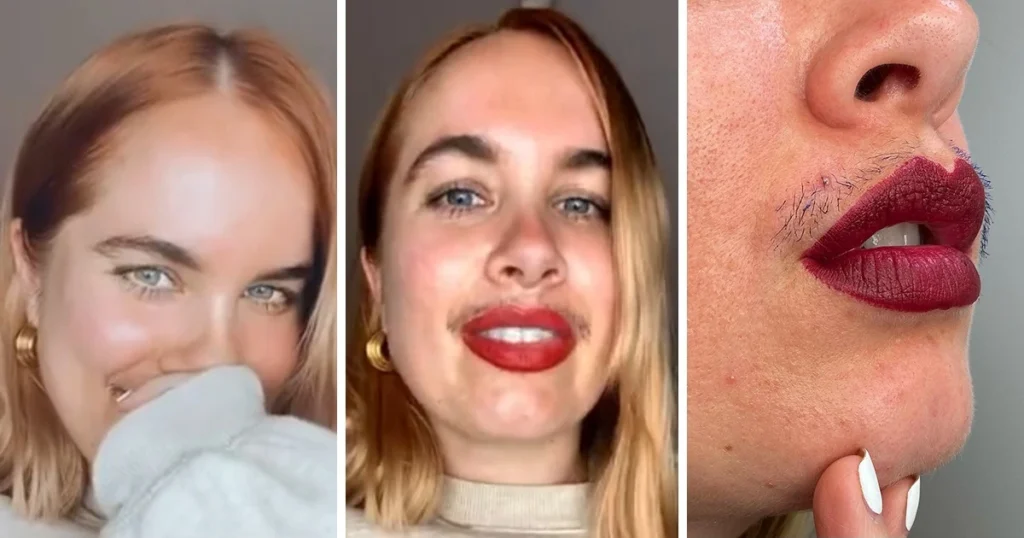
Joanna Kenny is an esthetician who made her upper lip hair visible on purpose. She has posted videos where she darkens her peach fuzz with mascara. It is a direct protest against filters that sell “poreless and hairless” as normal.
Her point is not “you must love this.” Her point is freedom. You can remove hair, or leave it, without treating it like a secret. She also links her choice to skin health. Harsh DIY removal can irritate the skin barrier and trigger breakouts for some people.
3. Shyja: The Viral Mustache

Shyja went viral for one reason. She showed visible upper lip hair and refused the usual apology. In clips shared widely, she treats it as a normal feature, not a flaw.
This matters for search intent. Many readers are not looking for a “statement.” They are looking for reassurance. Seeing someone treat a mustache as neutral can lower panic fast.
4. Frida Kahlo: The Icon Who Kept the Upper Lip
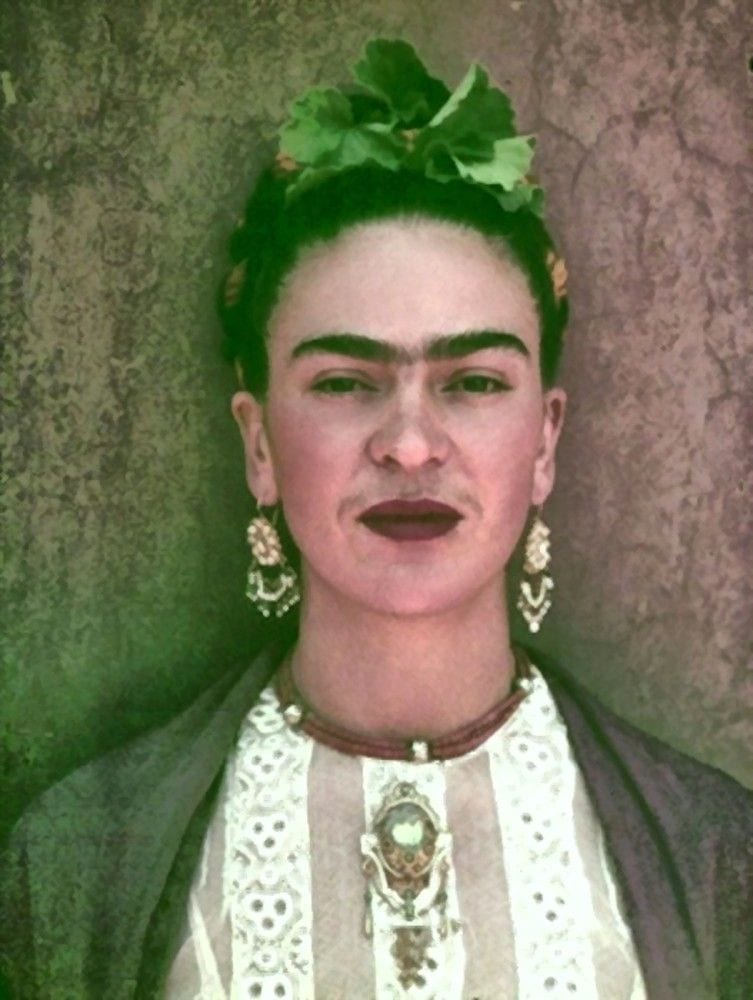
Frida Kahlo is the most famous example of a woman who kept her upper lip hair visible and made it part of her image. In her self-portraits, the mustache and brow are not hidden. They sit inside the work, as identity, heritage, and realism.
Her influence still shows up in modern beauty culture. Even the film world had to face it. During Frida, Salma Hayek spoke about how “real” grooming routines get edited out of celebrity stories. Kahlo forced the opposite. She made the detail impossible to ignore.
5. Qajar Princesses: When a Mustache Was a Beauty Ideal
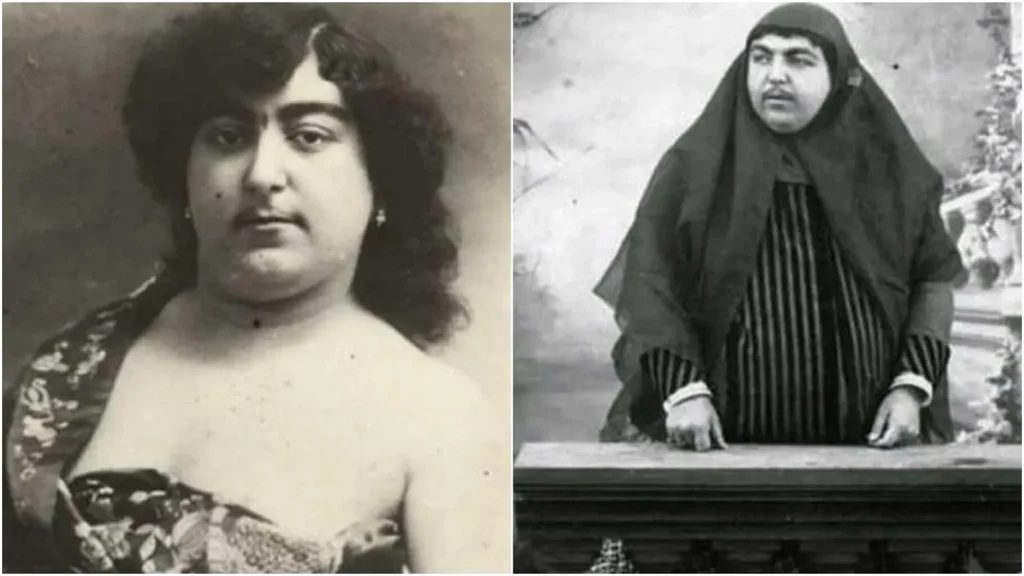
Photos of Qajar-era Persian women go viral every few years, often with junk history attached. Ignore the meme. Focus on the truth that matters for this article.
In 19th-century Persia, a faint upper lip mustache was widely framed as beautiful. Historian Afsaneh Najmabadi documents that period sources and images show women with visible upper lip down as part of the beauty ideal. In that context, hairlessness was not the standard.
6. Eleanor Dumont: “Madame Moustache” of the Gold Rush
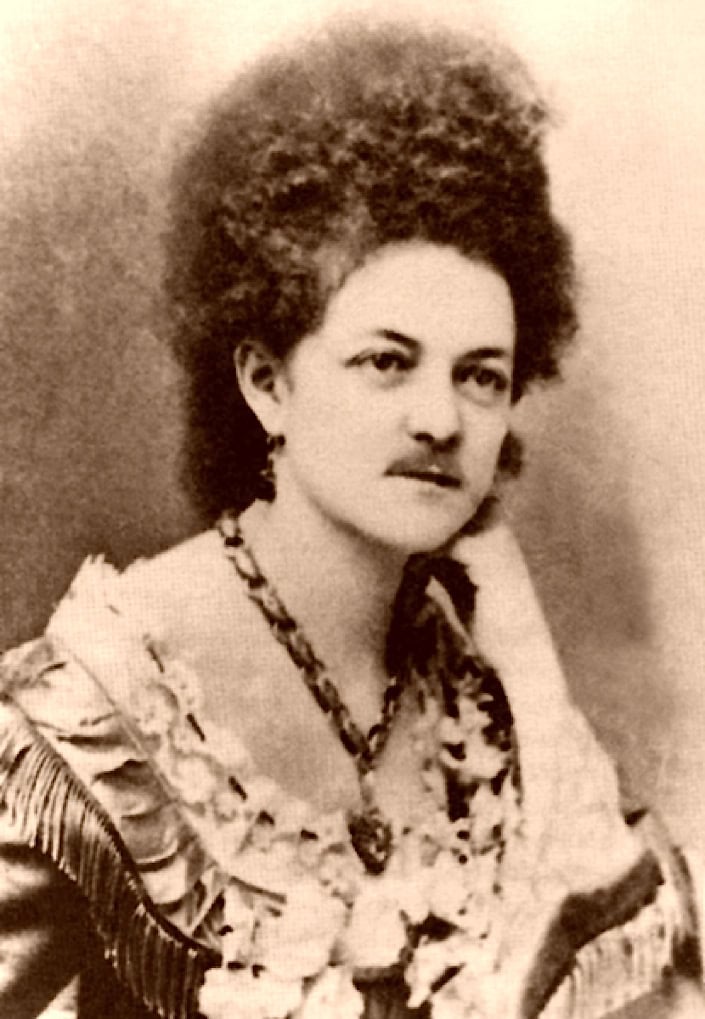
Eleanor Dumont, also known as “Madame Moustache,” is a historical figure tied to the California Gold Rush. She was known as a skilled blackjack dealer in male-dominated rooms, with a sharp reputation and strict control of her tables.
As frontier lore goes, the nickname came from her visible upper lip hair as she aged. Instead of hiding it, the name stuck. It became part of her authority. In a place where women were judged fast, she used what was visible as a signature.
7. JD Samson: Redefining Androgynous Beauty
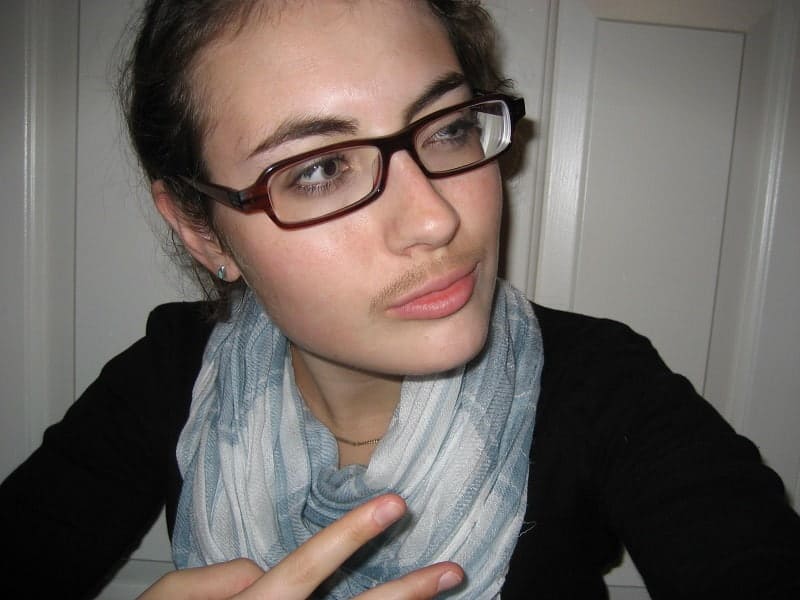
JD Samson is a musician best known for Le Tigre and MEN. Her pencil mustache reads as deliberate, not accidental. It is part grooming, part statement.
In interviews, she has talked about how people react to gender nonconformity in public spaces. A mustache can be medical. It can also be styling. With Samson, it is a choice that pushes back on the idea that femininity must look one way.
The “Sun Mustache” (Melasma): The Shadow That Is Not Hair
Some women think they have a mustache, but it is not hair. It is pigment. A darker patch above the lip can look like a hair shadow in photos. People often call it a “sun mustache.”
This is usually melasma or post-inflammatory hyperpigmentation. Sun exposure, pregnancy, hormones, and skin irritation can play a role. If the “mustache” looks more like a stain than strands, treat it like skin, not hair. Daily sunscreen helps. A dermatologist can guide safe treatment if it bothers you.
Biological Normalcy: Vellus vs. Terminal Hair
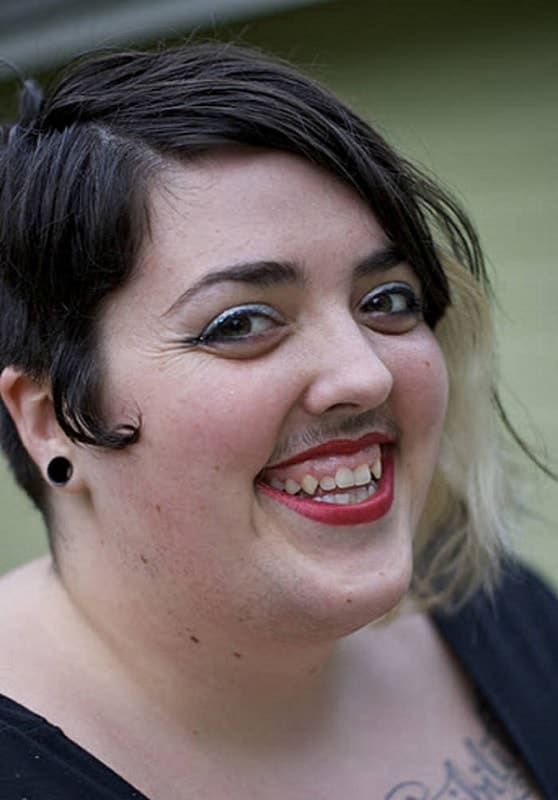
Most “baby mustache” photos online are not hirsutism. They are vellus hair, also called peach fuzz. Nearly everyone has it. Makeup, lighting, and camera sharpness can make it look darker than it is.
Terminal hair is different. It is thicker, coarser, and more pigmented. When women talk about a “mustache” that bothers them, they usually mean terminal hairs on the upper lip.
Facial hair is not one story. Sometimes it is biology. Sometimes it is culture. Sometimes it is style. The common thread is choice, and the right to be seen without ridicule.
FAQs
Most of the time, it comes down to genetics and normal hormone variation. Some medical conditions can also increase terminal hair growth, especially PCOS and other hormone-related disorders. If growth is sudden or fast, see a clinician for an evaluation.
Yes. Light facial hair (vellus hair) is normal on all faces. Some women also grow darker, coarser terminal hairs on the upper lip or chin. If the change is new or paired with other symptoms, a checkup can help rule out hormonal causes such as PCOS.
They can be. A “mustache” describes hair on the upper lip. That hair may be fine vellus hair, or it may be thicker terminal hair. The difference is texture and pigment, not where it grows.
Sometimes. Genetics play a major role. For women with PCOS, lifestyle changes can have a real impact because insulin resistance can raise androgen production. A low-glycemic eating pattern, weight management, and regular activity may lower insulin and androgens over time. This usually will not remove existing terminal hair, but it may slow new growth and reduce progression. Talk to a clinician if you suspect PCOS.