

If you use hairspray often, you know the downside: that stiff, sticky feeling that makes hair look dull and feel rough when you touch it.
The good news is you can remove hairspray buildup safely. The key is to break down the spray’s polymers (the “hold” film) and then rehydrate your hair so it stays soft and flexible.
How to Remove Hairspray Buildup from Hair
Use one of the methods below based on how heavy your buildup is and how often you use hairspray.
Pre-Wash Tip for Heavy Buildup
If your hair feels like “helmet hair” (hard, crunchy, or tacky), do a quick pre-wash step first. Massage a few drops of a lightweight oil (like jojoba or olive oil) into dry hair, focusing on the sprayed areas. Let it sit for 10–15 minutes, then shampoo as usual. The oil helps loosen the hardened spray film so cleanser can lift it more easily.
Use a Clarifying Shampoo
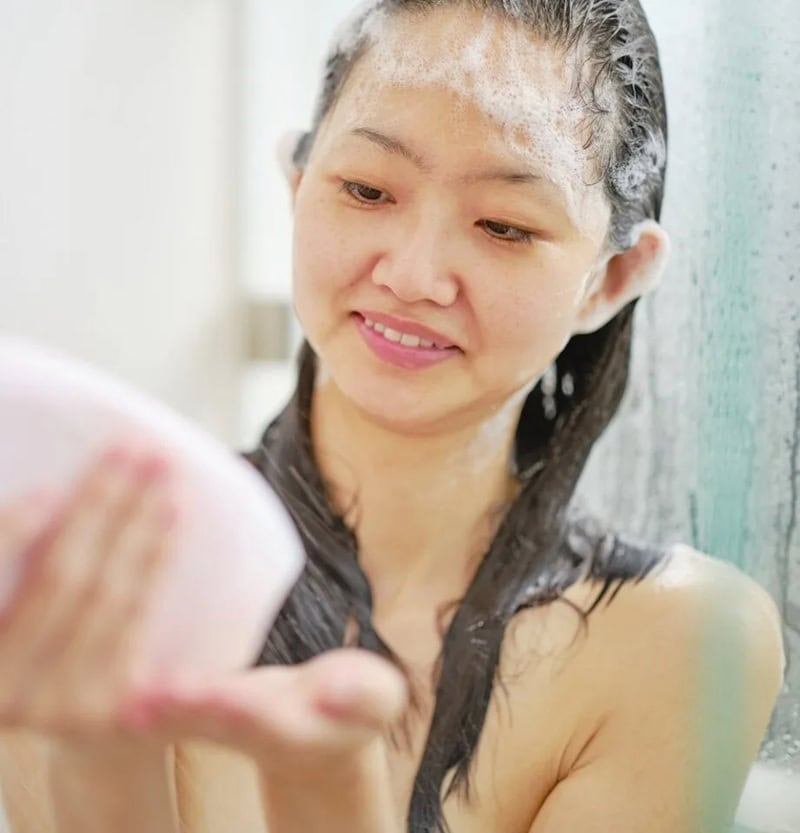
A clarifying shampoo is one of the fastest ways to remove hairspray residue. Sulfate-based clarifiers are the most effective at cutting through heavy buildup, but they can feel drying and may fade hair color faster if used too often. Look for shampoos containing Sodium Lauryl Sulfate or C14-16 Olefin Sulfonate for the deepest clean.
If you use hairspray frequently, consider alternating between:
- A strong clarifying shampoo (use up to twice a month for most people, especially if it contains sulfates).
- A gentler “micellar” shampoo (often marketed as a lighter cleanse for regular buildup). Micellar cleansers can lift residue without stripping as aggressively, which makes them a good option between deeper clarifying washes.
Whatever cleanser you choose, always follow with conditioner or a mask. Hairspray buildup blocks moisture, and clarifying removes oils, so rehydration is what keeps hair from feeling brittle afterward.
Quick Steps
- Wet hair thoroughly with warm water.
- Apply clarifying shampoo to the scalp first, then work the lather through the lengths, focusing on sprayed areas.
- For heavy buildup, do a double cleanse: shampoo, rinse, then shampoo again. The first wash loosens oils and hardened spray polymers. The second wash actually cleans the hair and scalp.
- Repeat only if you didn’t get a good lather the first time.
- Apply a conditioner or mask (mid-lengths to ends is enough for oily roots). Detangle gently while the conditioner is in, then rinse.
Use an Apple Cider Vinegar Rinse

Apple cider vinegar (ACV) is a popular at-home clarifier. ACV is best as a rinse step after shampooing. It helps with mineral buildup from hard water and supports a smoother feel by bringing hair back toward an acidic pH.
It’s not a detergent, so it won’t remove heavy hairspray polymers as effectively as shampoo does.
Always dilute it. Applying ACV directly to hair or scalp can be irritating.
ACV has a real place in a buildup-clearing routine for one simple reason: it is mildly acidic, so a diluted rinse helps break down leftover styling residue and rinse away visible flakes. It is a cleansing rinse, not a treatment. For persistent dandruff, psoriasis, or any other scalp condition, see a dermatologist.
Quick Steps
- Mix 1 part ACV to 3 parts water in an applicator bottle or spray bottle.
- Apply the diluted ACV mixture from scalp to ends. Massage gently. Avoid the eyes.
- Let it sit for 1–5 minutes, then rinse thoroughly.
- Condition or apply a mask, then rinse. (This step matters. ACV clarifies, but your hair still needs moisture.)
Scalp Scrub for Sticky Roots
If hairspray leaves your scalp feeling sticky or “coated,” a gentle scalp scrub can help. You can use a store-bought scalp exfoliator, or make a simple sugar scrub (fine sugar mixed into a small amount of shampoo).
Warning: Do not use coarse sugar or salt, as this can cause micro-tears on the scalp. Only use ultra-fine sugar.
Massage lightly for 30–60 seconds, then rinse and shampoo. Skip this if your scalp is irritated or sensitive, and don’t use harsh grains that can scratch.
Don’t Use These to Remove Hairspray Buildup
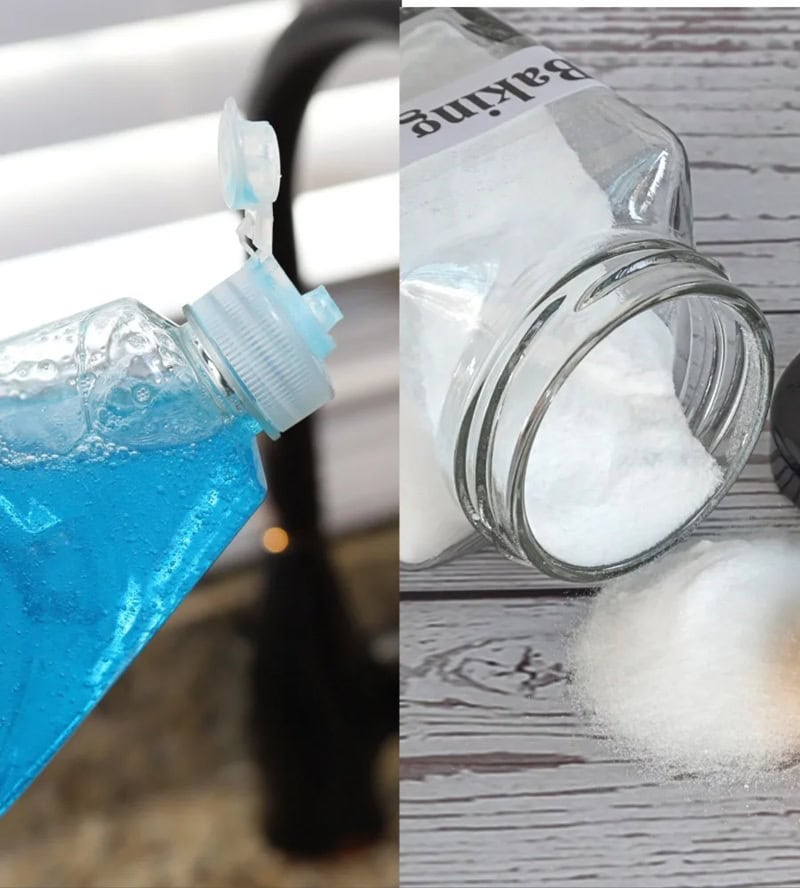
Two common “DIY clarifiers” can do real damage over time: dish soap and baking soda. Keep this warning in mind, especially if you color your hair or already struggle with dryness.
Dish Soap
Dish soap is made to cut grease on plates, not to cleanse hair. It strips lipids aggressively and typically lacks conditioning agents, so repeated use can leave hair rough, dry, and more prone to breakage.
While a single use is unlikely to “ruin” hair, frequent use is a bad idea. Stick to a real clarifying shampoo instead.
Baking Soda
In an article published on MedicalNewsToday, MaryAnn De Pietro states:
“Because of its abrasive composition, baking soda is a good cleaner for grills, stoves, and stainless-steel sinks. However, the small crystals of baking soda may be too harsh for the hair.”
Baking soda is alkaline (around pH 8–9 in water). That can force the cuticle to lift, which increases dryness, frizz, tangling, and breakage over time. If you want exfoliation, a gentle scalp scrub or exfoliating shampoo is the safer route.
Can You Use Hairspray Every Day?
Yes, but daily use needs a cleanup routine. Hairspray is designed to coat hair with hold polymers. If you layer it day after day, that film builds up and hair becomes stiffer, drier, and more breakage-prone.
What daily hairspray can do over time:
Dryness and frizz: Many hairsprays use fast-drying alcohols, which can dehydrate hair when used frequently. (Note: not all ‘alcohols’ are bad. Drying alcohols (like ethanol, SD alcohol) can be dehydrating, but fatty alcohols (like cetyl or stearyl alcohol) are conditioning ingredients commonly found in creams and conditioners.)
More breakage: Once hair is stiff, it snaps more easily when you brush, tug, or sleep on it.
Dullness and “false flakes”: Product film can make hair look matte and leave white residue that resembles dandruff.
Scalp irritation: Buildup can bother the scalp and leave it itchy or congested, especially if you’re sensitive.
How to Minimize Damage If You Use It Daily
Spray distance: Hold the can about 10–12 inches away so you don’t saturate one spot (that’s where breakage happens).
Hairspray alternatives offer different kinds of hold, although gels, mousses, and waxes can also leave buildup.
Don’t brush dried hairspray out: If hair is stiff, brushing can snap strands. Loosen it with conditioner in the shower instead.
Use a gentle “in-between” cleanse: A micellar shampoo can help lift daily residue without over-stripping.
Clarify on a schedule: Use a true clarifying shampoo as needed (often weekly for heavy users, or every 2–4 weeks for light users).
Condition every time: Hairspray + cleansing equals moisture loss. A conditioner or mask keeps hair flexible.
Choose flexible-hold formulas when possible, and if dryness is an issue, look for sprays marketed as low-alcohol or alcohol-free (meaning fewer drying alcohols).