

Disclaimer: This content is for informational purposes only and does not constitute medical advice. For concerns regarding hair loss or scalp health, please consult a medical professional.
When you think about the physical characteristics that make a woman’s face attractive, the hairline isn’t usually the first one that comes to mind. Still, certain types of hairlines are more desirable and flattering than others, so never underestimate them as being less important than the nose, eyes, lips, or chin.
The hairline helps create a part of the face’s silhouette, but it doesn’t define the entire facial shape. Instead, it acts as a frame that creates a balance between the upper (eyebrows, eyes, forehead) and the lower (jawline, lips, chin) sections of the face.
Factors That Influence Hairline Type
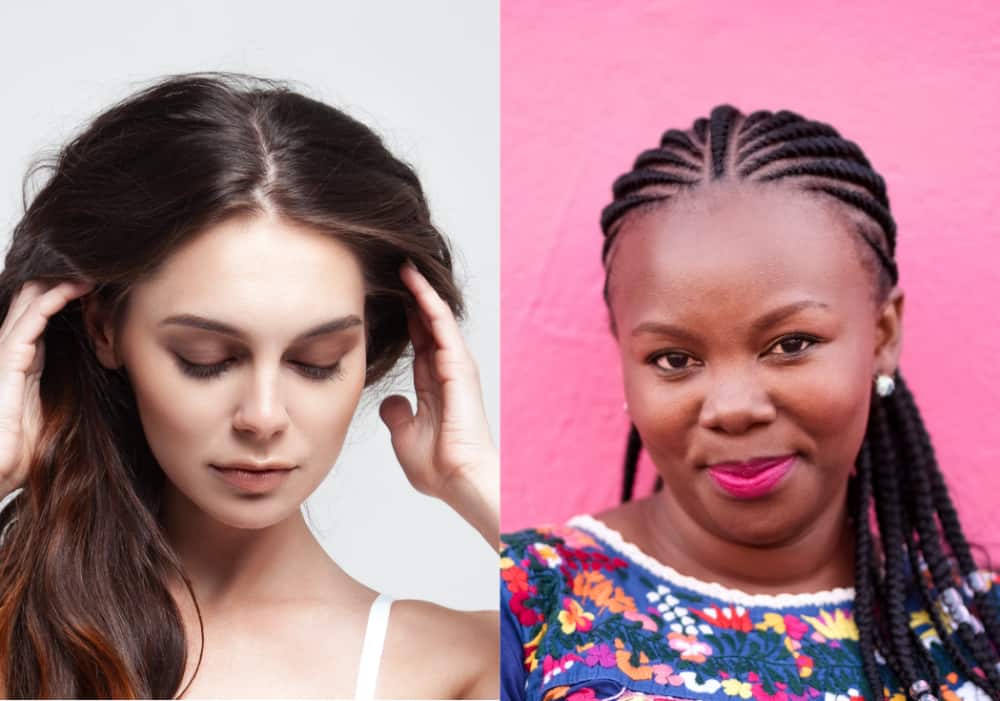
Several factors influence your hairline type in many different ways. In the end, you may understand what is happening with your hairline by viewing these common patterns and information about hairlines.
Age
While we are in the womb, our hairlines start to develop, and there isn’t a lot of distinction between hairlines until the child is around five years old.
As you age, your hairline can naturally recede. Things like stress, genetics, and hormones further influence a receding hairline.
Race
Studies point to race playing a part in hairline development. White people, as their hairlines recede, often get a v-shaped hairline. This pattern is a lot less regularly seen among Black and Asians.
Lifestyle
Even things as simple as pulling your hair back can result in a receding hairline. If you often pull your hair back tightly, this can pull at your hairline, causing it to recede in response to the stress on the hair.
This type of hair loss is known as traction alopecia. Another cause is tight braids at the hairline. Traction alopecia is a common cause of this issue amongst Black people. Note that traction damage can happen faster than many people think. One extremely tight “event style” (for example, a very tight ponytail or bun) can cause breakage at the edges, especially on curly and coily hair.
Different Types of Hairlines
Each person’s hairline is as unique as their fingerprints, but in groupings, hairline types are usually divided into four broad categories: high hairline, normal hairline, low hairline, and receding hairline.
Included within these categories are specific types of hairlines whose characteristics are defined by the place on the forehead where the hairline starts.
Specific Categories of Hairlines for Women
High Hairline
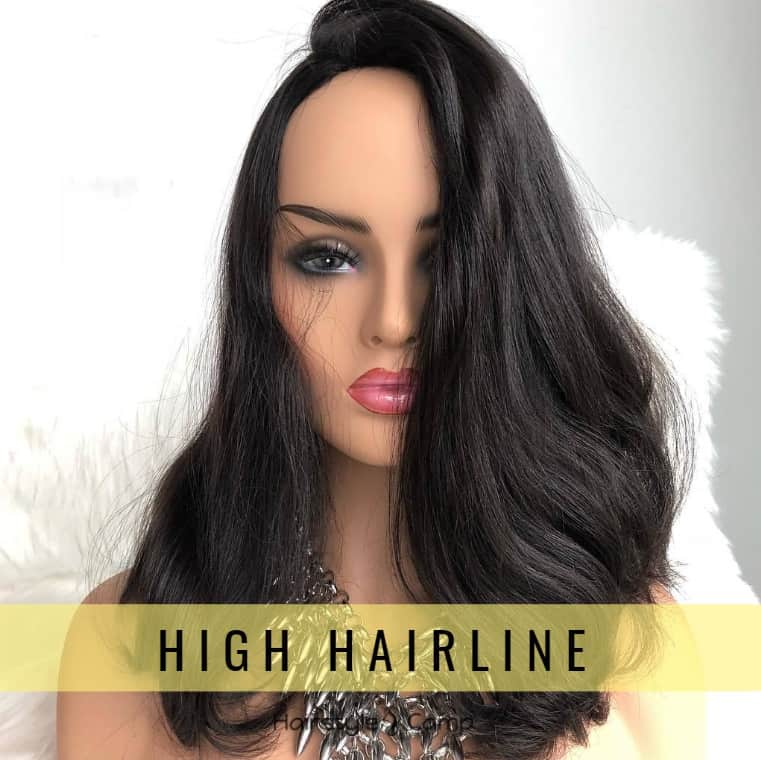
When a woman is young, having a high hairline isn’t usually a worrisome issue. As she ages, however, a high hairline can be perceived as hair loss or a receding hairline.
That’s why, if you were born with a round or bell-shaped hairline, you should avoid wearing your hair in tight, combed back styles. (This doesn’t mean that you can never wear a ponytail or a bun, just don’t do it all the time.) The constant pulling and tugging at your hairline area adds undue stress to the hair follicles and could eventually cause hair loss.
Low Hairline
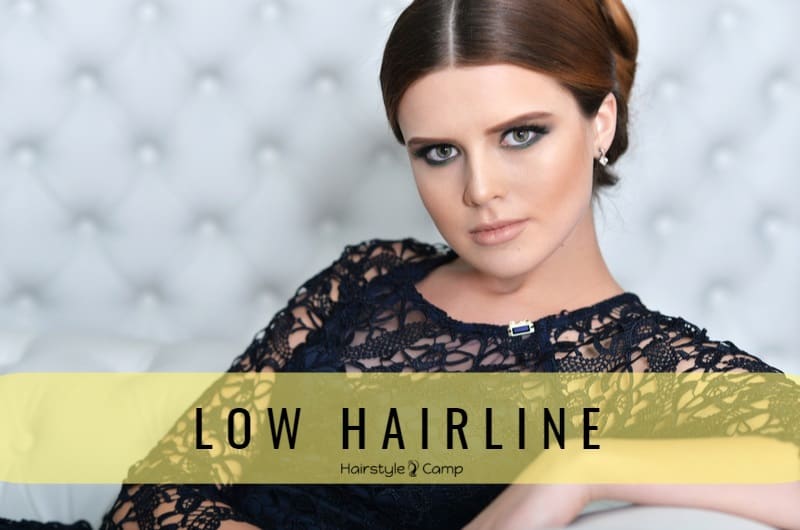
If your forehead area appears smaller and shorter than most, you likely have a low hairline.
Since it’s natural for the hairline to shift slightly upwards as you get older, starting out in life with a lower hairline can be an advantage. If you have a low hairline, you’re in great company; many beautiful and famous women have them — (think Fergie, Sandra Bullock, Mayim Bialik, and ALL five of Kris Jenner’s daughters).
Normal Hairline
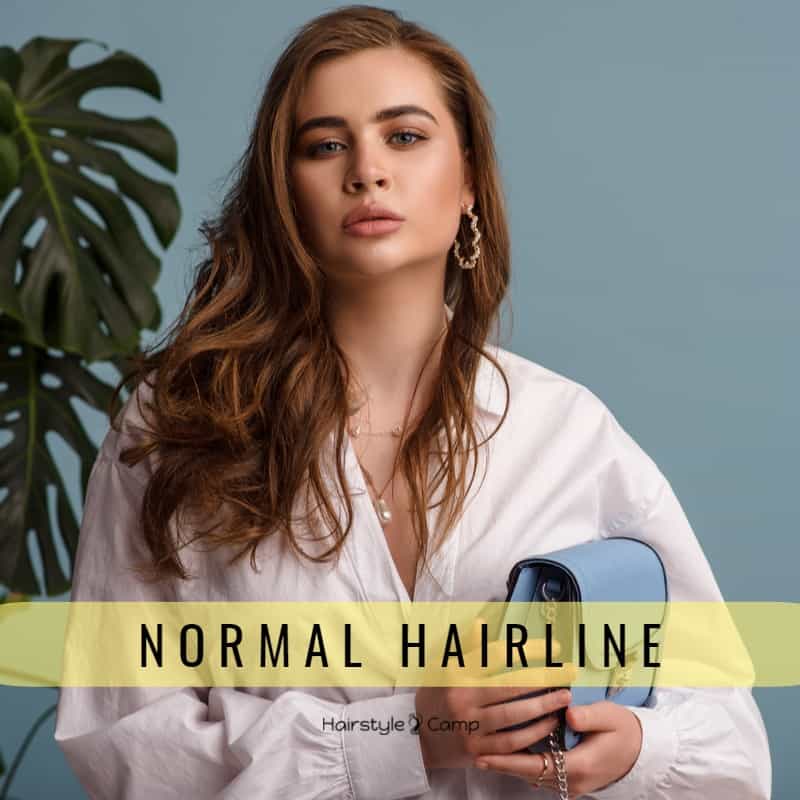
A normal hairline offers the best of both worlds, and it’s also the most common hairline type for women.
If you have a Normal hairline, your forehead won’t look too small or too broad, and you shouldn’t notice any serious issues with hair loss as you get older. Even though you can feel confident wearing lots of updos and ponytails, stay aware that you could create a receding hairline over time if you continuously pull them too tight.
Receding Hairline
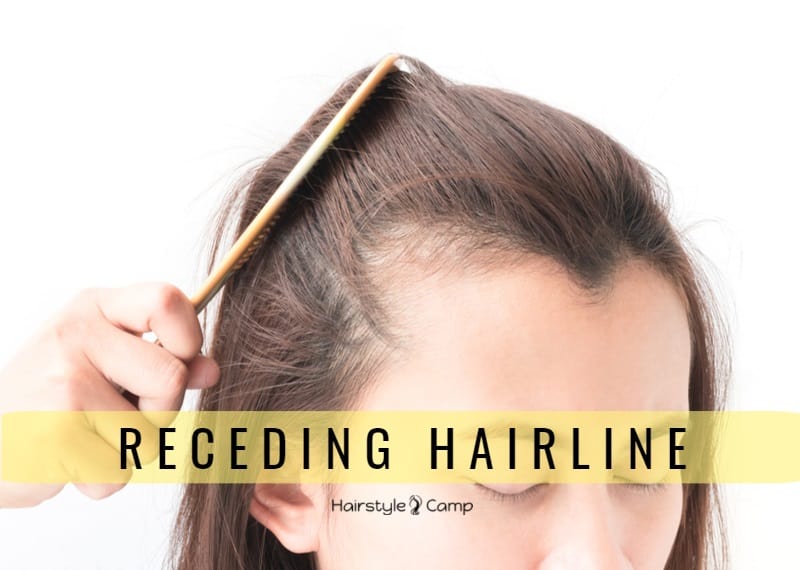
A receding hairline in the “frontotemporal corners” can affect any woman as she ages, especially those who have a family history of hair loss. While you won’t usually lose all the hair in those areas, it can thin significantly, leaving you with fine, wispy hairs that can look like “baby hair” in those sections. Many women also have natural baby hairs that are not a sign of hair loss, so what matters most is a clear change over time, plus thinning at the temples.
If you have had a small, triangle-shaped thin patch at the temples since childhood and it has not progressed, it may be Congenital (Temporal) Triangular Alopecia, which is usually stable and non-progressive. If you are unsure, a dermatologist can confirm it.
Certain medical conditions can also play a role, such as anemia, vitamin or protein deficiencies, and thyroid disease. As mentioned earlier, repeatedly wearing your hair in a too-tight ponytail or bun could cause the hairline to recede over time.
Important: if the hairline is also itchy, red, burning, very flaky, smooth and shiny, or you notice eyebrow thinning, see a dermatologist. Some scarring conditions (including Frontal Fibrosing Alopecia) can mimic “recession” and need early treatment to prevent permanent loss. (Medical overview: DermNet: Frontal fibrosing alopecia.)
Typical Female Hairline Patterns
Regardless of whether you have a Normal, high, low, or receding hairline, the actual shape usually falls into one of the following categories:
Widow’s Peak
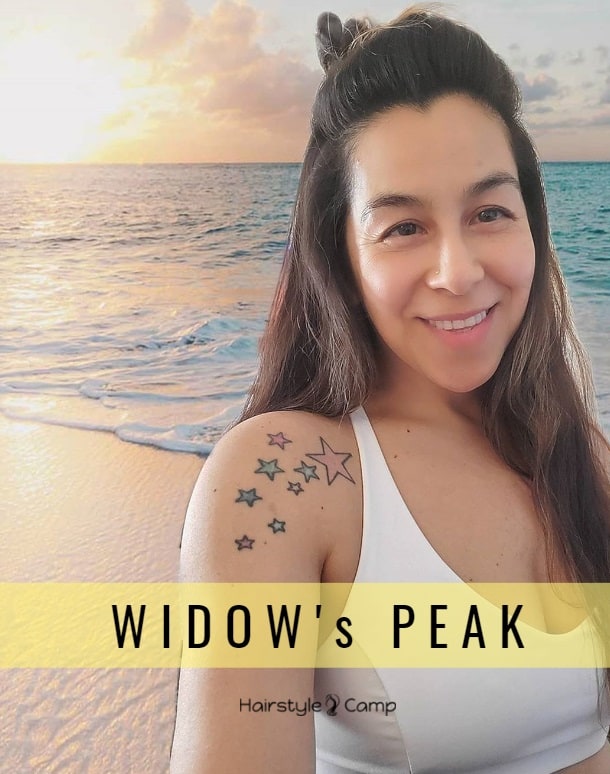
This hairline pattern can best be described as a ‘V’ or an M-shaped point at the center of the forehead. Unless it has an unnaturally prominent point, most women enjoy having a slight widow’s peak, but if you notice hair loss on either side, your hairline may be receding.
- You can camouflage a too-deep widow’s peak with side-swept bangs or a soft, textured fringe. Avoid plucking/tweezing or shaving the hairline, which can irritate skin and may damage follicles over time.
- An inverted widow’s peak is shaped like a ‘W‘. Also known as a triangular hairline; it’s less common than a widow’s peak but no less attractive.
Straight (Rectangular)
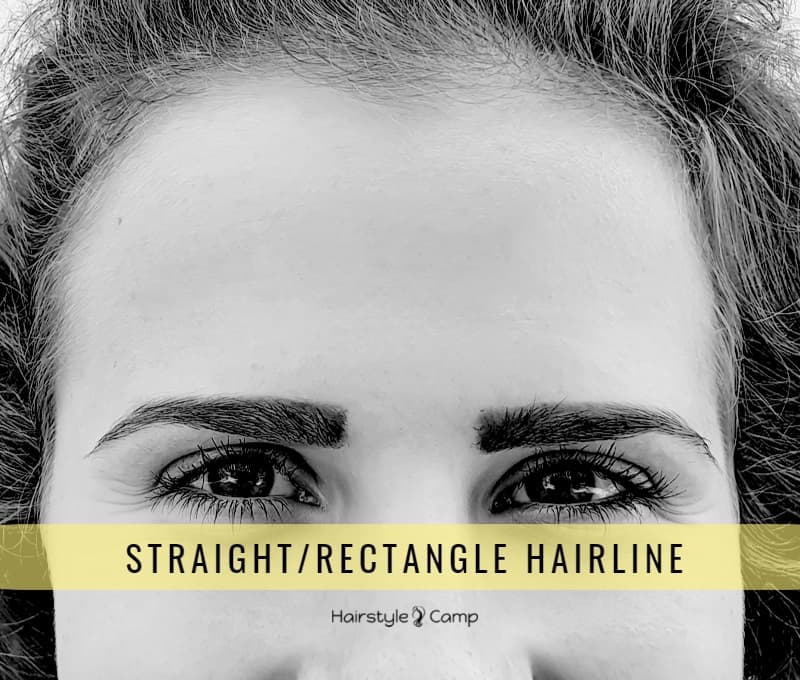
Women’s hairlines rarely fall perfectly straight across the forehead, but they may come across as so, depending on the hairstyle.
- If you prefer a more feminine appearance, then avoid haircuts and combing techniques that emphasize a precisely rectangular hairline, as they tend to create a more masculine feel.
- Face-framing layers or side-swept bangs can also make a rectangular hairline come across as more soft and gentle.
Rounded or Bell-Shaped
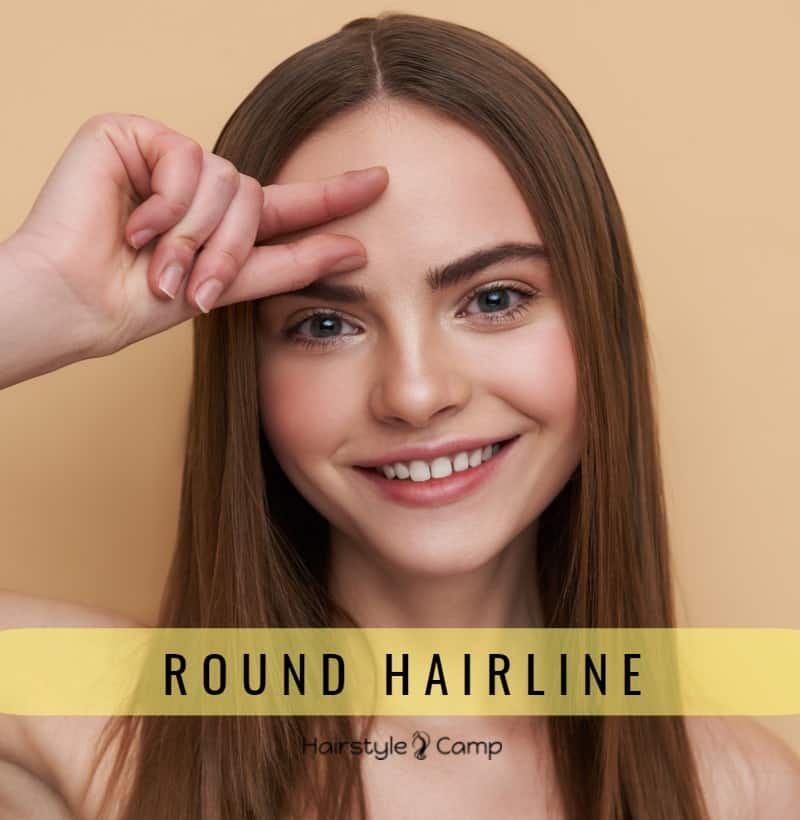
Some women have a bell-shaped hairline that can make the forehead appear longer than it actually is.
- A bell-shaped hairline can sit higher at the temples, but that shape alone is not “recession.” A receding hairline is progressive thinning and/or a change over time.
- If your temples look sparse, try a side part, or a center part with curtain bangs. Avoid tight ponytails, buns, or other backswept hairstyles that pull on the edges and draw extra attention to the hairline.
Maintenance Tips to Protect Hairline
To avoid damage to your hairline and to keep your hair strengthened overall, there are measures you can take to protect your hairline.
Manage a Receding Hairline
A receding hairline can cause a lot of panicking initially, but there are steps you can take to manage it.
Diet
A diet high in antioxidants may help your hair improve. Focus on a balanced diet with enough protein, fruits, vegetables, and leafy greens. Talk to a clinician before taking supplements, as excess vitamins can sometimes worsen hair loss (for example, too much Vitamin A can trigger shedding).
Medication
Just like how you can medicate male pattern baldness, you can treat a receding hairline, too. Minoxidil was first used for high blood pressure, but scientists discovered that one of its side effects was hair growth.
Minoxidil can help with certain types of hair loss, but it is not a quick fix. It requires consistent use, and hair shedding can return if you stop. Side effects can include scalp irritation and unwanted facial hair growth in some women.
Minoxidil is most studied for genetic pattern hair loss. For traction alopecia, it may only help in early, non-scarring stages after the tension is stopped. It is generally ineffective once follicles are scarred (late-stage traction alopecia) or with scarring hair loss. A dermatologist can help you confirm the cause and choose the safest plan.
How To Maintain Your Hairline
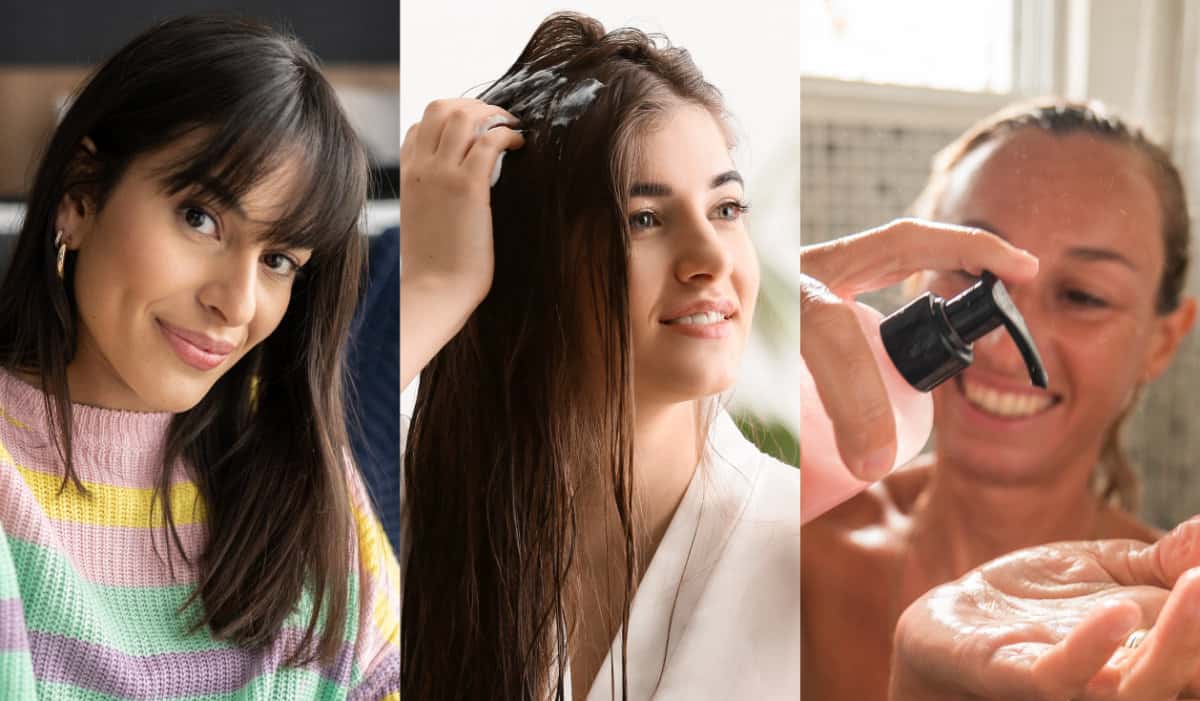
The following factors will affect how you maintain your hairline over time.
Diet
Like with a receding hairline, diet is vital to maintain your hair’s health. Like above, eat a healthy diet of fruits, vegetables, and leafy greens.
Avoid Tight Hairstyles
As mentioned above, your lifestyle can impact your hairline. Braiding too tight or wearing your hair up too tight can damage your hairline. Doing this pulls out weak hairs and results in hairline recession. Keep in mind that acute traction can happen in a single day from an extremely tight style.
Switch up your hairstyle often to give a break to specific stress points that come from tight styles. Heavy protective styles on Black hair can cause stress if you struggle with hair loss due to traction alopecia. Also watch “wet weight.” Braids and extensions that feel fine when dry can become much heavier in the shower, which can snap fragile edges.
Watch Your Heat Settings
Turn it down for the front. The hairs at your hairline are often finer and more fragile than the thick hair at the back of your head. They cannot withstand the same high temperatures.
- The Risk: High heat causes “thermal breakage.” This creates short, snapped hairs that stick up or refuse to grow past a certain length. Many women mistake this breakage for a receding hairline or “baby hairs,” when it is actually heat damage.
- The Fix: When you move your flat iron, blow dryer, or curling wand to the front sections, drop the temperature. Try to keep it below 300°F-350°F (150°C-180°C) for the hairline, and always apply a heat protectant spray specifically to these delicate edges before styling.
Use Hair Masks
There are great hair masks that can help hair feel softer and look smoother. “Keratin” masks do not biologically add keratin into your hair. Instead, they can temporarily coat the cuticle and reduce breakage, which can make hair appear fuller.
Use Hair Oils
Using oils like Vitamin E or Jojoba oil can act as emollients and help with dryness. They do not “strengthen” the follicle itself. If you deal with dandruff or an itchy, flaky scalp, keep oils off the scalp or avoid leaving them on for long periods, as dandruff is often Seborrheic Dermatitis and heavy oiling can sometimes worsen the yeast (Malassezia) involved. (Medical overview: AAD: Seborrheic dermatitis.)
Condition It
Using conditioner when you shampoo is vital to keeping your hair softer and reducing breakage. In simple terms, hydration is water content, while “moisture” often refers to the conditioning barrier that helps slow water loss. Over-wetting without conditioning can leave hair swollen and fragile. Dry, brittle hair breaks more easily, which can make the hairline look thinner (even if it doesn’t change the follicle’s natural pattern).
Can You Change Your Hairline Type?
The forehead is bordered at the top by the hairline and the bottom by the eyebrows. The amount of space between these two points determines whether your overall hairline position is high, normal, low, or receding.
Unless you’ve had an accident, surgery, or worn your hair for many years in a style that’s permanently changed the appearance of your hairline, your hair follicle pattern is genetically determined.
Ethnicity also sometimes plays a role in your hairline type, so to a certain extent, there’s not much you can do to change it, short of undergoing plastic surgery.
How To Change Your Hairline
There are a few ways you can try to change the shape, regardless of the type of hairline you have. Some are temporary or superficial changes, but others remain more permanent.
Hair Styling
There are ways to style your hair that will obscure your hairline. Similar to using a comb-over to hide balding, bangs can influence how your hairline looks because they often cover the area.
Hair Removal
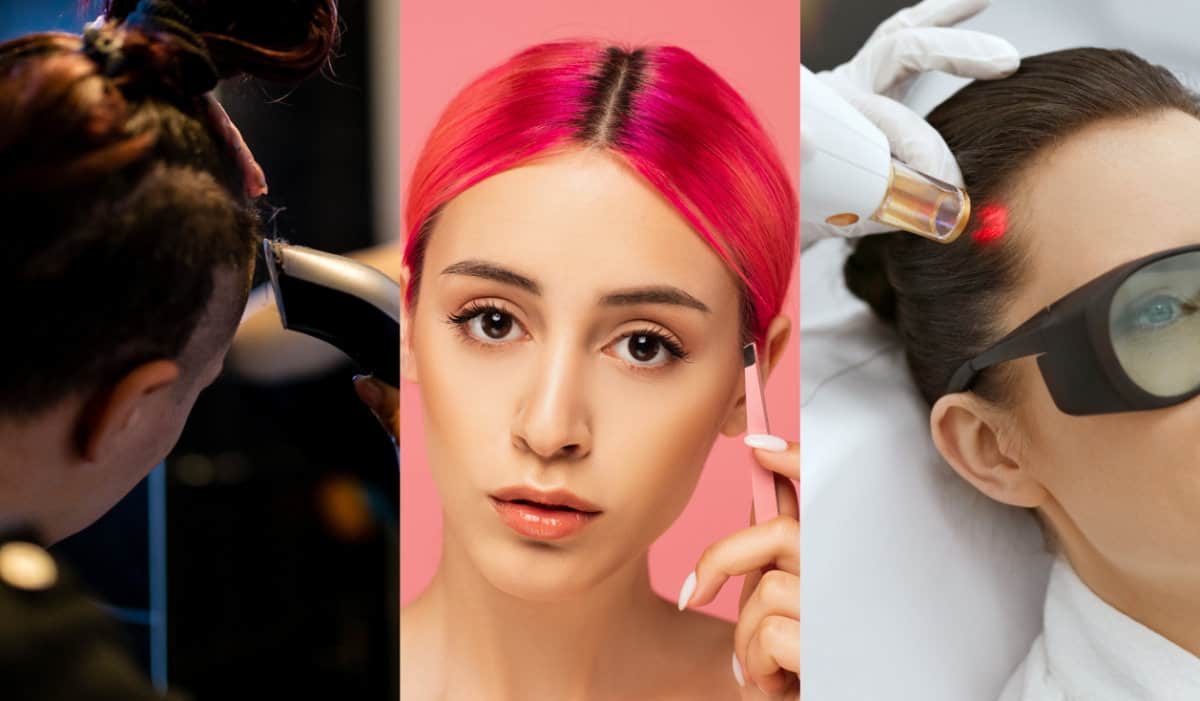
You can also remove the hair on your hairline if too much in a particular place is an issue for you. For example, if you have a widow’s peak that you dislike, you can flatten it out.
Shaving
Shaving can reduce a widow’s peak and help balance a hairline if you square out rounded corners. However, this is strongly discouraged for most people. Forehead stubble can show within 24 hours and creates a hard-to-hide texture clash that can ruin makeup and look like shadow or dirt. Shaving can also cause micro-irritation, and applying hair dye or strong products over freshly shaved skin can sting and stain.
Tweezing
Tweezing is not recommended for changing a hairline. Plucking scalp hairs can cause irritation, folliculitis, ingrown hairs, and in some cases permanent follicle damage or scarring over time.
Laser Therapy
Laser hair removal is used to permanently reduce unwanted hair. It is not the same as laser/light devices used to support hair growth.
On the opposite side, low-level light therapy (LLLT) uses specific wavelengths of light (often red light) to support hair growth in some people. If you are considering either option, speak with a dermatologist first so you do not treat the wrong problem. Also note that skin can be more sensitive after laser hair removal, so follow your clinic’s guidance before applying hair dye, strong actives, or heavy makeup near the hairline.
Cosmetic Solutions (Temporary)
If your goal is to make the hairline look more even or to fill in sparse temples without removing hair, cosmetic camouflage is often the safest place to start.
- Water-resistant root sprays can tint the scalp and reduce show-through.
- Root cover-up powders or fiber powders can help the hairline look denser in photos and real life.
- Shadow roots and soft face-framing highlights can lower contrast between hair and scalp, which often makes recession look less noticeable.
Some people use eyeshadow as a quick hack, but it can look chalky and may transfer onto the forehead with sweat or flash photography. A product made for roots is usually more reliable.
Good Hairline vs. Bad Hairline

While there is no definitive answer as to what a good or bad hairline is, there are types of hairlines that are typically more or less attractive. There is not such a thing as a good or a bad hairline.
We often view a fuller hairline as better: like the normal hairline which is not too high nor too low, allowing it to look better than a too-high or too-low hairline. Low hairlines look good too as they do not make your hairline look too high.
Straight and bell-shaped hairlines also allow for better-looking forehead size and handle hairstyling well.
It’s always best when you’re content with the physical features Mother Nature gave you, and that goes for your hairline’s shape and position too. Regardless of which type of hairline you have, you can rest assured knowing there are plenty of haircuts and styles that will help you blend it in to achieve an attractive look that fits your face correctly.
Sources: American Academy of Dermatology: Causes of hair loss | AAD: Seborrheic dermatitis | DermNet: Frontal fibrosing alopecia