

Also reviewed by Susy Hernandez, Licensed Cosmetologist
If you have dark hair and want to lighten it, you will need a hair developer. However, walking down the hair care aisle and seeing bottles labeled 10, 20, 30, and 40 volume can be incredibly confusing.
Lightening dark hair is a complex chemical process. Using the wrong developer can lead to severe hair damage, chemical burns, or a patchy, bright-orange disaster.
In this comprehensive guide, we will break down exactly what hair developer is, the chemistry behind 10, 20, 30, and 40 volume, and how to safely use them to lighten dark hair like a professional colorist.
Who this guide is for: everyone standing in that aisle, with an honest split. 10 and 20 volume are consumer territory when you follow the label and test first. 30 and 40 volume are explained here so you understand exactly what your colorist is doing with them, not as an invitation to try them at home.
Andrea Torre has been behind the chair since 1988, and the licensed cosmetologist and colorist who reviewed this guide still decides developer volume one way:

In my salon, I always choose the developer volume based strictly on the client's hair history, as a gentle 10-volume will safely brighten fine hair, whereas an aggressive 30-volume on that same hair would completely destroy its texture. Selecting the right volume is truly the thin line between a successful color service and a tragic chemical haircut.
What Is Hair Developer?
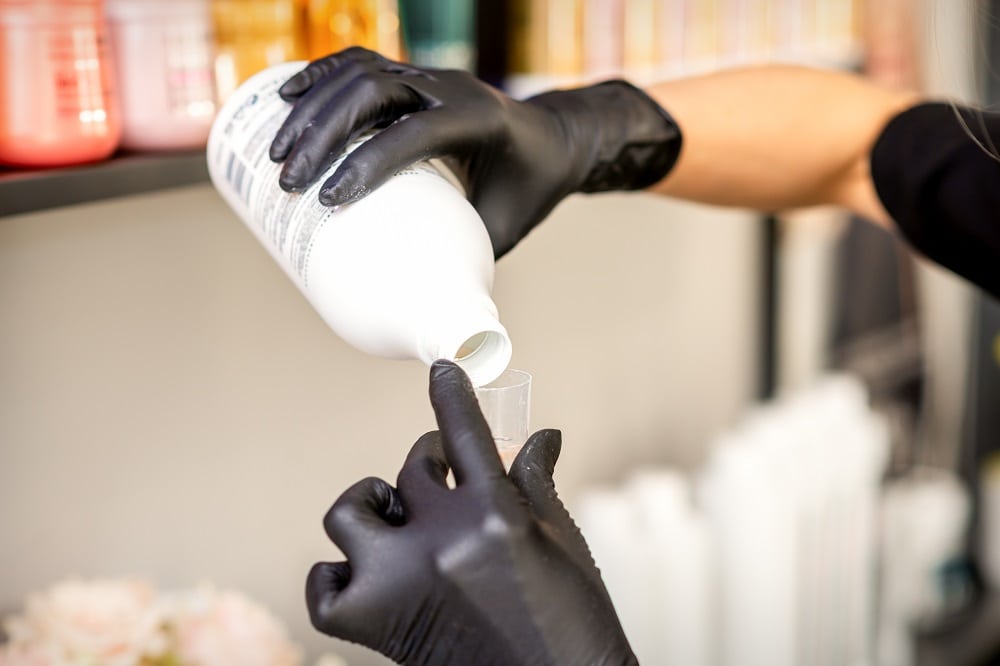
Hair developers are creamy or liquid mixtures containing hydrogen peroxide.
By itself, developer is acidic and does not do much to hair color. But when mixed with an alkaline agent (like bleach powder or permanent hair dye), a chemical reaction occurs. The alkaline agent swells and lifts the hair cuticle, allowing the developer’s peroxide to penetrate the hair shaft, dissolve your natural pigment (melanin), and permanently lighten your hair color.
The number on the bottle (Volume) refers to the concentration of peroxide. A higher volume means a stronger chemical action and a significantly higher risk of structural hair damage.
Developer with Bleach vs. Developer with Dye
A common point of confusion is how developer behaves differently depending on what you mix it with. Developer is the activator. What you mix it with is what decides the result.
Developer with bleach (lightener): Bleach powder contains alkaline persulfates. When mixed with developer, it breaks down and removes both natural melanin and many forms of artificial dye. This is the main way to lighten previously dyed hair. It does not deposit color. It reveals underlying warmth (red, orange, yellow) that often needs toner after.
Developer with permanent dye: Permanent color contains an alkaline agent and artificial pigment. When mixed with developer, it lifts natural pigment and deposits new dye at the same time. This is for virgin hair changes and gray coverage. It does not reliably lighten hair that already has dye in it.
10 vs 20 vs 30 vs 40 Volume Developer: A Quick Comparison
Use this professional cheat sheet to understand the differences, chemistry, and safety levels of 10, 20, 30, and 40 volume developers before you mix any chemicals.
Before you compare the numbers, Andrea's reminder about what developer actually is:
Using the correct developer volume is critical in the hair lightening process. Hydrogen peroxide acts as the catalyst for the chemical reaction in hair color. Choosing the wrong volume developer risks destroying the hair and/or improper lift of the pigment.
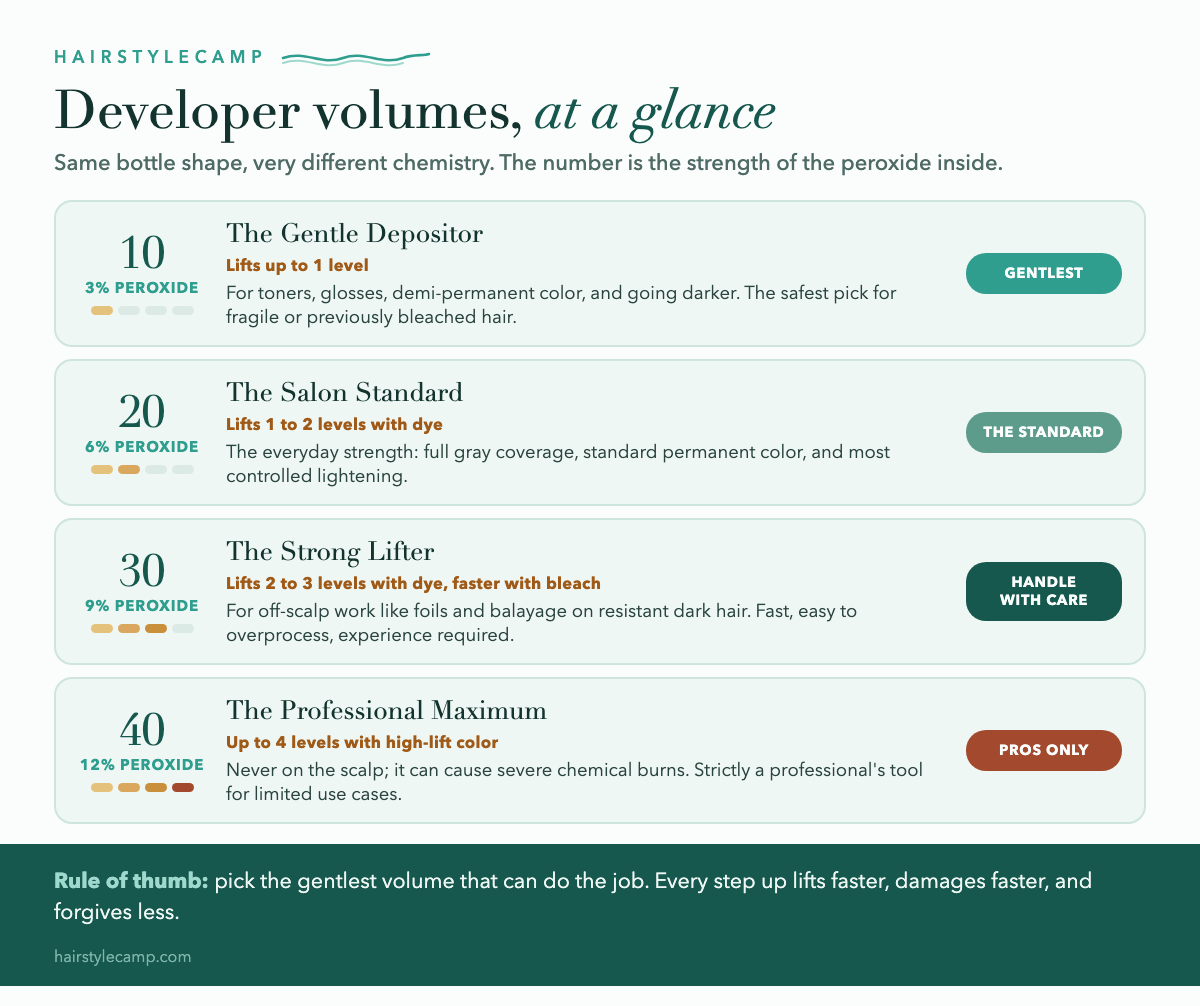
| Feature / Detail | 10 Volume (3% Peroxide) | 20 Volume (6% Peroxide) | 30 Volume (9% Peroxide) | 40 Volume (12% Peroxide) |
|---|---|---|---|---|
| What It Is | The Gentle Depositor. The gentlest of the standard options; only a 5-volume deposit developer is weaker. | The Industry Standard. Balances lifting and depositing. | The Strong Lifter. Fast-acting chemical lifter. | The Professional Maximum. Highly aggressive lifter. |
| Why It Is Used | To provide minimal oxidative strength for depositing color without heavy structural stress. | To lift and deposit in a controlled way for most salon work. | To lift faster on resistant hair with controlled placement. | To push maximum lift in limited, professional use cases. |
| When It Is Used | Toning pre-lightened hair, going darker, demi-permanent dyes, small tint shifts on virgin hair. | Gray coverage, standard root touch-ups, many at-home bleach mixes. | Off-scalp highlighting (foils, balayage), resistant dark hair. | High-lift permanent color on coarse, virgin dark hair, off-scalp use. |
| Levels of Lift (Virgin Hair) | 0 to 2 levels | 1 to 2 levels (more with bleach) | 2 to 3 levels (more with bleach) | Up to 4 levels (more with bleach) |
| Scalp Safety Risk | Lower risk. Still patch test. | Moderate. Common for roots when directions allow. | High risk. Keep off scalp. | Extreme risk. Never on scalp. |
| Use with Toner? | Yes. Common and safest choice. | Rarely. Only when the toner system calls for it. | No. Higher risk of damage and hot roots. | No. High risk of breakage. |
| Gray Hair Coverage? | No. Too weak for full coverage. | Yes. Common standard for coverage. | Usually no. It can easily over-lift the hair and leave the final color looking translucent or hollow. | No. Too aggressive for clean deposit. |
| Biggest Pros | Gentle deposit, safer for fragile hair when used correctly. | Versatile and predictable for most goals. | Fast lift for resistant hair with controlled placement. | Maximum power for specific professional formulas. |
| Biggest Cons | Will not effectively lighten dark hair. | Big blonding goals often need multiple sessions. | Higher burn and breakage risk with mistakes. | High risk of snap-off and scalp injury with misuse. |
How to Lighten Hair Using Different Volume Hair Developer
Each developer volume has a different strength and safety profile, so the application technique changes. Dark hair does not immediately turn blonde. It lifts to deep red, then orange, then yellow. You will often need a toner after lightening to neutralize warmth.
⚠️ Crucial Safety Warnings
- Patch test (48 hours before): Checks for allergy. If you get swelling, rash, or intense itching, stop.
- Strand and elasticity test: Test the mixture on a small hidden piece. If hair snaps, feels gummy, or stretches like a rubber band when wet, do not bleach it.
- Prep: Wait 24 to 48 hours after your last shampoo before lightening. A day or two of natural scalp oils may add a little buffer, but they do not prevent chemical burns, so still keep strong lightener off the scalp and stop if you feel burning.
- Gloves: Always. Developer and bleach can irritate or burn skin.
- Ventilation: Work with fresh air. Do not inhale fumes.
- Non-metal bowl and tools: Metal can react with lightener and cause heat spikes.
- Keep strong volumes off the scalp: This is not negotiable. 30 and 40 volume do not belong on the scalp.
- Use 20 volume or lower only if the product directions allow it. For bright roots or full scalp lift, book a colorist.
- Stop signs: Bleach should not feel hot. Tingling is not the goal.
- Rinse immediately if you feel burning, strong stinging, swelling, blistering, intense heat, or pain.
- Rinse immediately if hair turns gummy, stretches like wet chewing gum, or snaps when you tug a strand.
- Foil heat warning: If a foil or section gets hot, that is a reaction spike. Heat means speed. Speed means damage. Rinse.
- Do not store leftovers: Discard the leftover mixture immediately. Never keep mixed bleach or developer in a closed container, as expanding gases can build pressure and make it burst.
10 Volume Developer (3% Peroxide): The Gentle Depositor
10-volume developer is the weakest standard developer. Because of its low peroxide content, it provides minimal pigment oxidation within the cortex. On virgin (undyed) hair, it will only lift your color by a maximum of one level.
- Best For: Depositing color, toning pre-lightened hair, going darker, or making a very subtle shift in the tone of virgin hair.
- Safety: Very gentle. It is the safest option for fragile or previously bleached hair, but do not exceed the maximum processing time stated by the product manufacturer.
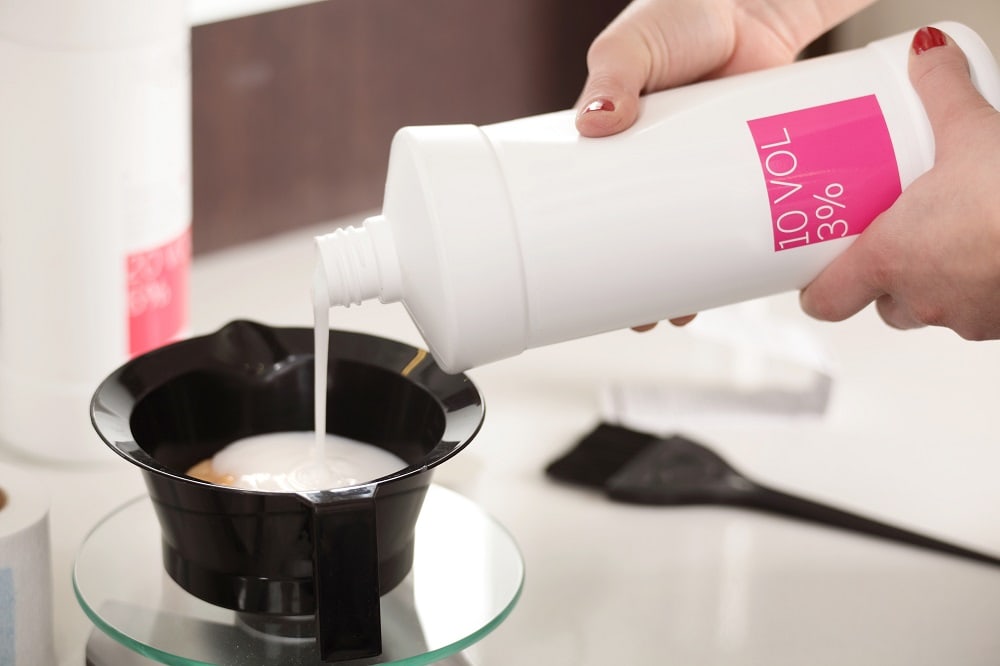
You can use developers in two different ways. In most cases, developer is mixed with another product like hair dye, bleach, or toner. The alkaline agent in your dye or bleach opens the cuticle, allowing the developer to enter and activate the color change.
Do not use developer by itself as a lightening method. Use 10 volume only with a toner, gloss, or dye system that specifies it. A colorist can use developer alone to nudge hair a shade or two, but that is a professional judgment call, not a DIY technique.
What Is 10 Volume Developer Used For?
10 developer is often used in combination with toner or glaze. The peroxide in the developer helps the toner penetrate the hair shaft more deeply.
10 vol can also be mixed with bleach to lighten hair even more. The developer will allow the bleach to work more effectively in your hair.
You can also use 10-volume developer to create a subtle shift or soft highlights on virgin black or dark brown hair. Note: these highlights will not come out as a blond shade.
How to Lighten Dark Hair Using 10 Volume Developer
As 10-volume is so gentle (only 3% peroxide), you will not get dramatic blonde results on dark hair. However, it is perfect for slow, controlled lifting on fragile hair or subtle tint shifts.
The “Bleach Bath“: If your hair is too damaged for standard bleach or you just want a very slight lift, mix 1 part bleach powder, 1 part 10-volume developer, and 1 part hydrating shampoo. Apply this to wet hair for 10-20 minutes. Apply to hair lengths only and do not massage into the scalp. Rinse right away if you feel burning or strong stinging. It can gently bump out a small amount of color, but it can still raise porosity and cause breakage if over-processed.
⚠️ Warning: This is too risky for non-professionals. Even a small amount of bleach mixed with developer and shampoo adds stress to hair that is already too damaged for standard bleach, especially applied all over and left on for the full 20 minutes. Leave this one to a licensed colorist.
For a Subtle Shift: Mix 10-volume developer with a permanent hair dye to lift virgin hair by up to 1 level, or to simply shift the underlying tonal warmth. Process according to the dye box instructions.
20 Volume Developer (6% Peroxide): The Salon Standard
20-volume is the gold standard used in almost every salon. It provides a controlled balance of lifting and depositing, usually lifting dark virgin hair by 1 to 2 levels with dye. With bleach, lift varies by product, hair history, and processing time. Follow the lightener manufacturer’s instructions.
- Best For: 100% gray hair coverage, permanent hair dye, and standard, healthy lightening when mixed with bleach.
- Safety: Strong enough to permanently change hair color, and mild enough that many products allow limited scalp contact for root touch-ups when the manufacturer directions permit it. This is the highest recommended volume for at-home DIYers.
What Does a 20-Volume Developer Do?
Using 10-volume developer with bleach is often the strongest at-home option when the product directions allow it. Using a higher concentration developer with bleach increases the risk of hair damage and scalp irritation.
Using a higher concentration developer without bleach will not get hair as light as bleach and 20 vol developer mixed.
All developers make hair more receptive to dyeing or bleaching. A 20-volume developer mixed with dye will result in permanent color. With bleach, lift varies by the lightener formula and your hair’s condition, so follow the bleach brand’s instructions.
Do not apply developer by itself as a lightening method. Use developer only with a properly formulated dye or lightener.
Lightening with dye and 20-volume developer is also a good option for those that only want to lighten their hair by one or two shades.
The results of using developer to lighten hair are permanent because, instead of coating your hair, the peroxide affects the cortex of your hair, which is the part that holds color.
How to Lighten Hair Using 20 Volume Developer
20-volume developer is the gold standard for global (full-head) lightening. It provides steady lift with bleach when the product directions allow it. Before attempting anything full-head, do a patch test 48 hours ahead, run a strand test, and read our full bleach powder guide. Here is the professional “Virgin Bleach Application” procedure:
- Gather Supplies: You will need a non-metal bowl, dye brush, plastic clips, gloves, bleach powder, and 20-volume developer.
- Mix the Lightener: Mix the bleach powder and developer (usually a 1:1.5 or 1:2 ratio) until it reaches a smooth, pudding-like consistency.
- Section the Hair: Divide your dry, unwashed hair into four manageable quadrants.
- Apply to Mid-Lengths and Ends FIRST: Wearing gloves, apply the bleach mixture starting at the mid-lengths and pulling through to the ends. Keep the mixture strictly 1 inch away from your scalp. Body heat makes roots process faster, so if you bleach the roots first, you can end up with dark, under-processed ends and glaringly over-processed, neon “hot roots” near the scalp.
- Apply to the Roots LAST: Once the ends have lightened halfway to your goal (usually 15–20 minutes in), mix a fresh batch of 20-volume bleach and apply it to your 1-inch root area.
- Process and Monitor: Check the hair every 5 to 10 minutes. Do not exceed the maximum processing time stated by the lightener manufacturer.
- Rinse and Tone: Rinse thoroughly with lukewarm water. Shampoo twice to stop oxidation. Apply your toner (mixed with 10-volume developer) to neutralize the brassiness.
30 Volume Developer (9% Peroxide): The Strong Lifter
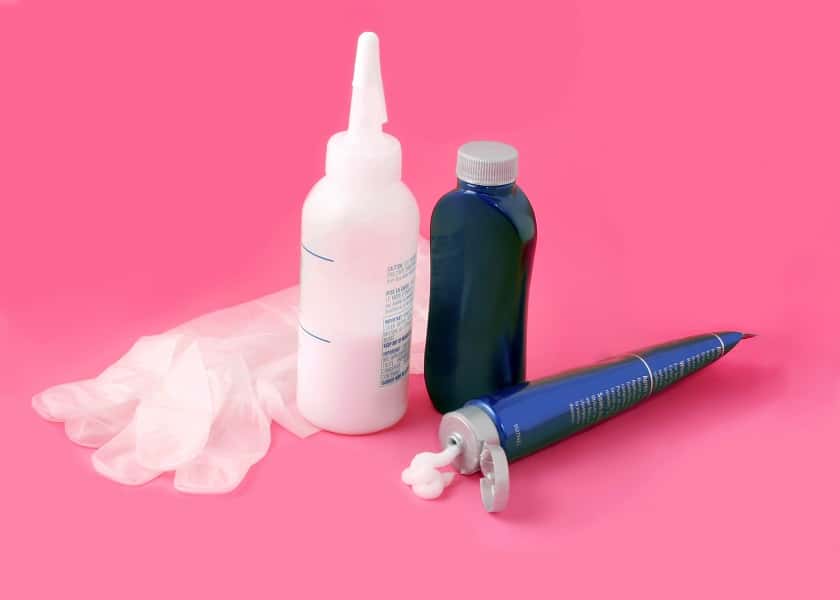
A 30-volume developer is a strong lifter that works quickly. It is a tool for experienced hands, and in practice that means a colorist, not a home experiment. It can lift virgin hair by 2 to 3 levels with dye, and very rapidly with bleach.
- Best For: Off-scalp lightening (like foil highlights, balayage) and lifting highly resistant dark hair.
How 30 Volume Developer Is Used (Mostly by Pros)
⚠️ WARNING
- Do not apply 30 volume bleach to your scalp. It can burn skin and damage hair.
- Colorists use 30 volume for off-scalp work like foils. For roots and scalp, use 20 volume or lower or see a pro.
- Stop right away if you feel strong burning, blistering, or swelling. Rinse with cool water and get medical help if needed.
- Work in a ventilated room. Wear gloves. Use a non metal bowl.
30-volume developer works very fast. Because it creates a rapid chemical reaction, it should never be applied directly to the scalp. It is reserved for thick, resistant dark hair and off-scalp techniques.
- Foil Highlighting & Balayage: Colorists mix 30-volume with bleach powder and paint it onto isolated sections, using foils or balayage film to keep the product separated from the rest of the hair and strictly off the scalp.
- Busting Through Bands: If you have a dark band of old color in the middle of your hair shaft, fixing it requires precise placement to avoid overlap and breakage. It is best done by a professional colorist.
Safety Tips
- A good colorist will not take you from very dark to very blonde in one day. That is how breakage happens. If anyone promises it in a single sitting, walk away.
- Expect at least 2 to 4 weeks between lightening sessions. Your job in between is repair and moisture.
- Use a bond builder or repair mask if you have one. Limit heat styling for a week.
- If your scalp burns, blisters, or stays sore, stop and get medical advice.
Can You Use 30 Volume Developer to Lighten Brown Hair?
Yes, 30 volume developer can lighten brown hair when it is used with bleach or permanent color. But 10 volume and 20 volume are often recommended for lighter hair colors like brown, especially for safer results.
If you want a big change, it is often better to use the right product plan rather than the strongest developer. When in doubt, ask a licensed colorist.
If 30 volume feels too strong for your hair, do not try to “water it down” at home.
The safer choice is simple: buy 20 volume instead. It is more predictable and easier on hair and scalp.
Do not dilute developer with water or conditioner. It can change how the product performs and can lead to uneven lift.
Can You Mix 30-Volume Developer With Hair Dye?
Quick Summary
- Yes, 30 volume can be mixed with permanent dye, but it raises dryness and breakage risk, so colorists treat it as a deliberate step up, not a default.
- On virgin hair, it can lift about 2–3 levels with permanent color, depending on the formula and your starting level.
- Color does not lift color. If your lengths are already dyed, 30 volume + dye will not make them lighter. It may only shift virgin roots.
- For most DIY root work, 20 volume is the safer standard unless the brand specifically instructs otherwise.
30-volume developer (9% peroxide) can be mixed with permanent hair dye, but it is a higher-stress option. It is mainly used when virgin hair needs extra lift and the color formula allows it.
Your result depends on your starting level, hair condition, and whether your lengths are virgin or previously dyed. Timing matters more with 30 volume because it is easier to dry out hair when the processing time is pushed.
When permanent dye is mixed with developer, the dye’s alkaline components open the cuticle so the developer can oxidize the pigment inside the cortex. That allows some lift of natural pigment while the dye deposits a new shade. With 30 volume, that lift can be stronger, but it also makes it easier to end up brassy, dry, or uneven if the timing or saturation is sloppy. That judgment call is exactly what you pay a colorist for.
Do not expect 30 volume + dye to lighten previously dyed hair. If your mids and ends have permanent color buildup, it usually takes a color remover or bleach to remove artificial pigment. Stronger developer with more dye usually means more stress, not more lift.
Mixing ratio: follow the dye label. Many permanent colors are 1:1, but some use 1:1.5 or 1:2. Do not guess ratios.
Safety Notes
Gray coverage note: 30 volume can make coverage look lighter or patchy on resistant grays. 20 volume is the usual standard for solid gray coverage.
Patch test: follow the brand directions, usually 48 hours before.
Strand test: confirms lift speed and tone. It also shows if your hair is too weak to handle 30 volume.
Timing: follow the label. Do not extend time “for extra lift.”
Scalp caution: 30 volume can irritate sensitive scalps. If you feel strong burning or heat, rinse immediately.
40 Volume Developer (12% Peroxide): The Professional Maximum
⚠️ WARNING
- STRONGLY NOT RECOMMENDED to try at home. 40 volume developers should be used by professionals only.
- NEVER apply 40 volume developer to the scalp or roots. It can cause severe chemical burns and blisters.
- If you need to lighten roots, use 20 volume, or see a professional hair colorist/stylist.
- If you feel burning, strong itching, or heat, rinse right away with cool water and see a medical professional.
- Wear gloves. Work in fresh air. Do not use heat or a plastic cap.
- 40 volume developer must be mixed with bleach powder or a high lift permanent color for real lift.
- Using developer alone gives little to no lift on dark hair. It can still cause major breakage.
- For semi-permanent dye, start with gentler removal methods first.
40-volume developer is a professional-strength, highly aggressive chemical. It can lift dark virgin hair up to 4 levels with dye, but it causes rapid, severe damage if misused.
- Best For: High-lift permanent colors on healthy, highly resistant, coarse, virgin dark hair.
When to Use 40 Vol Developer?
40 volume developer is not for everyone. It is usually used when healthy, virgin, dark, coarse hair needs a stronger lift on mid-lengths and ends. It is also common in some high-lift permanent color formulas.
Avoid 40 volume if your hair is already bleached, highlighted, relaxed, permed, heat damaged, or very fine. In those cases, 20 or 30 volume (or a salon visit) is safer.
If your goal is to remove a semi-permanent dye, start with gentler options first. Try a clarifying or sulfate shampoo cap, or a dedicated color remover made for semi-permanent dyes. 40 volume is usually too aggressive for this job and can cause needless breakage.
Ask a stylist about your options and hair type before applying any strong lightener to previously treated hair.
How Professionals Use 40 Volume Developer (Not a Home Method)
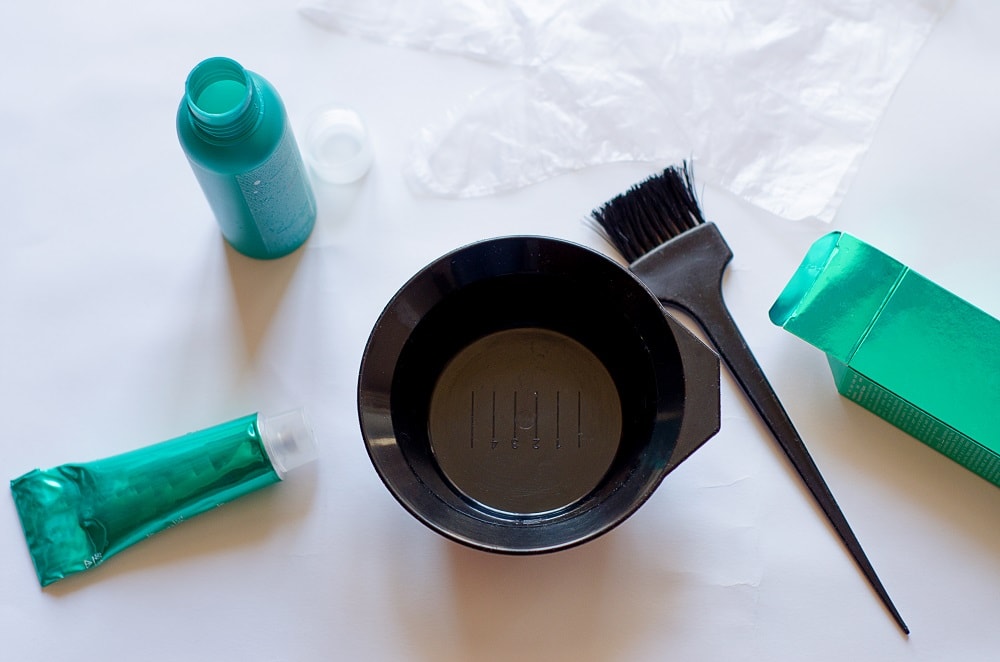
As 40-volume developer (12% peroxide) is an aggressive, professional-strength chemical, it demands a much stricter process. For highly resistant, coarse, virgin dark hair, this is how licensed colorists deploy it, described so you know what you are paying for, not as a home method:
With High-Lift Permanent Color (Safest): Most professionals avoid mixing 40-volume with bleach powder because it degrades the cuticle too rapidly. Instead, the safest way to achieve maximum lift is by mixing 40-volume developer with a professional high-lift blonde permanent dye. In professional hands this can lift virgin dark hair up to 4 levels while depositing tone to neutralize brassiness, but 12 percent peroxide is aggressive and still carries real damage and burn risk, so it is best left to a licensed colorist, who applies it strictly according to the dye manufacturer’s instructions.
Off-Scalp Foil Highlighting (With Bleach): When a colorist does pair 40-volume with bleach powder, it never touches the scalp: the mix is painted onto mid-lengths and ends in foils, with no added heat, constant checking, and a hard stop at the lightener’s maximum processing time. If you are ever tempted to try this one at home, that is your cue to book the salon instead.
Is It Safe to Bleach Twice in One Session?
Stylists do not recommend bleaching twice in the same session or even in the same day. Bleach swells the cuticle and weakens the hair’s structural bonds while stripping pigment. Attempting a second round immediately can cross the line from standard dryness to catastrophic chemical breakage. Give your hair weeks to recover, not hours.
Recommended Waiting Time between Sessions
Most people should wait at least 2 to 4 weeks before bleaching again. If hair feels stretchy, gummy, or breaks when you tug a strand, wait longer and get professional help.
Aftercare for Lightened Hair
Bleach and higher-volume developers alter the cuticle and reduce strength. Aftercare is not optional if you want your hair to stay on your head.
- Wait to wash: If your toner or color system recommends it, wait 48 hours before your next wash.
- Moisture and strength: Alternate between a hydrating mask and a strengthening treatment as needed.
- Avoid heat: Keep hot tools low and limited for at least two weeks, and always use a thermal protector product before any heat tool.
- Cool water: Wash with cool or lukewarm water to reduce dryness and help tone last longer.
Myths Busted: Dangerous DIY Developer Hacks
Myth 1: Developer alone lightens hair
Many tutorials suggest applying straight developer directly to dark hair without bleach or dye. Do not do this.
Developer needs the right alkaline system to work cleanly. Straight peroxide can dry hair and expose underlying warmth without giving a clean lighter result. Always use developer with a properly formulated color or lightener.
If you try it anyway, here is what actually happens. On virgin light brown to dark blonde hair, straight 10 or 20 volume developer can shift the color about one shade at most, and the result leans gold or brassy, because peroxide exposes warm undertones as it lifts. On dark hair it gives little to no visible lift, just dryness, and repeat attempts leave hair brittle.
If a soft, sun-kissed lift is the goal, there are better routes: a colorist can break the base with a quick, controlled formula, and a bleach bath lifts gently with far more predictable results than straight peroxide.
Myth 2: You can dilute hair developer with water
A common hack is mixing 30 or 40-volume developer with water to dilute it. Professionals do not recommend this for bleach work.
Developers are formulated with stabilizers and thickeners to control the reaction and texture. Adding water can make the mix runny and increase drip risk, patchy lift, and scalp contact.
A safer option: If your brand explicitly allows a different strength, follow their directions. Otherwise, buy the correct volume developer for the job.
Myth 3: Baking soda boosts developer’s lift
Some tutorials suggest mixing baking soda into developer for extra lightening. Skip this one. Baking soda is abrasive and alkaline; combined with peroxide it can leave hair rough, porous, and prone to snapping, especially on damaged or previously lightened hair.
If the goal is real lift, use a properly formulated lightener or see a pro. There is no safe kitchen shortcut to a stronger developer.