


Were you one of those teenagers or college students who expected your hair would turn out like a blonde bombshell after bleaching it with hydrogen peroxide?
You probably figured out the hard way, when your hair ended up dry and damaged, that even though using hydrogen peroxide to lighten hair is relatively easy, it doesn’t always deliver the luxurious blonde tresses you were hoping for.
So here is the honest version of how to lighten hair with Hydrogen Peroxide: what it can and cannot do, who should skip it, and the careful way to try it if your hair is a good candidate.
Using Hydrogen Peroxide on Your Hair
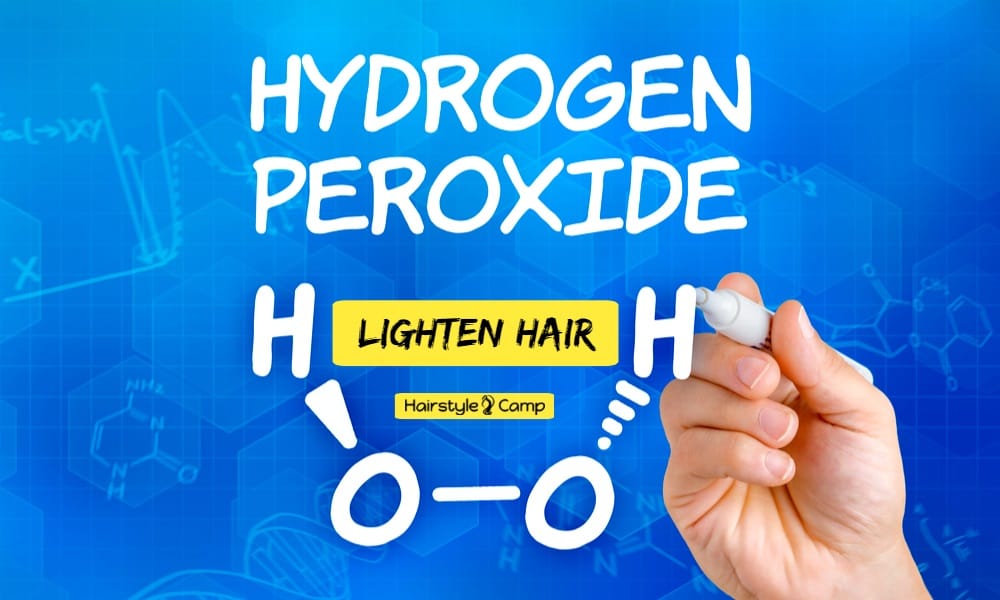
Bleaching hair with peroxide may seem like a simple, no-brainer DIY project, but remember, it does involve chemicals.
A few simple precautions can improve your odds of getting it right and prevent your hair from ending up looking like a haystack.
If possible, get a friend to help you apply the peroxide evenly to your hair, especially in hard-to-reach areas in the back.
If you’ve already got color-treated hair, we recommend going to a beauty salon, because the professionals there can fix and correct mishaps if things go kablooey along the way.
What 3% Peroxide Can Really Do
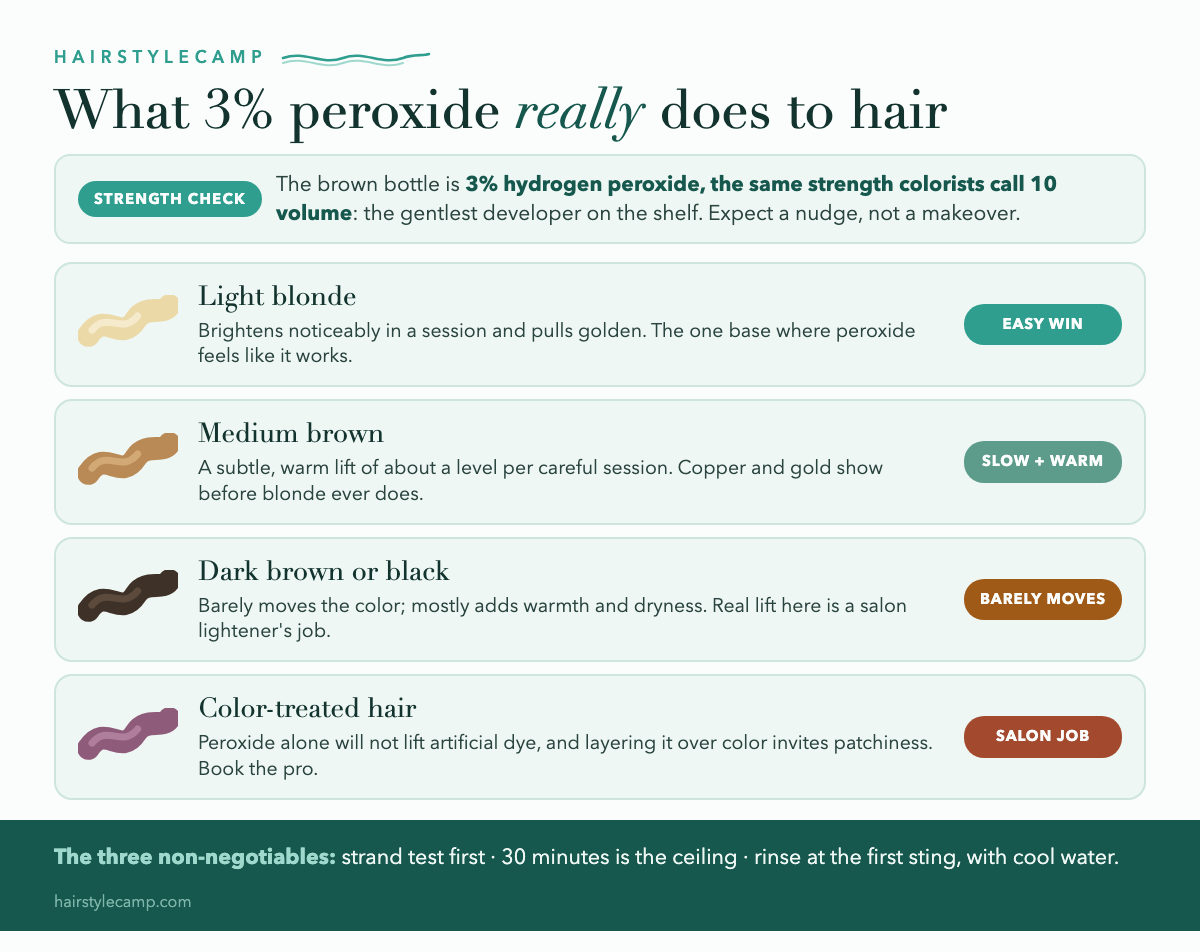
Household hydrogen peroxide is sold at 3%, which is the same strength colorists call 10 volume, the gentlest developer on the shelf. That sets the expectations: a gradual, warm-leaning lift of about one level per careful session, not a transformation.
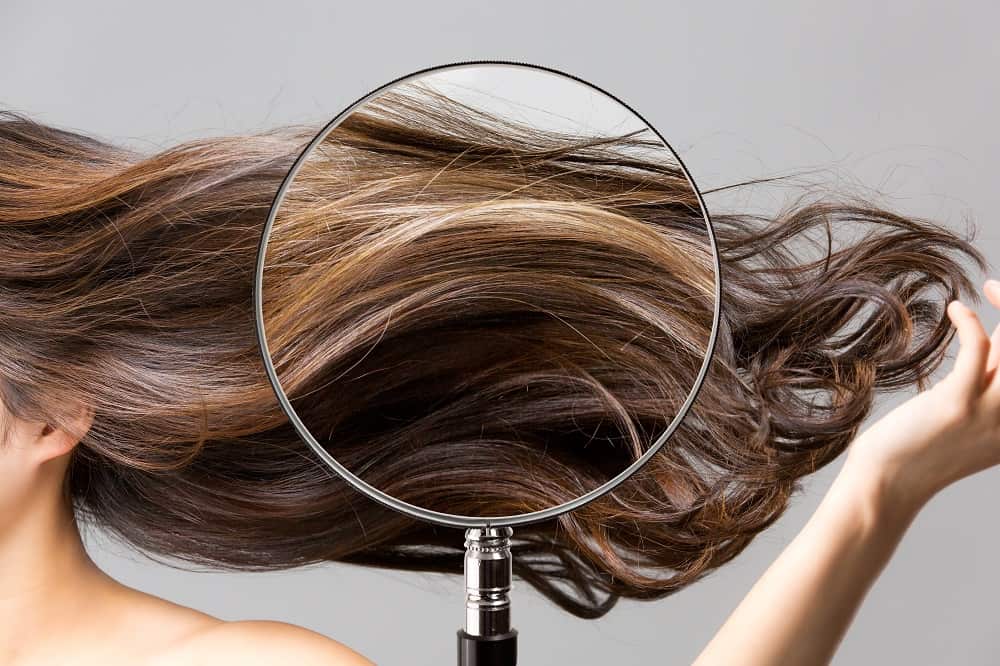
It shows most on light to medium natural bases, where it brightens and pulls golden. On dark brown or black hair it barely moves the color and mostly adds warmth. And on color-treated hair it will not lift the artificial dye at all, which is why colored hair belongs at a salon. For what happens shade by shade, see the stages of lightening.
Items You Need to Lighten Hair with Hydrogen Peroxide
If you’re still determined to apply hydrogen peroxide hair bleach on your own, the first step is to have healthy, untreated hair.
You might want to rethink your plan and hold off for a few months until new, healthy hair grows in, especially if you’re already battling with split ends and breakage, or if you have brittle, color-treated hair.
If you decide to move forward, then be sure to have all your tools and materials ready. They include:
- Hydrogen Peroxide 3%
- An old towel to cover your shoulders
- Spray bottle (for applying peroxide to large sections of hair)
- Plastic gloves
- Comb
- Clock or watch (to keep track of the time)
- Small rubber bands (to keep your test strands together)
- Hair clips (to separate large sections of hair)
- Hair dryer (optional)
- Cool water (for the final rinse; hot water adds dryness)
- Gentle shampoo and a deep conditioner (clean hair to start, moisture to finish)
For Highlights Only (in addition to the above items)
- Small bowl (to dip a brush in for highlights and for strand test)
- Small brush or toothbrush (for applying highlights)
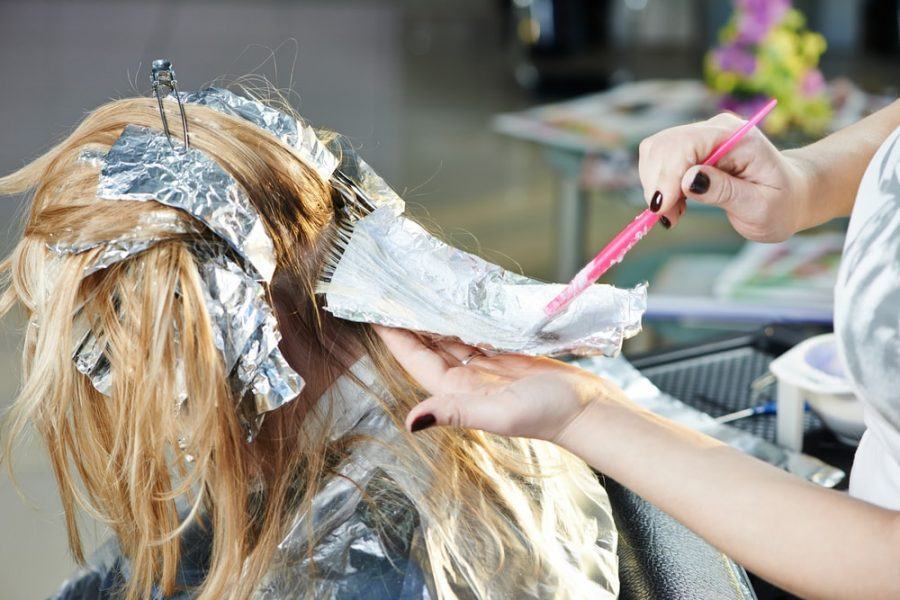
- Aluminum foil (to keep dyed hair separate from rest of the hair.)
How to Lighten Hair with Hydrogen Peroxide

- Shampoo and towel dry your hair, leaving it slightly damp, but skip the conditioner for now; its film can block an even lift. Place the towel around your shoulders.
- Put on gloves and pour the peroxide into the spray bottle or the bowl.
- Dip your hair strands into the bowl of peroxide to do the test sample. The longer you leave the peroxide on, the lighter your hair will become. Fifteen minutes is usually long enough to get an idea. Do not leave peroxide on longer than needed, and stop sooner if your scalp stings or the strand starts to feel brittle.
- Once you have confirmed, via your strand test, the optimal length of time to keep the hydrogen peroxide in your hair, you’re ready to begin applying the rest. Use clips to section off hair as necessary. If you are just highlighting individual sections, wrap those areas with aluminum foil to protect the rest of the hair from being lightened.
- Avoid contact with the face, eyes, and skin. If a few drops land on you, wipe them off and rinse the area with water right away. If you notice stinging, redness, or irritation, rinse thoroughly and stop.
- Resist the urge to rush it with heat. If you do reach for a hairdryer, use the lowest setting, hold it well away, and keep it brief; heat speeds up the reaction and the dryness in equal measure, and patience gives the more even result.
- Once you’ve achieved the desired shade, or at 30 minutes, whichever comes first, rinse thoroughly with cool water. Rinsing is what ends the session; cool water does not neutralize peroxide, but hot water does add dryness. Here is the full answer on hot versus cold rinsing.
- Immediately after rinsing, apply a generous amount of conditioner to moisturize your hair. Leave it on for at least 5-6 minutes, and then rinse again thoroughly.
Maintenance
When you use hydrogen peroxide to lighten hair, it’s essential to nourish it and keep it healthy afterward.
Wash no more than twice a week with a gentle, hydrating shampoo and conditioner. Save the clarifying wash for an occasional reset rather than the routine; freshly lightened hair needs moisture, not stripping.
If possible, also apply a hot oil treatment at least once a week for extra moisture, strength, and shine.
Used with modest expectations, household peroxide is an inexpensive way to coax out the blonde and copper tones already in your natural hair. If you want an even gentler nudge, chamomile lightening is the low-stakes cousin.
When you take a few extra minutes to do some preliminary strand testing, you’ll increase your chances of achieving a successful result at a fraction of the cost.


Leave a comment