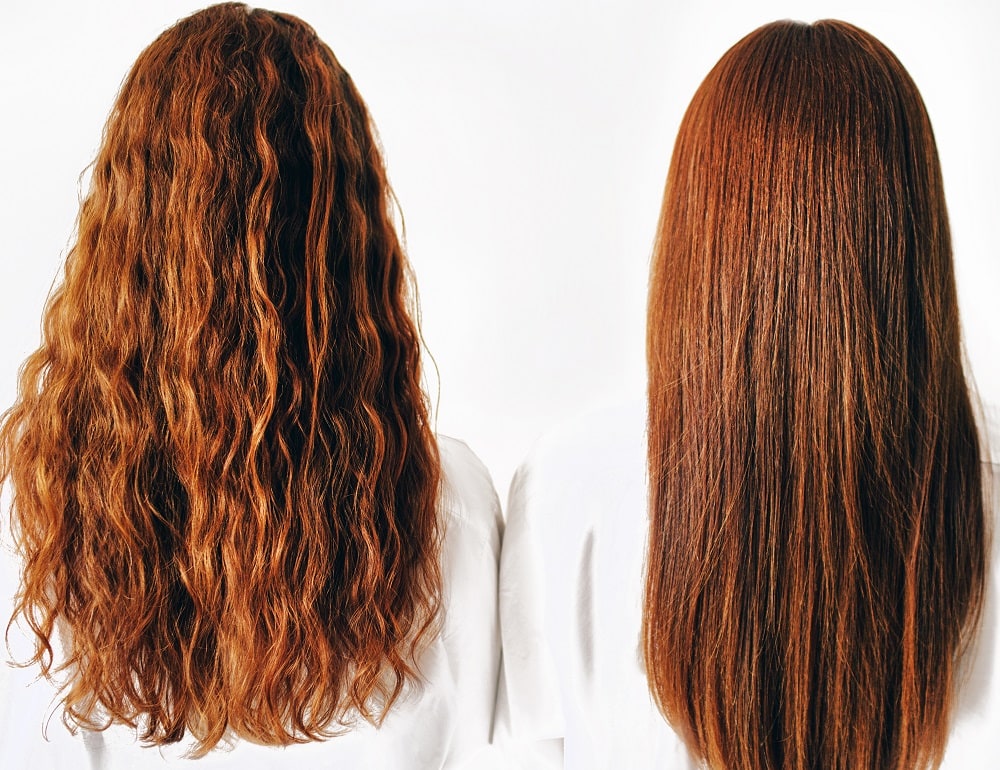


Getting a perm is one of the best ways to express your personality. But you need to understand acid perm vs. alkaline perm before you start. The wrong choice can damage hair fast.
Today, we’ll cover who each perm is for, how each one works, and the key differences.
Key Highlights
- Colored, highlighted, or fragile hair: An acid or acid-balanced perm is often the gentler choice.
- Thick, coarse, resistant hair: An alkaline perm can give a stronger, tighter curl.
- Time: Acid and acid-balanced perms usually take longer. Total salon time can be 3+ hours, depending on wrap and hair length.
- Safety: Ask for a patch test and a strand test before any perm, especially if your hair is bleached or you have had skin reactions. A perm on bleached hair is not recommended at all; the result can be what stylists call a chemical cut, where the damaged lengths simply break off. One more rule from the salon: every perm needs a long final rinse of at least 10 to 12 minutes. A short rinse leaves the perm smell in the hair, and any solution left behind can make the curl drop or keep the perm from taking at all.
Nearly four decades behind the chair have taught licensed cosmetologist and colorist Andrea Torre to make the acid-or-alkaline call on the hair in front of her:

The non-negotiable rule in my salon for choosing acid versus alkaline is the structural integrity and porosity of the hair before the service.
Color-treated, highlighted, or fine and fragile hair, or a cuticle that looks visually damaged to the eye, needs an acidic perm solution, no higher than 6 or 7 on the pH scale. Hair with a previous perm still in the mid-lengths and ends is always acid too.
Virgin or resistant hair calls for an alkaline perm, starting at about 8.
How Do Perms Work?

A perm, or permanent wave, is a chemical hair service that changes your natural texture into waves or curls.
Depending on the type of perm, the process uses an acid or alkaline solution to reshape the hair. Then a neutralizer is applied to set the new shape by reforming the bonds. (A neutralizer is often a hydrogen peroxide solution.)
Acid Perms
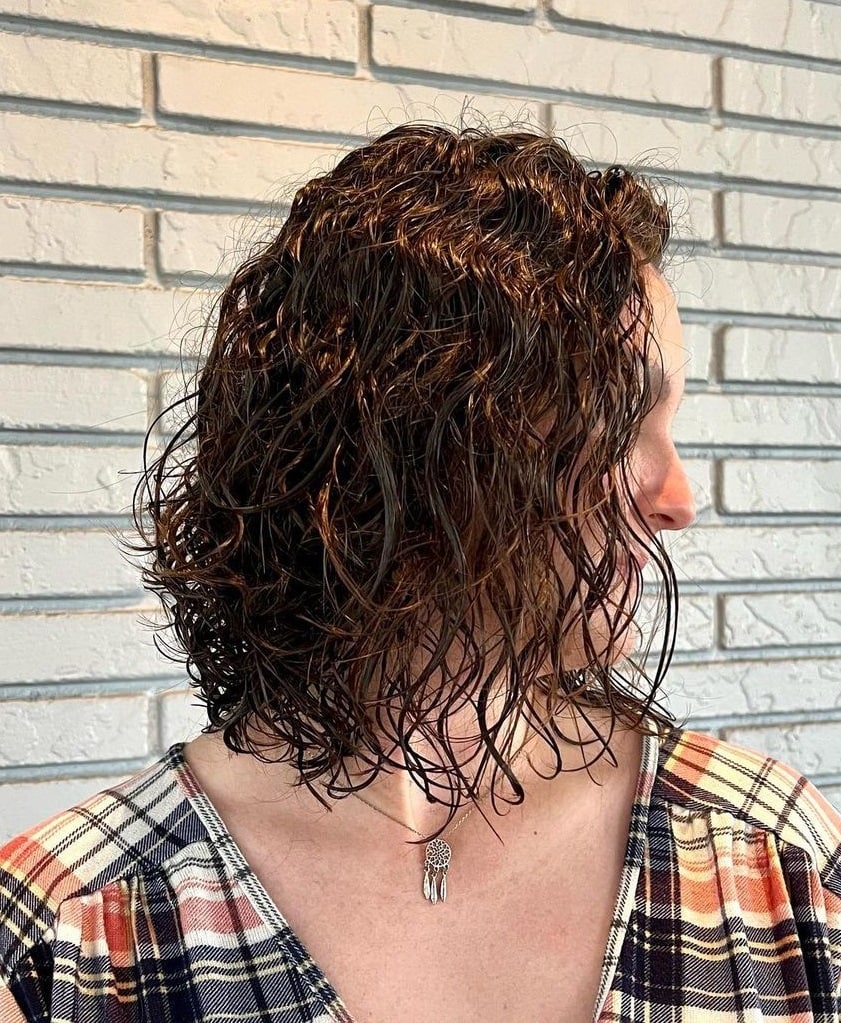
Acid perms use glyceryl monothioglycolate (GMTG) to break some of the disulfide bonds in keratin.
Important: A true “acid wave” is often endothermic, which means it may need added heat to process. Many modern salon “acid” perms are actually acid-balanced and may process at room temperature.
Acid perms create softer curls than alkaline perms. They suit people who want a natural wave, not a tight curl.
They also tend to process slower than alkaline perms. The chemical processing time is longer, and the total salon visit can be 3+ hours, depending on your wrap, hair length, and thickness.
Acid perms often hold around 3 to 4 months, depending on hair type and aftercare.
After the waving lotion processes, your stylist applies a neutralizer to reform the bonds and lock in the curl pattern.
Who Should Get an Acid Perm?
Acid perms are often a better match for hair that needs a gentler approach, such as:
- Fine to medium hair that goes limp easily
- Porous, dry, fragile, or previously permed hair
- Colored or highlighted hair (an acid or acid-balanced option is usually safer than an alkaline perm)
- People who want softer waves and worry about breakage from stronger formulas
Those with very damaged hair may also prefer gentler options such as a digital perm, depending on hair condition and salon technique.
Acid Perm Pros and Cons
- Often ammonia-free, so the smell can be milder
- Colored hair note: Acid and acid-balanced perms are often the gentler choice for colored, highlighted, or fragile hair. Any chemical process can slightly fade color. But using a strong alkaline perm on already colored or bleached hair can increase the risk of severe breakage and lasting damage.
- Allergy warning: The active ingredient used in many acid perms, glyceryl monothioglycolate (GMTG), is a known trigger for allergic contact dermatitis. Ask your stylist for a patch test before treatment. Some reactions can be delayed, and research has found GMTG or related allergen activity can persist in permed hair for months in sensitized people. Source. Learn symptoms of contact dermatitis here: NHS, MedlinePlus.
- Usually gentler than alkaline perms, but still a chemical service that needs care and good timing
- Often pricier. Costs can reach $250 per session
Safety Notes
- Patch test first: If you have ever had a rash from hair products, ask for a patch test. Patch testing is also how dermatologists identify allergy triggers. AAD
- Strand test: Ask your stylist to test one small section, especially if your hair is bleached, highlighted, or very porous.
- Watch for symptoms: Itching, redness, swelling, weeping, or blisters can be signs of contact dermatitis. If this happens, rinse the product off and get medical advice. Mayo Clinic
- Do not DIY on damaged hair: If your hair is heavily bleached or already breaking, a salon consult is the safer route.
Disclaimer: This guide is for general hair styling education. For skin symptoms or allergy concerns, speak with a clinician or dermatologist.
Alkaline Perms
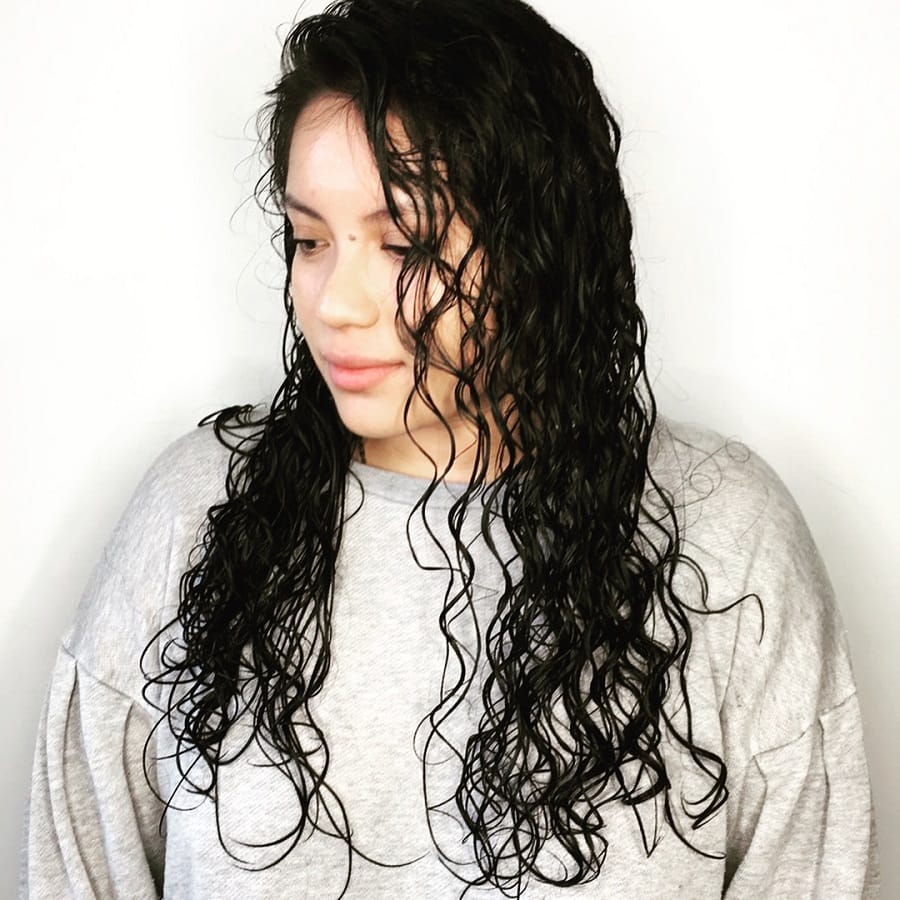
Alkaline perms, also called cold perms, are popular because they are faster and often give a firmer curl.
An alkaline perm lotion uses a base like ammonium thioglycolate to curl your hair. It can have a pH around 9.5, which makes it strong and more likely to stress the cuticle if your hair is already fragile.
This type of perm swells the hair and lifts the cuticle so the solution can work quickly. Processing time is often shorter than acid perms.
After treatment with alkaline perm lotion, your stylist applies a neutralizer like hydrogen peroxide. This helps reform the bonds and set the curl pattern.
Who Should Get an Alkaline Perm?
If you want more defined curls, an alkaline perm can be the better match.
Alkaline perms are best for thick, coarse, resistant, or very straight hair. Virgin hair often holds the strongest result because it has not been weakened by bleach or repeated color.
Pros and Cons of an Alkaline Perm
- Often cheaper than acid perms. Around $150 per session
- Often lasts longer than acid perms. Many people get up to 6 months
- Can have a stronger odor
- Harder to get a subtle wave. The curl is usually more defined
Acid-Balanced Perms

The acid-balanced perm is also worth knowing about.
It sits between acid and alkaline in many salons. Many formulas are closer to neutral, often around pH 7.8 to 8.2.
Acid-balanced perming blends qualities from both types. It may not need added heat, yet it can create a firmer wave than a true acid perm.
Like other perms, you still need a neutralizer step to reform the bonds and lock in the curl.
Who Should Get an Acid-Balanced Perm?
If you have porous or damaged hair but want a stronger result than a soft acid wave, an acid-balanced perm may be a smart middle option.
Acid Perm vs. Alkaline Perm
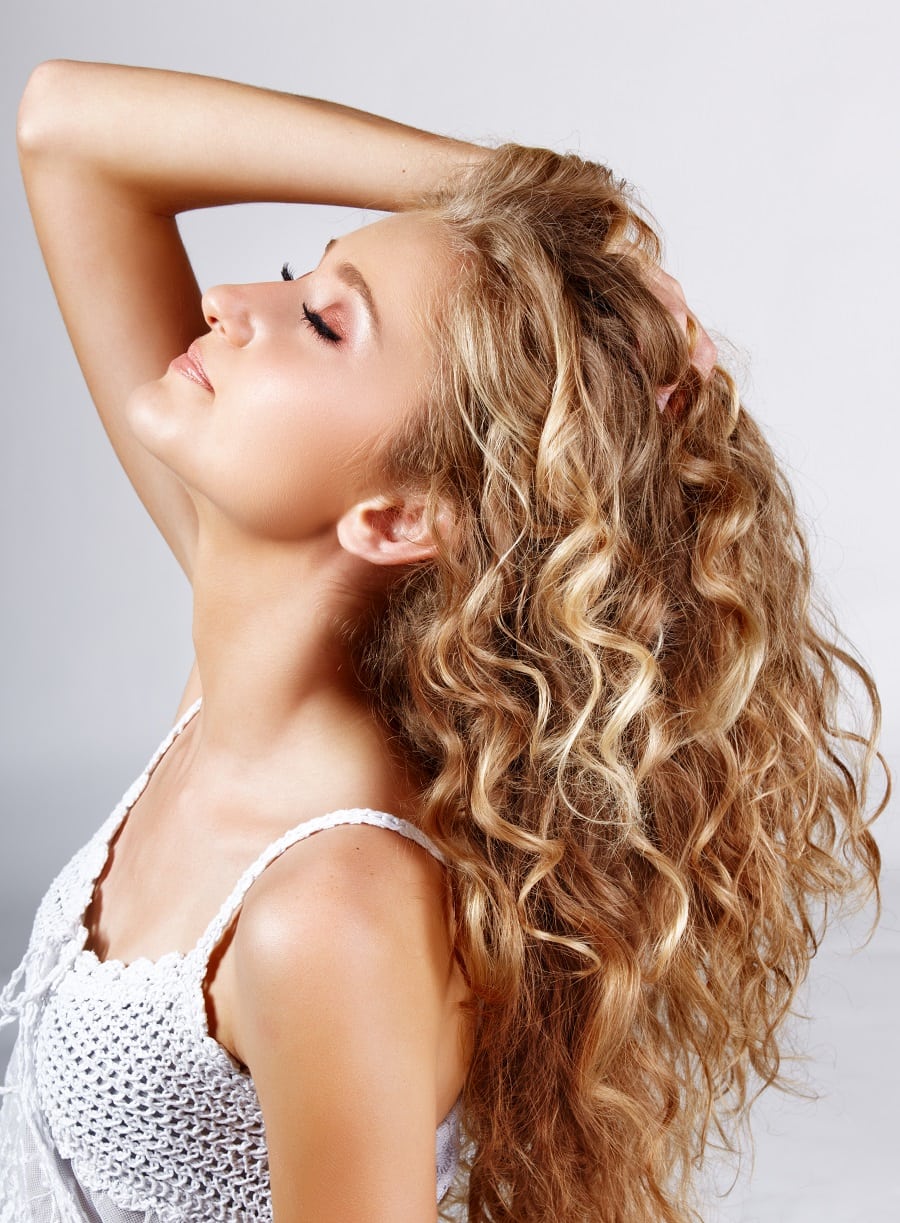
Based on the process, results, and feel, here are the main differences between acid and alkaline perms:
1. pH Level
- Acid Perm: Lower pH (often around 4.5 to 7.0)
- Alkaline Perm: Higher pH (often around 8.0 to 9.5)
2. Hair Type Suitability
- Acid Perm: Often suits delicate, porous, colored, or damaged hair
- Alkaline Perm: Often suits normal, thick, or resistant hair
3. Result
- Acid Perm: Softer, more natural-looking curls or waves
- Alkaline Perm: Firmer, more defined curls
4. Processing Time
- Acid Perm: Longer processing time, and longer total salon time
- Alkaline Perm: Shorter processing time
5. Smell
- Acid Perm: Milder odor for many formulas
- Alkaline Perm: Stronger odor for many formulas
6. Strength
- Acid Perm: Often gentler on the hair
- Alkaline Perm: Stronger and more aggressive on the cuticle
7. Curl Type
- Acid Perm: Subtle, soft curls and waves
- Alkaline Perm: Dramatic and defined curls
So, based on these differences, here are the simple takeaways:
- Acid and acid-balanced perms are often best for fine, fragile, colored, or porous hair.
- Alkaline perms are often best for thick, coarse, resistant hair and for tighter curls.
- If you want strong curls but your hair is damaged, ask your stylist if an acid-balanced perm is a safer middle option.