
There is a sentence I hear in the clinic more often than any other. My hair just does not grow.
It is almost never true. In most of the women who say it to me, the hair is growing at a perfectly ordinary rate. It is being lost at the ends faster than it is made at the scalp, so the length never gets the chance to show.
That means this is rarely a growing problem. It is a keeping problem, and the difference is expensive. Mistaking one for the other sends women with textured and Afro hair toward products that cannot help, and away from the handling changes that would.
The mix-up survives because of the belief I spend the most time correcting: that textured hair is the toughest and strongest hair there is, so it should withstand plenty of pulling and bending. This is quite far from reality.
Strand for strand, textured hair is the most fragile hair on any head. It breaks at lower force, holds less moisture, and tangles far more easily than straight hair, and the reasons live in its structure, which is exactly where I want to begin.
This is not a fault. It is a reminder that textured hair needs a little TLC to keep it in good shape, and that the length so many women are chasing is not waiting on a stronger product. It is waiting on gentler handling.
It begins with the follicle, not the strand
The coil in textured hair is not a property of the hair itself. It is decided below the surface, by the shape of the follicle that produces it.
Curly and coily fibers are generated by curved follicles, which carry a retrocurvature at the bulb and come out of the scalp at an angle rather than straight up. Think of it like a mold: a curved channel can only ever produce a curved fiber.
The cross section differs as well. African textured fibers have an elliptical cross section with a low to moderate diameter, and they vary in thickness along their own length, while straighter fibers tend to be rounder and more uniform.
This matters more than it sounds. A round fiber resists bending equally in every direction, while a flattened one bends far more easily along its narrow axis, and that is what allows the strand to fold into a tight coil in the first place.
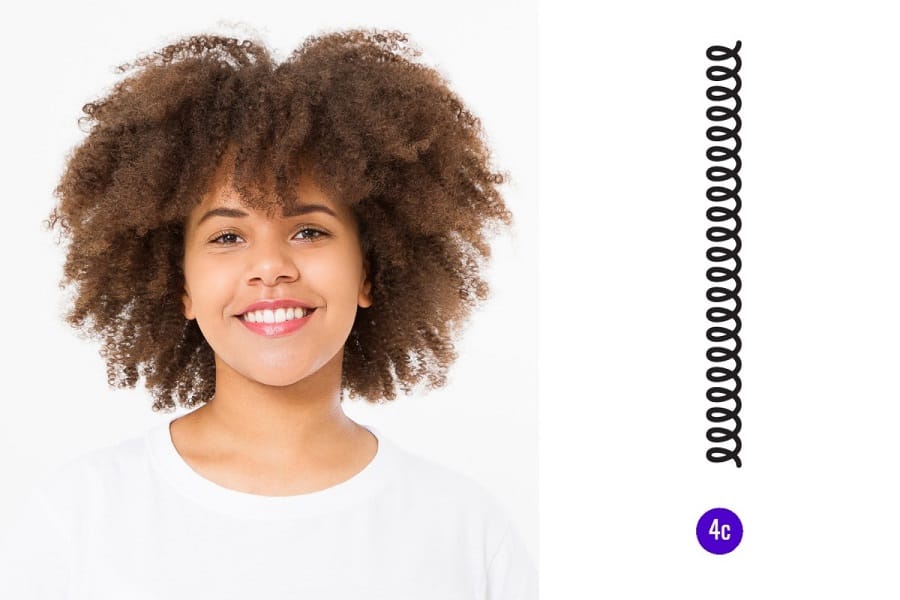
If you have never placed your own pattern, it is worth knowing where you sit among Type 3 and Type 4 textures and within the 4A, 4B, and 4C range, because the handling changes as the coil tightens.
Why the coil creates points of weakness
Every place a strand changes direction is a place where force concentrates. A tight coil has a great many of those places along one single hair.
The coiled, elliptical structure is also thought to impair the distribution of sebum down the shaft. Your scalp produces oil normally, but that oil struggles to travel around each bend, so the mid lengths and the ends are left far drier than the root.
Laboratory work supports what people report in the mirror. African hair has been shown to have lower moisturization and less radial swelling when exposed to water, compared with Asian or Caucasian hair.
The consequence is measurable. Textured fibers have a lower breaking stress and a lower breaking elongation, and they knot and tangle more readily, which is exactly the combination that punishes rough handling.
Understanding high and low porosity helps here, because how readily your hair takes in and holds water changes what your routine needs to do.

Curly hair fragility is not a defect. It’s genetics, just how the hair is formed during fetal development.
Think of it like natural hair color; some people are born with red hair while others have jet black hair.
Neither of them would say that their hair is defective because it is different from the other person. The same goes for fragility as a trait. What makes it stand out is how we style our hair.
We use styles that strain the hair fiber, causing damage and loss. Without this, curly hair fiber is as good as any other hair fiber, and hair does grow to its fullness.
The truth about fragility
Here is the part of the research I most want people to hear, because it changes what you do on wash day. The fragility is real and we are born with it, but most of the weakness people live with day to day is added on top of it.
When researchers examined why natural, untreated African fibers test weaker, they concluded that the weakness is consistent with mechanical stress accrued from grooming a complex physical structure, and not entirely from structural abnormalities in the hair itself.
That distinction matters. You can’t change the shape of your follicle, and you don’t need to, because the part doing most of the damage is the part that is already in your hands.
It also explains why the same head of hair behaves so differently in different hands. Nothing about the fiber changed, only the handling did.
What the numbers actually say about density and growth
Follicle density does differ between populations. One trichoscopic study of a healthy American population measured roughly 169 to 177 hairs per square centimeter in African American participants, against around 280 in Caucasian participants.
I want us to be careful with that figure, because it is routinely misread. Fewer follicles per square centimeter is a normal baseline, it is not a deficiency and it is not a sign of loss.
Growth rate has also been reported as slower in African hair than in Asian or Caucasian hair. Even so, slower growth is nowhere near enough to explain hair that seems to sit at the same length for years.
The real gap is retention. Growth happens at the scalp and is fairly steady, while length is kept or lost at the ends, and the ends are where textured hair is most vulnerable.
So the honest question is not how do I make my hair grow. It is almost always how do I stop losing what I have already grown.
When a client insists that their hair does not grow, we check several things first before making that conclusion. First, how is their hair care routine? If the hair care routine involves aspects such as tension, excessive heat, or overprocessing, then the problem is not growth but retention.
Retention is how long your hair strands stay on your scalp without mechanical or man-made breakage. Growth is how much hair emerges on the scalp from the hair follicle.
Think of it like a plant. A plant will grow normally from the soil. But if we keep pruning its head, then it will never grow tall to its determined end; the roots will stay in place and continue supporting the plant throughout its lifetime.
Unless there are systemic causes like deficiencies, hormonal shifts, or scalp conditions that would stop or slow down the predetermined hair growth rate, then the reason the hair is not getting to its full length is normally due to lack of retention.
Where the damage actually comes from
When I trace breakage back to its source, it almost always sits in one of three places.
Heat
Heat styling disrupts the bonds that hold the curl, and repeated exposure produces irreversible bond weakness, which we see in the mirror as a curl pattern that no longer returns. Once a section stops reverting after washing, that change is not coming back.
Mechanical handling
Combing dry, working from the roots down, pulling through knots, and daily manipulation do more damage than most people believe. A coiled fiber that is already dry at the ends has very little margin for force.
Several of these habits are so normalized that nobody questions them, which is why it is worth reviewing the common natural hair mistakes that quietly cost length.
Chemical processing
Chemical straightening alters the fiber permanently, and it belongs in the hands of a licensed professional rather than being attempted at home.
A study of Ghanaian women compared natural, styled, and chemically relaxed hair, and found that relaxing involves removal of the protective fatty acid layer on the shaft, leaving the hair more penetrable to water and more prone to swelling and structural compromise.
That same study found the cuticle surface itself differed by grooming method, with natural unstyled hair showing the smoothest scale margins. The hair keeps a record of how it has been handled.
As much as mechanical handling, heat, and chemical processing all cause hair damage, excessive heat use is the most rampant cause of hair damage. I attribute this to the need of women with curly hair to “tame” the hair every so often in the quest to make it easy to manage. The use of blow-drying with excessive heat ends up causing more harm than good.
Color processing could also cause as much damage if over-processing happens. I would place it under chemical processing as well.
Two conditions worth recognizing early
Most textured hair concerns are handling problems. A few are medical, and these two deserve to be known by name, because both do far better when they are caught early.
Traction alopecia
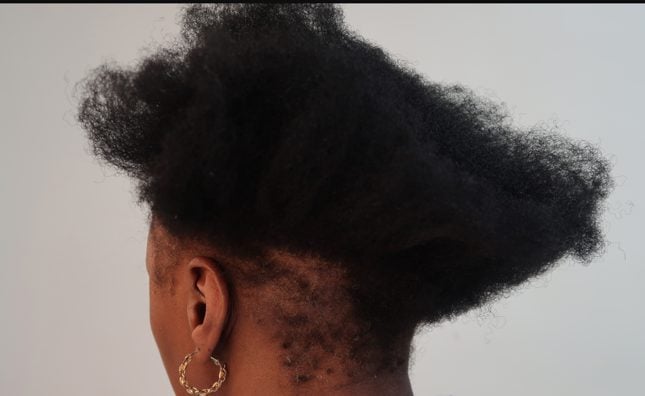
This is hair loss caused by sustained pulling. It is estimated to affect about one third of women of African descent who wear high tension styles over long periods, and the risk increases when chemical relaxing is combined with tension.
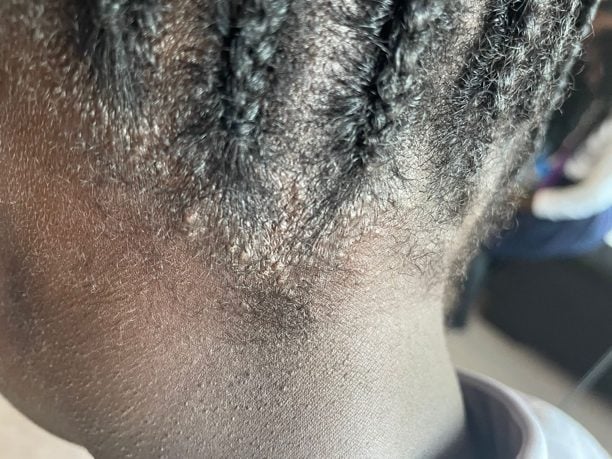
The warning sign is refreshingly simple, and trichologists give the same advice: if a hairstyle feels painful, it is too tight. Tenderness, small bumps along the hairline, and a hairline that is quietly retreating are all worth acting on.
Caught early, the tension can be removed and the follicles usually recover. Left for years, the damage can become permanent, and that is exactly why I would rather see someone too soon than too late.
Central centrifugal cicatricial alopecia
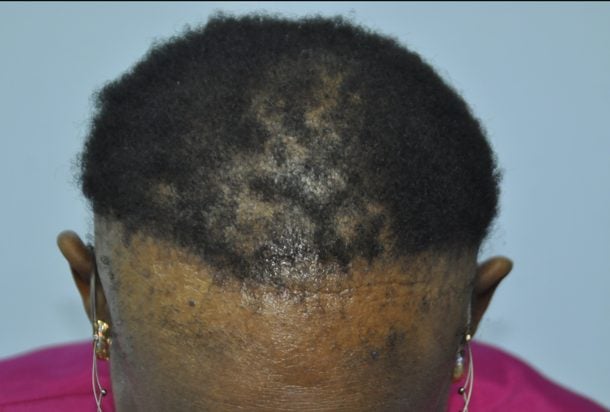
CCCA is a scarring hair loss that mainly affects women of African descent, with a reported prevalence of two to seven percent and a mean age of onset around thirty six years.
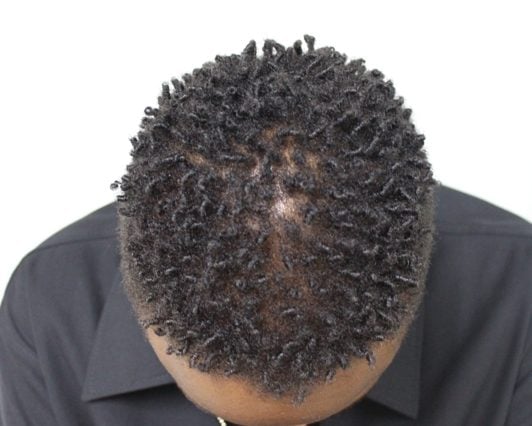
It typically begins at the crown and spreads outward in a symmetrical pattern, and it may be preceded by mild burning, tenderness, or itching in the affected area.
The reason I raise it here is that it is a scarring condition, so follicles that are lost do not return. Early assessment by a hair specialist genuinely changes what is possible, and any persistent tenderness or thinning at the crown deserves that appointment rather than another product.
Most people dismiss the burning sensation on the scalp and just being tenderheaded. The unending itch and the progressive reduction in density is mostly confused for fungal infection, which, as most clients say, only needs that antifungal shampoo and it will go away. Any of these signs, especially if they have been for weeks, need to be addressed before hair loss becomes imminent
What actually protects textured hair
The good news is that the care that works is not complicated or expensive. It is mostly about reducing force and keeping moisture in.
Wash, do not avoid washing
The belief that washing dries out textured hair has done real harm. Weekly gentle cleansing has been shown to regulate the scalp environment and reduce product buildup, which is the opposite of the problem people fear.
It also helps to know the difference between product buildup and dandruff, because the two look similar and call for different responses.
Detangle with water, product, and patience
Detangling dry is where a great deal of length is lost. Work on wet or damp hair with a conditioner that gives real slip, in small sections, starting at the ends and moving up.
Keeping the mid lengths and the ends conditioned matters more in textured hair than almost anywhere else, given that scalp oil is slow to reach them, and a simple regular moisturizing routine does most of that work.
Use protective styles, and respect their limit
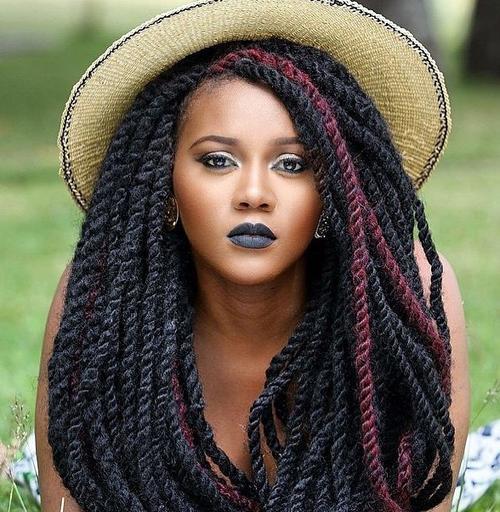
Braids and twists genuinely help, because they reduce friction between the strands and help the hair hold its moisture. Styles like two strand twists let the hair rest from daily handling.
The limit is tension, and it is not negotiable. A protective style installed too tightly stops being protective the moment it is put in, no matter how neat it looks.
The same care applies during a change of routine, including the months of transitioning to natural hair, when two different textures meet along one strand and that meeting point becomes the weakest part of the hair.
A realistic weekly routine for someone with coily hair would include:
- Before shampooing, use a wide-toothed comb and a conditioner to detangle the hair. Start detangling from the tips towards the roots.
- Shampoo the hair once a week with a sulfate-free shampoo that does not deplete the hair of its natural oils.
- Use a deep conditioner that has both moisture and protein in it to nourish the deeper layers of the hair strand with moisture and structural support.
- Keep the hair in breathable styles, such as two strand twists, or simply worn loose.
- Use a moisturizing product, which could be a leave-in treatment or a hair oil, to spruce up the hair every day and maintain the curls.
The scalp underneath
Textured hair conversations focus almost entirely on the strands, and the skin they grow from gets forgotten, particularly during long protective styles.
The scalp is skin, and it needs cleansing, moisture, and air like any other skin. During braided or twisted styles it still sheds and still collects product, which is why caring for 4C coils has to include a plan for the scalp and not only for the hair.
For those of us on braids and twists, keep them no longer than 3 weeks. This prevents excessive buildup. Also, as the hair gets new growth from the base of the braid, the braid starts to pull on the scalp, and this causes tension.
Use light products such as leave-in treatments to moisturize the hair in braids and avoid heavy products, as this will only cause buildup.
When to see a professional
Ordinary breakage and dryness are handling problems, and handling problems respond to changed handling. Some situations need trained eyes sooner.
I would encourage anyone to be assessed if the hairline is receding or thinning, if there is tenderness, burning, or itching that persists, if thinning is spreading outward from the crown, if bald patches appear, or if the scalp is scaling or sore.
A dermatologist assesses and manages the medical side, and with scarring conditions like CCCA the timing of that visit matters. A trichologist works alongside, on the hair and scalp themselves and on the daily handling that decides how much length you keep.
The earlier you manage hair loss, the better. I highly recommend that you seek specialist intervention at the earliest time you notice any symptoms. However, even with that being said, the next best time is now.
When the hair loss has significantly progressed, we can still work towards ensuring that you do not lose any more hair; we support the existing growth and manage the scalp to create a conducive environment for the existing hair to thrive.
Textured hair is not difficult, nor is it an abnormality. Once you understand and listen to your hair, it becomes a step closer to achieving your hair goals. Handle it gently, keep water and conditioner in it, refuse any style that hurts, have your scalp checked as soon as you feel something amiss on it, and most of what people chase with products arrives on its own.