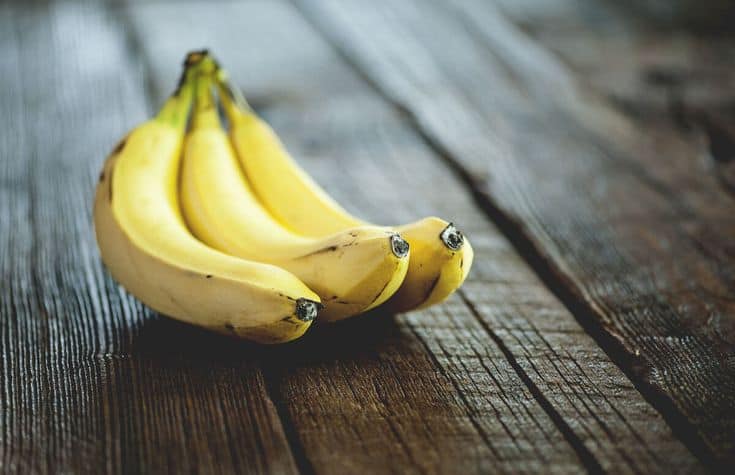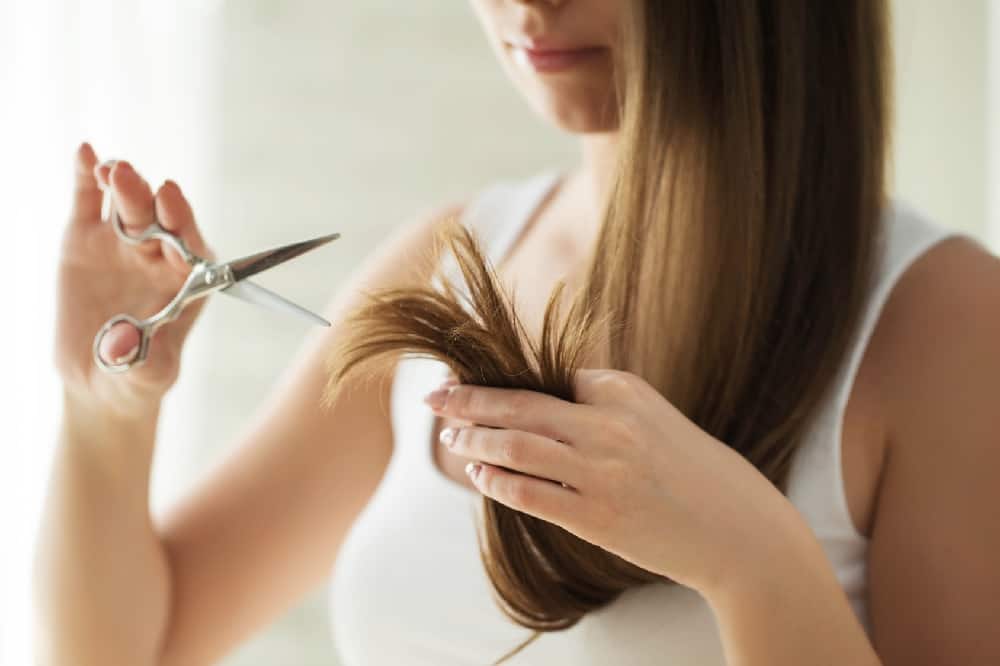


If your hair has been feeling like straw lately, you do not need a cart full of products. The fix may already be sitting in your kitchen, if you know which ingredients are worth your time.
A few of them have real research behind them. Coconut oil has been shown to reduce protein loss in hair, honey is a well-documented moisturizer in skin care, and aloe vera may help skin and hair hold on to moisture. Those three earn their place in almost any DIY mask.
Others are trusted by stylists more than by scientists. Olive oil, avocado, banana, and vinegar rinses can leave hair feeling softer and easier to detangle, but researchers have not properly tested them for this yet. And two things you may have heard are myths: no mask can mend a split end (only a trim can do that), and nothing in your kitchen has been shown to make hair grow faster.
A few things stylists repeat all day: work masks into damp, towel-dried hair, not dripping wet or bone dry. Keep the richest layers on your mid-lengths and ends, the oldest part of your hair. And a warm towel over a mask does more for softness than an extra half hour ever will.
Below are 7 easy homemade natural hair moisturizer recipes, each labeled with the hair it suits: richer masks for thirsty, high porosity hair, lighter mixes and a daily spray for fine or low porosity strands, plus a protein boost and a clarifying rinse for the weeks when conditioner stops pulling its weight.
Safety Notes
- Natural ingredients can still trigger skin reactions. Test on a small spot 24 hours before you use any mix on your scalp or hair. Check how to patch test at home
- Do not store DIY masks made with food. Throw away leftovers.
- Rinse right away if you feel burning, itching, or swelling.
- Never leave masks containing raw food (egg, dairy, fruit) on your hair overnight. Wash them out thoroughly within 30 to 40 minutes to prevent bacterial growth.
- For egg masks, pasteurized eggs are the safer choice; see the note in recipe 6.
Jump to a recipe: 1. Avocado and honey mask · 2. Banana, almond oil and honey mask · 3. Honey and olive oil syrup · 4. Coconut oil treatment · 5. Aloe and glycerin leave-in spray · 6. Egg and honey strength mask · 7. Apple cider vinegar rinse
Not sure which to pick? A hair floating or sinking in a glass of water is not a definitive porosity diagnosis. Consider colour history, condition and observed wetting, drying and buildup when choosing care, rather than using a float test to decide which recipe to try.
If your hair feels like straw no matter what you try, start with our porous hair fix guide, and for the order to layer moisture products in, see LOC vs LCO.
One more thing before the recipes: for most textured and curly hair, dermatologists suggest washing about once a week or every other week, with conditioner every wash. A deep moisture mask fits naturally into that wash day; keep the egg mask to once or twice a month.
1. Avocado and Honey Mask
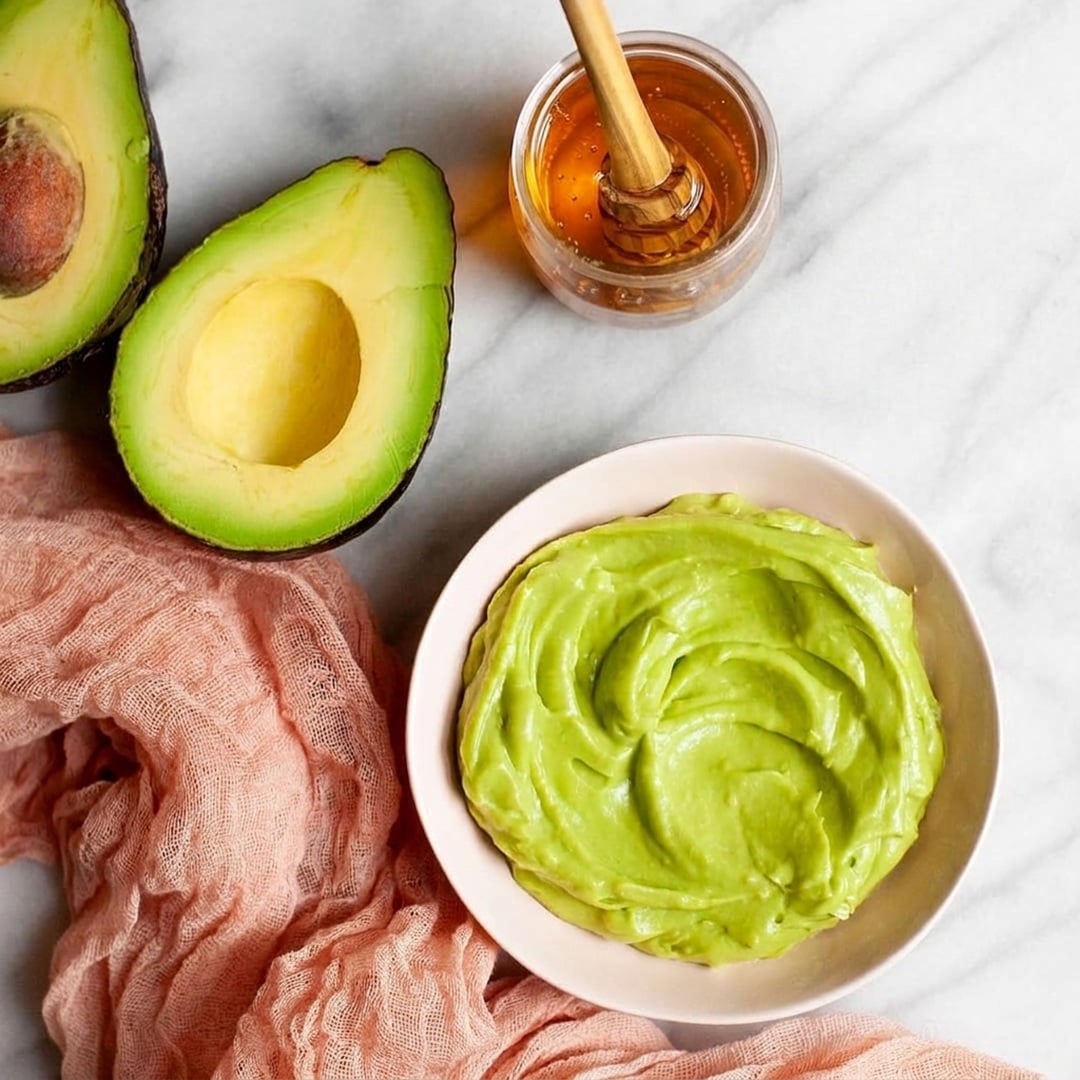
Best for: dry, medium porosity hair
Ingredients
- 1 small ripe avocado
- 2 tablespoons honey
- 2 tablespoons olive oil
Steps
- Mash the avocado in a bowl until completely smooth.
- Stir in the honey and olive oil until it looks like a green cream.
- Push the mix through a sieve. Leftover fruit bits are hard to rinse out.
- Apply to damp, shampooed hair from mid-length to ends.
- Wait 20 to 30 minutes, rinse well, then condition.
Honey is a natural humectant, which means it helps draw and hold water. Make a fresh batch each time; this is a food, not a product.
2. Banana, Almond Oil and Honey Mask
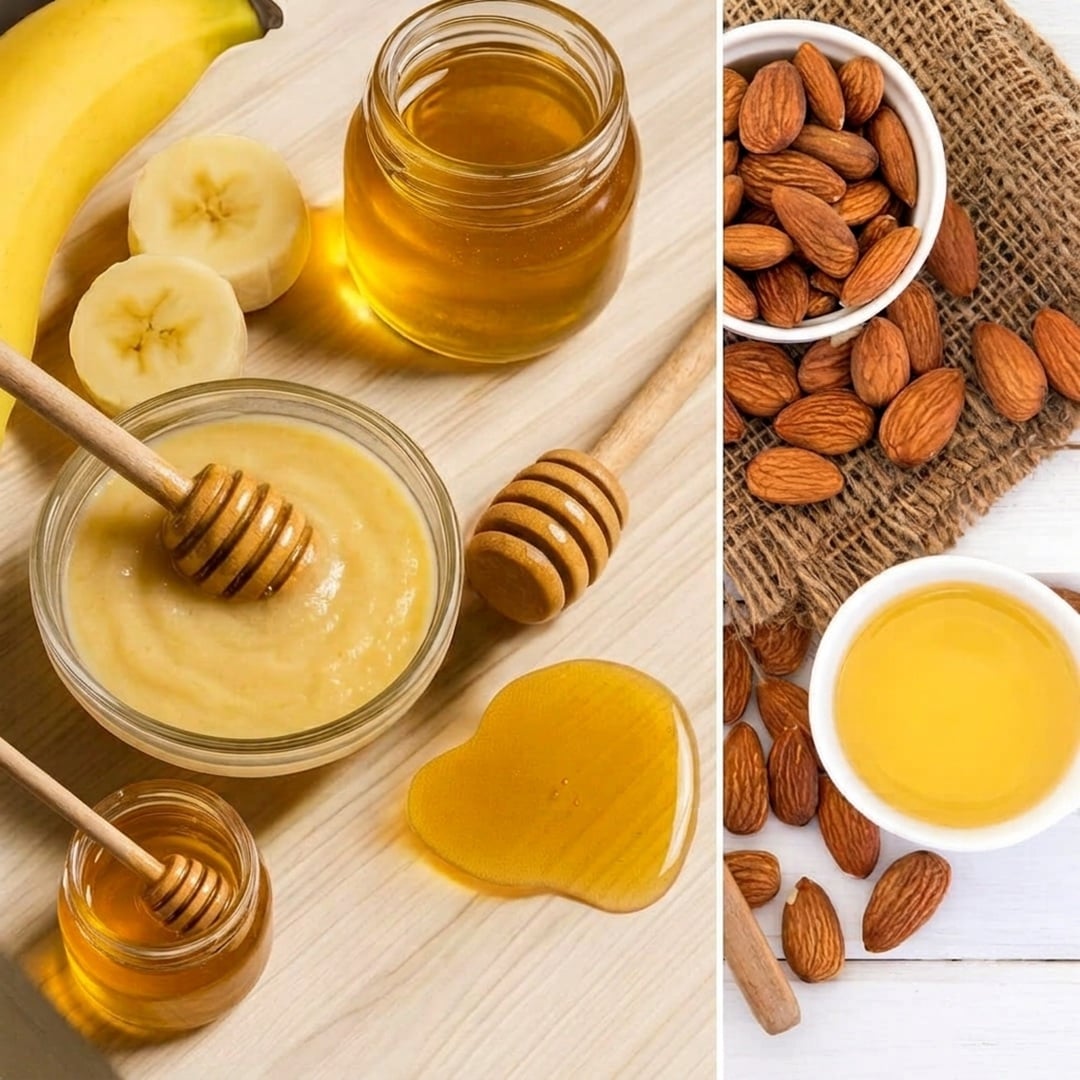
Best for: dull, tangly, medium porosity hair
Ingredients
- 2 ripe bananas
- 2 tablespoons almond oil
- 4 tablespoons honey
Steps
- Blend everything until fully liquid, with no lumps left.
- Strain through a fine mesh sieve. Do not skip this step; banana pieces cling to strands.
- Apply to damp hair, focusing on the length and ends, and cover with a cap.
- Wait 20 to 30 minutes.
- Rinse well, shampoo lightly, then condition.
Want more versions? See our banana hair mask recipes.
3. Honey and Olive Oil Syrup
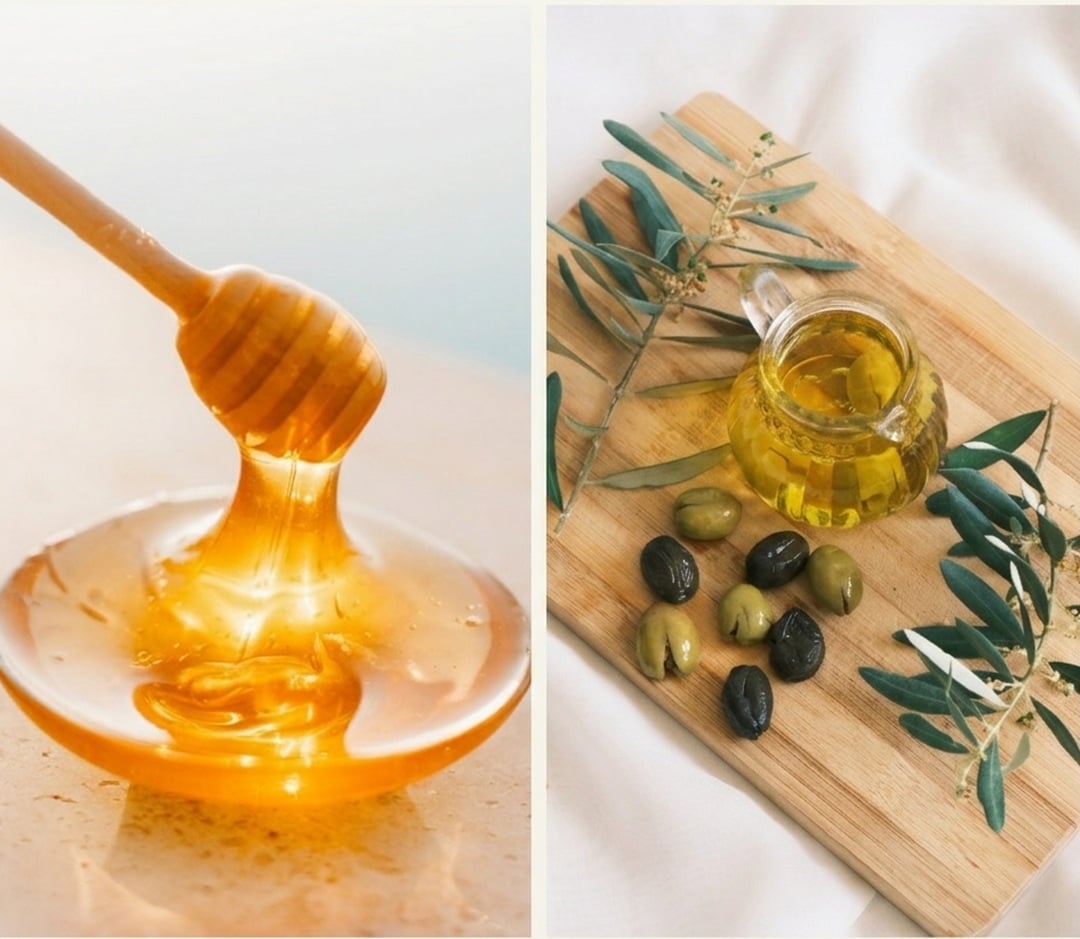
Best for: low porosity hair that resists thick masks
Ingredients
- 1/2 cup honey
- 4 tablespoons extra virgin olive oil
Steps
- Stir the oil into the honey until it moves like one smooth syrup.
- Work it through damp hair in sections.
- Cover with a warm towel or a heat cap for 30 minutes. The warmth helps low porosity hair absorb it.
- Rinse, shampoo, and condition.
4. Coconut Oil Treatment
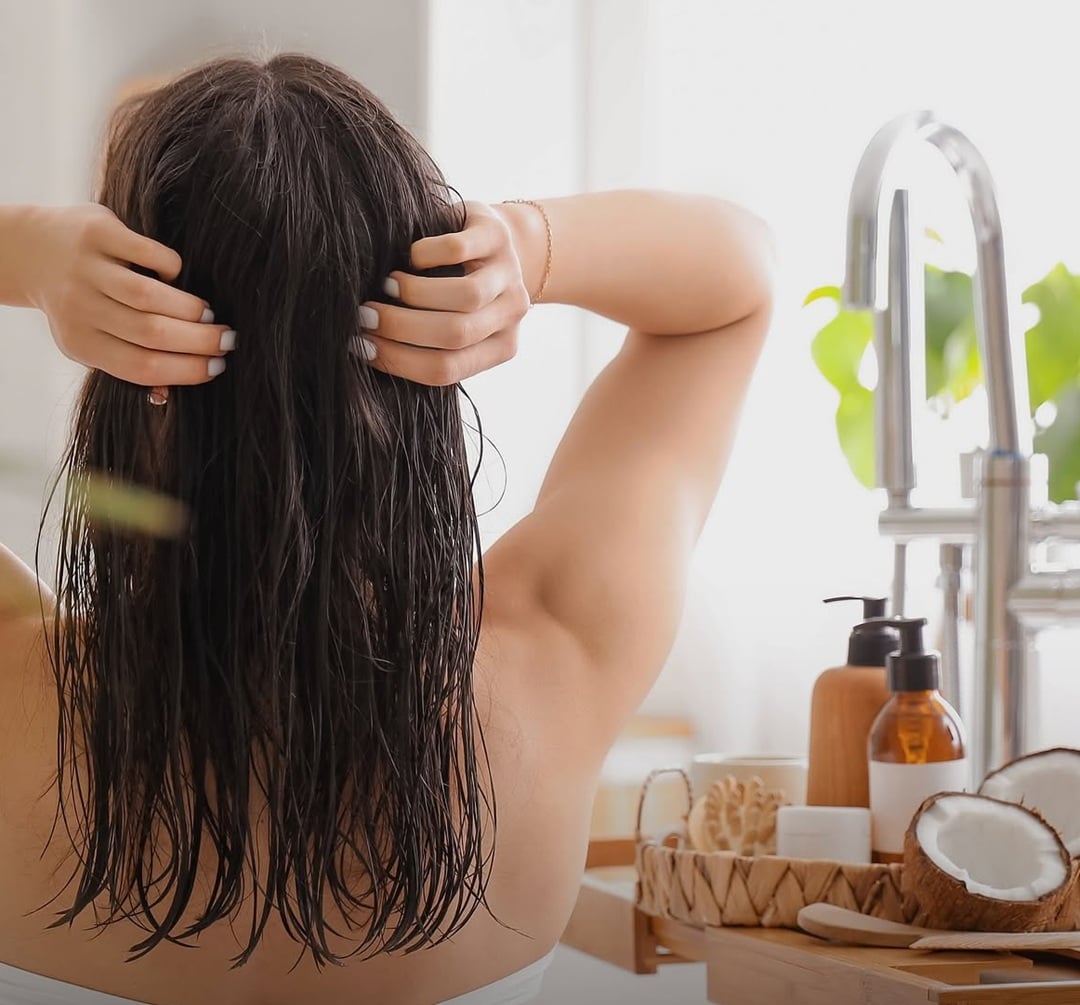
Best for: dry, damaged, high porosity hair
Ingredients
- 2 to 4 tablespoons coconut oil, depending on hair length
Steps
- Coconut oil is solid below 76°F. Stand the sealed jar in a bowl of warm water until it turns liquid.
- Test a drop on your wrist. Warm is right, hot is not.
- Work it through damp hair from mid-length to ends.
- Leave it on for one to two hours, then shampoo out, twice if needed.
- For an overnight soak, apply it to dry hair instead, wrap your hair, and sleep on an old, dark pillowcase; coconut oil stains fabric.
Used before and after washing, coconut oil was shown to reduce protein loss in both damaged and undamaged hair, something mineral oil and sunflower oil did not do in the same testing. Keep in mind that oils seal rather than hydrate: they slow the loss of moisture already inside, which is how most conditioning ingredients work.
On low porosity hair it can sit on the surface and build up. Overnight means dry hair only, since sleeping with a damp, oiled scalp can trap moisture and worsen dandruff.
5. Aloe and Glycerin Leave-In Spray
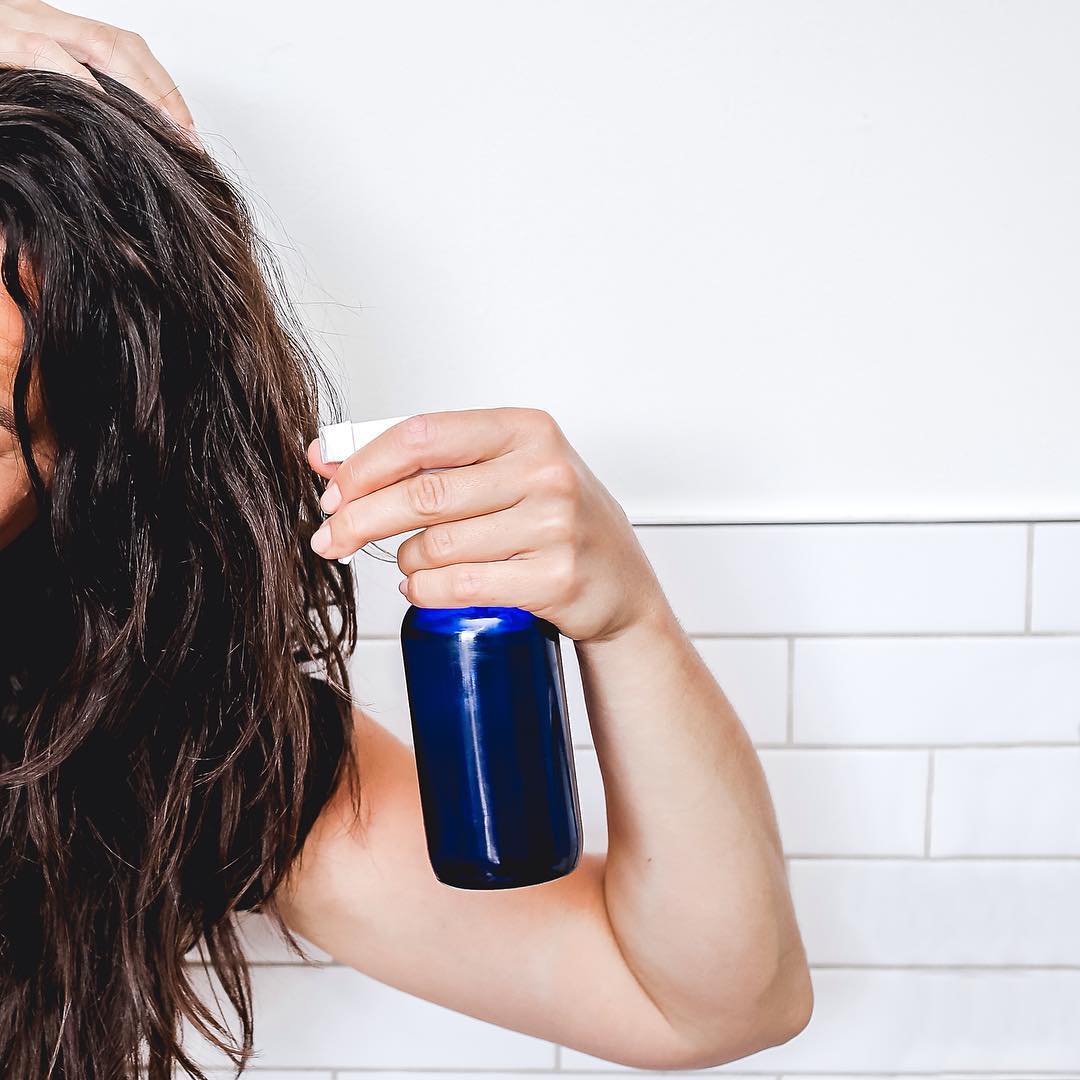
Best for: daily use on any hair type
Ingredients
- 3/4 cup plain aloe vera juice
- 3/4 cup water
- 2 teaspoons vegetable glycerin
- 1 teaspoon almond oil (optional)
Steps
- Funnel everything into a clean spray bottle.
- Shake hard until it looks even, and again before every use.
- Mist the lengths on dry or damp hair whenever they feel parched, then smooth down with your palms.
- Keep it in the fridge and mix a fresh batch within a week. It has no preservative.
This is the one true daily moisturizer on the list. Aloe’s gel is rich in mucopolysaccharides that help bind moisture, though it can cause redness or stinging in sensitive people, so patch test first. Use half the glycerin for fine hair or very dry air; too much can leave hair feeling coated.
6. Egg and Honey Strength Mask
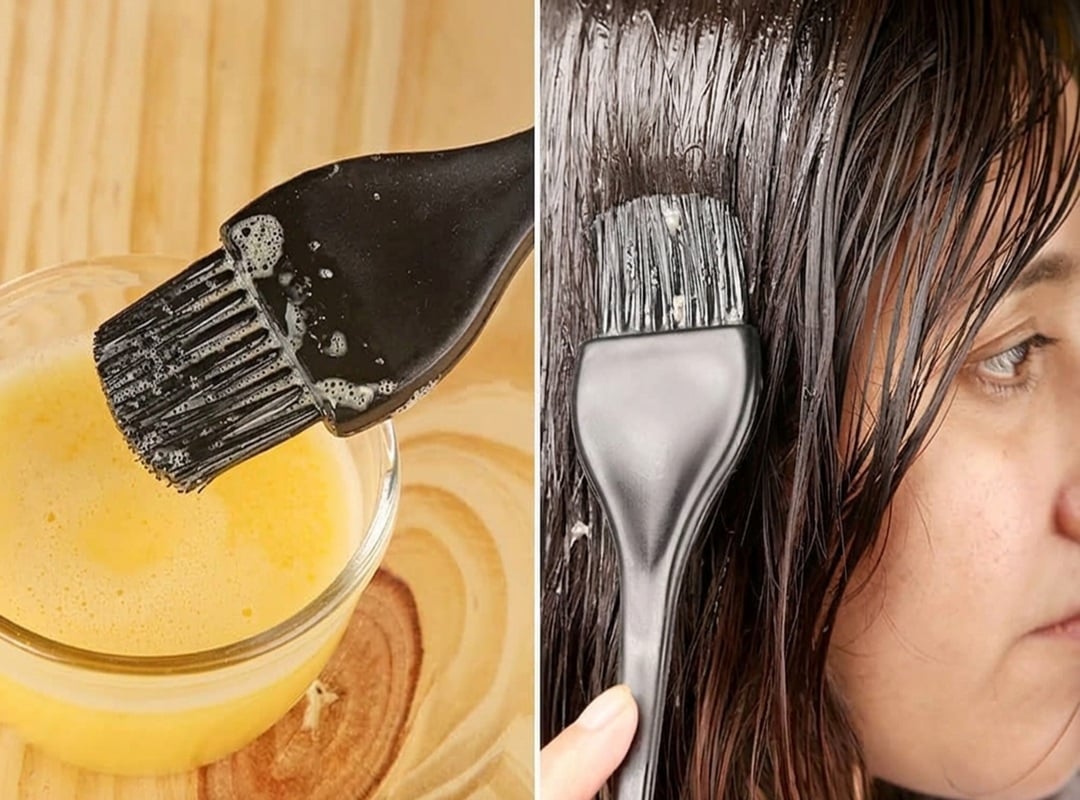
Best for: stretchy, breaking, high porosity hair, once or twice a month
Ingredients
- 3 eggs (pasteurized are the safer choice)
- 3 tablespoons olive oil
- 2 tablespoons honey
Steps
- Whisk everything until even. Halve the batch for short hair.
- Apply to damp hair in sections and cover with a cap. No heat.
- Wait 15 to 20 minutes.
- Rinse with cool water first, so the egg does not cook into your hair.
- Shampoo and condition.
Raw eggs can carry Salmonella, so use pasteurized eggs if you are pregnant, mixing this around kids, or have a weakened immune system; they behave identically in a mask.
This is a protein treatment: use it occasionally, then follow with a moisture mask like recipes 1 to 3. And if your hair ever starts feeling mushy, limp, or overly soft from all this care, it may be over-moisturized and due for a break.
7. Apple Cider Vinegar Rinse
Best for: buildup; the prep step before any mask
Ingredients
- 3 tablespoons apple cider vinegar
- 3 cups water (about 750 ml / 24 fl oz)
Steps
- Mix the vinegar into the water. Keep this dilution; stronger is not better.
- Pour it slowly through clean hair, keeping it away from your eyes.
- Wait up to five minutes.
- Rinse very well, finish with a cool-water rinse, and condition.
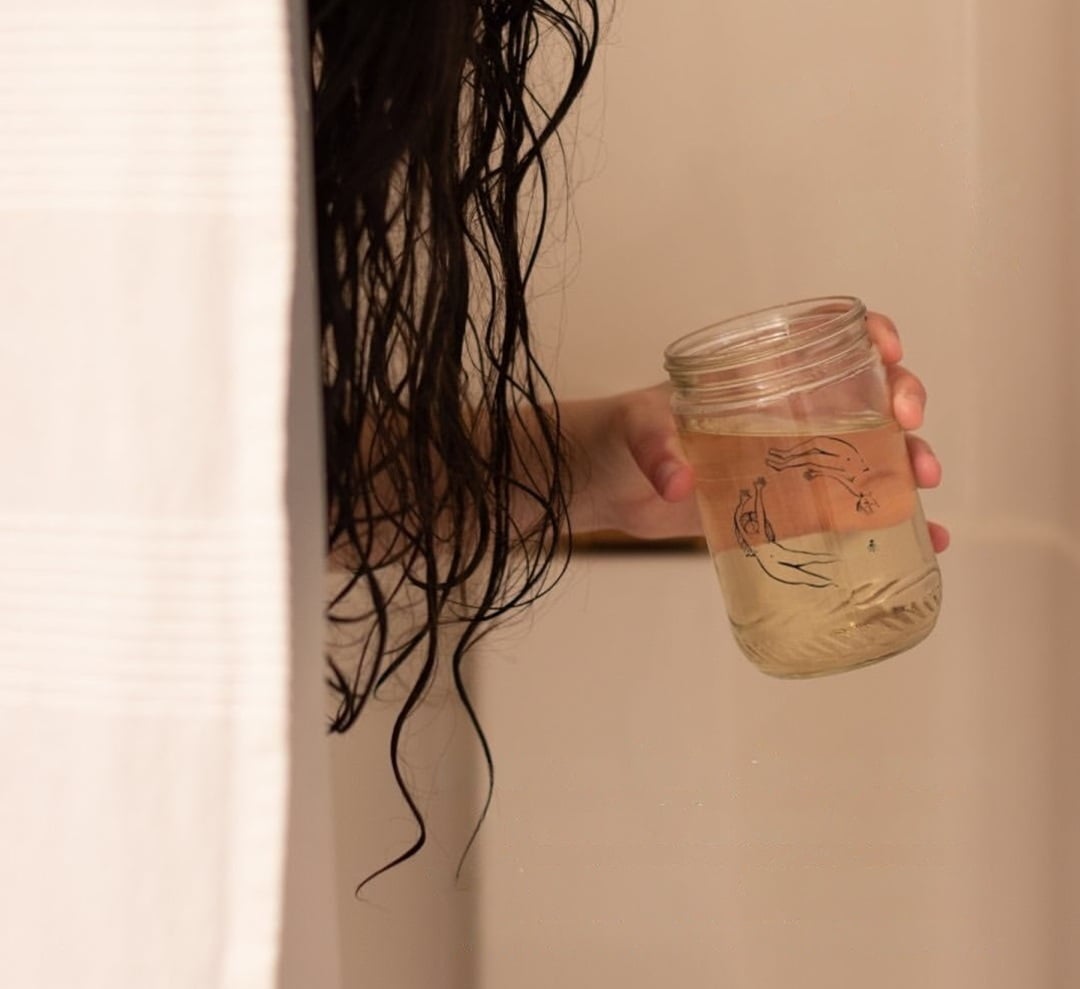
This one is not a moisturizer, and we will not pretend it is. It is the prep step: vinegar lowers the pH of the rinse water, and hair products closer to scalp pH cause less friction and less frizz. Clean strands also take the next mask better; if products have stopped working on your hair, check these signs of product buildup.
Start with one recipe that suits your porosity, keep batches small and fresh, and give it a few washes before you judge it. If your hair stays dry no matter what you try, a stylist or trichologist can help.