

If you’re thinking about getting a perm, you have probably heard the terms tight perm and loose perm. But what is the actual difference between them, and how do stylists use these terms?
Tight perms and loose perms have more to do with the rod size and the tension used during the wrapping process. Let’s break down exactly what these terms mean for your hair health and style.
What is a Tight Perm?
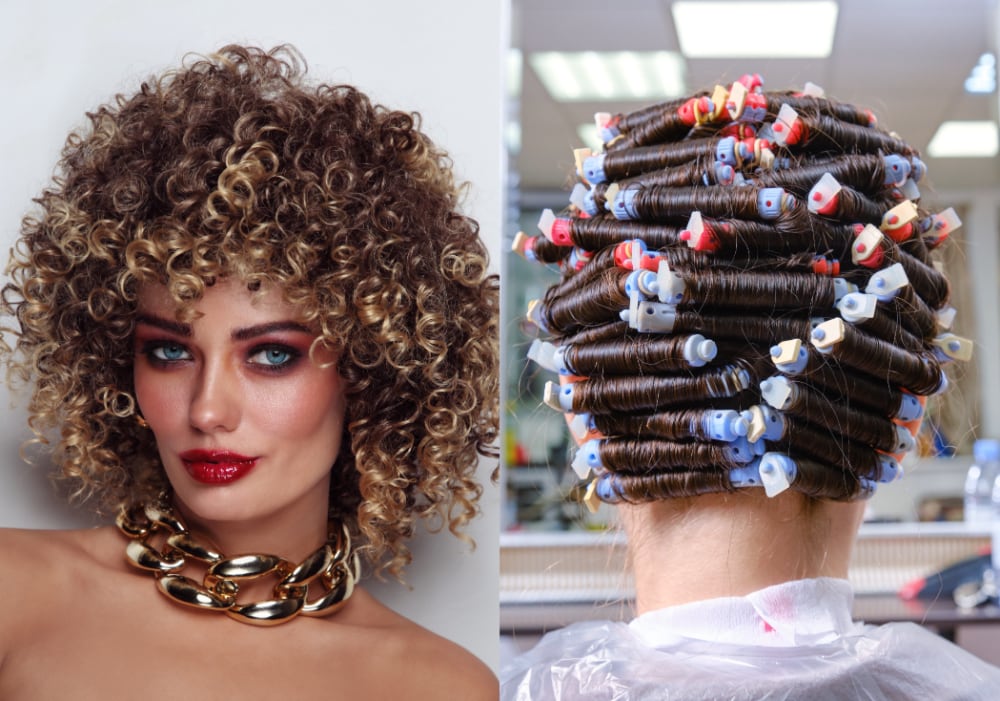
Tight perms are defined by firm, consistent tension and structured coily curls that deliver maximum volume. It is done with smaller rods (1/10″ – 1/2″) and a stronger alkaline solution (pH 9-9.6) that reshapes the hair into a coily pattern.
A standard alkaline perm is heat-free, relying on a strong waving lotion to break the hair’s bonds and a neutralizer to set the curl firmly.
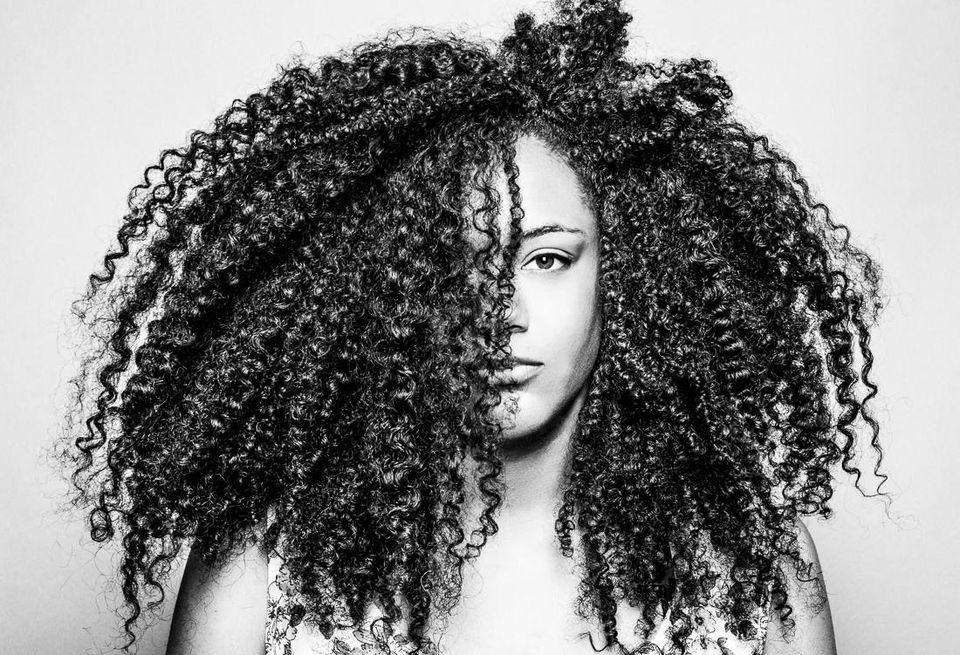
Tight perms can mimic the visual texture of naturally coily hair (Type 3C or 4A), though permed hair requires specific care for chemically treated hair rather than standard natural hair products. The tightly stacked curls create significant width and lift. This can make a short bob look much fuller or give long hair a spiraled, highly textured appearance.
WARNING: Do not get a perm (tight or loose) on hair that has been bleached, highlighted, or lightened with high-lift color. Mixing lightener damage with perm chemicals can cause severe breakage and hair “melting.” Perms are safest on virgin hair, or hair that has only been colored darker with a single-process deposit-only color. When in doubt, get a strand test from a professional stylist first.
What is a Loose Perm?
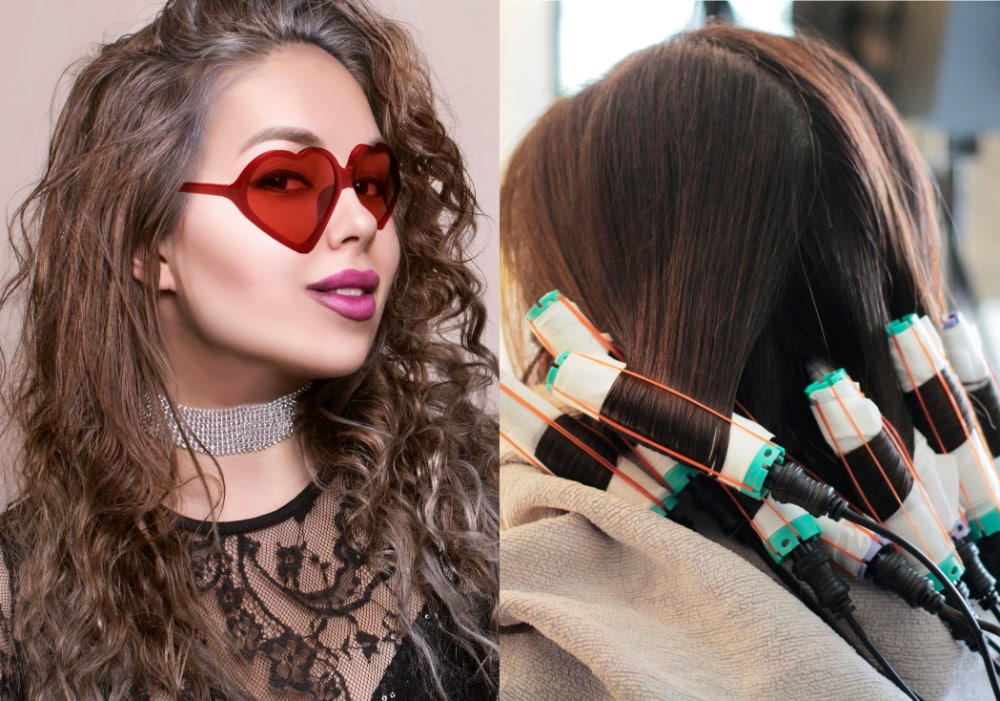
A loose perm uses larger rods (11/16″ or larger). It creates natural-looking wavy curls.
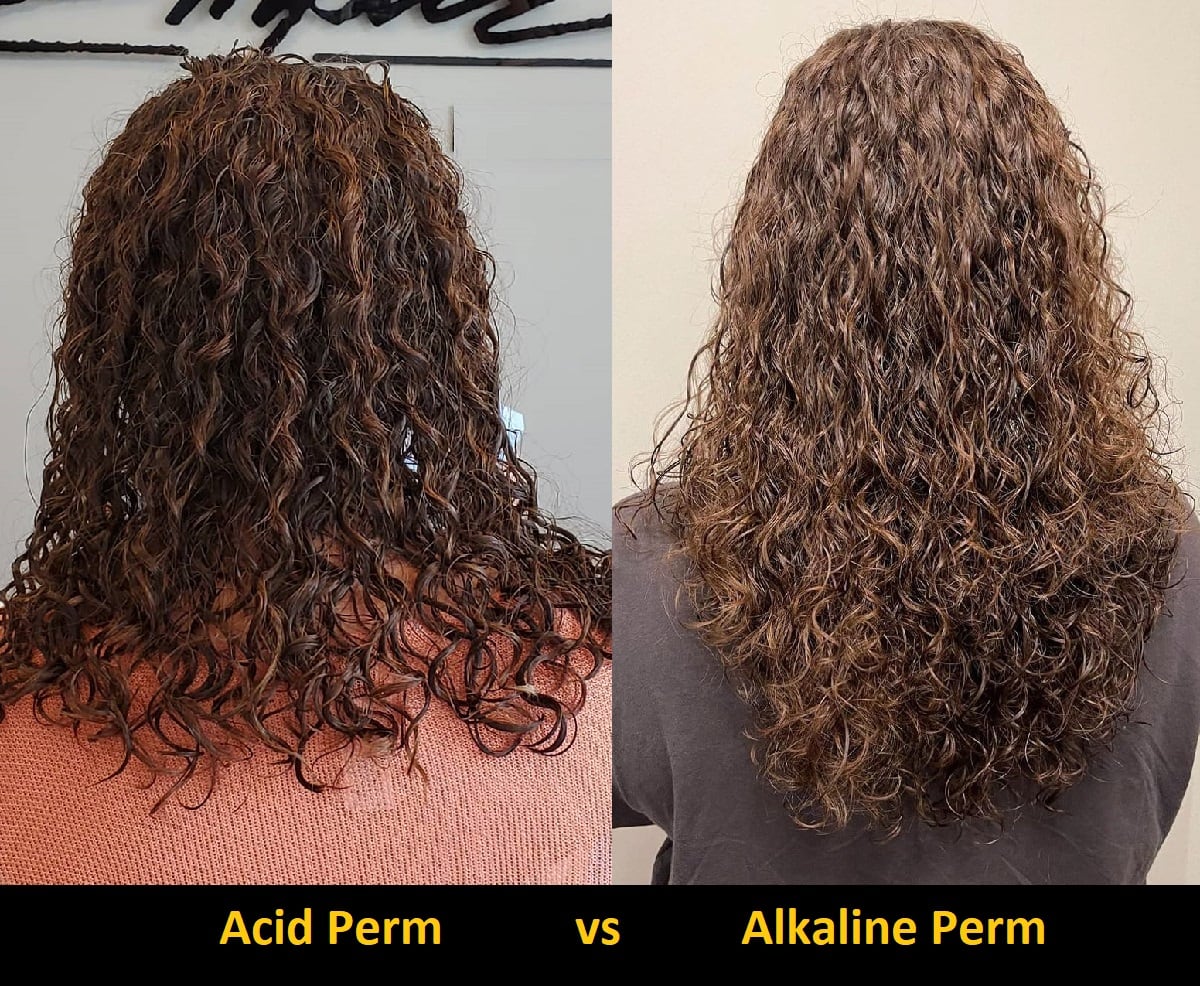
Usually a gentler acidic solution (pH 6.9 – 7.2 for true acid, or up to 8.2 for acid-balanced) is used for a loose perm. Unlike cold or alkaline perms, it requires external heat (like a hooded dryer) to activate the curl.
Acid-permed hair loses the shape faster than other perm types. A loose acid perm will gradually relax into a wider wave pattern over 3 to 4 months.
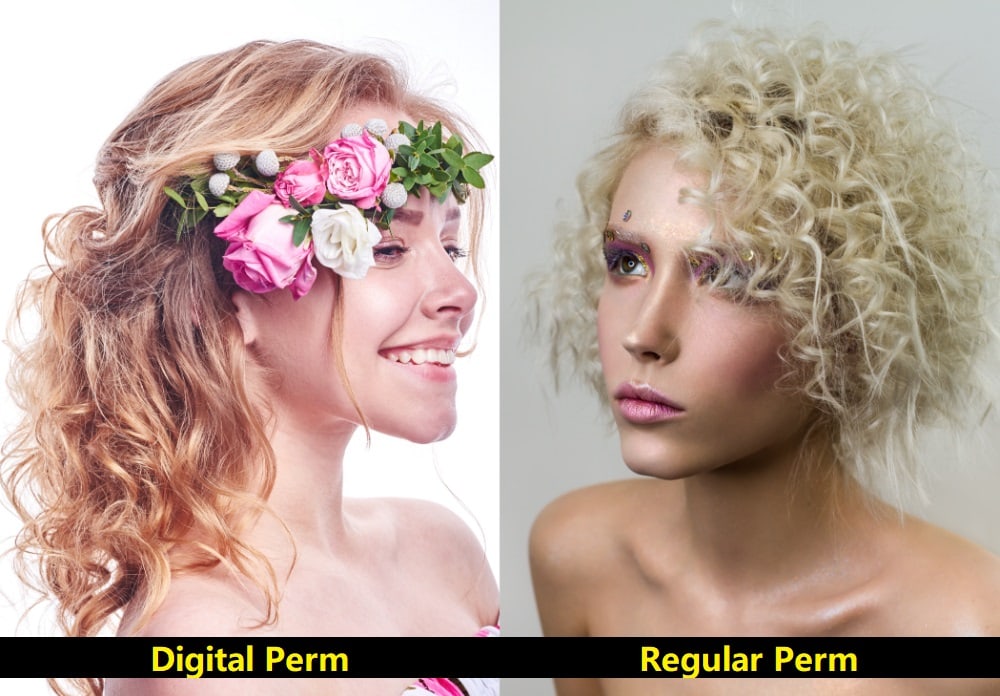
You can also choose digital perms for loose waves. A digital perm (hot perm) is done with heated rods and holds shape longer.
What Do Tight Perms and Loose Perms Look Like?
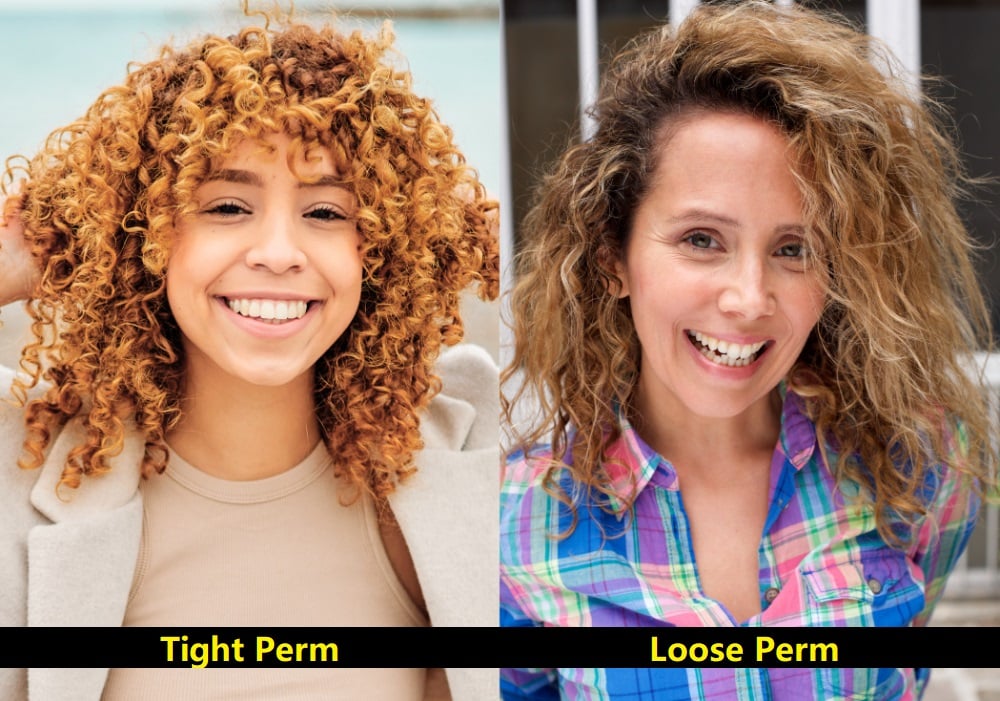
A tight perm is characterized by curls that tumble over one another. Due to the smaller rod sizes, a tight perm creates overlapping curls with significant spring and rebound; if you pull a curl down, it snaps back up instantly.
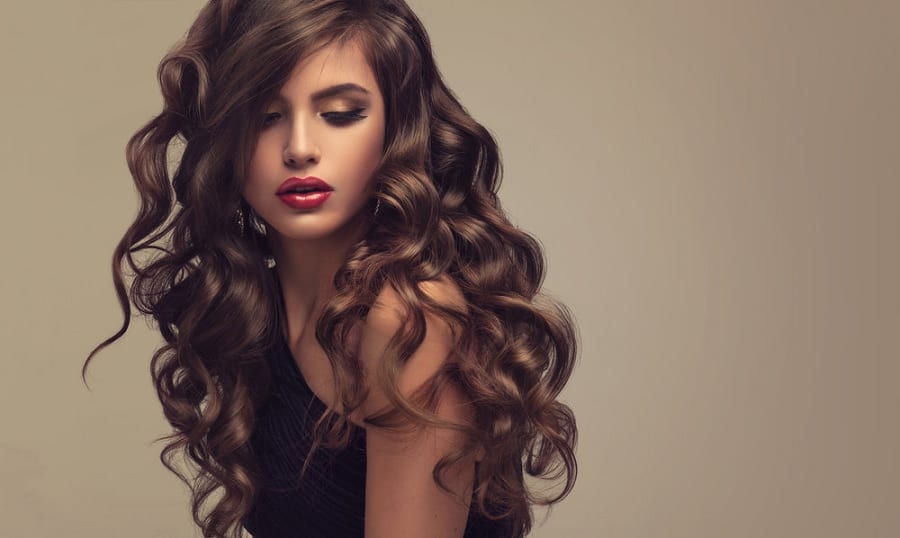
A loose perm makes the hair more wavy than curly. The curls form S-pattern waves rather than tight spirals, and these curls do not overlap. Instead, they cascade naturally for a relaxed look.
Difference Between a Tight Perm and a Loose Perm
To give you a better idea of the differences between tight perms and loose perms, here is a tight perm vs. loose perm comparison table.
| Feature | Tight Perm | Loose Perm |
|---|---|---|
| Rod Size & Color |
Small rods (1/10" – 1/2") Standard: Red, Blue, Pink |
Large rods (11/16" – Over 1") Standard: Orange, Green, Black |
| Curl Pattern |
Coily / Spiral Curls overlap and spring back instantly when pulled. |
Wavy / Beachy ‘S’ pattern waves that do not overlap, low rebound. |
| Chemical Solution |
Alkaline (Cold Wave) pH 9.0 – 9.6 Process: Room temperature |
Acid / Acid-Balanced pH 6.9 – 7.2 for true acid, or up to 8.2 for acid-balanced Process: Endothermic (Requires Hooded Dryer) |
| Wrapping Technique | Hair is wrapped tightly to maximize spring. | Wrapped with smooth, consistent tension on larger rods to create soft waves. |
| Best For |
Resistant / Healthy hair Ideal for adding maximum volume and lift. |
Elastic / Porous hair Ideal for natural, "lived-in" texture. |
| Fine Hair Risk |
Moderate Adds volume, but requires extra moisture to prevent frizz. |
Moderate risk Waves may relax faster. Fine hair can be permed with large rods, but an alkaline solution is often required for the curl to hold. |
| Maintenance |
High Requires hydration. Leaves a visible line between straight new growth and curly ends (line of demarcation) as it grows out. |
Low to moderate Fades gradually. Requires styling products (mousse, diffuser) to define the wave. |
*Note: Rod colors and sizes are not universal. Always check the diameter (inches) on the package as color may vary across different brands.
Expert Note | Yashandeep Kaur
Always get a strand test done to know the health of your hair and the suitability of your perm. Afterwards, maintain proper moisture to prevent your hair from further damage.
So, tight perms and loose perms create different curl shapes and looks. Your final look also depends on the perming rod shape. Concave rod curls feel tighter in the middle and softer at the ends. Straight rods create even curls or waves.
Before you go get a perm, think carefully about what you want your curls to look like and consider your budget. Perms typically range from $70 to over $300 depending on the salon, hair length, and technique. A good stylist can create a perm from almost any curly look, so don’t forget to bring pictures.