
Men often lose hair on the top of the head before the sides start thinning. This leaves room to choose bald-on-top haircuts that work with the remaining hair on the sides and back.
Although this pattern can feel limiting, the right haircut can make it look clean, balanced, and intentional.
Best Hairstyles for Bald on Top, Hair on Sides
If you are bald on top with hair on the sides, the best styles usually focus on clean blending, controlled side length, and a shape that looks intentional.
1. Short White Hair with a Beard

Balance a bald top by pairing it with a neatly shaped short white beard and mustache that follows the jawline. Facial hair can add structure around the mouth and jawline without trying to hide the hair loss.
Keep the hair on the sides trimmed and blended instead of letting it grow high and patchy. If there is only light fuzz across the top, keep it short so the finish looks deliberate.
2. Salt-and-Pepper Sides
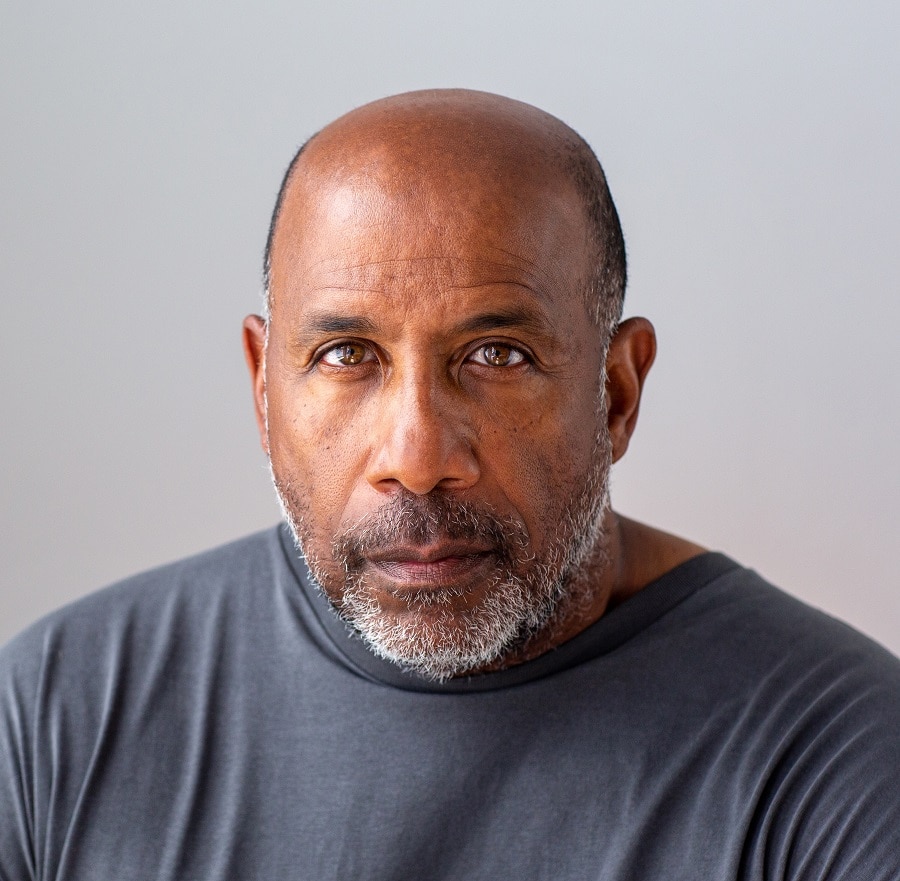
If your hair still has some pigment left, show it off. Shave the sides down very short, so both gray and dark hair are visible and blend together. Add a beard to balance the look further.
3. Short White Tufts

Some men still have a few white tufts in an area that is mostly bald. Keep these tufts short and blended; long isolated strands can look unkempt and make the contrast more obvious.
Keep the side hair at a uniform, controlled length around the top of the ears. A simple shape works best because it keeps attention on the overall grooming rather than the sparse top growth.
4. White Sides with a Long Beard
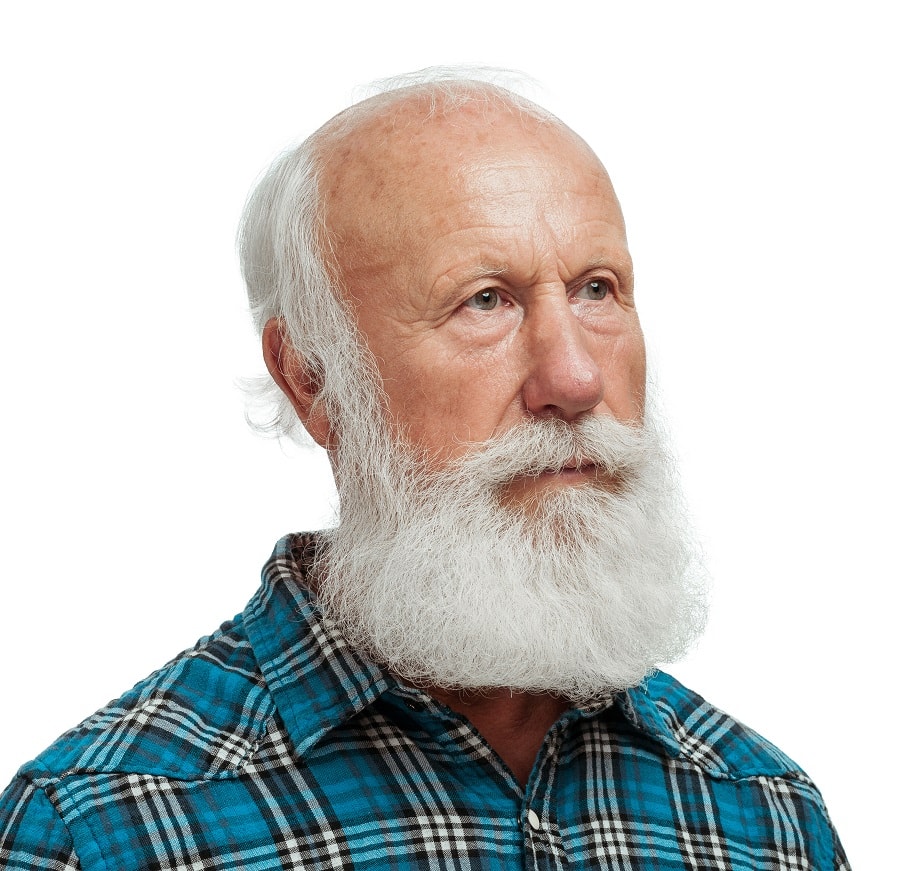
Make the most of the hair you have left by keeping the sides controlled and blending the sideburns into the beard. This gives the style shape without letting the sides overpower the bald top.
If a small amount of hair still grows on top, keep it cropped close. Shorter top growth looks cleaner than trying to preserve uneven fluff over a mostly bare scalp.
5. Slicked-Back Front with Short Sides
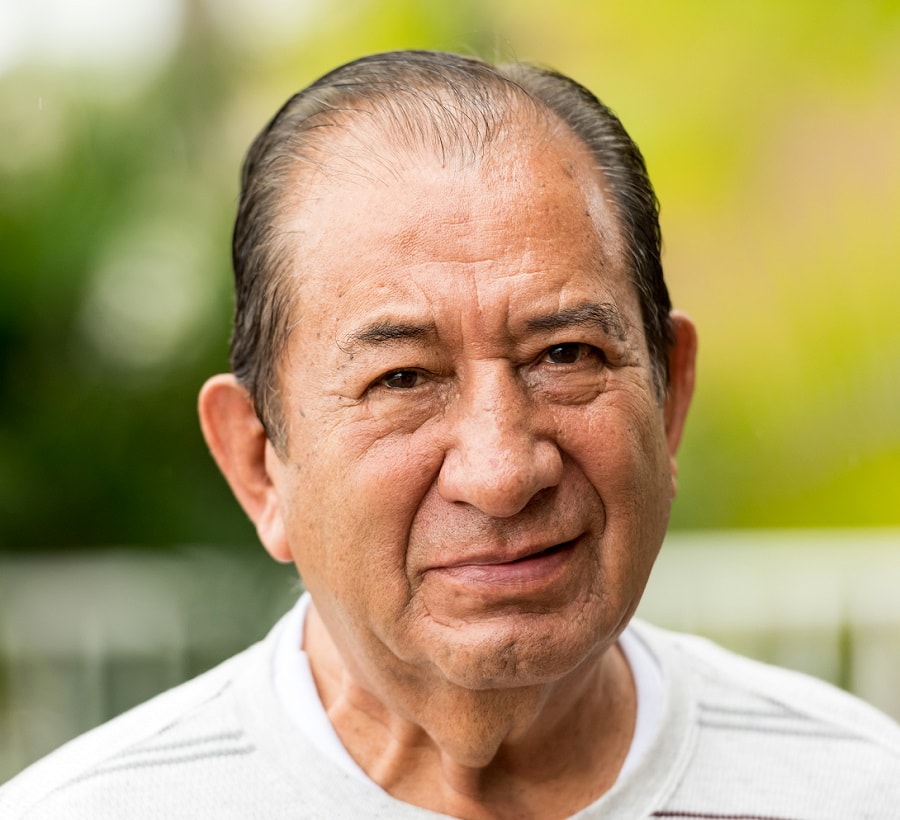
This option suits men who still have some density near the front hairline and sides, but not enough to create a full top style.
Brushing the remaining front strands straight back over smooth, short sides leaves the scalp visible behind the hairline. If you want a softer transition from hair to scalp, ask your barber to crop the front short or add light texture. Keep the sides neat with a taper or short blend.
6. Thick Sides with a Mustache
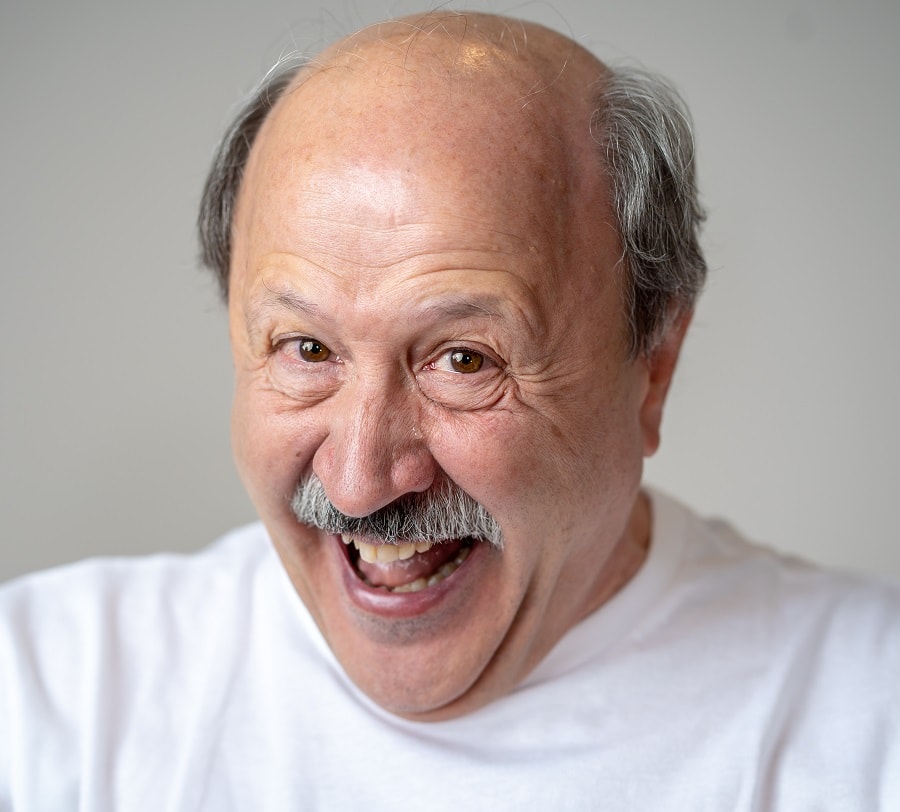
If you still have thick hair on the sides with a bald top, ask for controlled layers so the sides look shaped rather than bulky. A well-kept mustache can add balance to the lower half of the face.
7. Brushed Sides
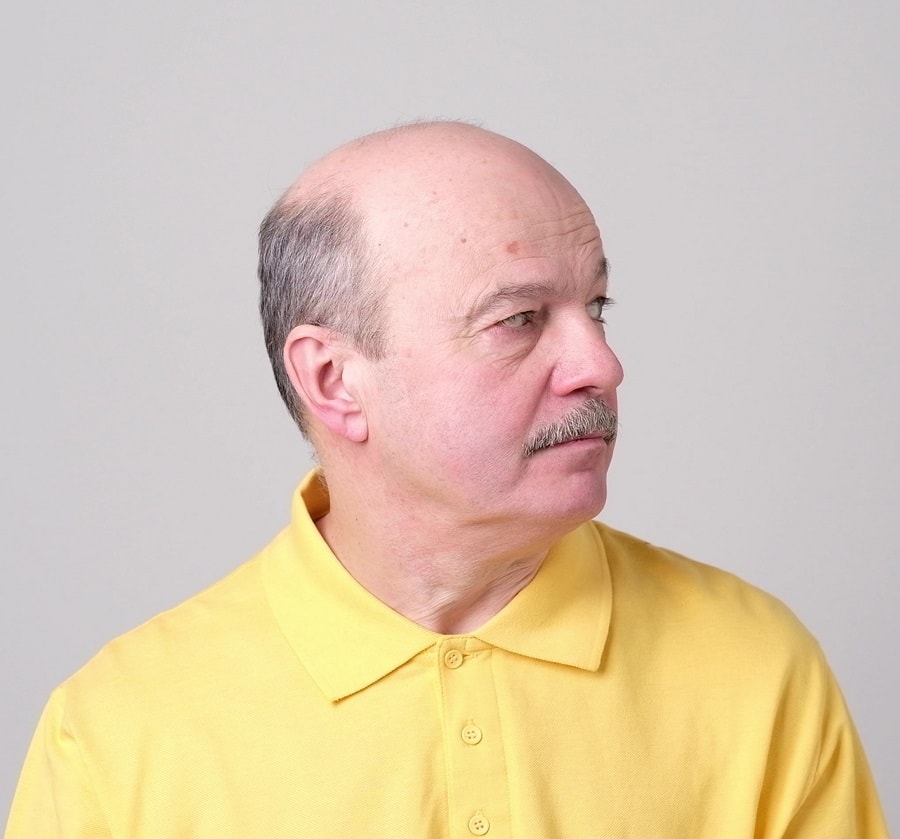
Thick, unruly side hair does not suit every guy. Keep your hair short and brushed toward the back of your head if you want it to look neater.
Keeping your hair shorter on the sides is also a good idea if your hair is thinning around the temple area.
8. Fluffy Silver Sides
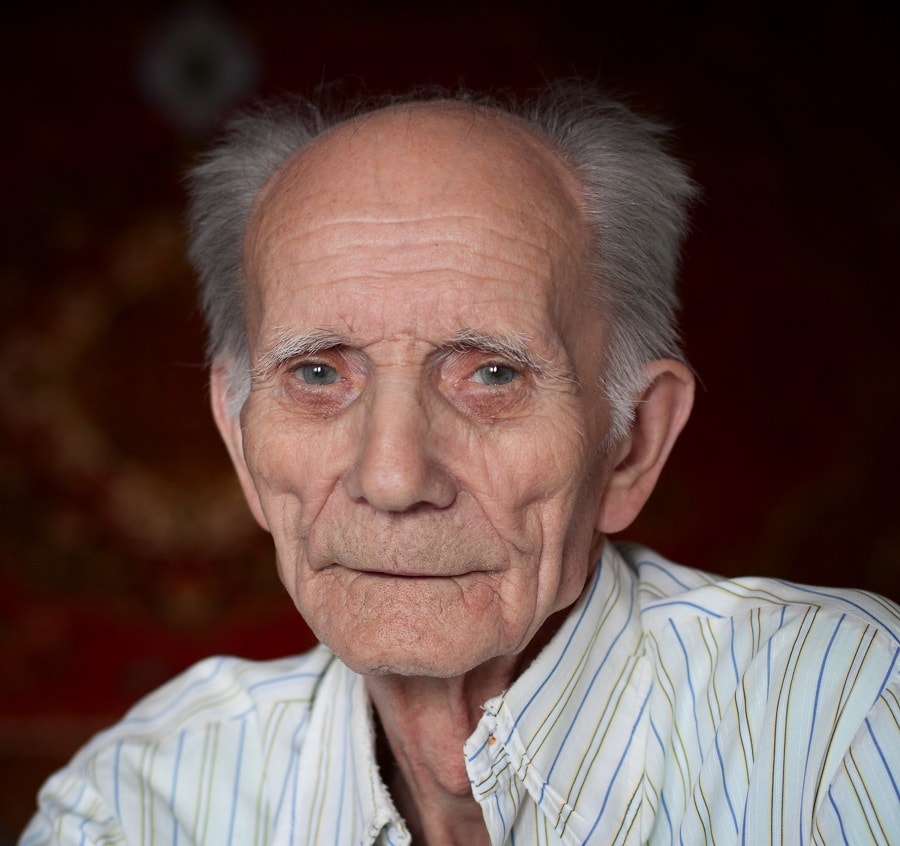
If your side hair has a naturally fluffy texture, keep it cropped enough to control the shape. This prevents the sides from widening too much against a bald top.
Short silver texture can look clean and intentional, especially when the neckline, sideburns, and beard edges are regularly trimmed.
Bald-on-top haircuts share the same basic challenge: balancing a bare or thinning top with fuller hair on the sides. The right length depends on your hair density, face shape, beard growth, and how much contrast you want.
For advanced Norwood 6-7 hair loss, a buzz cut, full shave, or SMP-style stubble effect usually looks cleaner than trying to maintain long side growth or sparse strands on top.
What Causes Baldness on Top but Hair on Sides?
Many men develop thinning across the top, front, or crown while keeping denser hair around the back and sides. This pattern is usually male pattern hair loss, medically called androgenetic alopecia.
We put the why to double board-certified dermatologist Sanober Pezad Doctor, MD, and her explanation is textbook clear:

The 'bald on top, hair on the sides' pattern is a distinct clinical presentation of androgenetic alopecia. The follicles on the crown and frontal scalp are genetically more susceptible to hormonal miniaturization, whereas follicles on the sides and back tend to be more resistant, creating this characteristic distribution of hair loss.
Male pattern hair loss is a genetically influenced, hormone-dependent process. According to StatPearls, available through the National Institutes of Health, in susceptible follicles dihydrotestosterone (DHT) binds to androgen receptors and gradually shortens the hair growth phase, causing follicle miniaturization. Over time, terminal hairs become finer, shorter, and less visible, which is why the top can look bare while the sides remain thicker.
Here are three key factors behind baldness on top and hair on the sides.
- Male pattern baldness has a strong inherited component and can be influenced by genes from either side of the family. If close relatives have this pattern, your risk may be higher.
- Hormones, especially dihydrotestosterone or DHT, influence male pattern baldness.
- Male pattern baldness can begin after puberty. Some men notice it in their late teens or 20s, while others see more obvious thinning in their 40s, 50s, or later.
Norwood Scale: Where This Pattern Usually Fits
The bald-on-top, hair-on-sides pattern is often described using the Norwood Scale, a naming system barbers and stylists use as a shorthand for how far a receding pattern has progressed. This is a styling reference, not a diagnosis. The stages that usually come up for this look are Norwood 5, 6, and 7:
| Norwood stage | What it usually looks like | Best styling direction |
|---|---|---|
| Stage 5 | More obvious loss at the front and crown, often with a narrow bridge of hair between them. | Keep the sides controlled and avoid forcing sparse hair across the top. |
| Stage 6 | The bridge between the front and crown is mostly gone, creating a larger bald area on top. | Use a close buzz, taper, or fade to reduce contrast between the top and sides. |
| Stage 7 | The most advanced pattern, with a horseshoe-shaped band of hair around the sides and back. | Consider a very short buzz cut, clean shave, or scalp micropigmentation for a uniform stubble effect. |
If your hair loss is around Norwood 5-7, the most polished approach is usually to reduce contrast rather than trying to cover the bald area with long sides or isolated strands.
How Can I Hide Baldness on Top?
Here are several strategies you can use to disguise or work with the baldness on top while still maintaining the hair on the sides:
Hairstyling: Talk to your barber about styles that suit the amount of hair you still have on top. A longer, layered cut may help only when there is still enough density to create coverage; once the top is mostly bare, a shorter blended cut usually looks cleaner.
Subtle side sweep: If you still have enough density near the hairline, a light side sweep can soften thinning. Avoid a sparse comb-over, because stretching a few thin strands across a bald crown usually draws more attention to the area.
Hair Products: Use volumizing shampoos and conditioners. These can make the remaining hair appear thicker and fuller. Products that add texture can also make your hair look more voluminous.
Hair Fibers: Hair-building fibers can bind to existing strands and create the appearance of fuller hair. They work best when there is still enough hair on top for the fibers to attach to.
Shave or Trim the Sides: Keeping the hair on the sides shorter can reduce the contrast between the bald top and the fuller sides. If hair loss is advanced, a clean shave or buzz cut is often more balanced than leaving long side growth against a bare crown.
Scalp Micropigmentation: Scalp micropigmentation (SMP) is a cosmetic tattooing technique that creates the look of tiny hair stubble. It can help create a more uniform shaved or buzzed look when the top is mostly bald.
Scalp SPF: If the crown or shaved top is exposed, apply broad-spectrum SPF 30 or higher to the scalp before sun exposure and reapply every two hours outdoors.
Hat or Headwear: Wearing a stylish hat or bandana can be a great way to cover a bald spot, and it adds to your overall look.