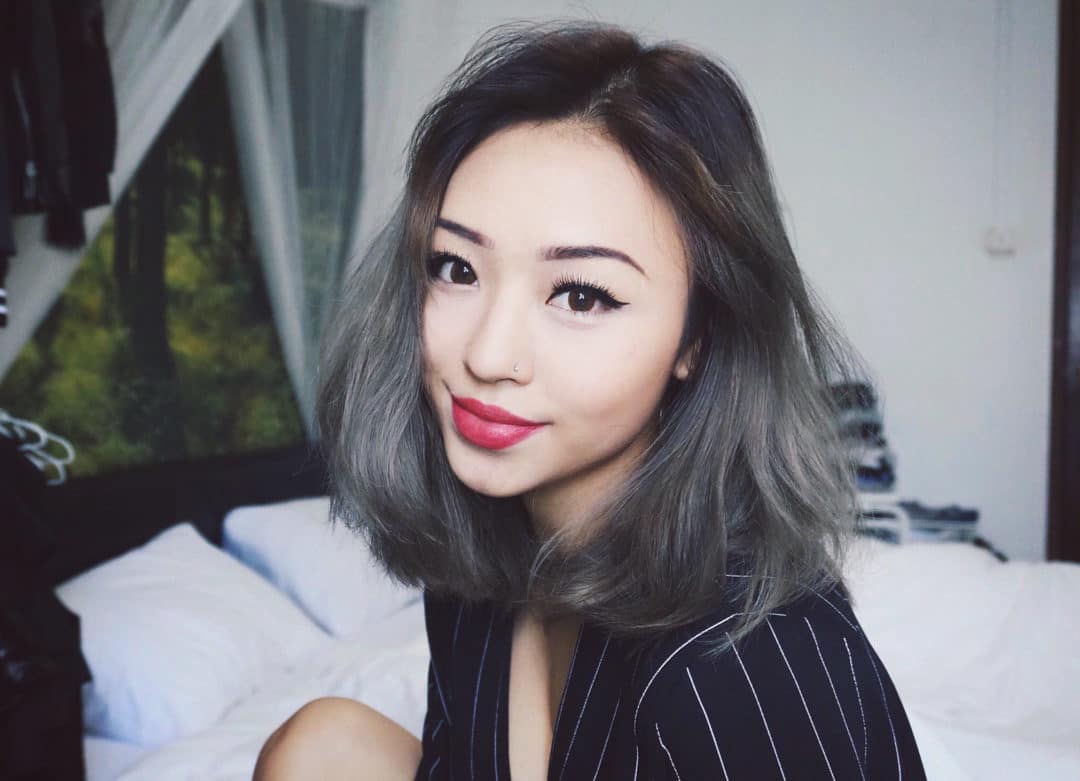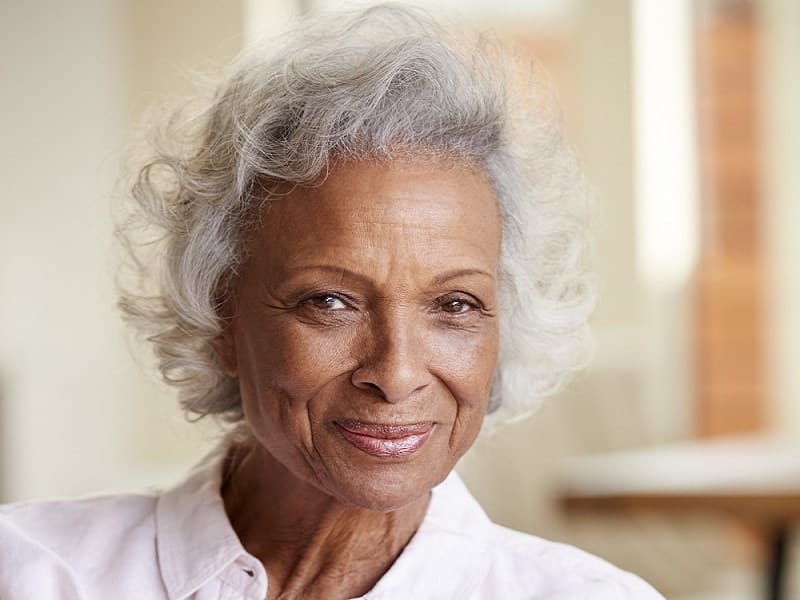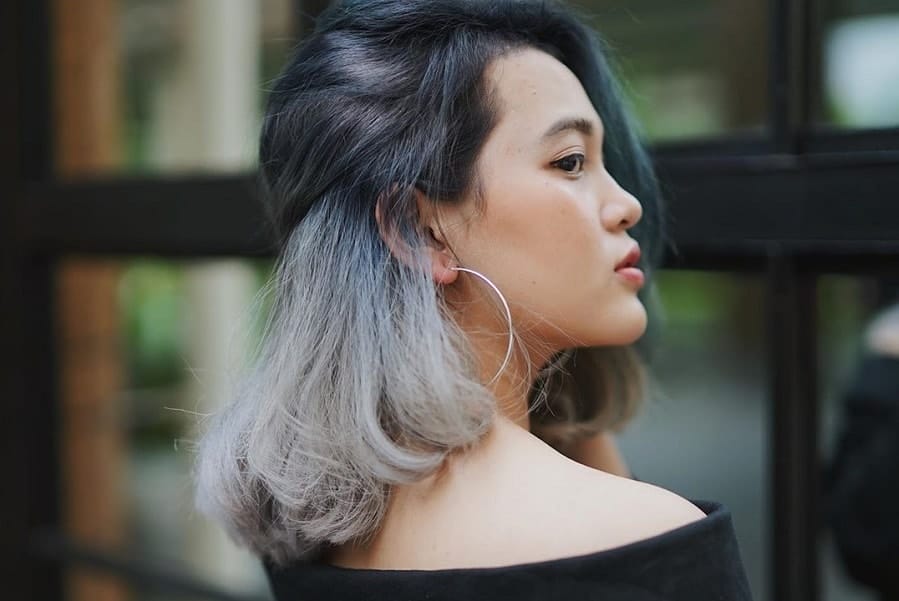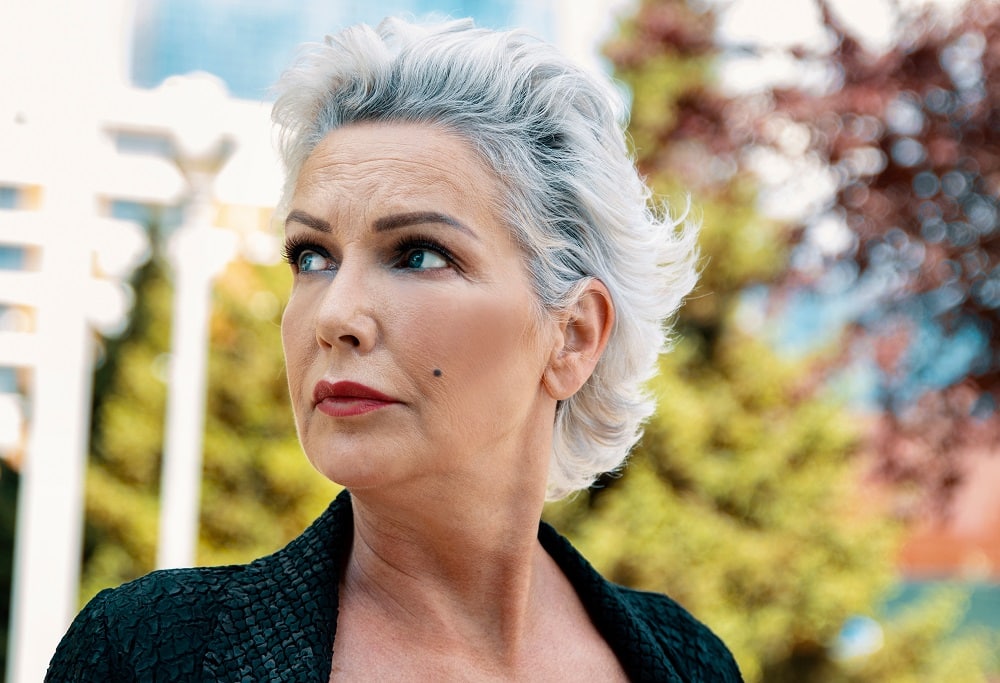

Going gray doesn’t happen all at once. Instead, gray hairs come in subtly over time until you notice a contrast between your current color and your new silverish or salt-and-pepper regrowth. In this transition phase, you may want to softly blend the gray into your natural color or let your hair turn fully gray.
Either way, the goal is the same: to make the grow-out phase look intentional.
Below, we cover your options for the transition, from highlights and lowlights to salon services and at-home options. Our goal is to help make your transition smooth, stylish, and easy.
Exercise Patience + Honesty When Transitioning To Gray Hair
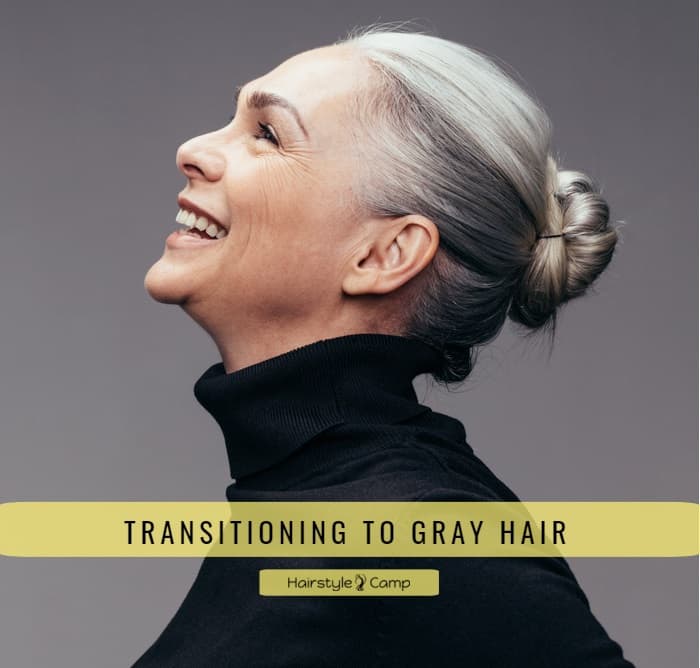
It can take anywhere from six months on shorter styles to a few years on long hair to go fully gray, so keep this time frame in mind when deciding how you want to transition your hair.
There are a few rules that never change, regardless of the method you’ll be using. First, if using standard permanent hair color, it will only safely lift up to two levels. For lighter gray results, a professional must use a bleach lightener. Never apply dark colors and then attempt to lighten them to create gray effects.
Letting your roots grow is cheap and requires less work, but it can be clunky and unstylish. Many of us want to go gray with grace, so it’s important to have an honest conversation with your stylist about your skin tone, natural base color, and even eye color. This will help you customize your look so that your needs and wants are fully met.
For starters, you will need at least an inch of gray root growth to work with, regardless of your chosen method, but especially before creating highlights and babylights.
Transition to Gray Hair with Highlights and Babylights

Highlights and babylights are the most expensive and time-intensive way to transition to gray hair. However, highlights ensure a natural-looking blend that is highly customizable. Plus, you can rest assured that you’re in good hands with a professional.
You don’t have to retouch your base color to transition to gray hair with highlights. Instead, your stylist can color correct your hair to match the growing gray. Foils for highlights or babylights will gently blend all variations of tone in graying hair. Anywhere from three to five appointments will be necessary to fully complete the transition process.
Having blonde hair makes it easier to transition to gray hair because the contrast at the root is less noticeable. A sheer toner can help create a fully highlighted effect. On the other hand, brunettes should make the switch once more of the salt-and-pepper look has come in.
You will likely have to head back to the salon once or twice throughout the transition for your stylist to apply a gloss. These treatments add color and shine while giving hair a needed rest between highlighting sessions.
Some examples of transitioning to gray hair with highlights and babylights:
Hint of Purple
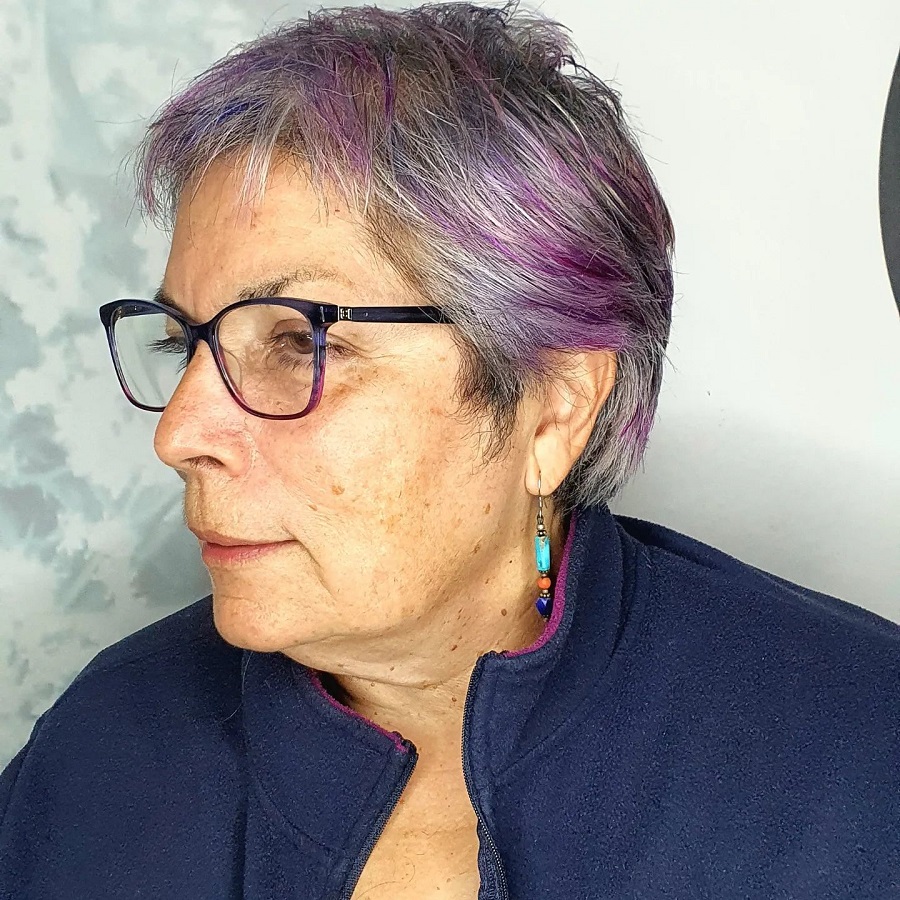
If you have decided to transition to gray hair with highlights, why not do it with style? Start fresh with a pixie haircut and add streaks of plum to liven up the gray mane. Also, add a hint of blue or any other color of your choice for a more detailed look.
Brown Babylights
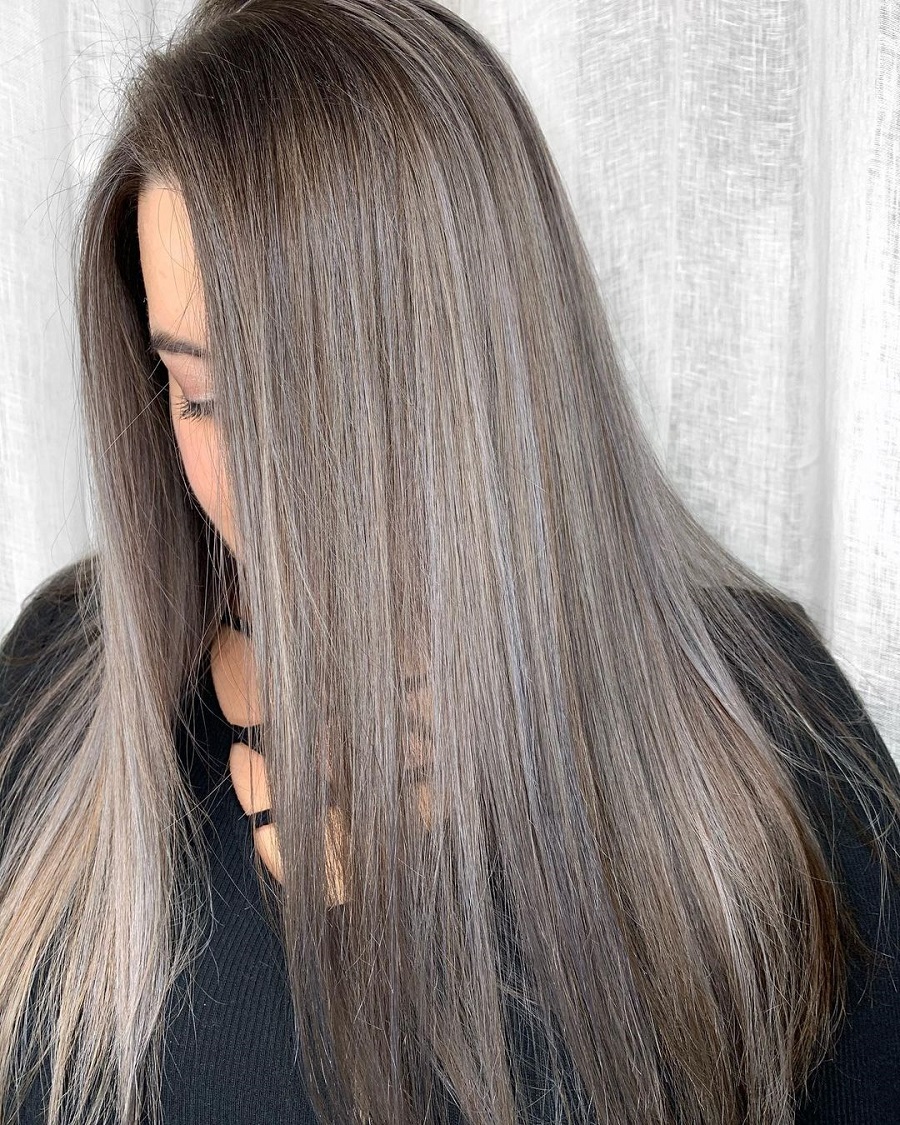
Babylights are handy for those who want a subtle yet noticeable hair change. Ask the hairstylist for base shading that matches the natural grays and incorporates fine streaks of medium brown, adding more depth and dimension to the overall look.
Dove Gray
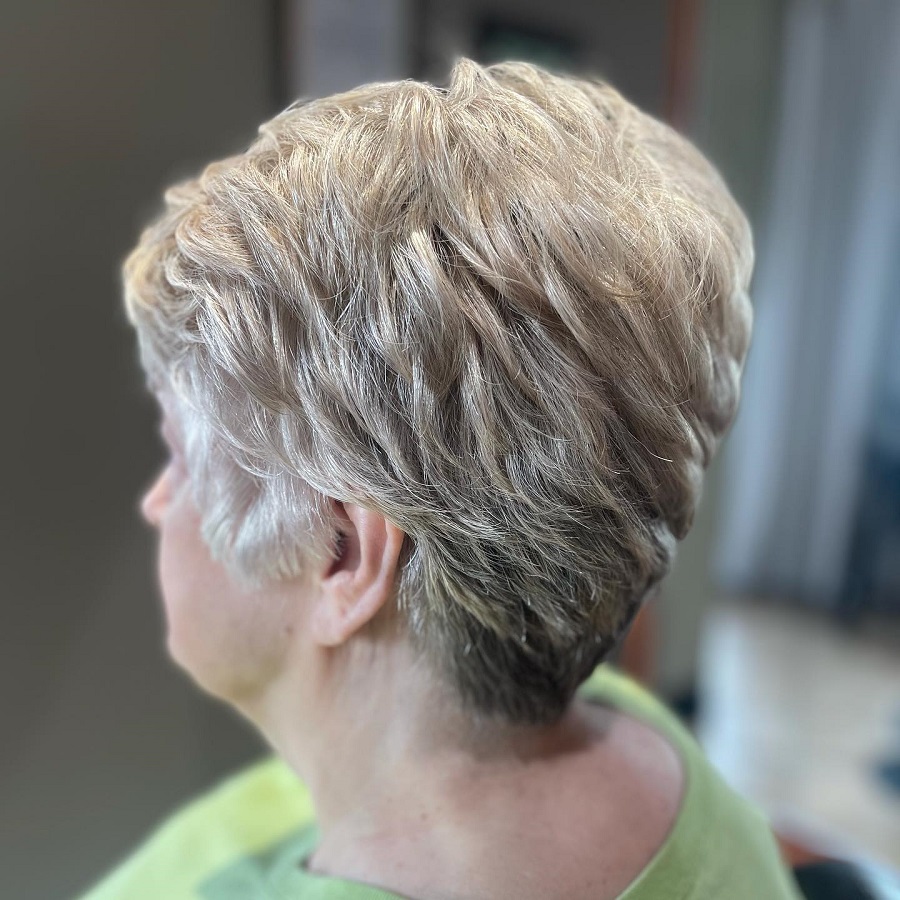
When talking about gray, various shades can be mixed and matched to create an alluring look. First, chop the hair into short layers and dye them an ashy gray hue. Finish off with dove gray highlights that are barely there but create a huge difference.
Salt and Pepper Moment
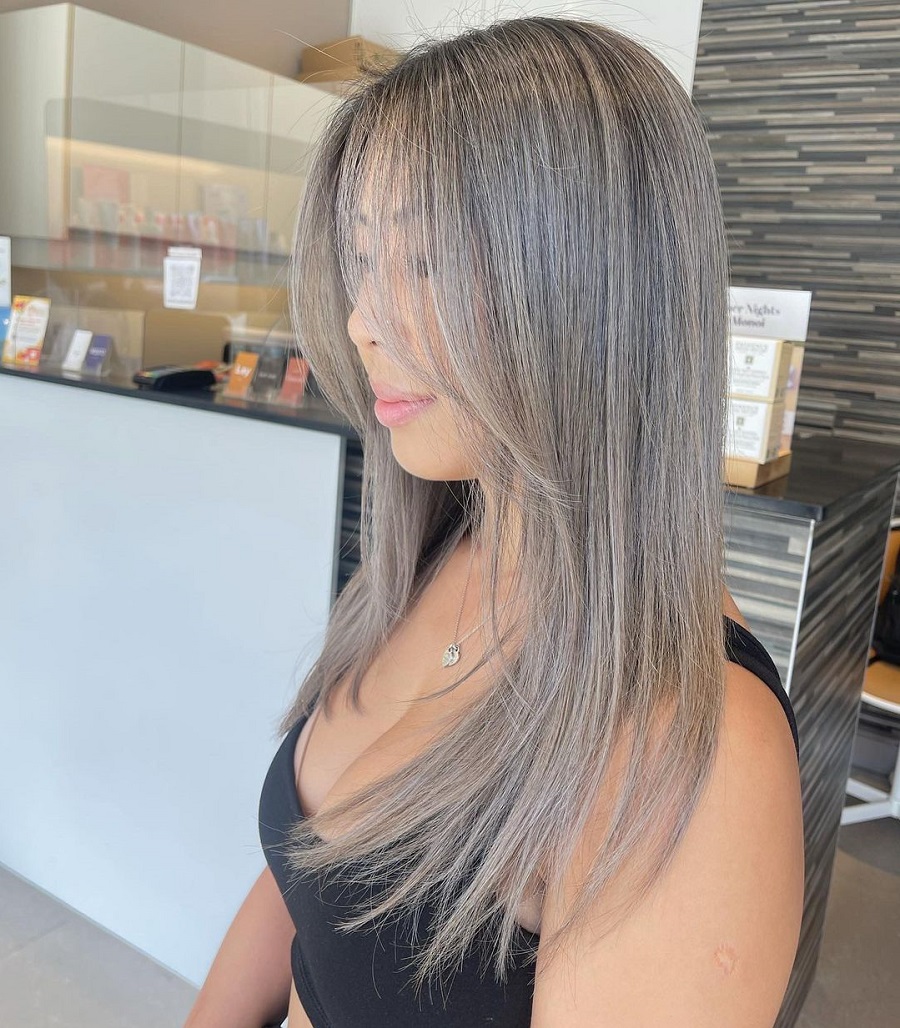
Ladies with brown or black hair can copy this glorious salt and pepper hairstyle when silver strands start peeking through their dark mane. Choose the tone that best matches those natural grays and add heavy highlights all over the head, leaving just a hint of the dark base.
Silver Streaks
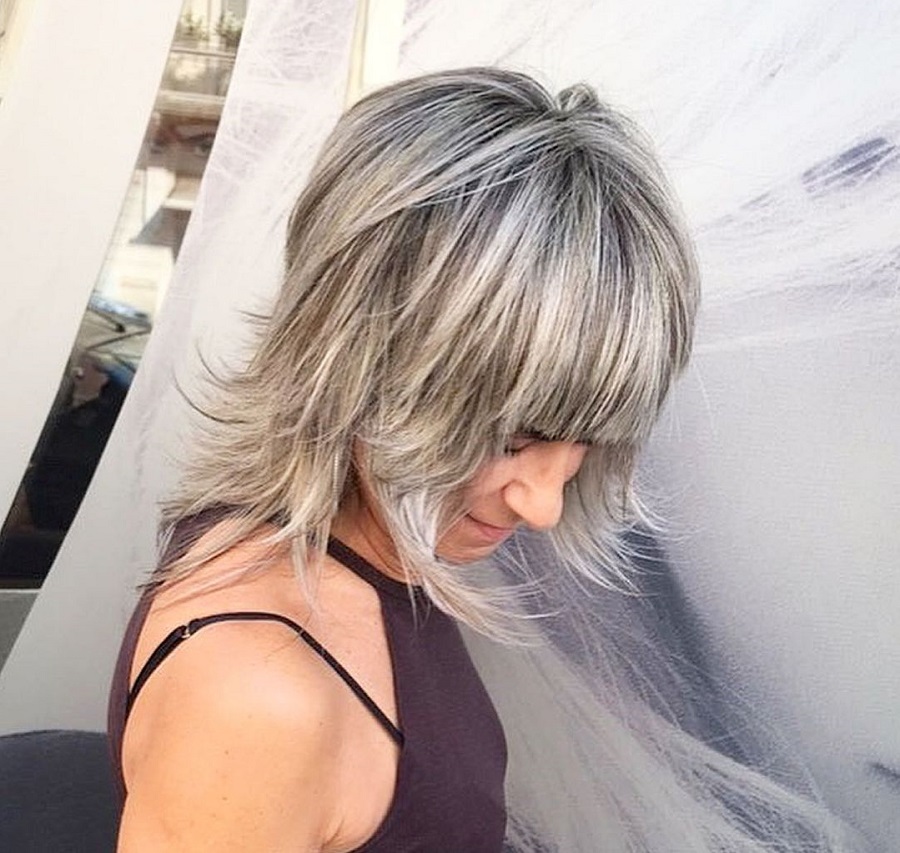
Get noticed from a distance by adding chunky streaks of silver or blonde gray that stand out against the dark gray base shade. Pair the look with a shoulder-length feather haircut and thick bangs covering the forehead to look several years younger, even with those aging tresses.
Transition To Gray Hair With Lowlights
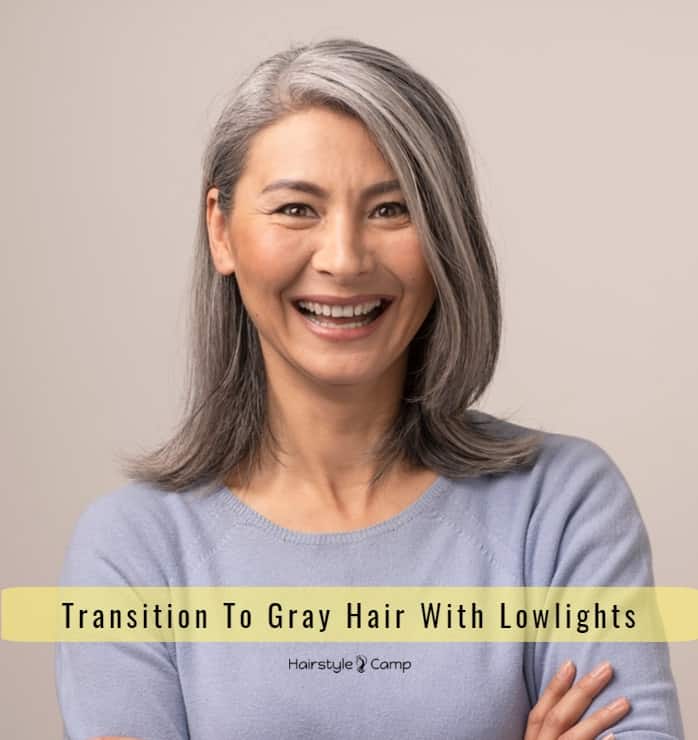
Lowlights are dyed a few shades darker than your base color to add depth and dimension to your overall look. They are perfect for fighting those unwanted yellow tones that often come from highlighting gray hair.
To create the most natural-looking contrast, the transition to gray hair with lowlights is done by adding streaks of your virgin hair’s tone to your look. We also love this method because it’s low maintenance and doesn’t require as many salon visits as highlights do.
While highlights strip hair of color before applying the desired tone, lowlights simply add dimension. Since gray hair naturally lacks melanin, those darker strands bring back welcome depth.
For an even gentler solution, try semi-permanent color. Instead of penetrating the hair shaft, semi-permanent color coats only the cuticle, giving you the look you need with less damage to the hair.
Some examples of transitioning to gray hair with lowlights:
Color Contrast
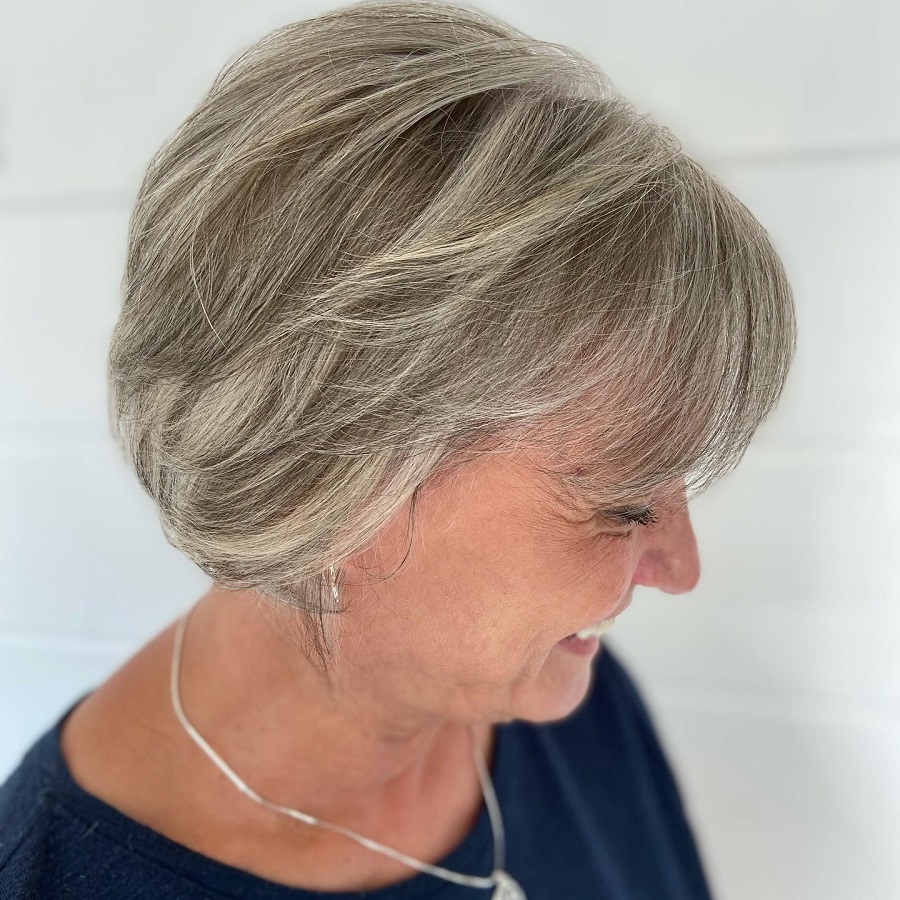
Keep it elegant yet stylish by creating a light and dark color contrast. Go for a pixie-bob haircut and choose an icy gray hue as the base shade. Chunky bits of steel gray contrasting with the lighter strands complete this natural look.
Feathered Gray Bob with Blonde Streaks
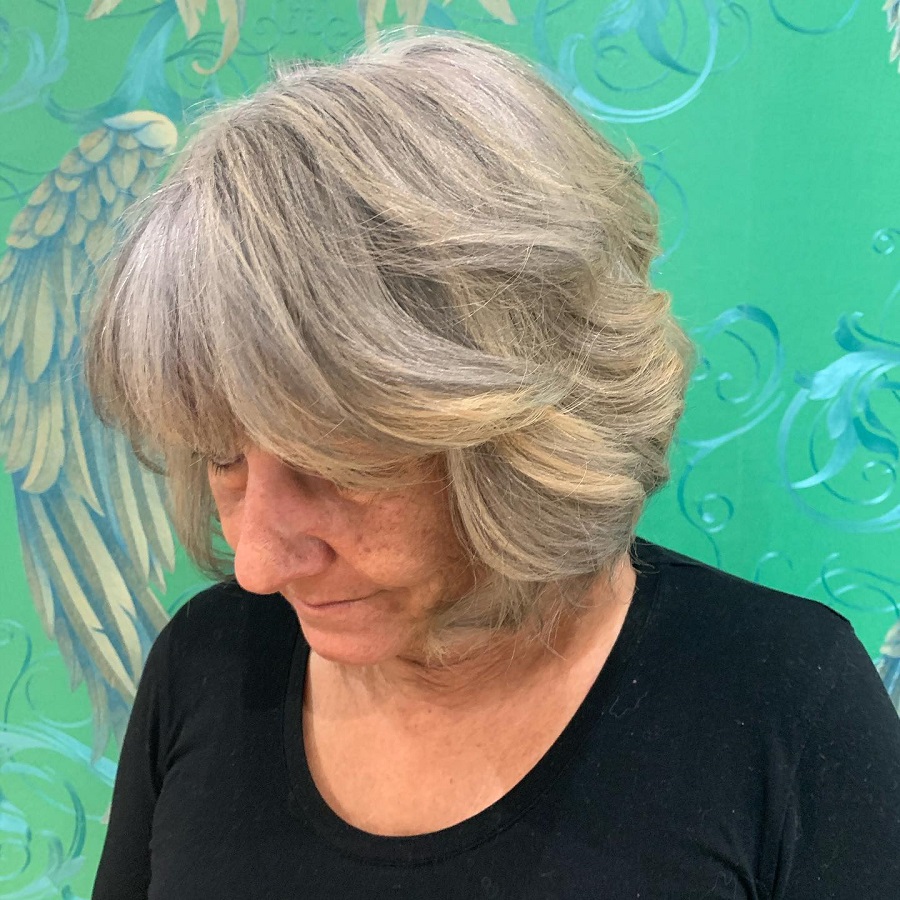
Although a blonde and gray hair color combination seems uncommon, it can create a soft look. Place light blonde lowlights on the ashy gray mane, focusing on the sides and back rather than the top. Finish off with a layered bob haircut.
Dirty Blonde Lowlights
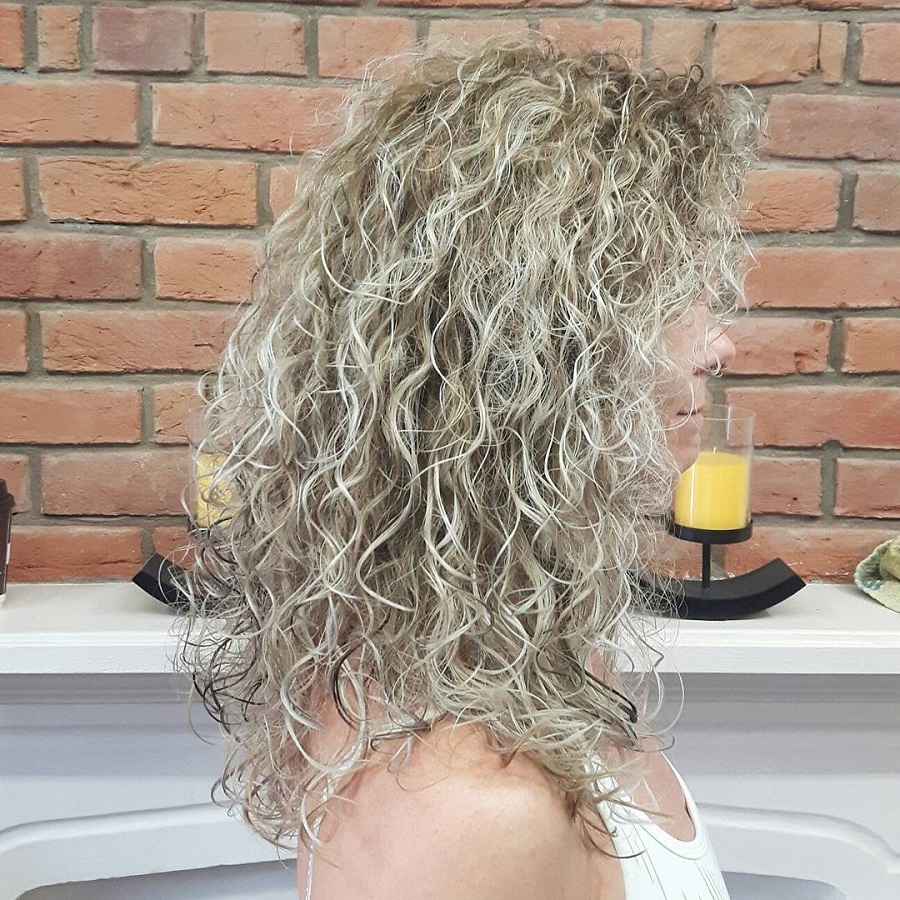
Take part in the gray hair trend while embracing your white strands with confidence. Dye the hair a shiny silver blonde shade with fine dirty blonde lowlights, adding some depth to the look. This style is high maintenance but looks stunning on both straight and curly hair.
Golden Beauty

Gray strands are inevitable; instead of dyeing them repeatedly, it is better to flaunt them gracefully. The light golden blonde streaks begin just behind the roots and gradually concentrate toward the tips, creating a flawless gray-to-golden ombre look. Give off vintage vibes with bangs and a flipped-out bob.
Growing Out Gray Hair From Home

Growing out gray hair without the time and price tag that comes with a salon job is absolutely possible. This method involves growing your gray out an inch or two and then cutting your hair into a short bob or pixie. Not everyone wants to go gray and cut hair super short at the same time, however.
You can cover gray roots as they grow with an at-home root touch-up. This way, you can blend in your roots for 5-6 weeks. A short haircut with regular trims will speed up the transition process. If you think you’re too old to try a new hairstyle, think again; here are some classy gray hairstyle ideas for women over 60.
How To Choose the Right Gray Shade For Your Hair?
Whether you want to harmonize with Mother Nature or simply love the look of gray hair color, choosing the perfect gray shade is essential to the transition.
The most important thing to consider with multiple shade options is your skin undertone. Understanding if you have cool or warm undertones will help determine which shades of gray you want to consider.
The easiest way to identify your undertone is to check the color of the veins inside your wrist. If they are bluish, you have cool undertones; if they are green, you have warm undertones. Of course, you may also have a mix of both, making your undertone neutral.
Lighter shades of gray tend to brighten darker skin tones, whereas darker shades of gray illuminate lighter skin tones. Those with olive tones can wear just about any shade and look great.
Hair Maintenance During Transition
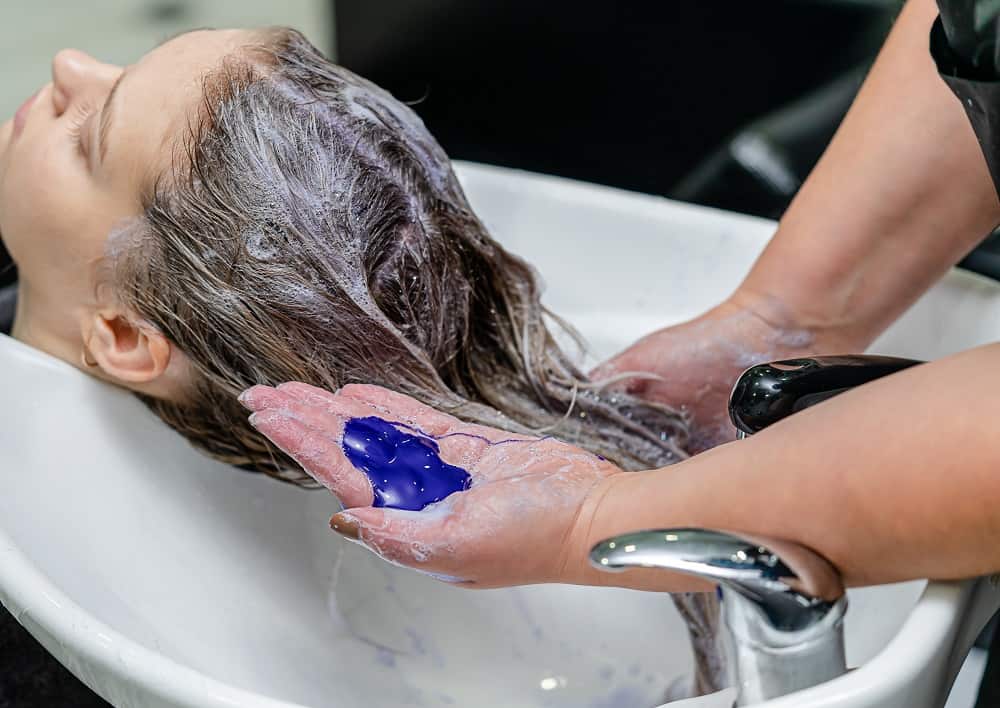
Overall, upkeep when transitioning to gray hair is just as important as the coloring process. To keep gray highlights from developing unwanted yellow tones, use a purple shampoo regularly.
You may have to go back to the salon for more toner and glosses during your transition, but at home, glazes are also great to use. As hair ages and turns gray, it becomes drier, so it’s a good idea to incorporate powerful moisturizing conditioners into your haircare routine.
Like aging, transitioning to gray hair takes time, patience, and a little self-love. You can complete the process on your own or work with a stylist to approach it gently and according to your overall maintenance level. Going gray doesn’t have to be dull. In fact, with the proper care, it can be fabulous.
Key Takeaways
- Going gray is a months-long process.
- Permanent dye safely lifts virgin hair up to two levels (bleach lightener is required for more).
- Highlights and babylights create natural, gentle blends.
- Glosses maintain color and give hair a rest between coloring sessions.
- Lowlights are lower maintenance than highlights.