
Highlights and lowlights can bring life to dull hair colors. Knowing the differences between the two can help you choose the right one for your preferred look.
Getting one flat hair color is easier, but where’s the fun in that? Both highlights and lowlights create contrast with your base hair color. However, the methods are different.
Highlights create contrast by lightening your hair strands a few shades lighter than your base color, while lowlights darken them to add rich depth.
Let’s break down exactly what each method does and the differences between them.
What Are Lowlights?
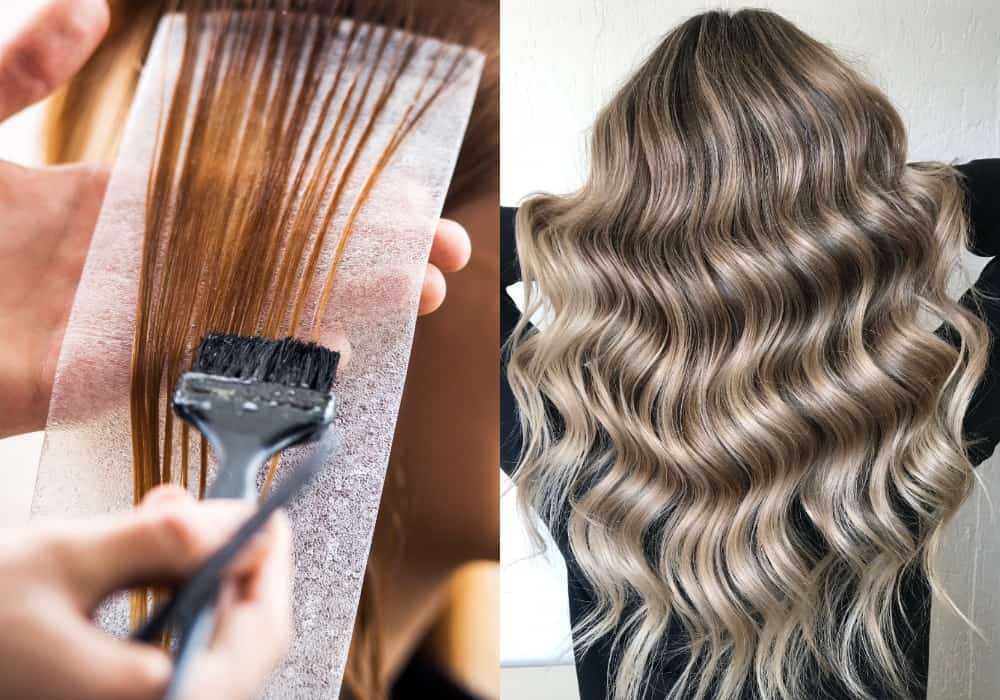
Lowlights are small sections of dark color that are added to the hair. Sometimes you can add lowlights if you went too far highlighting your hair. Maybe your hair looks more like bleach blonde, but you don’t really like that look, or it’s not appropriate for your age. In this scenario, you can add a shade of deeper lowlights to your hair all over.
Sometimes, lowlights are only added to the bottom section. This gives you the appearance of having been in the sun, and only the top of your hair got lighter, but in a nice, natural sort of way.
Many people use lowlights on the top of their hair to re-create the blond hair of their childhood just as it started turning brown. To do this, the lowlights can be added close to the roots. Your colorist might use balayage techniques to blend in color with the rest of your hair.
What Are Highlights?
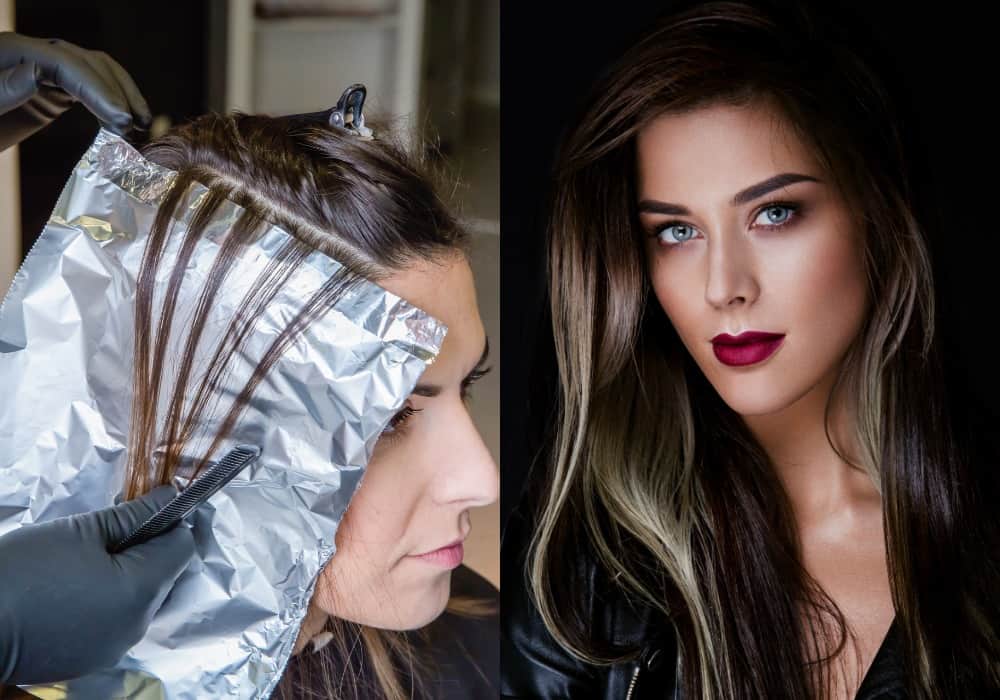
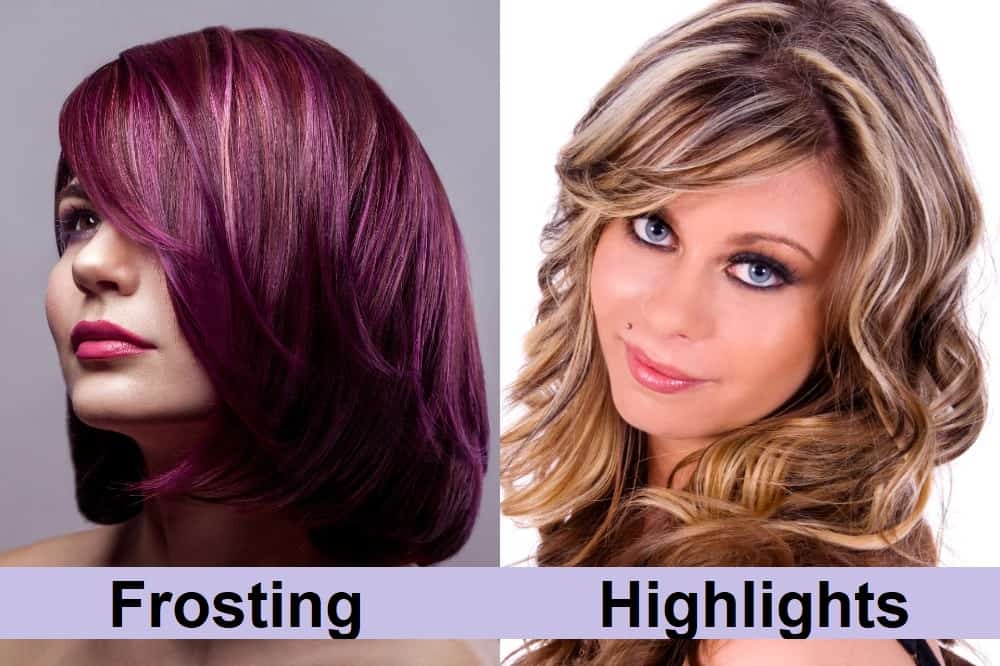
Highlights are streaks of color lighter than your own. So if you have brown hair, your highlights might be a shade lighter, or two or three shades lighter, depending on your preference. It’s not unheard of for people with hair that’s close to black to sport blonde highlights.
But these aren’t thick chunks. Highlights are almost always done in small, woven sections of hair. A colorist can create highlights using a cap or foils, choosing the technique to suit your hair and the result you want. Have highlights and lowlights applied in a salon.
Can You Mix Lowlights with Highlights?
Most certainly! Mixing highlights with lowlights can give you a very natural look as if you were transitioning from a blond childhood. Children’s hair often features natural highlights on top from sun exposure, with deeper natural lowlights underneath.
When your hair is naturally blonde or even brown, it’s lighter in some areas than in others. In fact, one way you can tell that someone is using hair coloring is to observe that the color is the same shade all around with no variation.
So having lowlights and highlights at the same time makes your hair color look natural. Some people add lighter highlights to their bangs to give their faces a younger look.
Highlights and Lowlights for Thin Hair
On adults with thin hair, having both lowlights and highlights can make the hair look fuller by adding depth and dimension. This is especially the case when the highlights are babylights.
Here, you can’t tell that highlights have been added, and the lowlights look like natural coloring. This creates the illusion of volume while at the same time being a very pretty, soft look.
How to Care for Hair with Lowlights and Highlights
The benefit of having highlights and lowlights is that the coloring still looks natural as your natural hair color grows in. So you can delay your next color treatment for up to two to three months.
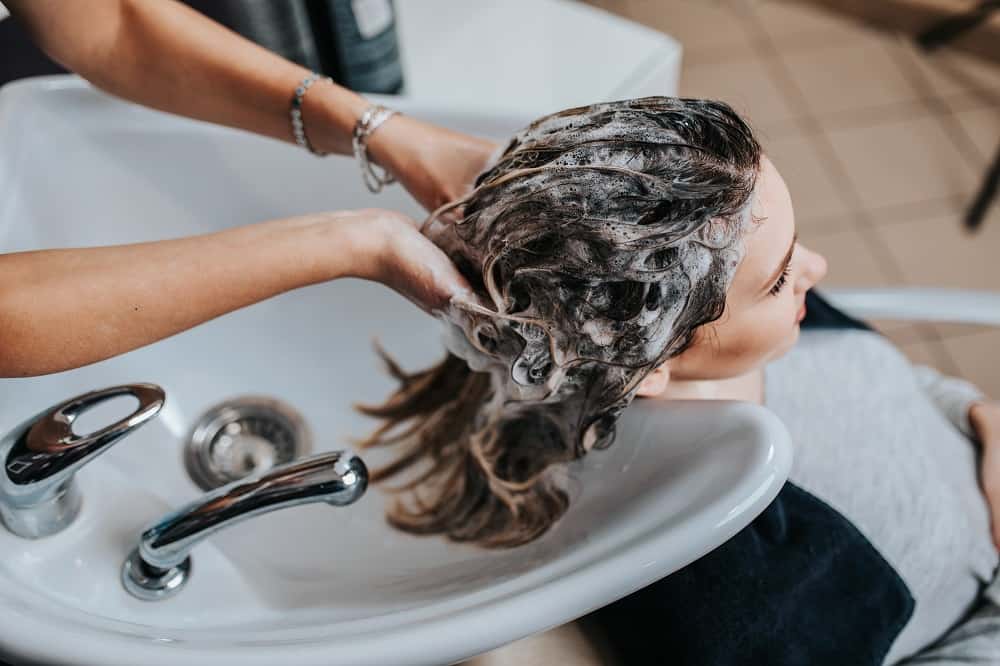
That being said, you should always go into a salon to have lowlights and highlights added to your hair, preferably the same salon where you had them done originally.
Proper maintenance can help keep your hair vibrant, so make sure to use color-safe, sulfate-free shampoos and matching brand conditioners. Deep condition regularly and try to avoid the use of high heat.
If you have to use heat on your strands, make sure to use a heat protectant serum. To keep your blond looking fresh, consider using purple shampoo. There are also shampoos on the market that make sure red, brown, and black stay vibrant.
Do Lowlights Work for All Hair Colors?
You won’t be able to apply lowlights on black hair because lowlights are darker than your hair. The only way to use lowlights on black hair is if you have too many highlights and would like to conceal some of them with lowlights instead.
Besides this, lowlights work on any hair color that has darker shades, so that would be all others besides black. Reds, blonds, and browns can all take lowlights.
Lowlights bring out the loveliness of pastel and rich fashion colors, too. Imagine having highlights and lowlights applied over a pastel pink so that it actually looks something like your natural color. Amazing!
How to Decide Between Lowlights and Highlights
Some people decide not to add highlights and lowlights at once because of the damage potential. Other people might choose one or the other to correct the shade of their hair. Lowlights can be added when you wish to darken your hair.
Like highlights, they are made with very thin portions of hair so that the coloring looks as natural as possible. So it’s easy to do a subtle darkening of the hair with lowlights. The same is the case with highlights, only the opposite.
You can lighten your hair with them subtly if you feel your hair is a bit too dark. If it’s not subtle changes that you’re after, consider a complete color treatment with new highlights and lowlights.
What’s the Difference Between Highlights, Lowlights and Babylights?
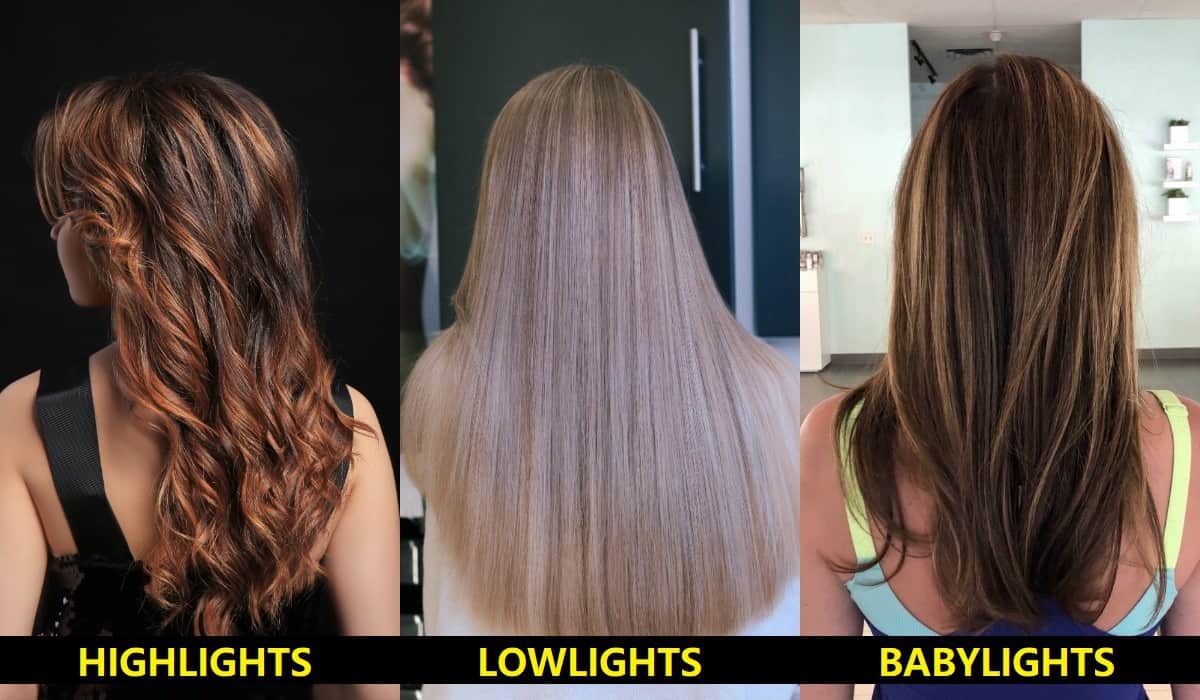
Highlights and lowlights use small, woven sections of hair. Babylights, on the other hand, use micro-fine woven sections of hair.
Babylights are a form of highlighting, but you really can’t tell the person has highlights applied because the hair sections are so tiny. They look very natural as if you have highlights from the sun.
For all textures of hair, there isn’t a more professional and, therefore, natural look than highlights or babylights and lowlights combined. For the most genuine look, just remember not to lighten or darken your hair by more than two shades.
Beyond that, you have complete freedom to warm up your highlights with a reddish tone, use the same tone range as your original locks or cool your hair down with an ashy color. Both procedures offer a highly customizable way to add dimension to your natural color.