
You’ve seen the video. Dark brunette hair at the start, a jump cut, and fifteen seconds later someone is platinum and shaking their head in slow motion under a ring light.
What that video doesn’t show is the three appointments spread over several months, the sessions that ended in a color nobody would post, the cost across the whole journey, and the moment the colorist said no.
I’m not saying it can’t be done. I’m saying it is a project rather than an appointment, and the clients who understand that at the start are the ones who end up happy with the result.
Dealing with box-dyed hair is very different from dealing with professionally dyed hair. The pigment tends to be a lot harder to remove, and box dyes often have caused more damage to the hair than a professional one. However, it is not always impossible.
Primarily based on the condition of your hair and how far I can push it without compromising that condition, a blonde result can still be achievable with patience, commitment and the right expectations.
My No. 1 priority will always be the condition of your hair.
As long as you are aware that lightening will affect condition to a certain extent, that you may not get the desired result in one sitting, and that you will need to invest in good hair care, then I am more than happy to start that blonde journey with you.
I have been doing color work, especially blondes, for over seven years now, and I take on around five to ten of these dark-to-platinum journeys in a year.
It is thankfully becoming less frequent as people realize the difficulty of getting back to blonde. For the clients who have been able to complete the process, it has been so worth it!
Keep your expectations low when dealing with box-dyed hair and wanting to go blonde, and you may be pleasantly surprised at what can be achieved.
Why box-dyed dark hair is the hardest place to start
Box color is not a moral failing, and I want to say that early. Most people reach for it for many reasons: a salon appointment was not possible that month, they have had a break-up and want a spontaneous quick change, or they just couldn’t afford anything else!
We will always encourage you to avoid doing this, but we will never judge you if you have, we are all human.
The problem is what a box promises. It has to work on every head that buys it, so it is formulated to deposit generously and cover reliably, which is the right choice for a product that can’t see your hair.
Over repeated applications that pigment builds up, most heavily on the mid-lengths and ends where it has been applied again and again. With the peroxides in these boxes, it is not usually just pigment buildup but damage buildup as well. What looks like one flat color in the mirror can be several different histories along a single strand.
There is also a salon rule that surprises almost everyone: color does not lift color. A lighter dye cannot lighten hair that is already dyed, so no shade of blonde in a box will get you there. The old pigment has to be lifted out professionally first, and that is the slow, careful part of the whole journey.
That is the real reason a colorist may be cautious about a fast transformation, and why the honest answer to lightening dark box dye is so often about sequencing rather than a single appointment.
What I look for when a box-dye client sits down
When a client sits down with box-dyed hair, I will always assess the condition first, because nothing can go ahead if the hair is badly compromised and could get worse through a lightening process.
If the condition is fine, I will look for bands in the color: areas where pigment has been overlapped and built up, lighter bands, or different shades that will need different treatments and processes when lightening the hair. My questions will always be:
- What has been put on the hair, how many times, and how often?
- When was the last time you applied this color?
- What is underneath? Have you put dark color on top of already lightened hair, or over your natural hair?
These make a huge difference in knowing how many layers of color have been put on top of each other. The more layers, the more pigment needs to be removed, and the harder it is. If you have recently applied another color, then less pigment has naturally faded out over time, which also means more pigment to remove.
That leads to the last question. If the hair has layers of pigment on top of already bleached and damaged hair, then it is already compromised before we even start to lighten it. This situation must be approached with a lot more caution, because the hair can break before enough pigment is removed to even get to a blonde stage.
However, you can also have previously lightened hair that is still in good condition, which allows me more opportunity to get you back to blonde with minimal damage. I will assess the hair condition in person and ask for previous pictures to make my decision on whether I think it is possible to proceed.
If the color has been applied to natural hair, then it is a lot safer, condition wise, to proceed with lightening, as there hasn’t been much previous damage.
What lightening actually does to hair
This is worth understanding, because it explains everything that follows about pacing and cost.
Start with the scale. Colorists measure hair depth in levels, from 1 for black up to 10 for the palest blonde: a typical dark box brunette sits around level 3 to 5, and platinum is a 10. Very few color journeys cover that distance.
Lightening works by oxidation, and it is not selective about what it oxidizes. Alongside the pigment, the process removes the hair’s protective surface layer, weakens the cell membrane complex, and oxidizes cysteine residues, which lifts the cuticle scale and causes protein loss.
In plain terms, the fiber is left more porous, more absorbent, and structurally weaker than it was. That is not scaremongering, it is simply what the chemistry does, and it is why aftercare matters more on blonde hair than on any other color.
It also scales with distance. The American Academy of Dermatology puts it plainly: lightening hair more than three shades needs stronger peroxide, and more damage comes with it.
So going from dark brunette to platinum is not one notch further than going to caramel. It is the far end of the scale, on hair that already has years of color sitting in it.
Why a good colorist won’t take you there in one sitting
Think of hair as having a budget. Every chemical service spends some of it, and the budget doesn’t refill.
Push too far in one appointment and the fiber does not simply look worse, it starts to fail.
Repeated chemical and mechanical trauma, with bleaching among the implicated causes, leads to abnormal fragility and premature breakage along the shaft, producing the frayed, paintbrush-like fractures a dermatologist would recognize as acquired trichorrhexis nodosa. If breakage like that is already happening, see a dermatologist before anyone books more chemistry.
That is what colorists mean by a chemical haircut. The hair does not fall out of the scalp, it snaps somewhere along its length, and no product puts it back. The only real answer is scissors and time.
So when a colorist stops halfway through a plan, or books you back in eight weeks instead of finishing that day, they’re not being slow or upselling you. They’re protecting the hair you still want attached to your head in three months.
How I decide the hair has had enough
Depending on the strength of the hair, lightener can be left on for different amounts of time. My rule of thumb in the salon is a maximum of an hour, sometimes an hour and a half if the client has strong hair. If I know the hair has previous damage, I will check the condition after 30 minutes and keep checking every 15 minutes from there.
I will never push the hair until the texture turns stretchy or gummy. That is already too late: the hair has been pushed too far and needs to be cut.
After the one-hour mark, bleach tends to slow down a lot and gradually stops working. At that point I can tell the hair won’t lift any more in this session, and it is best to tone the hair at that level and book a future lightening appointment if needed.
This is exactly why I won’t push the hair too much in the first session. If the client can leave with healthy hair, it allows us to lighten it again in the future and get them to their desired color. If the hair is already compromised from the first session, then lightening it again is not possible unless the damage is cut off first.
My prime focus this session is lightening you as much as possible without compromising the condition of your hair. This gives us a much lighter base to work with next time, as well as strong enough hair to withstand more lightening. This process is a journey, and there's no point in having your desired color sooner if your hair is breaking off!
The honest timeline, session by session
For dark box-dyed hair I would recommend at least three sessions, sometimes four depending on how stubborn the color is. These sessions will need to be roughly six to eight weeks apart, which allows time for treatments, toner, aftercare, and trimming any hair that becomes dry or brittle in the meantime.
That time scale allows me to see how different areas of the hair have coped with the lightening process: which areas are the strongest, and which I need to be more cautious with. It also allows you to understand the effort needed in the aftercare and how bleaching can affect the condition of the hair, giving you time to choose whether you still want to proceed.
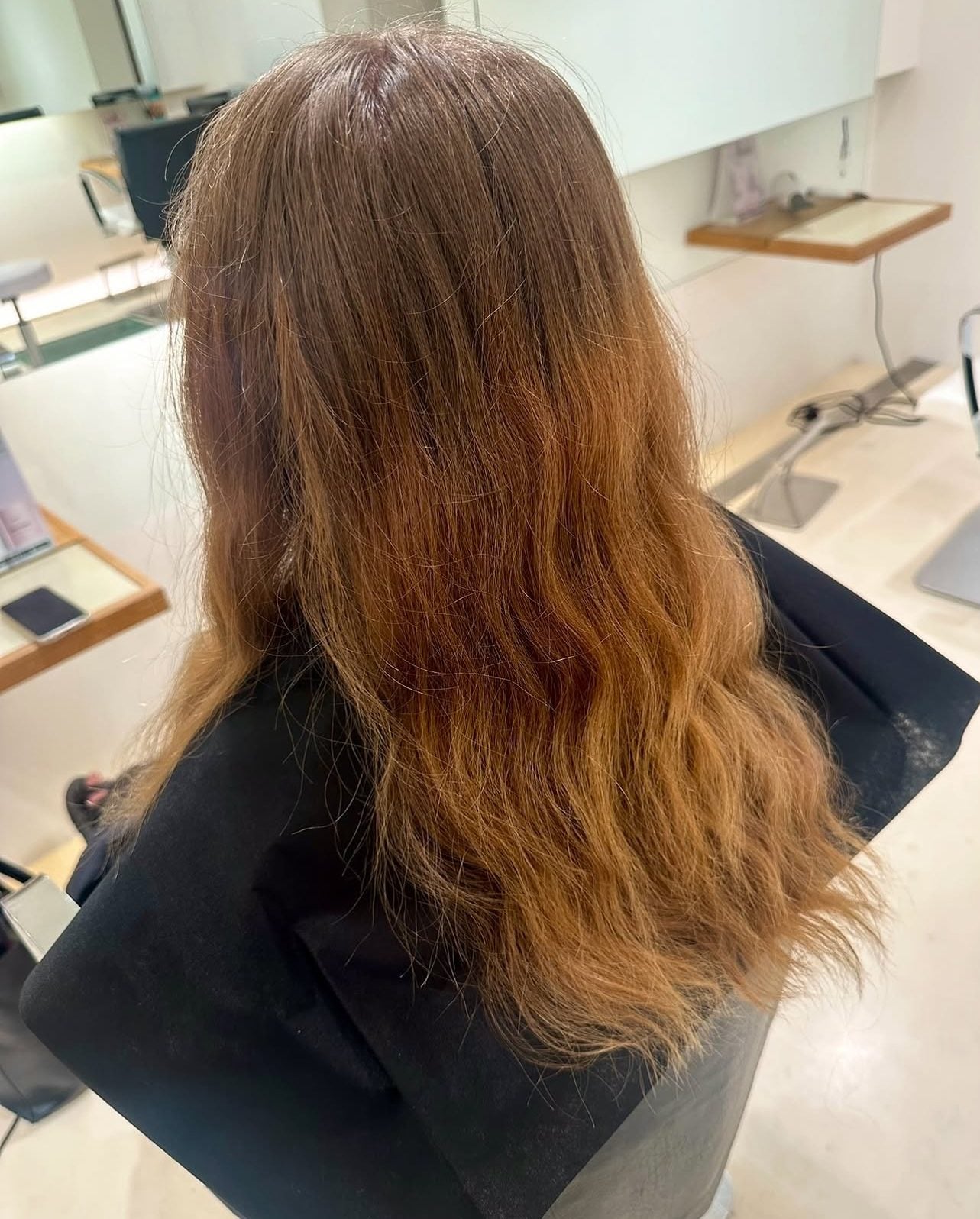
The end of session one is usually the least satisfying. This is where as much pigment as possible is shifted, often ending with a more caramel-feeling result, although I will never let you leave with something that doesn’t look nice and wearable!
“Enjoy the process” is my mantra for these sessions: enjoy each and every tone and style before the end result.
Session two will often give us a cleaner but warmer dark blonde. Some areas are usually lifting better than others, so expect it to be multi-tonal still. Session three is where we start getting a lighter and more even result, but it is also where regular trims and aftercare become even more important.
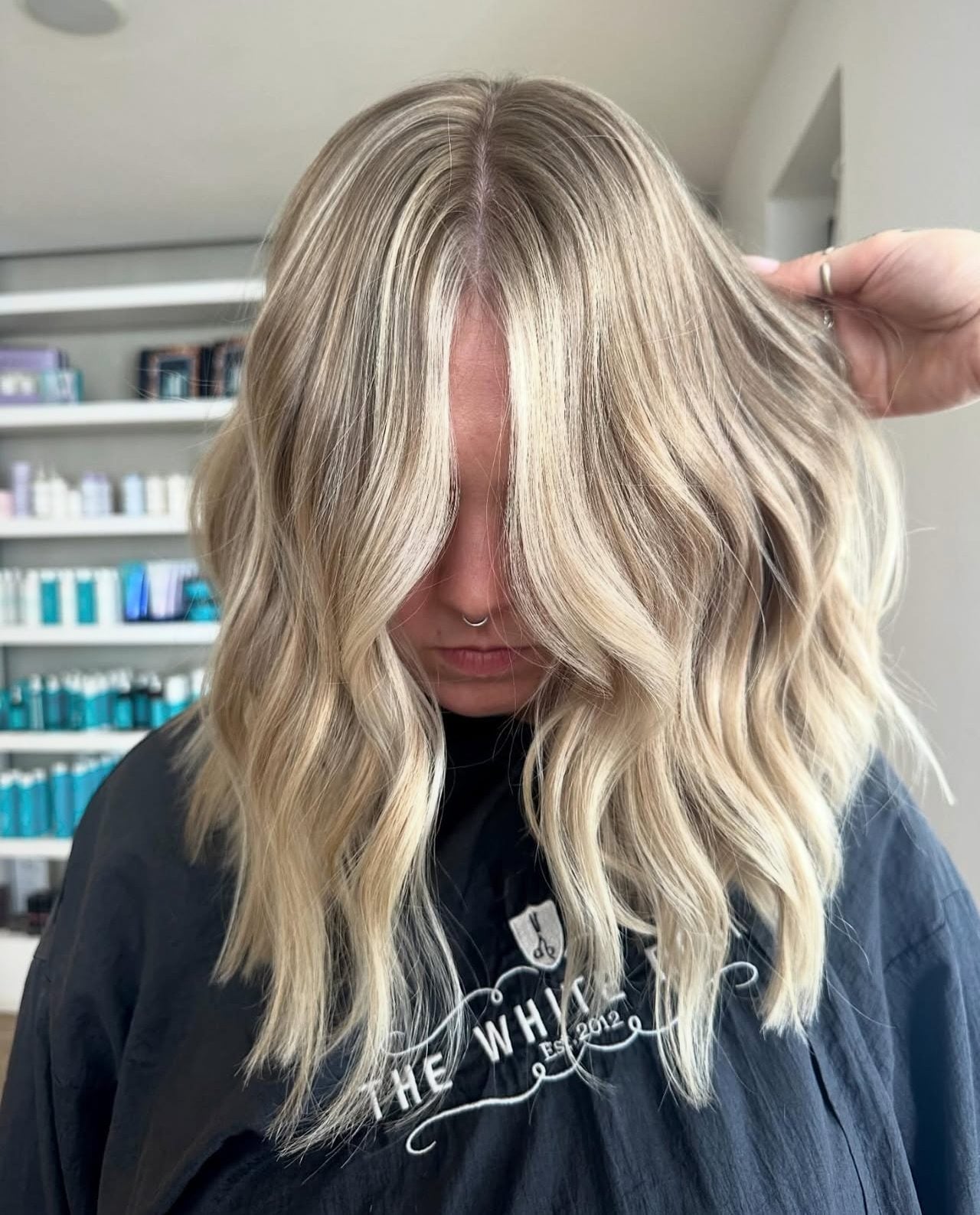
If the hair is still strong, then session four will create that beautiful, bright and even blonde you were dreaming of! Patience paid off. With regular maintenance and care, you can have beautiful blonde locks for as long as you like.
Between sessions, the color you are living with is usually managed with a toner refresh, which is why toner appointments belong in the plan and the budget rather than being an afterthought.
The gaps between appointments are not padding. They are the part of the plan that decides whether the hair survives it.
What the whole journey costs
Almost every quote a client is given covers one appointment. The real figure is the whole project, and it has more lines in it than people expect.
There is the lightening work itself, repeated across sessions. There is toning, both during the journey and afterward. There is whatever bond or conditioning work your colorist builds in, the home care that keeps the result wearable, and then the maintenance, which does not stop.
At my salon, a full head of highlights is £250 to £280 (about $335 to $375), depending on the thickness of your hair and the time taken.
That includes bond repair treatment sprayed onto the hair before lightening, mixed into the bleach to protect the hair, and applied after toning as a deep conditioning repair treatment. It also includes the toner and any root shadow, as well as the cut, style and finish.
I will not do a lightening service that does not include bond repair, because my No. 1 priority is keeping the hair in good condition. If a client doesn’t want it because of the price, I will refuse the service.
A maintenance toning and blow-dry or cut service is £100 to £110 (about $135 to $150). I encourage at least one of these between lightening appointments to keep the color fresh for longer, and the toners are also conditioning and beneficial for the hair.
For aftercare at home, I recommend a product purchase, but it is down to you at the end of the day. If you can take good care of your hair at home with good products, then future appointments will have much better results. If you can’t manage this and your hair is in bad condition, then I will refuse to lighten the hair again.
Most breakage and poor condition happens after the appointment, not during, and it is down to poor aftercare. This stage of hair care tends to be even more important than any care done during the appointment, and it can make or break your result.
Those are my salon’s prices, and salon pricing varies a lot by region and by market. The shape of the spend is what travels: several lightening sessions, toner between them, and ongoing maintenance once you arrive.
The maintenance nobody budgets for
Platinum is the highest-maintenance color there is, and the maintenance starts immediately.
Roots are the obvious one, and they show quickly on high-contrast blonde. Some people genuinely enjoy the grown-out look and choose deliberate dark roots, which is a legitimate and much cheaper way to live with blonde. Others want a tighter cycle, and there is honest information on managing regrowth for both camps.
Then there is tone. Lightened hair drifts warm, and understanding why blonde turns brassy is most of the battle.
Purple shampoo is where I see the most self-inflicted problems.
Used sensibly it maintains tone between appointments, but it leaves hair looking dull and darker when it is overdone, and there are real consequences to overusing purple shampoo. It is also worth knowing when blue beats purple, because they correct different tones.
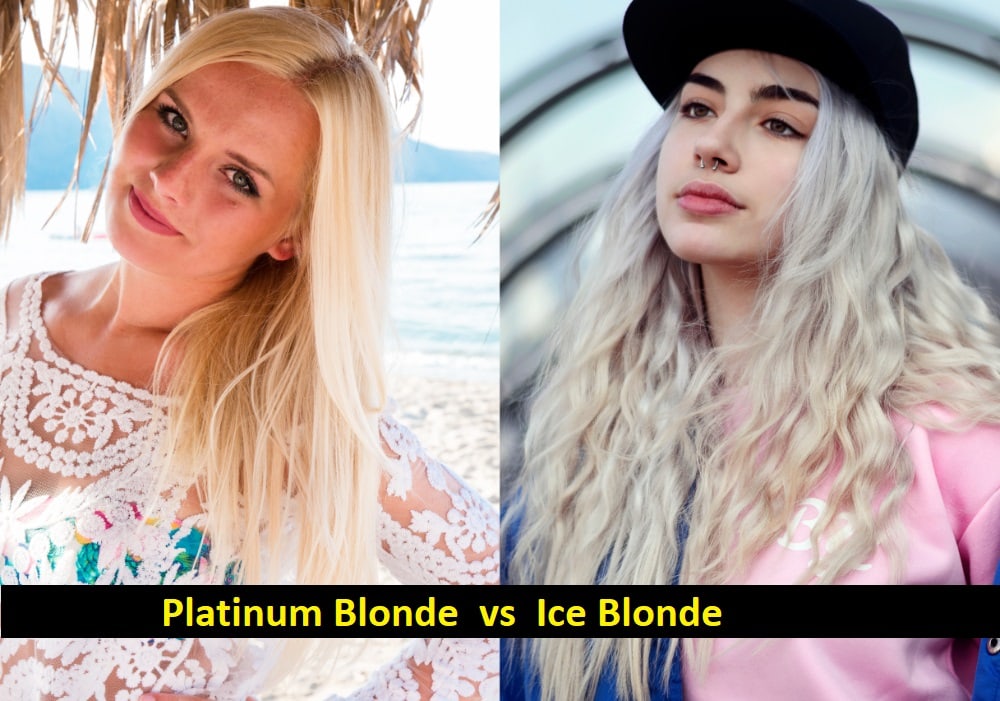
It is worth being clear about the destination itself, too. Ice blonde and platinum are not the same target, and the shade of platinum you choose changes both the work and the upkeep.
The mistake I see most between appointments
The main mistake I see with clients wanting to be as blonde as possible is waiting too long between appointments.
Super blonde looks are very high maintenance, and getting your color done once or twice a year is not enough to keep your desired result. Your ends become brassy, your roots become a much bigger problem, and every bit of the hair needs a complete refresh.
You cannot come into an appointment once a year with brassy ends and five inches of root and expect to be back to platinum within a three-hour appointment.
Extra steps are then needed: many more foils, often back to back, to deal with the amount of root now showing, plus careful re-lightening of the ends and tip-outs to brighten the existing hair again.
It is not a standard full head of highlights at that point, it is a color correction. That takes even more time and money.
Being platinum is a lifestyle, and it is totally maintainable if you can respect the commitment needed for it.
When the honest answer is not yet
Sometimes the right professional answer is to wait, and a colorist who tells you that is worth keeping.
Hair that is already compromised, or that has had another chemical service recently, isn’t a good candidate for a long lightening journey. Waiting a few months, keeping up with trims, and letting fresh growth come in usually gets someone to platinum faster than starting on hair that can’t take it.
Scalp health matters too, and it is a separate question from hair health. Lightener sits directly on the skin during root work, and the case literature on chemical scalp burns includes injuries even at concentrations generally considered safe. That is one of several reasons this work belongs with a trained professional rather than a kitchen and a YouTube tab.
If your scalp is sore, flaking, broken, or reacting, that is a conversation with a dermatologist before it is a conversation with a colorist. Any color service can wait.
How I say no kindly
Saying no to a client is always hard, and you always want to be able to give them what they desire. What’s even worse, though, is going through with the service anyway and giving them broken hair instead.
I would say: “At this moment in time I don’t believe your hair is in good enough condition to withstand a lightening service. I would rather you leave here with something healthy and wearable rather than bright and broken. Let’s do some TLC with your hair and work on getting it into optimal condition, so we can lighten it in the future and work towards your goal.”
I will always ask a client this question at the beginning of the appointment: “Is your priority your desired color result, or the health of your hair?” Nine times out of ten they will say the health of the hair, which answers any question about how far I am willing to push it.
For the ones who say the color, they accept that there may be some damage, but they have agreed to that process, so I can push the hair a bit more with their consent. That may mean needing a cut and having some dry ends, but I will never push the hair to the point where it is gummy or irreparable.
How to choose the right colorist, and what to ask
Since this is a project rather than an appointment, choosing who does it matters more than usual.
Look for the right portfolio
Blonde-on-blonde work is not the same skill as taking dark, previously colored hair lighter. Ask specifically to see corrective and dark-to-light transformations, ideally with the middle stages shown.
Expect a plan, not a promise
A good consultation ends with a sequence: how many sessions, roughly how far apart, what each one will achieve, and what it will cost. Anyone promising platinum in one visit on box-dyed dark hair is telling you what you want to hear.
Expect testing before chemistry
Strand testing and patch testing are normal professional practice, not fussiness, and they exist because both the hair and the skin can surprise you. Expect the skin test at least 48 hours before the color appointment. In many salons it is a booking requirement, and that is the mark of a careful salon rather than an inconvenience.
The one question that tells you the most
A good question to ask, to know whether you are in safe hands, is: “How many sessions do you think this will take to achieve what I want?” If the stylist gives you an estimate, something like “it could take two to four sessions depending on how your hair responds,” and bases their answer on hair condition and the results of each appointment, then you know it is safe.
A stylist can never predict exactly how long it will take or how the hair is going to lighten. But if they put the emphasis on maintaining the condition of the hair and assessing results at each appointment, you know they care about your hair and not just your money. Don’t trust someone who guarantees your desired result within one or two sessions regardless of anything.
Platinum blonde is a commitment and a lifestyle. Accepting this, managing expectations, and being prepared for the patience and dedication this beautiful color asks for will leave you with desirable locks wanted by many!
Invest in yourself, your hair and your stylist, and you won’t be disappointed. Your hair is an important part of you, so treat it with the care and respect it deserves, and the outcome will be worth it.