

You can bleach hair that was dyed black, but it is challenging to do safely. Before you start, it is important to know the safest order, when to wait, and the warning signs that mean you should stop and call a pro.
Black dye does not usually lift evenly, and bleaching too soon without fully removing the color can leave your hair patchy, dry, or badly damaged. This is especially true if your black dye is permanent, as bleaching over box dye is always a high-risk process. If your end goal is blonde, see how a stylist stages lifting box dye safely across several sessions.
CAUTION
- DIY black dye removal is high risk. A specialist colorist is the safest option.
- If your hair is stretchy when wet, snapping, or gummy, do not bleach at home.
- Plan for more than one session. “One and done” is rare with black dye.
- If you feel strong burning or see blistering, rinse at once and seek help.
How Soon Can I Bleach Dyed Black Hair?
Wait at least 2 weeks after dyeing black before you try any major lightening. Longer is better if your scalp feels sore or itchy. This gives your scalp time to calm down and lowers the chance of irritation.
If you used semi-permanent dye, you may get some fading in 2 weeks. If you used a standard permanent box dye, do not expect it to “wash out.”
If you have any burning, swelling, or blistering on the scalp after dye, do not bleach.
How to Bleach Black Hair Dye?
Use this order. It is safer. It also gives better lift on black dye.
Safety Order for Bleaching Black Dyed Hair
- Do a strand test. Test on a hidden section before you touch your full head. If the strand turns gummy, stretchy, or snaps, stop.
- Use a color remover first. Start with a sulfur-based color remover. Rinse for a long time, as the kit directs.
- Bleach only if you still need lift. Use 20 volume developer max for DIY, which Wella Professionals developer education describes as a gentler, moderate-lift strength better suited to at-home use. Keep hair open to air. Do not use foil or a plastic cap. Check every 5 to 10 minutes. If your hair is already compromised or you are unsure, stop and see a licensed stylist rather than pushing the lift at home.
- Rinse and condition. Rinse very well. Shampoo. Use a deep conditioner.
- Plan more than one session. “One and done” is rare with black dye. Do not bleach twice in one day. Rest your hair between sessions.
Stop signs
- Strong burning or stinging
- Blistering, swelling, rash, or severe itching
- Hair feels hot, gummy, or starts to melt
If this happens, rinse immediately with running lukewarm water until all residue is removed from hair and skin, then see a doctor.
Strand Test
Cut or isolate a small hidden strand. Do every step on that strand first. Color remover, rinse, dry, and then bleach test if needed. If the strand goes gummy, stretchy, or breaks, do not do your full head.
Use a Color Remover First
Use a sulfur-based color remover first. This type of remover shrinks artificial dye so it can be washed out. For many people it removes black dye with less strand damage than going straight to bleach, though results depend on the dye and your hair condition.
Follow the remover kit instructions exactly. Rinse for a long time. Many kits ask for 10 to 20 minutes of rinsing. That rinse step is the work.
Prepare Your Hair for Bleaching
Before you begin: do a patch test 48 hours ahead as your product directs, then put on gloves, keep the bleach away from your eyes, and work in a well-ventilated room.
Do not wash your hair right before bleaching. Aim for 24 to 48 hours after your last wash. This can reduce scalp sting. It does not make bleach “gentle” on the hair strand.
Split hair into 4 sections. Apply a thin layer of barrier cream around the hairline if you have sensitive skin. If you get redness, swelling, burning, or itching, stop and seek medical advice.
Mix the Bleach Properly
Do not use 30 or 40 volume at home. According to Wella Professionals developer education, higher-volume developers lift faster but process more aggressively, which raises the risk of severe breakage.
Mix bleach powder and developer as the brand directs. Use a plastic or silicone bowl and a plastic brush. Do not use metal tools.
Apply the Bleaching Solution
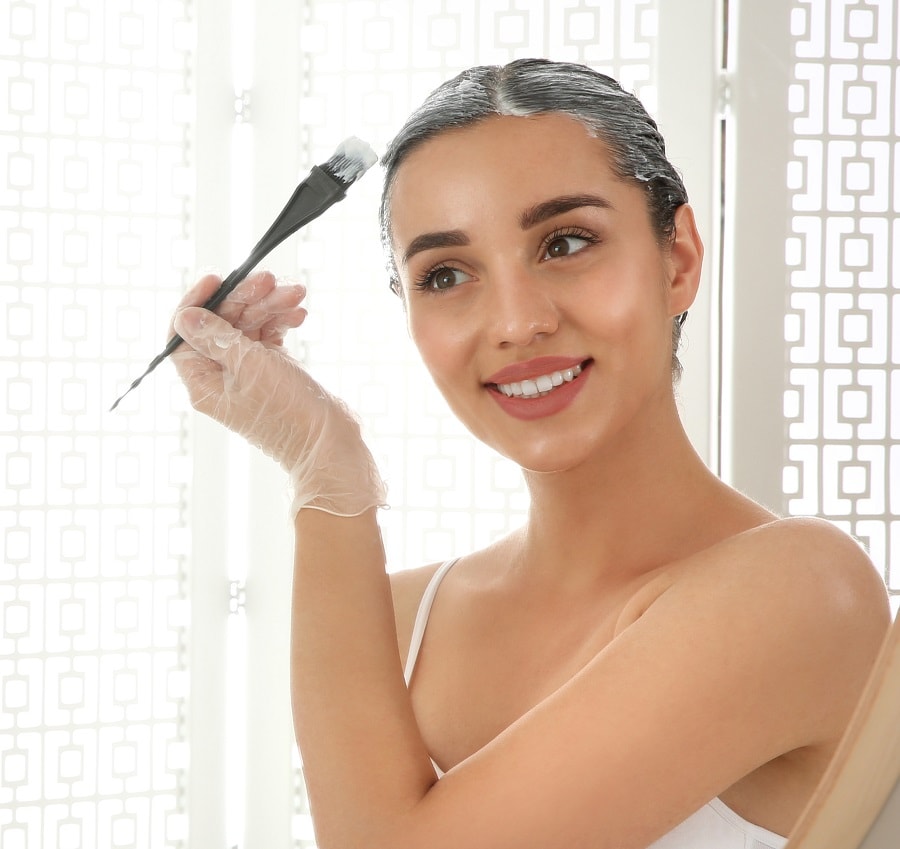
Work on dry hair. Start with mid-lengths and ends first, and the roots last since roots lift faster because of scalp heat. This helps prevent hot roots.
Take thin sections and fully saturate. Work quickly, but do not rush coverage. Uneven bleach equals uneven color.
Do not cover your hair with foil or a plastic cap for DIY bleaching. Leave hair open to the air so you can watch lift and feel for heat.
Check every 5 to 10 minutes. Follow the maximum processing time on the product. If you feel a strong burning, rinse right away.
What to Expect: The Orange Stage
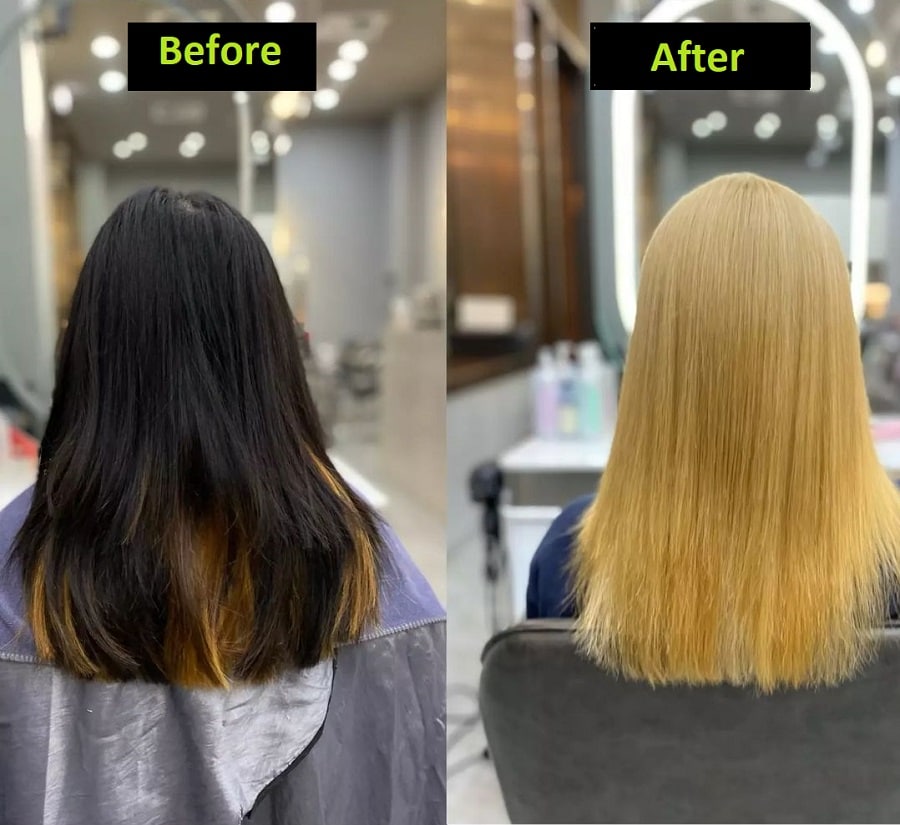
Lifting black dye usually turns the hair red or orange. That is normal. So don’t expect to go blonde in one session.
Do not bleach a second time too soon. If you need more lift, give your hair a rest. You should wait at least 4 weeks before bleaching again, even if your hair looks healthy.
Condition Hair After Bleaching
Rinse until the water runs clear. Shampoo gently to remove all bleach. Then use a deep conditioner made for color-treated hair.
Be gentle when drying. Squeeze with a towel. Do not rub. Avoid heat styling for a few days if you can.
So, Can You Bleach Your Dyed Black Hair?
Yes, you can, but you have to follow the safe order, which includes preparing your hair, removing the color, and mixing the bleach properly with the right developer volume. If you feel burning on your scalp, stop immediately and rinse the solution out.