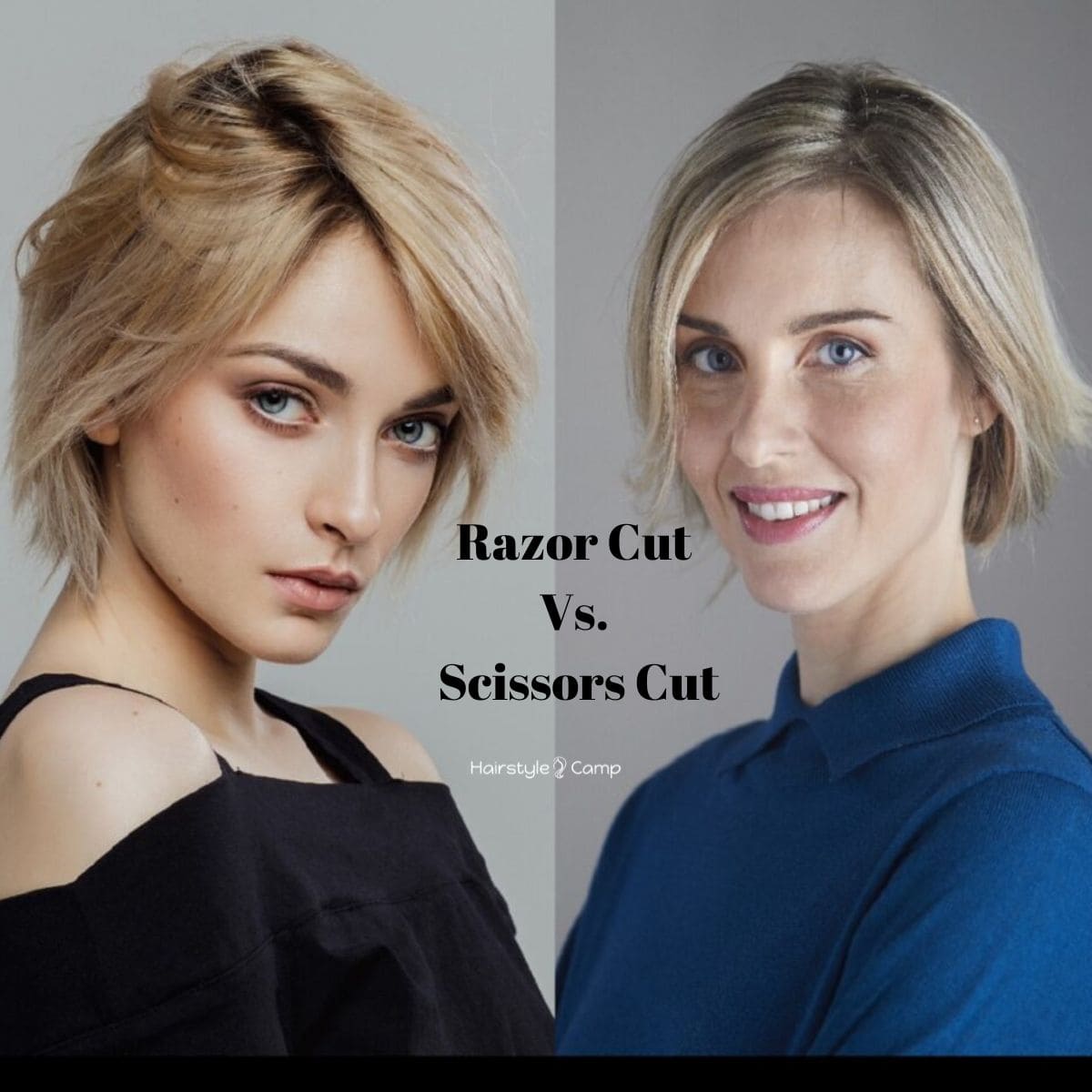

There is a moment in almost every consultation when a phone comes out. The photo is usually lovely, and the request is usually simple: this one, please.
I like that moment. A picture tells me in two seconds what someone finds beautiful, which is useful information and often more honest than a description.
The most common photo that is shown when someone comes in for a haircut is usually one of two. It’s either a heavily layered ‘wolf cut’ style photo or a professionally styled ‘flicky layers’ bouncy blow-dry style.
The wolf cut (which clients often mix up with the butterfly cut) is a style that only few have the hair for and only few can pull off.
It requires a lot of hair to be cut off due to such heavy short layering, especially around the face, which in turn requires the client to have a lot of hair to start off with. And a lot of the time it’s someone who has fine or flat hair that is asking for it.
Another issue with this cut for a lot of people is it requires a lot of styling, or someone who has natural movement/curl, which many people are either not willing to do or don’t know how, the layers aren’t going to sit like that by themselves.
The final thing about this style is that once it’s been chopped it’s a slow and annoying process growing it out, seeing as some of the layers are cut so short, so certainty is needed when going ahead with it!
The flicky-layer image on longer hair has similar issues, people with not a lot of hair are wanting a lot of layering, people with naturally straight or flat hair are expecting their hair to just sit like the image once it’s been cut, it just doesn’t work like that unfortunately.
I will always make a point of mentioning how styled these images are and are they willing to recreate that at home (if they have the hair to do so!), and most of the time they are shocked that it needs styling and go for a lower maintenance option instead.
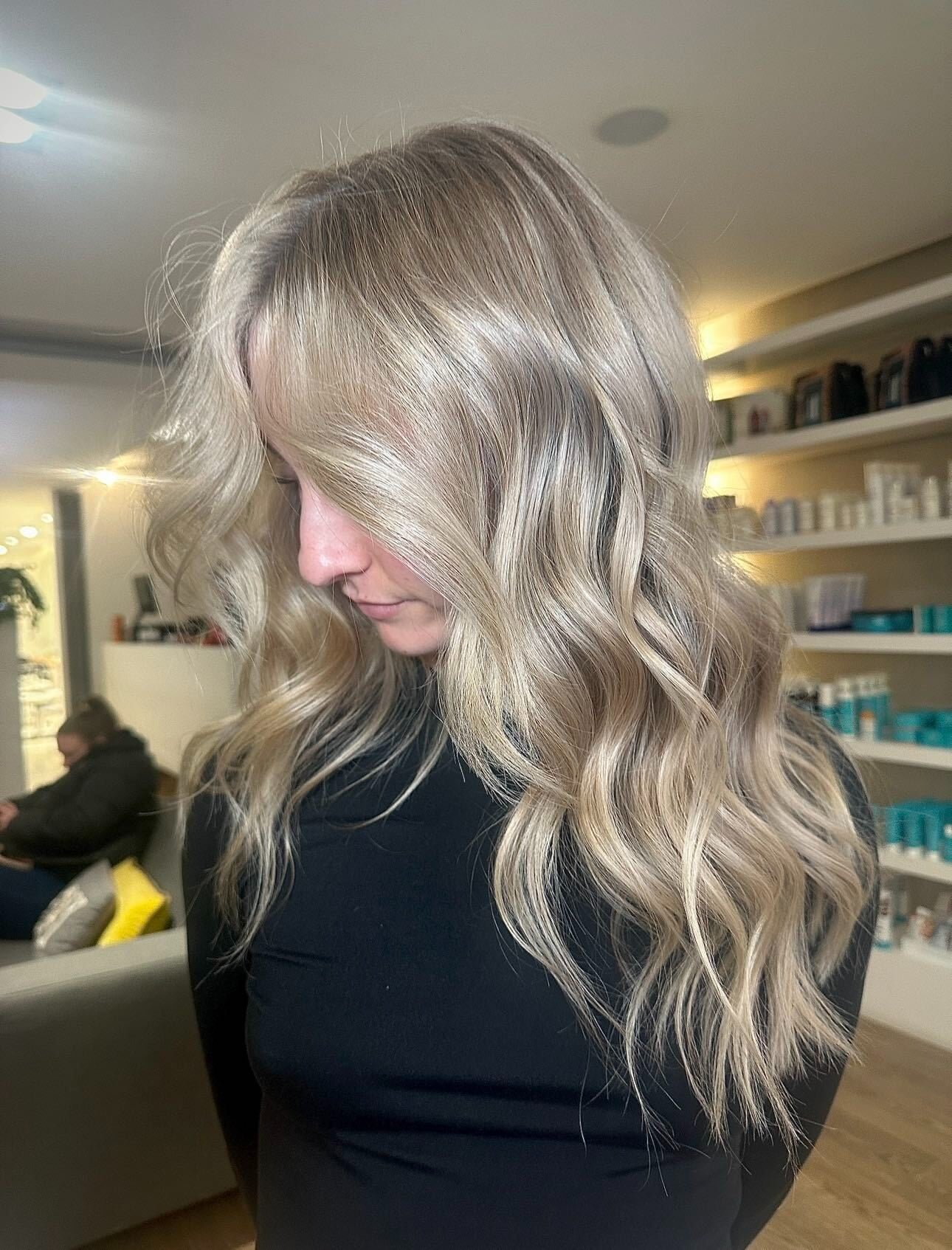
What I have learned is that the photo is the start of a conversation rather than a set of instructions. The same haircut, cut by the same hands on the same afternoon, will land differently on two people, and the reasons are not mysterious once someone explains them.

99% of these inspo photos are beautifully styled and photographed by a professional, hair won’t tend to sit like that by itself, the cut can only do so much.
What Your Inspo Photo Isn’t Telling You
Before we get to the hair itself, it is worth saying what a reference picture usually leaves out.
The person in that photo has been styled, often professionally, and photographed in flattering light. There may be a forty minute blow-dry underneath it, hot tools, and someone else working the back of the head, which is an angle none of us can reach on ourselves. Sometimes there are extensions in there too.
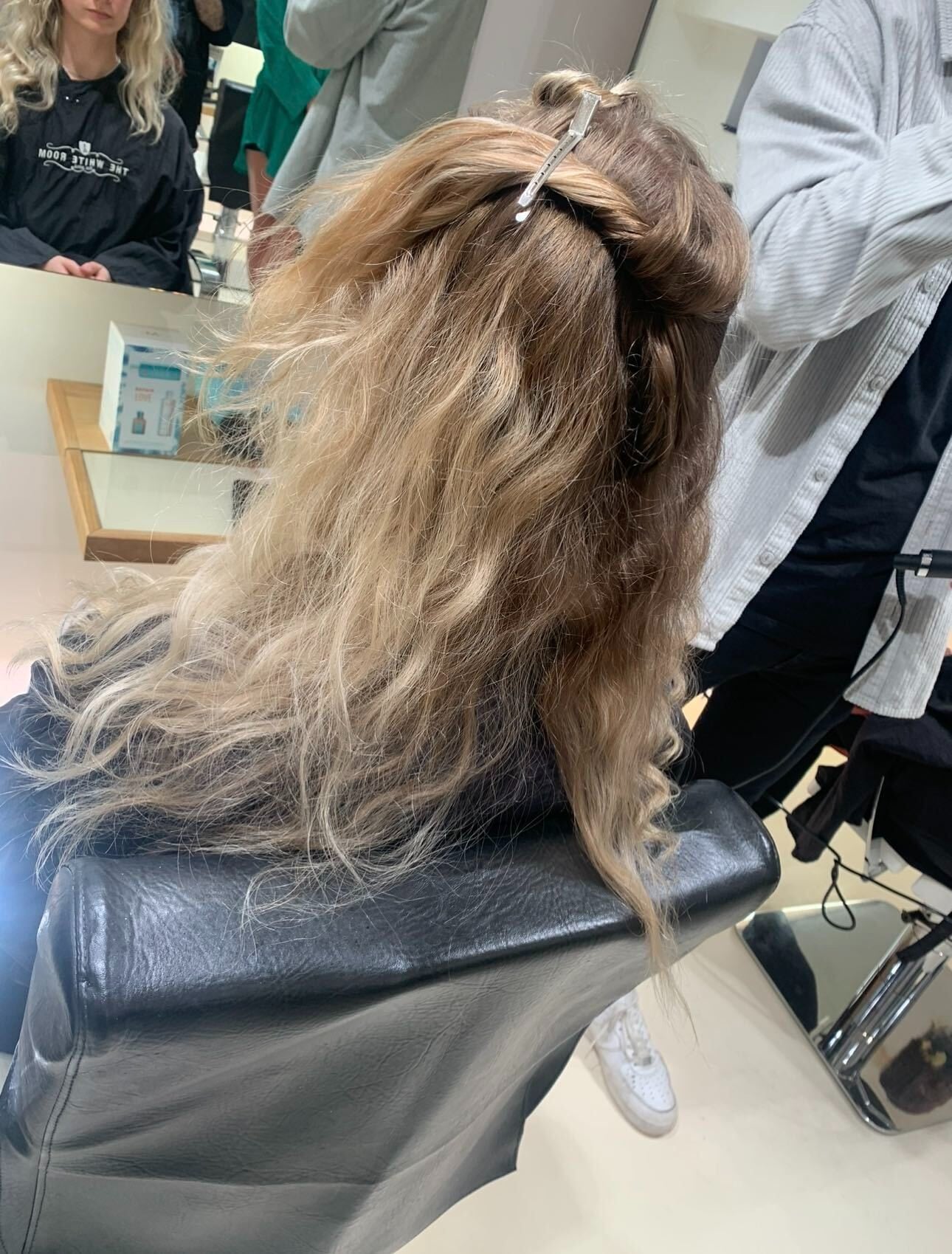
None of that makes the photo useless. It just means we are looking at a finished result, not a haircut, and the two are not the same thing.
The client thinks the whole style is created just with the cut, that once it has been cut it is just going to sit like that by itself. The shock in people’s faces when I tell them how much styling goes into these cuts is crazy!
It’s the same with bangs, everyone has a bangs phase and soon comes to realize that you have to style it every single day and that it won’t sit perfectly by itself!
Many times the client believes that the volume and fullness of the hair is created because of the short layers when, in reality, if you cut these layers on fine limp hair all it’s going to do is make it even finer!
You need to have the right texture and amount of hair for these cuts to work, unfortunately it just won’t work for everyone.
Your Hair Grows on Its Own Terms
Hair does not come out of the head at random. It grows in patterns that were set before you were born, and those patterns are the first thing I look for when someone sits down.
The most obvious one is the whorl at the crown, the spiral point the hair radiates out from. When researchers mapped the crowns of 519 children, about 84 percent of the single whorls turned clockwise, which leaves a real minority turning the other way. Around one child in eighteen had two whorls rather than one.
A double crown will split a short cut and lift it in a way no amount of product will hold down. A strong cowlick at the front hairline will keep pushing bangs to one side, and a nape that grows upward will show every blunt line you cut across it.
This is why I ask to see hair dry and unstyled before I cut. Wet hair lies down and behaves beautifully, and then tells you nothing about what it will do at eight in the morning.
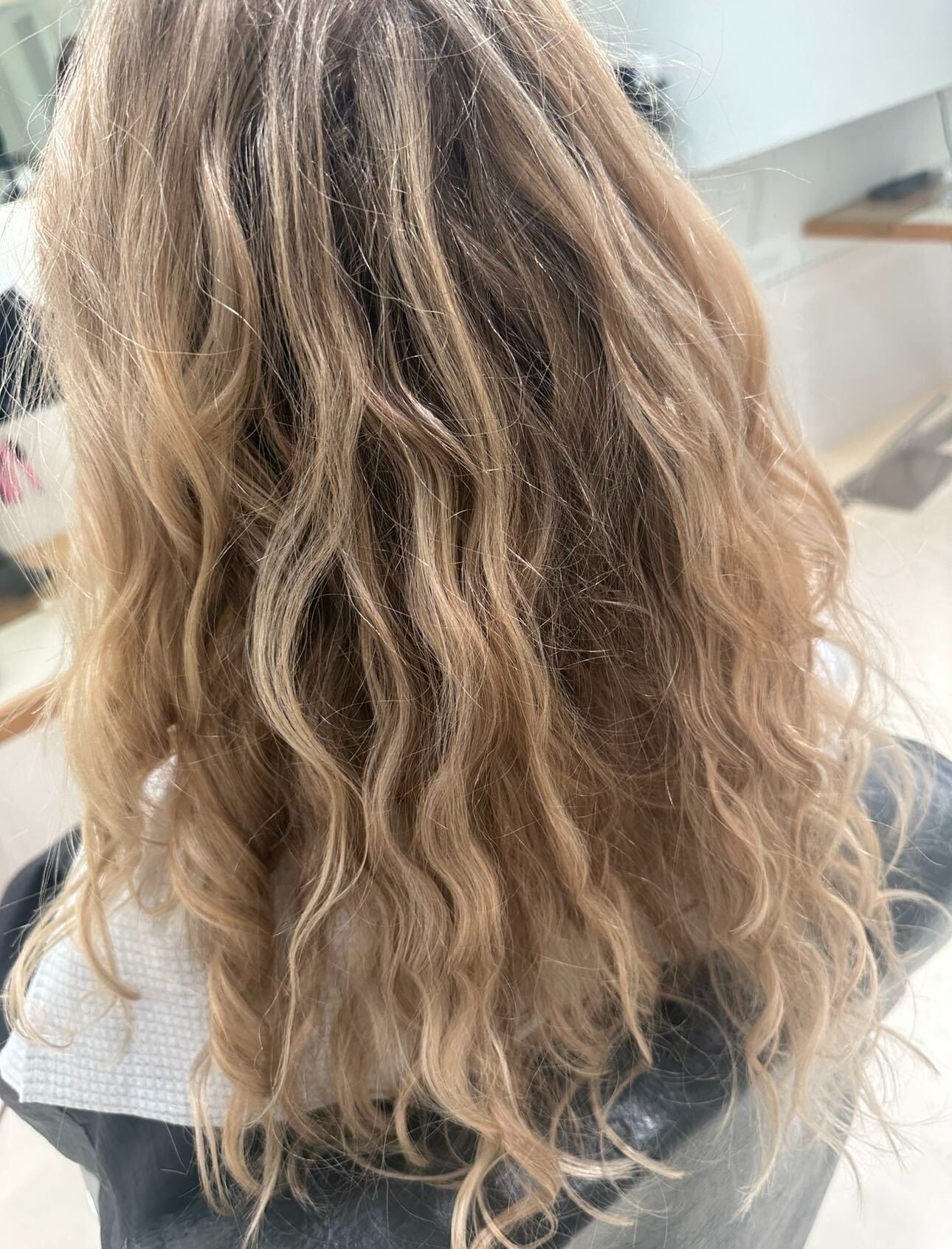
If you know you have one of these patterns, it is worth reading up on handling a cowlick before you commit to a shape that fights it. There are also cowlick friendly bangs that work with the pattern rather than against it.
When dealing with strong growth patterns in the hair such as a cowlick or double crown, I will always work with the direction the hair wants to go, trying to fight this or style it any other way will lead to bits sticking up and out of place.
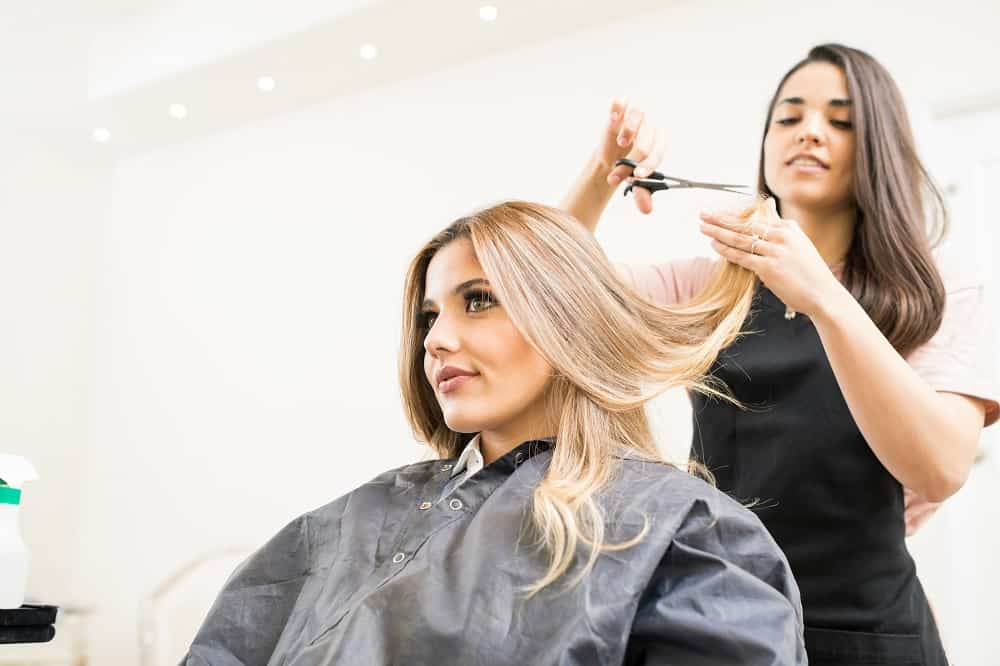
I will always assess the hair when it’s dry to know which areas will need cutting in which direction and which parts need to be left longer to get it to sit softly.
A double crown is notorious for accidentally being cut too short and sticking out at the back of the head, always keeping extra length around this area so that the hair can have more weight and lie flatter against the head.
A cowlick is going to jump up a lot more than the rest of the hair so the same principle applies when leaving extra length and weight here.
Things can always be adjusted once the hair is dry and I can see how it is sitting. Always better to take too little than too much!
Density vs. Thickness: The Mix-Up Almost Everyone Makes
This is the single most useful distinction I can give you, because almost everybody gets it the wrong way around.
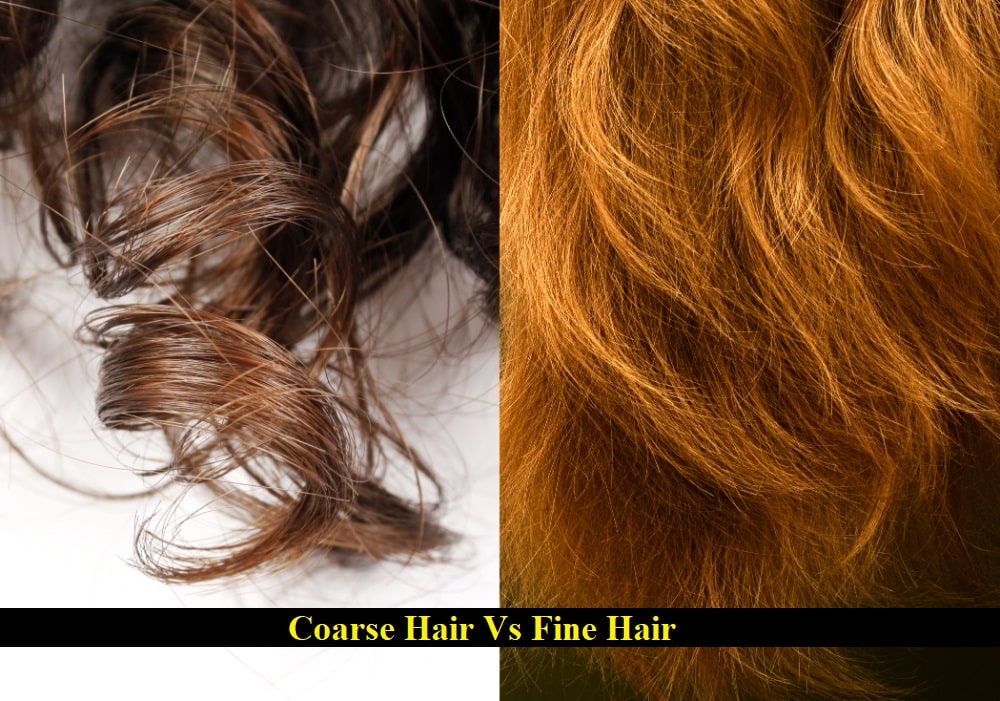
Density is how many hairs you have per square centimeter of scalp. Diameter is how thick each individual strand is. They are independent, and you can have any combination of the two.
Both vary far more between people than most clients expect. One study that counted hairs under magnification found healthy averages running from roughly 150 to 230 hairs per square centimeter across different groups of participants. All of those are normal.
For scale, the human scalp carries over 100,000 hairs in total, so the gap between a dense head and a sparse one can run to tens of thousands of strands.
Someone with fine hair in high density needs a completely different haircut from someone with coarse hair in low density, even though both might describe their hair as thick.
The fine, dense head holds a blunt line beautifully, and can turn heavy and solid if I leave too much weight in. The coarse, sparser head does the opposite, and the same blunt line can look thin and wiry at the ends unless I keep the weight.
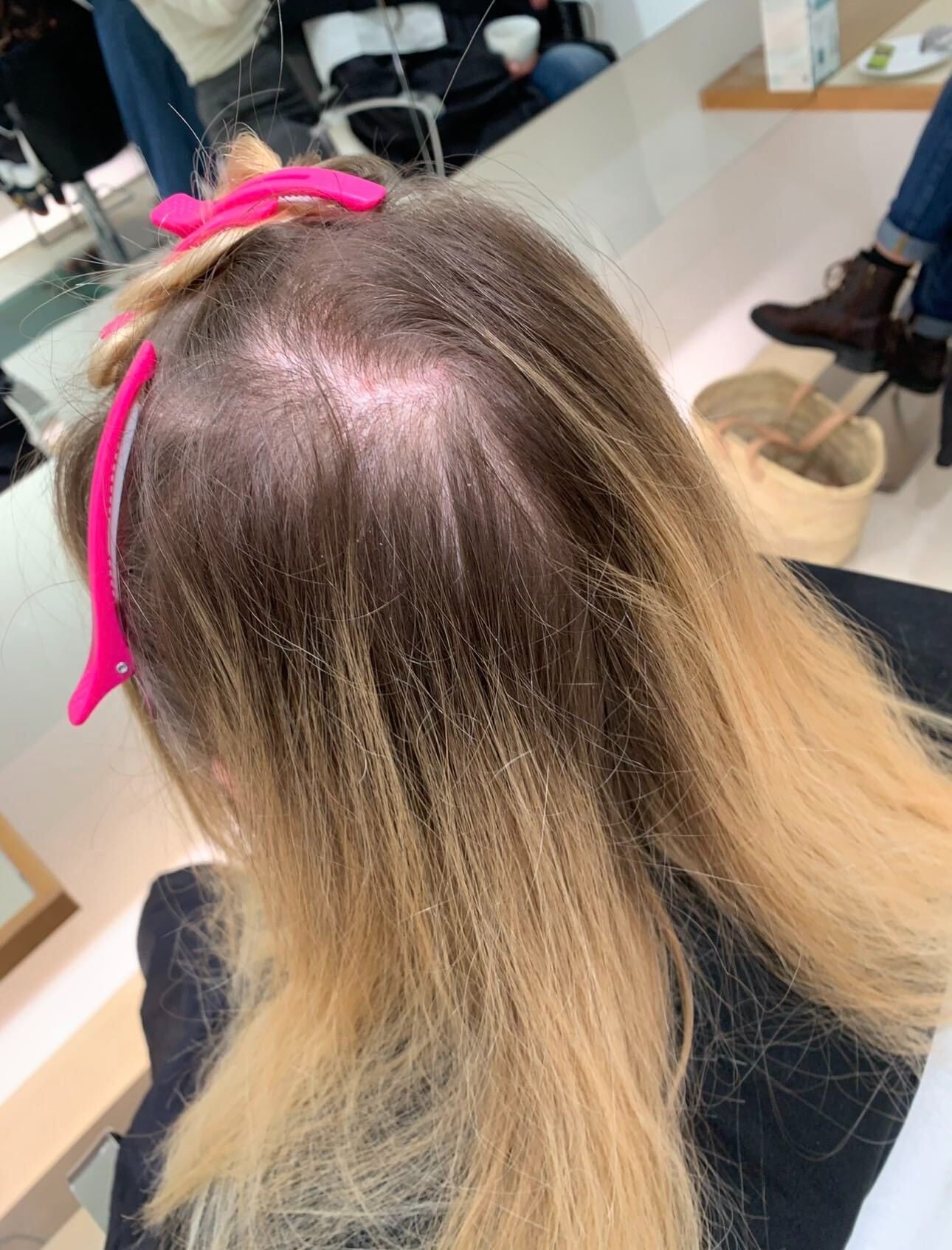
If you are not sure where you sit, the practical checks in fine versus coarse hair and this fine hair test are the fastest way to find out.
You can have someone with lots of hair (dense) yet their actual hair strands are very fine, same with someone who has coarse hair, they may have low density but thick strands.
I can see the density of hair in a consultation, how much of their scalp is covered, can I see through their hair much, the hair looks full in general and feels like a lot of hair when you grab it in one hand.
The strand thickness can be assessed just by touch, taking a strand in one hand and feeling if it is soft/silky and fine or it feels more wiry, resistant and strong. Density of hair is the main factor to be assessed in a haircut when thinking of removing weight, the strand thickness dictates hold, movement and strength.
Curly Hair Really Is Built Differently
The next layer down is the shape of each individual hair, and this is where curly and straight hair genuinely diverge.
Curl is not something that happens to the hair on the way out. It is built into the follicle, which curves as it sits in the scalp, so the fiber is formed with a bend already in it.
A micro-computed tomography study measured how that plays out along the strand. Low curl fibers were closer to round in cross-section, at around 1.3 to 1.4 on that scale, while high curl fibers reached 1.7 to 1.9, meaning a distinctly flattened, oval strand.
The same study found that the cross-section varies along a single hair, and that the variation is smooth in straighter hair and much more abrupt in tightly curled hair. So a curly strand is not simply a straight strand bent into shape, it is a different object along its whole length.
In practical terms, a blunt line reads as sharp and glassy on straight hair, and reads as soft and broken on wave or curl, because the ends do not sit in one plane. That is not a failed haircut, it is the fiber doing what it does.
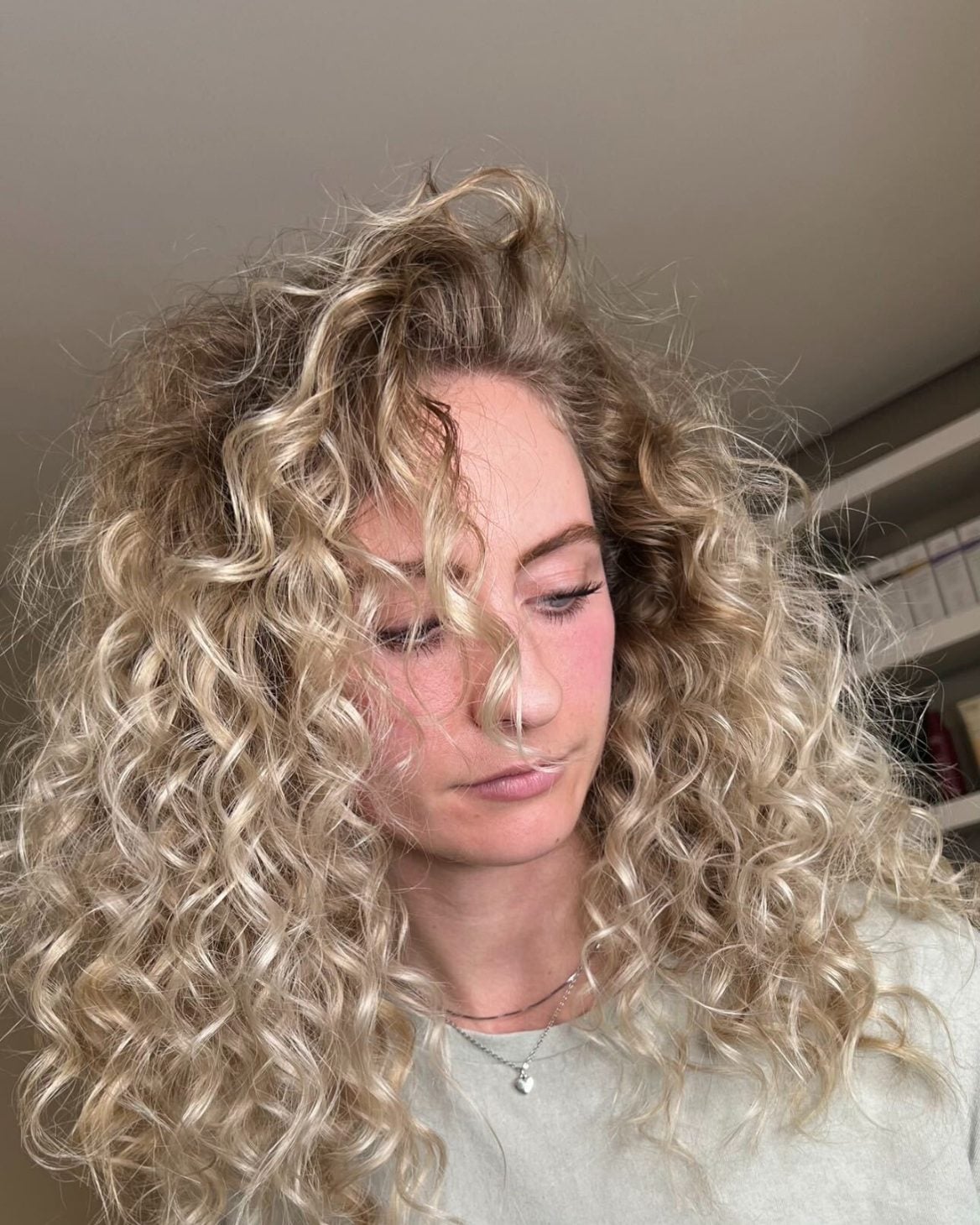
Shrinkage is the other half of this, and I cut curl with it in mind, because the same length can sit a few inches higher once it dries and springs up.
It is also why curly hair usually wants layers placed differently, and why so many curly clients arrive convinced that layers made their hair worse, when what actually happened is that layers were placed as if the hair were straight.
The amount of spring to allow when cutting curly hair differs based on how tight the curls are and how much they spring back. Some clients have a strong and resistant curl that will snap back as soon as it can, others have a softer looser wave that has more give in it when being manipulated.
I can pull on the hair strand and let go to test how strong their curls are and how much more length I need to leave.
I explain this to a client by telling them that their curls could shrink from anywhere between 5 and 40 percent and so it’s better to leave extra length rather than cut too short and regret it, especially as curly haired clients feel their hair takes forever to grow because of how the curls sit.
It’s better to be safe than sorry!
Your Head Shape Decides More Than You’d Think
Everything so far has been about the hair. The last piece is the shape it is sitting on, and it matters more than clients realize.
A flat occipital bone at the back of the head, a high crown, a long neck, or a low hairline all change where the weight of a haircut needs to go.
Two people can ask for the same bob, and on one of them it will need graduation built in to create a shape the head does not offer on its own.
This is the part of cutting where training shows, and it lives in the language of elevation, graduation, and over-direction. It is also why a good stylist walks all the way around you before picking up scissors.
My own training was in the Vidal Sassoon method, which is built on cutting to the bone structure rather than to the picture. The first habit it drills into you is to read the head with your hands before you commit to a line.
It is the same reason face shape guidance is a starting point rather than a rule. Face shape is one input among several, and I have broken most of those rules happily when the hair supported it.
The most common adjustment I make when cutting based on head shape is creating fullness where there’s flat areas and vice versa.
If someone has a prominent occipital bone I do not want to leave excess weight there, emphasizing this and making it look larger, and the opposite for if theirs is very flat, I want to leave extra weight there to create a fuller, more flattering look.
This works the same the whole way around the head, where there are flatter or more narrow areas I will keep the weight and when they are larger or stick out I will remove weight. It’s all about making the haircut cohesive with their features.
The Grow-Out Is Part of the Haircut
One more variable sits underneath all of this. Scalp hair grows at roughly 0.35 millimeters per day, which is about a centimeter a month, a little under half an inch.
That number decides how long you live with a decision. Bangs that are not working are a three month conversation, not a three day one, which is worth knowing before the scissors move.
It is also why I think about the grow-out at the moment I cut. A shape that grows out gracefully is worth more to most people than a shape that looks perfect for two weeks, and it is a fair thing to ask for by name.
How to Get What You Want From a Consultation
None of this means you cannot bring a photo. Please bring photos. It means the conversation around them is where the haircut is really decided.
Bring More Than One Picture
Three or four images tell me what they have in common, which is usually the thing you actually want. One image on its own is ambiguous in ways you would not expect.
Say What You Like About It
Is it the length, the movement, the bangs, the way it sits behind the ear? The specific feature is far more useful than the whole picture, because the feature can usually be translated onto your hair even when the whole look cannot.
Be Honest About Your Mornings
Ten minutes and a rough dry is a different haircut from forty minutes with a round brush. Neither is wrong, but a cut designed for one will disappoint you if you live the other.
Ask How It Will Be Cut
It is completely reasonable to ask whether your hair is being cut wet or dry, and why. There are real trade-offs in cutting hair dry, and there is a real difference between razor and scissor work on how the ends behave afterward.
The One Question That Changes the Haircut
The best question to ask, for me, is when a client shows me an inspo photo and I say “What do you like most about this cut?” because this allows me to see what is most important to them about how it looks, what they are going to be looking at once the cut is done.
It also allows me to see whether what they like is purely styling, which always leads me to my next question of “Are you going to style this at home?”
If they say no then a cut with lower maintenance for their hair texture would be a much better option, I can even show them photos of something that would work better for their lifestyle.
What a Photo Can Promise, and What It Can’t
Here is the honest summary I give in the chair.
The shape can usually be copied. The weight, the line, the length, the general feeling of a haircut, and the bangs all travel from one head to another with some adaptation.
What does not travel is the way it falls. Someone else’s density, their growth patterns, their strand shape, and the head underneath are theirs, and no cut transfers them to you.
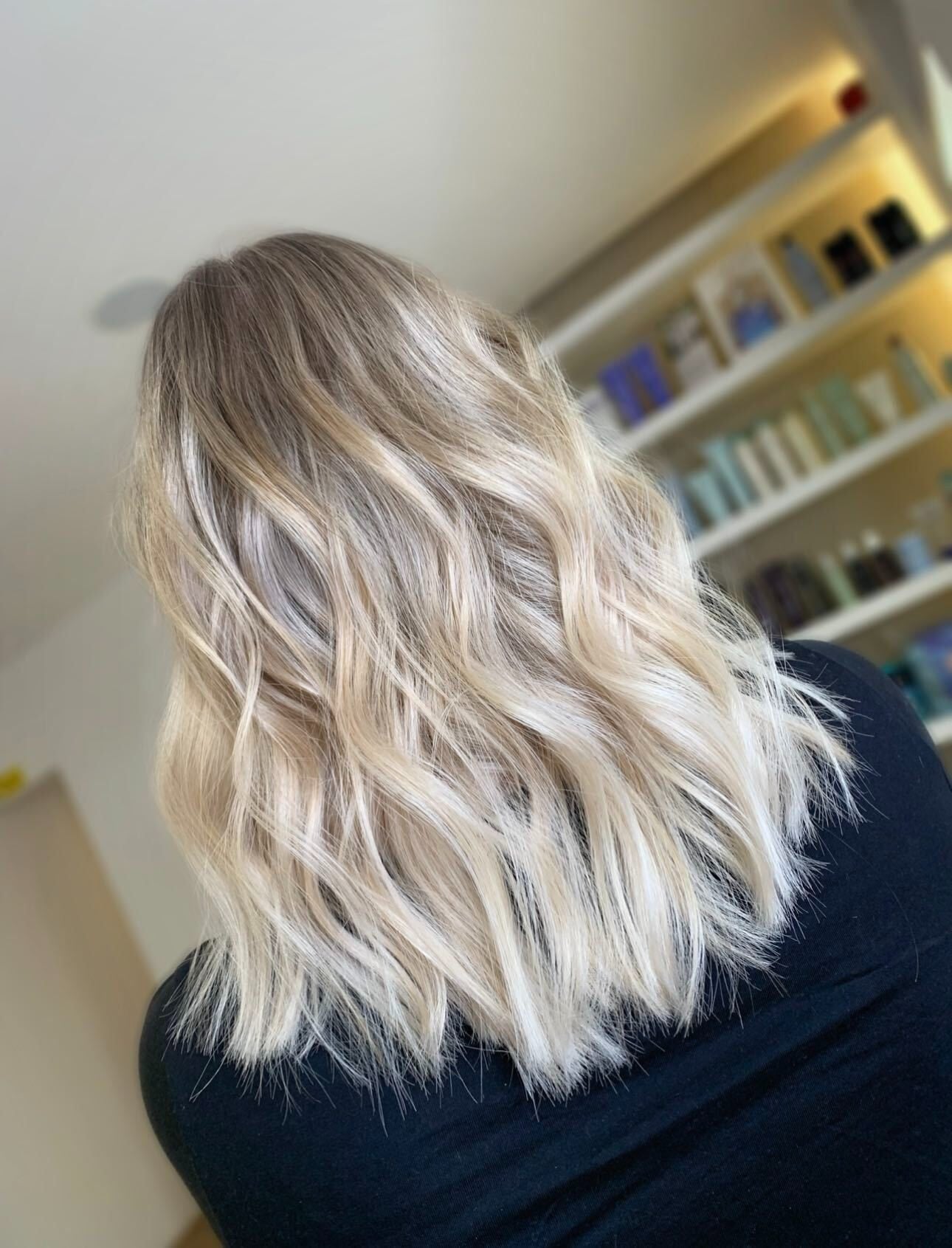
The good news is that the version of a haircut adapted to your hair usually suits you better than a faithful copy would have. Most of the short to medium layers I cut are exactly that, an adaptation rather than a copy.
If a reference photo is just not practical for my client’s hair texture or lifestyle then I simply tell them that. “Their hair sits like this in the photo because it has been professionally styled, it will not sit like that by itself, are you willing to style your hair each day to achieve this look?”
If they say no (which they often do!) I will suggest something else that will make their life easier but still look beautiful. They are usually very open to this because everyone wants their life made easier, not harder!
You would rather have beautiful hair that suits your lifestyle rather than hair you have to wrestle with every day to get it to look the way you want.
A haircut isn’t just about looking good, it’s about feeling good! Choose something that you love but at the same time suits your day-to-day lifestyle, you will thank yourself in the long run for this!
Nobody wants to wake up every day and wrestle with their hair to try and make it look good, picking a cut that enhances your natural style and works with you, not against you, is the best way to have beautiful hair without the stress.
Have a browse, talk to your stylist and work with what you’ve got to achieve the best outcome.