

Determining your true hair type is the key to knowing which products will actually benefit you in the long run. But how do you tell the difference between fine hair and coarse hair?
This comprehensive guide breaks down the exact differences so you can accurately identify your hair type.
What Is Fine Hair?
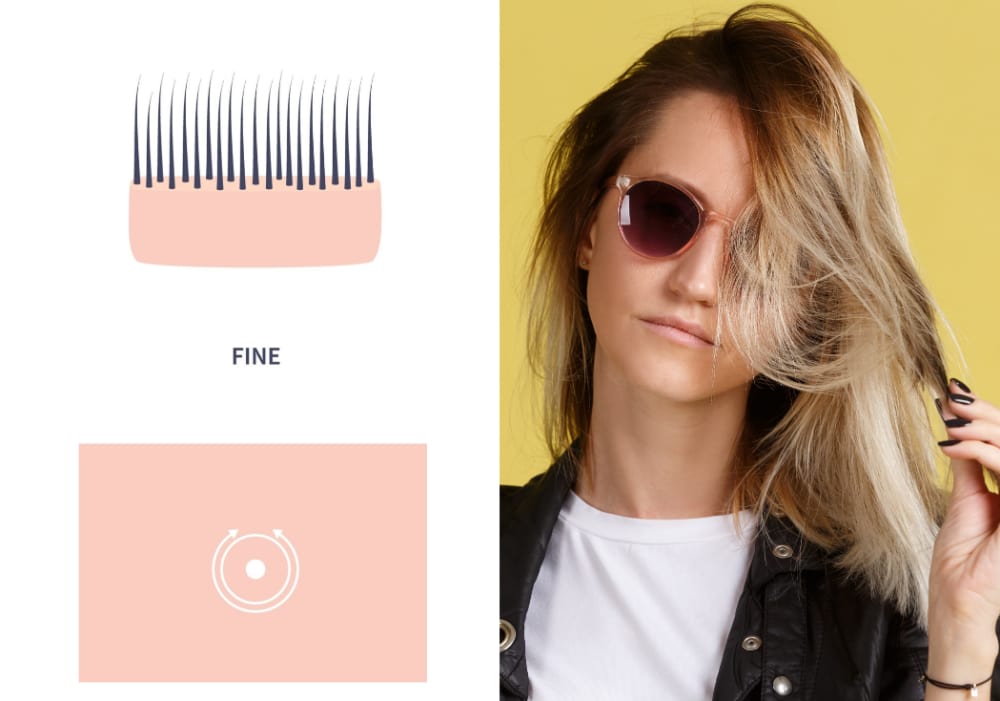
Fine hair refers to a hair type where the individual strands have a very small diameter or thickness.
However, it’s essential to note that fine hair is significantly different from thin hair as it’s not measured by dense growth. So while you can have thin hair, your hair strands can be coarse.
What Issues Come With Having Fine Hair?
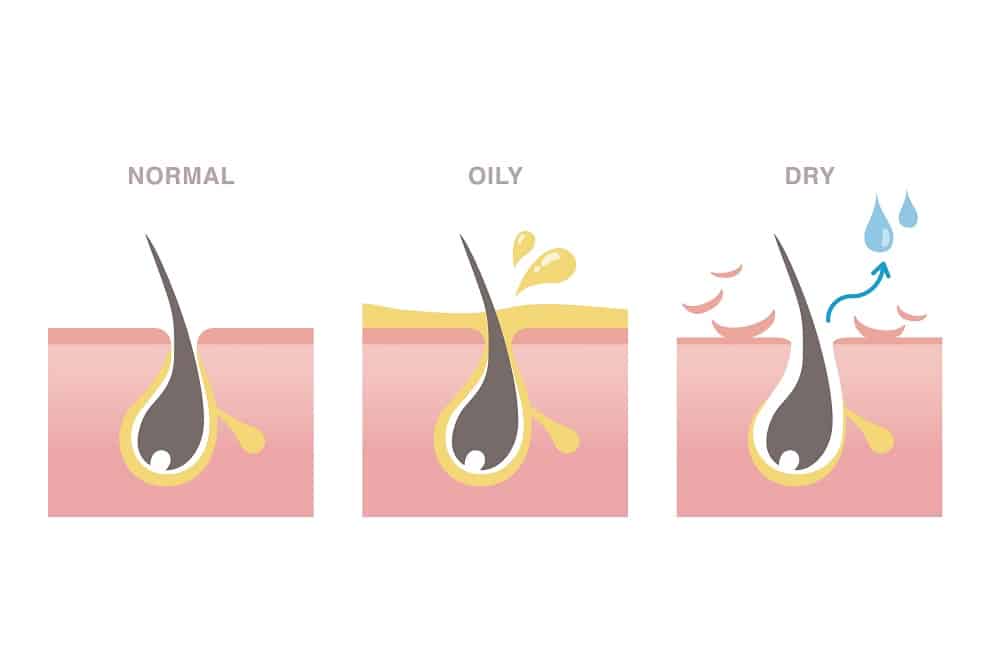
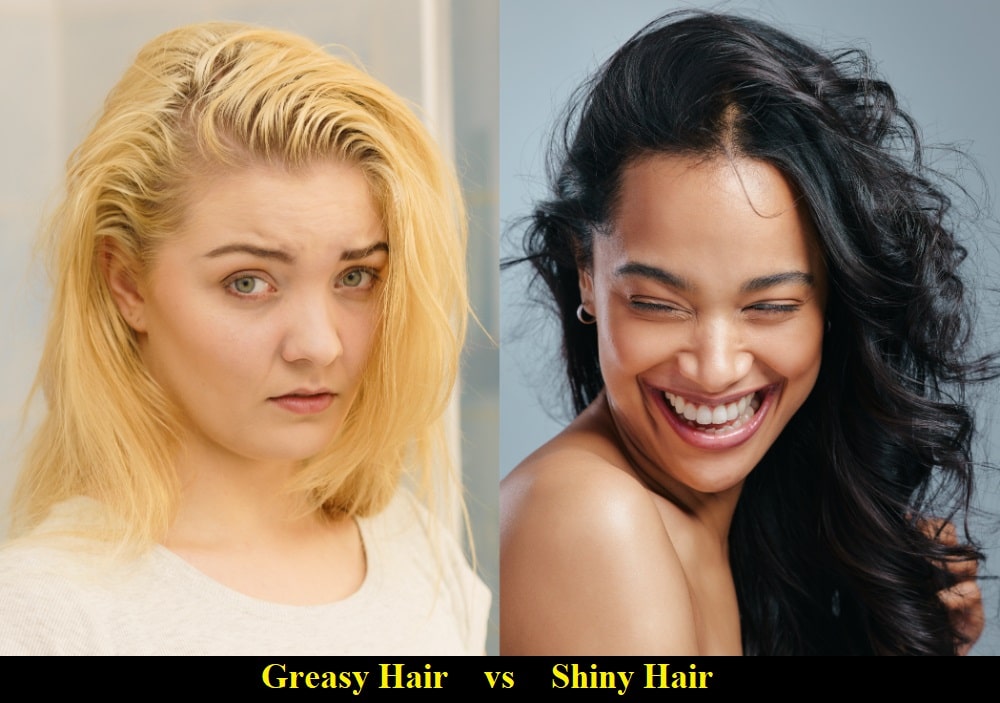
Fine hair often lacks volume due to its smaller hair strand diameter. The hair also may become greasy easily and tends to stay flat at the roots, especially on people with oily hair and scalp.
This hair type is more susceptible to damage caused by heat styling, overbrushing, or heavy hair products. These factors can make fine hair harder to style and maintain.
Because fine hair is silky and smooth, rubber bands and clips tend to slip out easily, and curls often fall flat soon after styling. Even when you spend time adding texture, the style may not hold for long without the right support products.
How Do You Maintain Fine Hair?
Fine hair needs lightweight products that cleanse and condition without making it feel heavy.
For moisturizing your hair, use lightweight argan or jojoba oil. Avoid heavy options like coconut and castor oil, as they can easily weigh fine hair down and make it look flat.
Use volumizing shampoos and conditioners, along with thickening sprays or dry texturizing sprays if you want to create an appearance of fuller hair.
A boar bristle brush can help create lift at the roots, and a lightweight mousse adds grip and volume without making fine strands feel sticky or overloaded.
This hair type is damaged much more easily by flat irons, curling tools, and blow dryers. Whenever you use heat, always apply a high-quality heat protectant first to help seal the cuticle and reduce heat damage.
Avoid too much tension and friction when brushing to protect your fragile strands. Finally, get regular trims, at least every 12 weeks or so, to physically remove and reduce breakage and split ends.
What Is Coarse Hair?
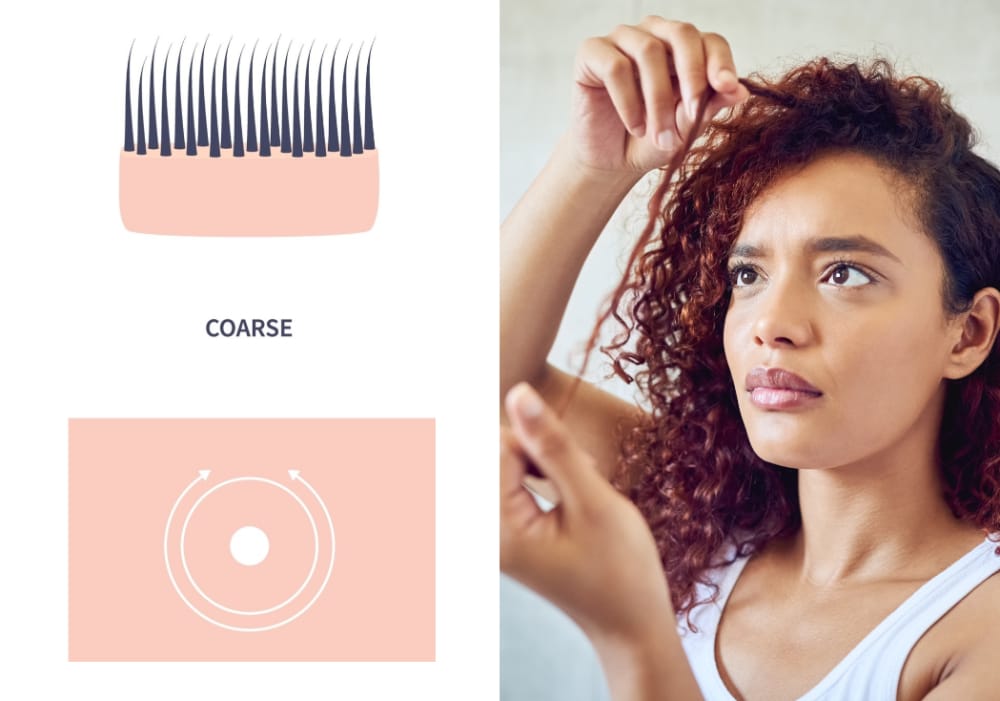
Coarse hair refers to hair with a thicker strand diameter than fine or medium hair. Each strand is wider, which often makes the hair feel stronger, fuller, and more textured.
Some often mistake curly or frizzy hair for coarse hair. But this is not right. Your hair can be curly and fine too.
What Issues Come With Having Coarse Hair?
Although coarse hair is often considered stronger than fine hair because of its thicker strands, it is usually less flexible under tension. This stiffness makes it more likely to tangle.
This type of hair easily becomes dry, rough, or brittle when it lacks moisture, and it is prone to frizz in humid weather.
Because coarse hair is thicker and more resistant to bending, it can take a long time to air dry. It also tends to snag more easily during detangling, so a detangling spray or conditioner with good slip can make wash day much easier.
How Do You Maintain Coarse Hair?
Coarse hair is more prone to dryness, so it often needs rich shampoos, conditioners, and deep conditioning treatments to stay soft and manageable. Heavier oils (like coconut, castor, and olive), thick creams, and hair butters help lock in moisture and control frizz for coarse hair.
Because coarse hair is thicker and resistant to bending, you may also need heavy-duty accessories like spiral scrunchies or large jumbo claw clips to hold styles in place without snapping.
To keep your hair healthy, use a heat protectant before heat styling and limit the temperature. Avoid high-tension styles if your hair feels stiff to prevent snapping and breakage.
What Do Fine Hair and Coarse Hair Look Like?
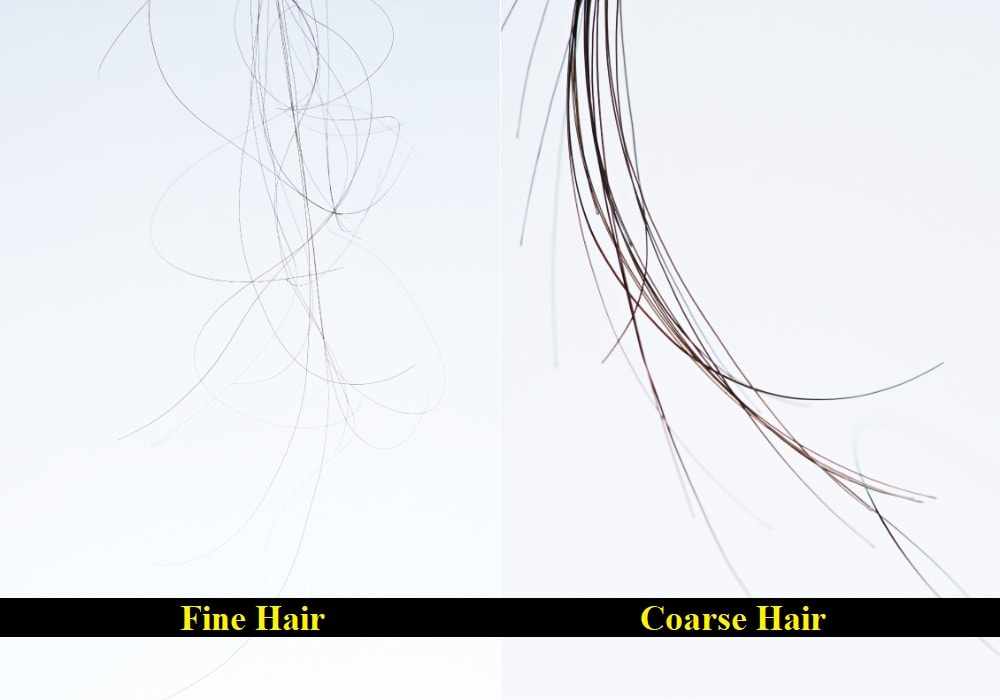
Fine hair is often mistaken for thinning hair, while highly textured or curly hair is automatically assumed to be coarse. Both of these assumptions are incorrect.
There is a significant difference in how fine and coarse hair actually look. As previously mentioned, you can distinguish coarse hair by checking the diameter of the hair strands; if the diameter is more than 80 microns, then it’s coarse.
Another way to tell the difference is by feel. Take a single strand of hair between your thumb and forefinger and gently roll it back and forth. If it feels thick and stiff, it’s coarse. If it is barely noticeable and feels delicate, it is fine hair.
Note: Thin hair and fine hair are often used as synonyms in everyday conversation. However, the term “thin hair” indicates less hair density and “fine hair” indicates the smaller diameter or thinness of a single strand.
At-Home Tests to Determine if Your Hair is Fine or Coarse
If you want a more hands-on way to check your strand size, try these simple at-home tests.
Try the Strand Test
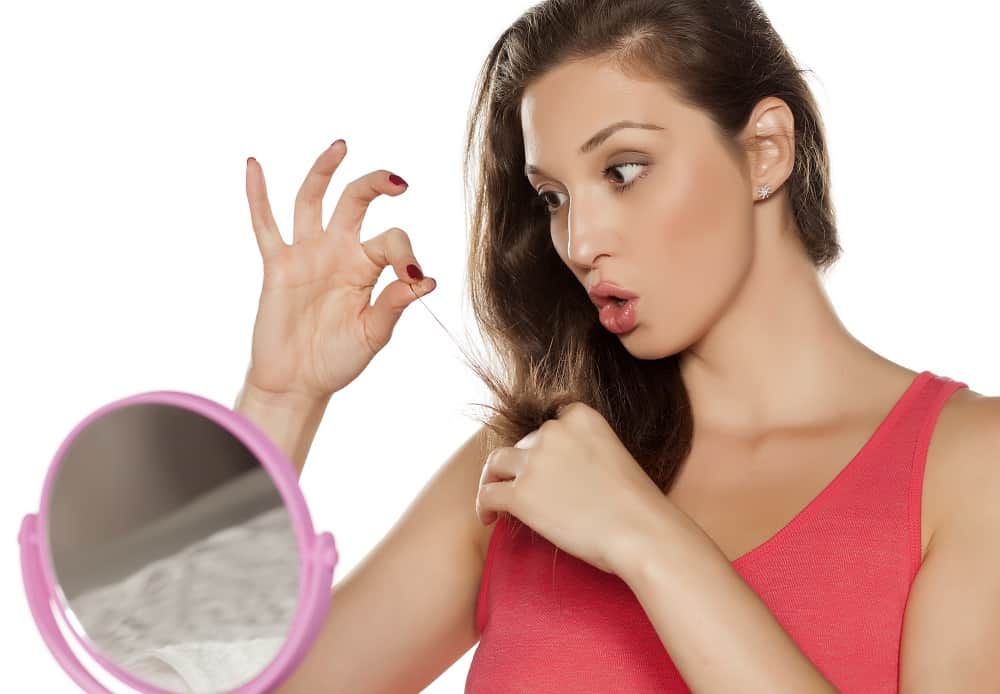
Take one loose strand from your comb or brush and hold it between your fingers.
- If you barely feel the strand and can hardly see it, you likely have fine hair.
- If you can feel it somewhat, you may have medium hair.
- If you can clearly feel the strand and it feels thick, you have a coarse hair texture.
Try the Thread Test
Take one strand of your hair and place it next to a standard piece of sewing thread. Because sewing thread is much wider than human hair, you are looking for how your strand compares in scale.
If your hair strand is barely visible next to the thread, you have fine hair. If it is clearly visible but still much thinner than the thread, you have medium hair. If it looks like it is approaching half the width of the thread, you have coarse hair.
It is the same comparison certified trichologist Celestine Muthoni Gitau gives her own clients:
“A quick at-home comparison between fine versus coarse hair will help in making product choices. Use a sewing machine thread and place it next to your hair strand.
If your hair is way thinner than the thread, the hair is probably fine, meaning with a smaller diameter. If the strand looks close to half the thickness of the thread, then that could mean coarse hair.”
Key Differences Between Fine Hair and Coarse Hair
The true differences between fine and coarse hair come down to these factors:
Hair Diameter
This is the primary factor that determines whether hair is fine or coarse. It measures the physical width of a single hair strand.
Celestine again, on what happens when hair gets the wrong product weight:

When fine-haired clients use products made for coarse hair, the products are too heavy on their hair and leave the hair limp and may not retain the style. On the other hand, when coarse-haired clients use products made for fine hair, the products are too light to provide effective moisturization and maintenance and may leave the hair still feeling dry.
Clients using the wrong product for their hair types will have unmet needs for their hair, from dry hair to limp, heavy hair.
Coarse hair has a larger strand diameter than fine hair and can reach about 120 μm. Hair diameter above 80 μm is considered thick hair.
Strand Structure
Structurally, human hair is made of three layers: the cuticle, the cortex, and the medulla (the innermost core).
Both fine and coarse hair have a cuticle on the outside and a cortex in the middle. One difference is the medulla, which is the innermost part of the hair shaft.
Coarse hair is more likely to have a visible medulla. The medulla is often reduced or absent in fine hair.
But a visible medulla is a sign of a thicker strand, not the reason it is thicker.
Product Tolerance
Fine hair gets weighed down easily, so it usually works best with lightweight shampoos, conditioners, and styling products. Heavy oils, thick creams, and rich butters can make it look flat or greasy.
Coarse hair can usually handle richer formulas better. It often benefits from deep conditioners, creams, and oils that help soften the strands and reduce dryness.
Heat Response
Fine hair is usually more vulnerable to heat damage because the strands are thinner and more delicate. Frequent use of hot tools can lead to dryness, breakage, and split ends more quickly.
Coarse hair is thicker, but it can still become dry or damaged with too much heat. Heat protectants and lower heat settings are helpful for both hair types.
Chemical Processing
Fine hair often processes color or bleach faster because its smaller diameter allows chemicals to penetrate the hair shaft more quickly. This can make it more sensitive during coloring or lightening treatments.
Coarse hair may take longer to absorb chemical treatments because the strands are thicker. As a result, it can sometimes be more resistant to color or bleach.
Common Misconceptions About Fine Hair and Coarse Hair
When people try to figure out their hair type, they often look at the wrong things. Here are a few common misunderstandings.
Hair Density
Hair density refers to how many strands grow on your scalp. It does not refer to the thickness of each strand.
It is common to have fine hair with high density (many thin strands packed closely together) or coarse hair with low density (fewer thick strands spaced further apart).
To prove to yourself that hair density is different from your fine/coarse texture, you can measure your density right now using the Ponytail Test:
Use a hair tie to make a ponytail near the crown of your head. Then measure the ponytail circumference.
High Density (Thick): Circumference is over two inches.
Low Density (Thin): Circumference is less than two inches.
Remember, you can have a thin ponytail (low density) but still have highly coarse hair strands.
Hair Elasticity
Elasticity is the hair’s ability to stretch and return to its shape without breaking. While coarse hair is naturally stiffer to bend due to its thickness, its ability to stretch is linked to hair health, moisture, and protein balance.
In general, both fine and coarse hair can have high elasticity if healthy, or low elasticity if damaged by heat or chemical processing.
However, coarse hair can quickly lose its elasticity and snap if it becomes too dry.
Hair Texture
Hair texture here refers to the curl pattern, whether hair is straight, wavy, curly, or coily. Curl pattern does not determine whether the strands are fine or coarse.
A very common misconception is that all tightly coiled hair is coarse and all straight hair is fine. In reality, fine hair can be tightly coiled, and coarse hair can be perfectly straight.
Scalp Moisture
Scalp oil production is affected more by genetics and hormones than by hair strand size.
However, fine hair tends to look greasy faster because the oil easily travels down the thinner shaft and weighs it down, whereas coarse or highly textured hair masks scalp oils much better.
Now you know the difference between coarse and fine hair. Knowing your hair type helps you choose the right products and care routine. It also changes how a haircut sits: here is why the same cut falls differently on two people. So, take a moment to check your hair type and start giving your hair exactly what it needs.