

Disclaimer: This article is for educational purposes and does not constitute medical advice. Please consult a dermatologist for specific hair issues.
Everything changes when we age, including our hair. If you have blonde hair, you may be curious to know whether your hair will turn gray or white as you get older.
Natural hair color changes can bring up lots of feelings (both good and bad), so it is perfectly normal to have questions.
The short answer is: blonde hair usually goes silver or white with age. Darker blonde or light brown hair may look gray first because of the contrast between the white strands and the darker base color.
People with lighter shades of blonde hair might notice white hair instead of gray when they age but darker blondes might notice graying first.
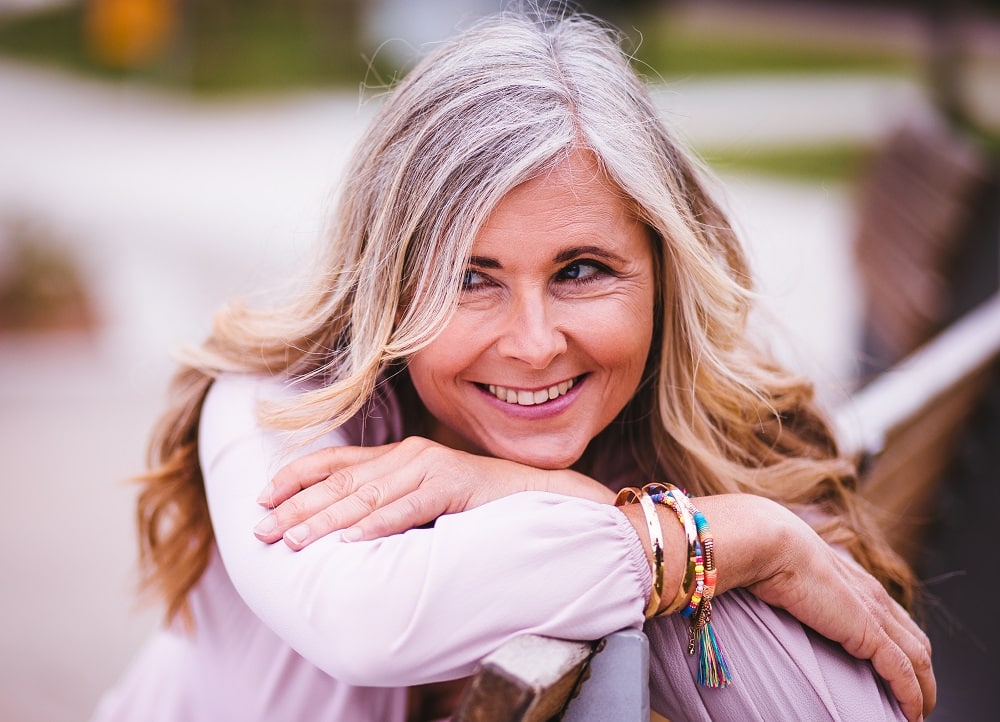
Why Does Blonde Hair Turn White with Age?
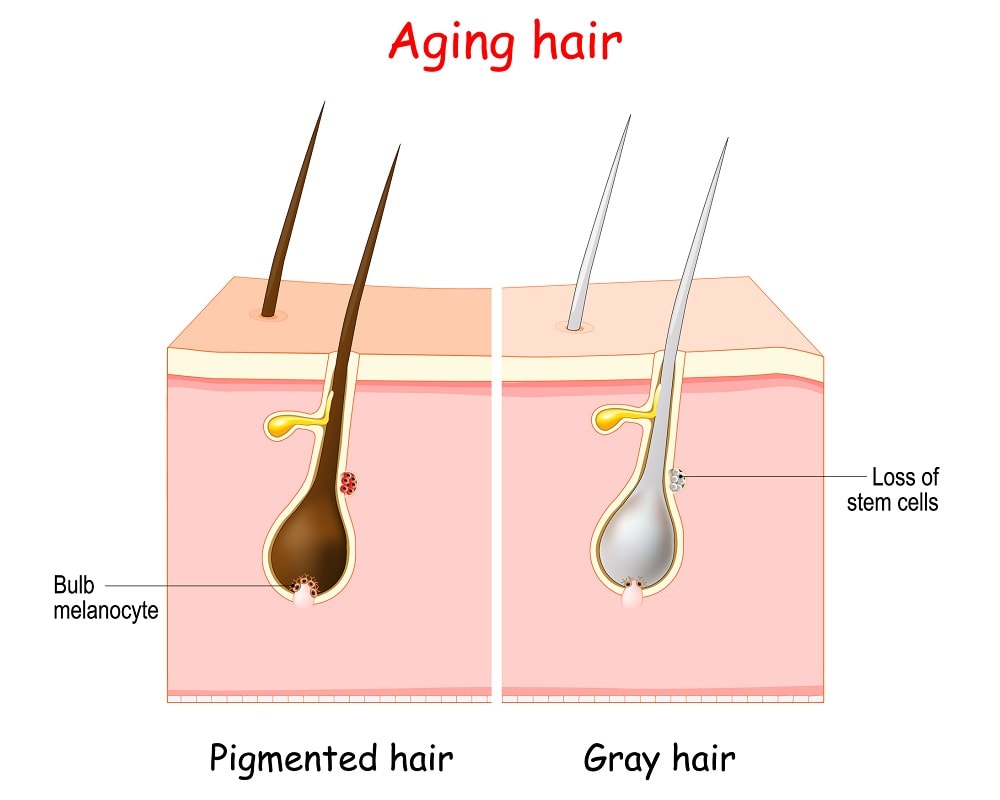
Hair color comes from melanin. There are two main melanin pigments involved in hair color: eumelanin and pheomelanin. Eumelanin creates brown and black tones, while pheomelanin is linked to red and yellow tones. Eumelanin is also divided into two types: black and brown.
Blonde hair has no black eumelanin and only a small amount of brown eumelanin. That is why blonde hair looks lighter than brown or black hair.
As you age, your hair follicles produce less melanin. When a new strand grows with less pigment, it looks gray or silver. When a new strand grows with no pigment, it looks white.
Since light blonde hair already has no black pigment, new hairs with less or no pigment turn silver or white.
When darker blonde or light brown hair produce less melanin with aging, it looks gray because of the contrast between the white strands and the darker base color.
Does Blonde Hair Turn Gray or White Faster?
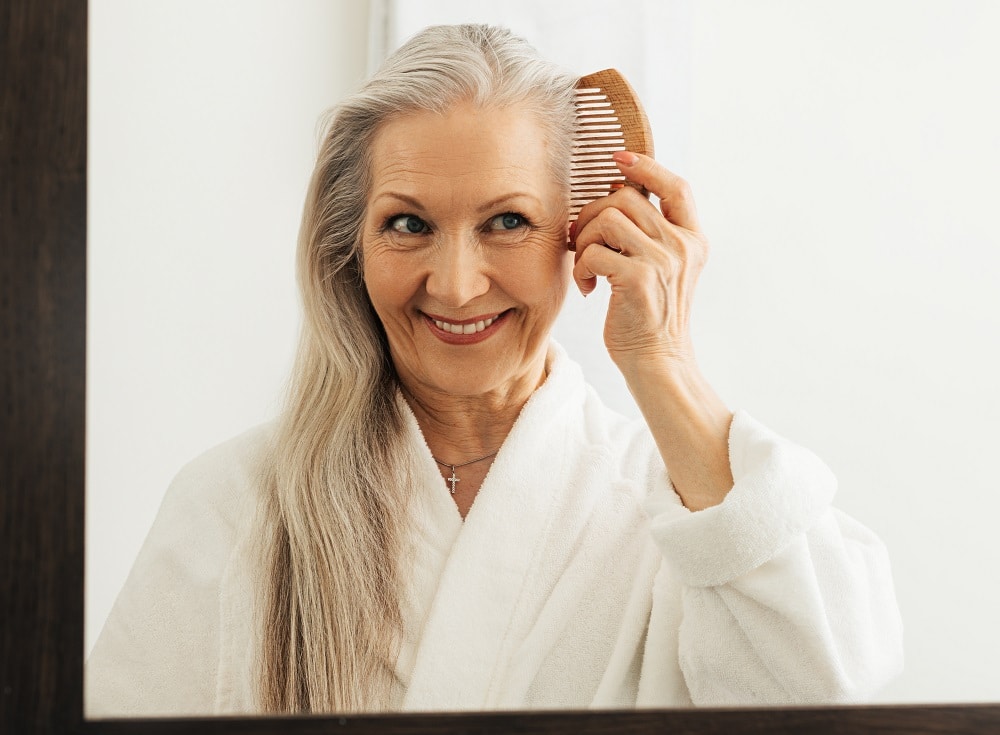
The biological rate at which hair loses its pigment is determined by genetics, not starting hair color. Blondes do not go gray earlier or later than those with darker hair. However, the change to gray is less noticeable initially compared to darker hair colors.
This is because blonde hair already has a lower concentration of melanin, so the contrast between the original hair color and the gray is less intense.
As a result, we notice the process only when the hair gets too white.
Melanin is not the only thing your hair loses when it changes color. Just as each hair follicle loses pigmentation, it also loses sebum, a natural oil that lubricates the hair shaft and seals in moisture. The effect? You may feel like your hair is coarse or wiry.
For people whose hair follicles used to have a high sebum production, this transition may be more noticeable than the color change.
Once most of your hair is white, hair care might need to change. Consider finding hair products that moisturize and hydrate your hair. Speak to your stylist for more ideas.
So, like all other hair colors, blonde hair can look gray and then white. Light blondes can expect to stay blonde for longer but gradually fade into white. Darker shades might see their hair going gray first.
You May Also Like: