


Glimpsing in the mirror, have you ever asked yourself why your hair is split all the way up to the point of no return?
Split ends can be frustrating, especially when they seem to climb higher and higher. So why does your hair get split ends so easily?
If your hair is already split too far, you probably want to know how to stop the damage and get your hair looking healthier again.
We’ve got you covered with ways to prevent further damage, plus tips on how to manage existing splits and keep them from getting worse.
For clients trying to keep their length, senior stylist Emma Baxendale of The White Room describes a gradual trimming plan:
“There is not much that can be done when hair is split high up but you want to keep your length. My best advice is to have as much cut as you are willing to lose now, then come for regular trims until the damage has gradually been cut out. It takes months, but it maintains the length.”
While the damaged length grows out, Emma makes a distinction between concealing split ends and repairing them:
“And no treatment can truly repair a split strand; once the hair is split, it is split. Products and styling can hide and manage split ends, but they can never actually mend them. Cutting will always be the only honest answer.”
Certified trichologist Celestine Muthoni Gitau on what high splits say about the fiber:

When hair is splitting high up the strand rather than just the ends, it is probably well into many months of structural damage. The most common culprit is excessive use of heat and over-processing.
What Causes Split Ends?

Split ends occur when the protective cuticle layer of a strand of hair is worn away or damaged. Though genetics can play a part, it often happens due to external factors like over-styling, chemical treatments, lack of moisture, and being too rough with your hair.
When the cuticle layer gets damaged, the strand starts to fray. That creates an overall unkempt look that can feel hard to manage.
Some people have naturally fragile hair. Most people, though, see split ends because of daily wear and tear.
Overusing Heat Styling Tools
One reason is using styling tools like curling irons, straighteners, and blow dryers too often without heat protection and on high temperatures.
Being Rough with Your Hair
Another reason is harsh brushing, rough detangling, tight hairstyles, and being too rough with wet hair. Wet hair stretches easily and can snap, which sets you up for split ends.
Overdoing the Chemical Treatments
Chemical treatments like bleaching, coloring, or perming can weaken your strands, making them more likely to split if the hair is not cared for properly afterward or if overprocessing happens.
Environmental Factors
Environmental factors like wind and sun can dry the hair out, which makes split ends more likely.
Sun exposure is a key factor since UV rays can strip away natural oils that help keep hair hydrated.
What Causes Split Ends To Go Up?
When split ends travel up the hair shaft, it usually means the hair keeps taking damage after the split starts.
The key is to stop the damage early and remove the split. If you leave the split in place, it can keep fraying higher.
Continuing aggressive brushing, using hot tools without protection, and repeating harsh chemical treatments can all make existing splits creep upward.
If you do not remove split ends and you keep damaging the strand, the split can travel surprisingly far up the hair.
What Happens If Your Split Ends Reach Your Scalp?
If splits travel very high, the strand can break off much shorter than you want, sometimes close to the scalp. That can make hair look thinner and feel harder to grow out evenly.
Your scalp can also feel irritated if you are scratching, tugging, or over-handling fragile hair. The goal is to remove the split and reduce ongoing damage so that breakage slows down.
Taking consistent, gentle care is the best way to avoid severe breakage.
My Hair Is Split All The Way Up, What To Do?
To keep split ends from climbing higher and causing more breakage, you need to remove the damaged part and reduce what is damaging your hair day to day.
Celestine again, on keeping as much length as honestly possible:
Once hair is splitting high up, using conditioners and products that help temporarily hold the strand structure in place helps to keep the length as new hair grows and as we slowly trim off the split ends. Eventually we will need to get rid of all the damaged hair.
Regular trims help, but you do not always have to lose a lot of length. The right technique matters.
Avoid excessive bleaching or frequent coloring sessions, as well as harsh chemical treatments like relaxers or texturizers. These can increase the risk of splits.
To prevent further damage, focus on gentle detangling, heat protection, and the right tools.
How To Prevent Split Ends From Growing Upward?
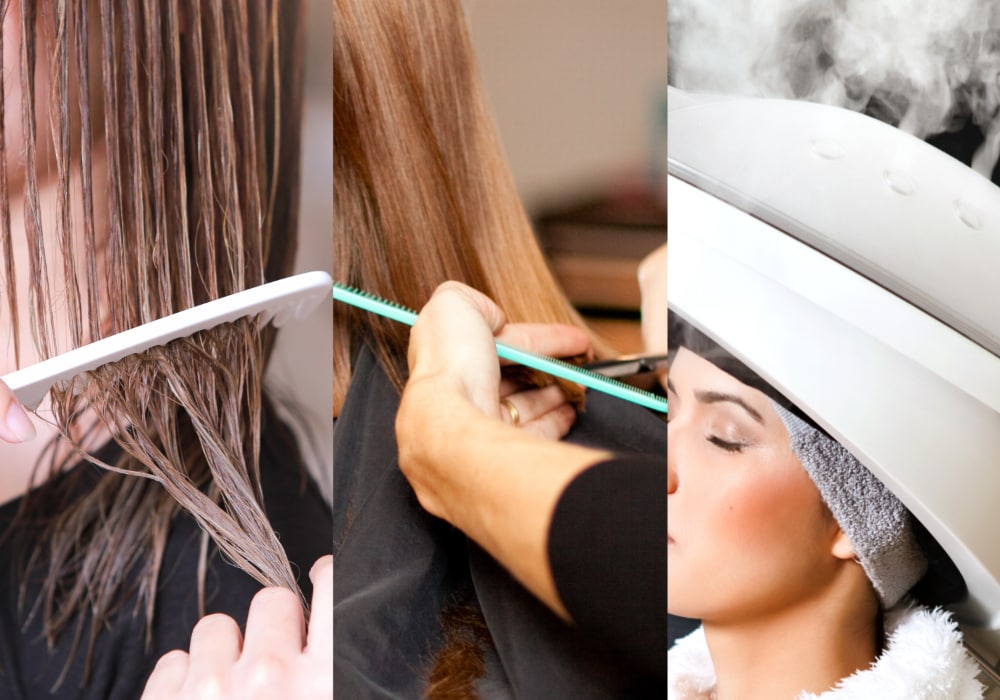
Split ends often start with mechanical damage from brushing, detangling, and hot tools.
This kind of damage weakens the cuticle, and once the cuticle is compromised, the strand can start to fray.
- Use a wide-toothed comb on wet hair instead of ripping through tangles with a brush. An oil or detangling product worked through first makes this even gentler.
- Always use a heat protectant before hot tools, keep tool temperatures at or below 365°F (185°C), and try not to use heat every day.
- Get regular trims, but use a technique that matches your goal. A full trim removes length. Hair dusting removes damage with less length loss.
- Swap harsh shampoos for gentler, sulfate-free formulas designed for damaged hair, and focus conditioner on the mid-lengths and ends; sulfates strip and dry the lengths, which is exactly how new splits start.
- Use deep conditioning as support. It can improve softness and reduce friction, but it cannot “heal” a split back together.
Deep conditioning is helpful, but do not overdo it. Twice or thrice a month is enough for most hair types, and if the mask is protein-based, do not leave it on longer than directed; protein overload can leave hair feeling more brittle, not stronger.
Add friction protection, too. It makes a bigger difference than most people expect.
- Switch Your Pillowcase: Cotton pillowcases can act like sandpaper on fragile hair. Switch to silk or satin to reduce friction while you sleep.
- Ditch the Towel Rub: Rubbing wet hair with a rough towel can cause splits. Squeeze, don’t rub, with a microfiber towel or an old cotton t-shirt.
How to Remove Splits Without Losing Length
If you don’t want to lose your length, try hair dusting. This technique involves holding a section of hair taut and snipping only the hairs that stick out along the shaft, rather than cutting the bottom length.
You can also use the “search and destroy” method.
If you want to keep your length, grab sharp hair shears. Twist a small section of hair. The split ends will pop out. Snip only the split ends individually. This removes the damage without losing overall length.
Never trim your hair with paper or kitchen scissors. They are too dull to slice the cuticle cleanly. Instead, they crush the hair shaft, causing it to split again almost immediately. Always use professional-grade stainless steel hair shears.
Can You Repair Split Ends? (The Harsh Truth)
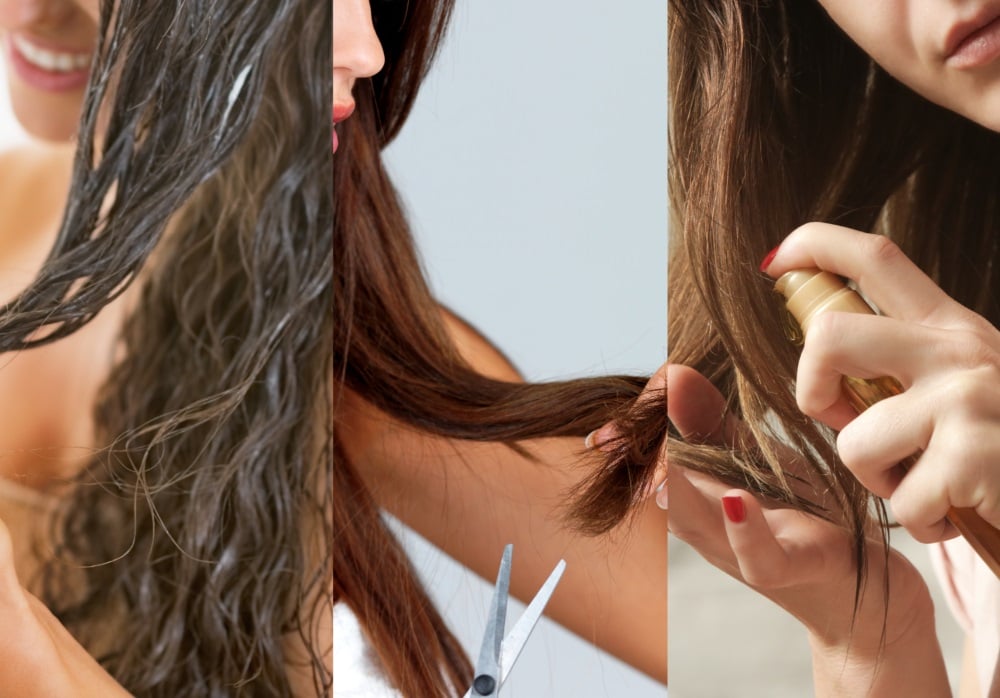
Once a split travels up the hair shaft, it cannot be repaired. Products can temporarily glue the split for a night, but the only way to stop the damage from reaching the root is to cut the hair above the split.
That said, you can still manage how it looks while you work on preventing more damage.
First, use conditioning treatments to improve slip and softness. This can reduce tangles and friction, which lowers the chance of new splits forming.
Second, use heat-protectant products and regulate heat down when styling with hot tools. Heat damage is a common trigger for splitting, so protection matters every time.
To reduce future splits, limit harsh chemicals like bleach, and avoid frequent back-to-back processing sessions.
If you need color, work with an experienced professional who can protect the hair during the service and guide you on aftercare.
Third, remove the split ends with the right method. A small trim, hair dusting, or “search and destroy” can stop the split from climbing higher.
Lastly, use lightweight oils or serums on the ends to reduce roughness and frizz. This helps the hair look smoother, but it does not fuse a long split back together.