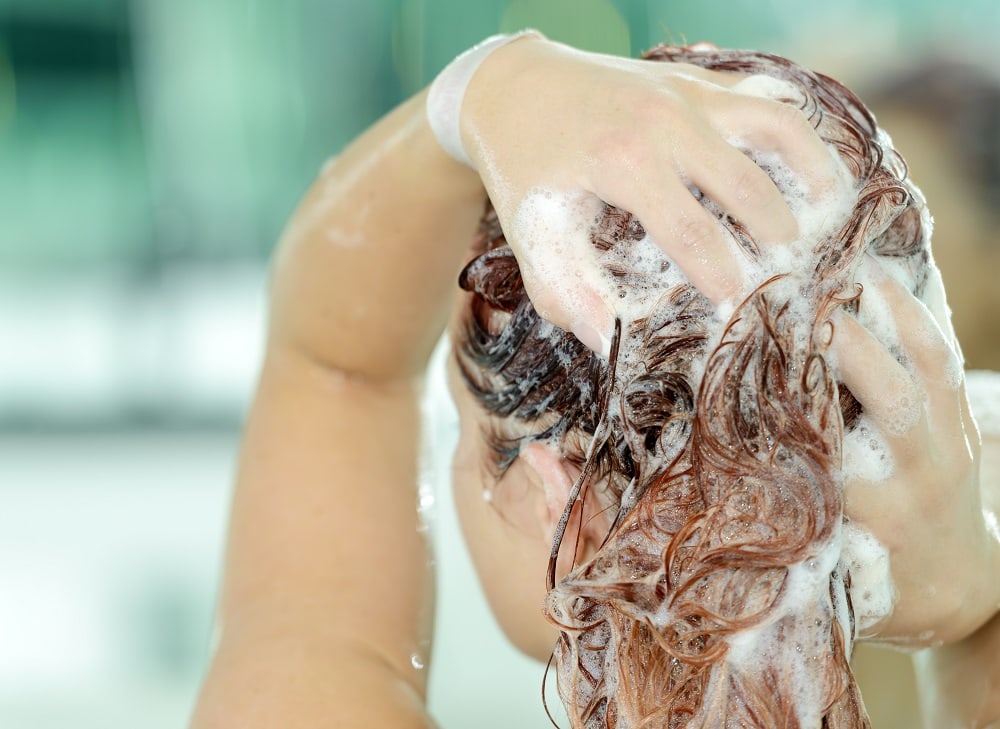

Retouching roots is an essential maintenance practice for people with color-treated hair. But what do you do when your roots don’t take color? First, you must understand why your roots won’t take color before you can apply the best solution.
Why Are My Hair Roots Not Taking Any Color?
Your hair roots won’t take color because of the following 7 reasons:
- You have virgin hair
- You left the dye in for too long
- Your roots are resistant gray
- Your hair is too greasy or coated in product buildup
- You used the wrong developer
- You used an inadequate amount of dye
- You used an improper application technique
#1. You Have Virgin Hair
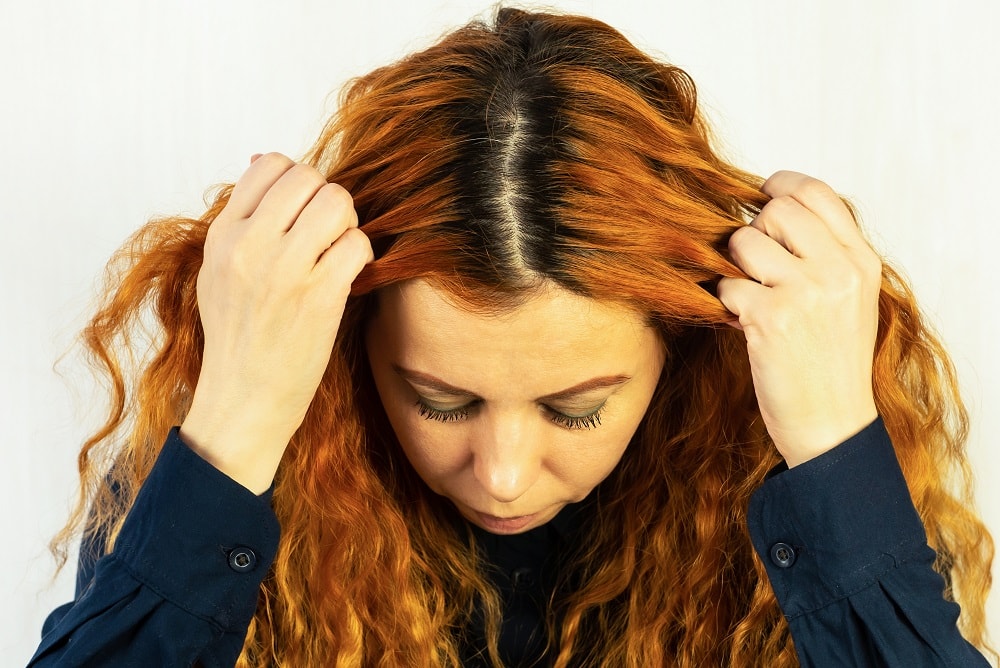
If you’re trying to color new hair growth, it might not take color readily. Virgin hair often has a tight, closed cuticle (low porosity), which can make it difficult for semi-permanent dyes to penetrate.
For permanent color, make sure you are using the correct developer and the full processing time listed by the manufacturer.
If your roots look patchy, do not re-dye immediately. Wait, condition the hair, and consider a strand test first.
#2. You Left the Dye in for Too Long
Why do my roots not take color even after I leave the dye in longer?
Sometimes, leaving the hair dye on for the full processing time allows hair to take on color better, especially when dealing with virgin roots.
A common myth that leads people to leave dye longer in their hair is the belief that the results will be better.
The truth is that leaving the dye on too long should not be the problem. Leaving it on longer will not make it “take”; if the color does not begin to process within 15 to 20 minutes, leaving it on longer will not reverse that. The color might also come out dull and patchy.
#3. Your Roots Are Resistant Gray
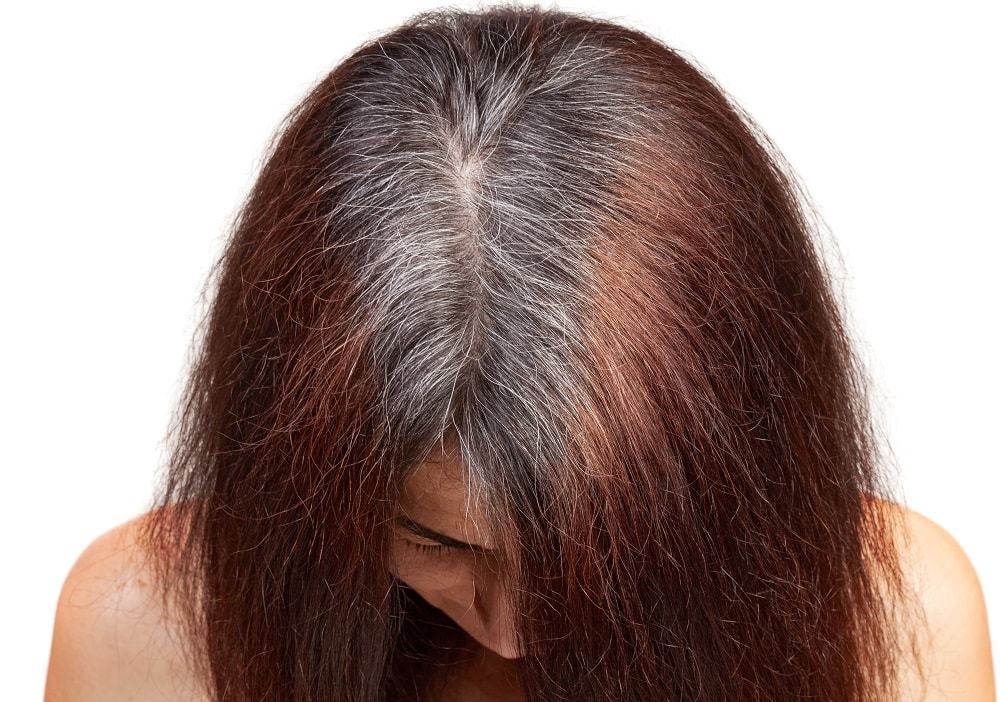
Your graying hair could be the reason your roots are not taking color. Gray hair is notorious for resisting color, particularly the roots. The changing texture is the primary reason gray hair rejects color.
As you age, you produce less oil, resulting in coarse hair. Coarse hair has a hard time absorbing color, especially demi and semi-permanent hair dyes. It’s even harder to color roots if there is heavy product buildup (creams, dry shampoo, waxes) on your gray roots.
For stubborn gray roots, professional colorists often use a technique called pre-softening with developer before applying color to help open the cuticle. It is a salon move; skip it at home.
#4. Your Hair Is Too Greasy
Leaving your natural scalp oils in place (by not washing right before coloring) may help reduce scalp irritation during coloring, though it does not prevent chemical burns. However, heavy product buildup (hairspray, dry shampoo, waxes, silicones) can block color absorption and lead to uneven results, especially when trying to cover gray roots.
It’s always advisable to wash your hair 24-48 hours before a dye job to remove product buildup while allowing natural oils to protect your scalp.
#5. You Used the Wrong Developer
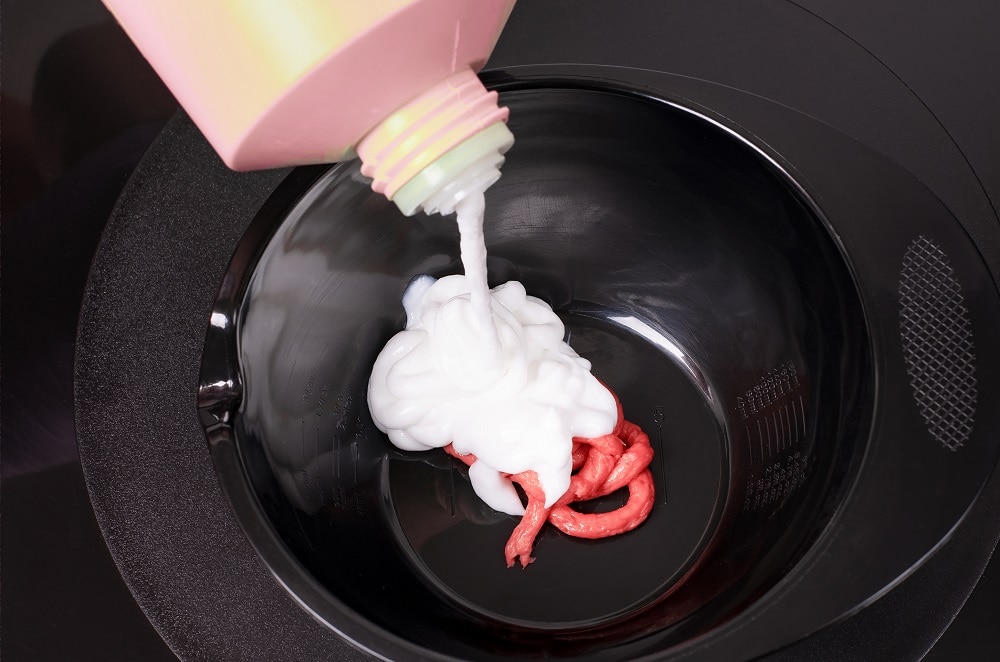
A developer is essential in activating the hair dye. Without the correct type of developer, your roots will not take the desired color.
Most box dyes come with the right type of developer as part of the package. However, when buying your dye and developer separately, you must decide whether you want to go lighter or darker.
Use a 20-volume developer for standard lift and gray coverage. If high-lift is needed, consult a professional. On the other hand, a 10-volume developer is the best choice when you’re going darker. Whatever volume you choose, always follow your product’s label, do a patch test 48 hours ahead and a strand test first, and see a licensed stylist if your hair is already damaged or you are unsure.
Safety Warning
30-volume and 40-volume developers are for professional use or off-scalp foil highlighting only. On the scalp they can cause chemical burns, blistering, and hair loss, so for at-home root work, stay at 20 volume or lower.
For more safety guidance, see the FDA’s hair dye safety information and checklist: Cosmetics Safety Q&A: Hair Dyes (FDA).
For gray hairs, the 20-volume developer is the best choice whether you’re going darker or lighter. This developer helps overcome the resistance to color that gray hair exhibits.
#6. You Did Not Use Adequate Dye
Your roots will only take color if you use an adequate amount of dye. When coloring your roots, the dye must be enough to fully saturate each strand of your hair.
You could have also mixed the wrong quantities of dye and developer, resulting in patchy results. Mixing ratios vary by brand, with 1:1, 1:1.5, and 1:2 all common, so always follow the ratio printed on your product label.
If you use too little developer, the dye will be too dry and incapable of dyeing your roots. Using too much hair developer could result in a runny solution that doesn’t deposit color as expected.
#7. You Used the Wrong Application Technique
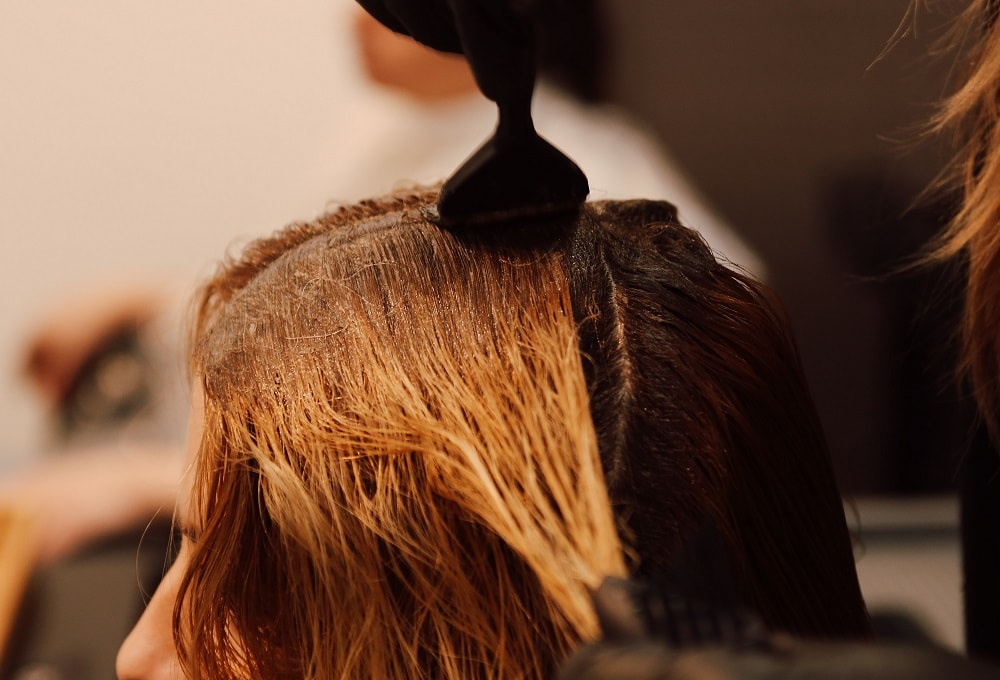
Using the right dye and developer is crucial in achieving the desired color results on your roots. However, you won’t achieve the desired outcome without the proper root touch-up technique.
Dyeing your roots is not about randomly placing the product on your hair. It involves methodically applying the dye to all the hair around your head, ensuring each strand is saturated with the dye and developer mix.
The right approach when dyeing your roots involves the following:
- Sectioning your hair into a minimum of four sections. You can go for more segments if you have more hair.
- Applying the dye directly to the roots of the hair first. When retouching your roots, starting with the roots allows for more processing at the roots. Keep the touch-up on the new growth, and pull color through the mid-lengths and ends only when the product’s directions allow a refresh and the lengths are in good enough condition for more processing.
- Leaving in the dye for the recommended time
- Rinsing out the product from your hair thoroughly after processing
How To Fix if My Hair Roots Don’t Take Color
Now that we’ve answered your question on why your roots won’t take color, the next thing is how to fix the problem.
Follow these tips when fixing roots that don’t take color.
- Apply nourishing treatments to your hair, especially if you’ve recently bleached your hair. Protein fillers and cuticle-smoothing oils are great at improving how your hair looks and feels.
- Prepare your hair before dyeing it by washing it 24-48 hours before the dye job.
- Follow the manufacturer’s instructions on how to mix the dye, what developer to use, and the processing time for the best results when retouching your roots.
- Choose the right hair color. Go for hair dyes made explicitly for root touch-ups.
- Use root coverage powders or sprays and temporary root concealer products to cover your roots as you wait to visit a professional colorist to touch up your roots.
- Visit a professional hair stylist for root touch-ups. A professional knows what they’re doing and will help you avoid the problems DIY root touch-ups bring.
Medications can play a part too. Certain heart, thyroid and other hormone-related medications could inhibit color development.
Should You Dye Your Roots First or Last?
When doing a root touch-up on regrowth, apply color to the roots first. Hair processes faster near the roots due to the heat from the scalp.
However, if you are coloring your entire head of virgin hair for the first time, apply to the mid-lengths and ends first, and roots last, to avoid “Hot Roots”.
How Long To Leave Hair Dye on Your Roots?
Processing time depends on the product: most root formulas sit somewhere in the 25 to 45 minute range, and the number printed in your product’s directions is the one to follow.
My Advice
- Follow the product’s processing time and maximum limit exactly. Stop and rinse immediately if burning, stinging, or a rash develops; do not wait out the timer.
- Do not leave semi-permanent dye on longer than the manufacturer’s instructions.
- Do not use external heat (like a blow dryer) unless the product directions specifically say so. The natural heat from your scalp is sufficient.
- If you feel burning, stinging, or blistering, rinse immediately and seek medical advice.
- Wear gloves, keep color and developer out of your eyes, and work in a well-ventilated room.
If you have had reactions to hair dye before, ask a dermatologist about patch testing: Patch testing (American Academy of Dermatology).
Touching up your roots is a must-do for every person with color-treated hair. In practice, color chemistry almost always moves the hair at least a little; “roots won’t take” usually means the result is patchy or far from the shade you wanted, rather than no change at all. When that happens, identifying the reason behind it can help you fix the problem and save yourself a lot of frustration.