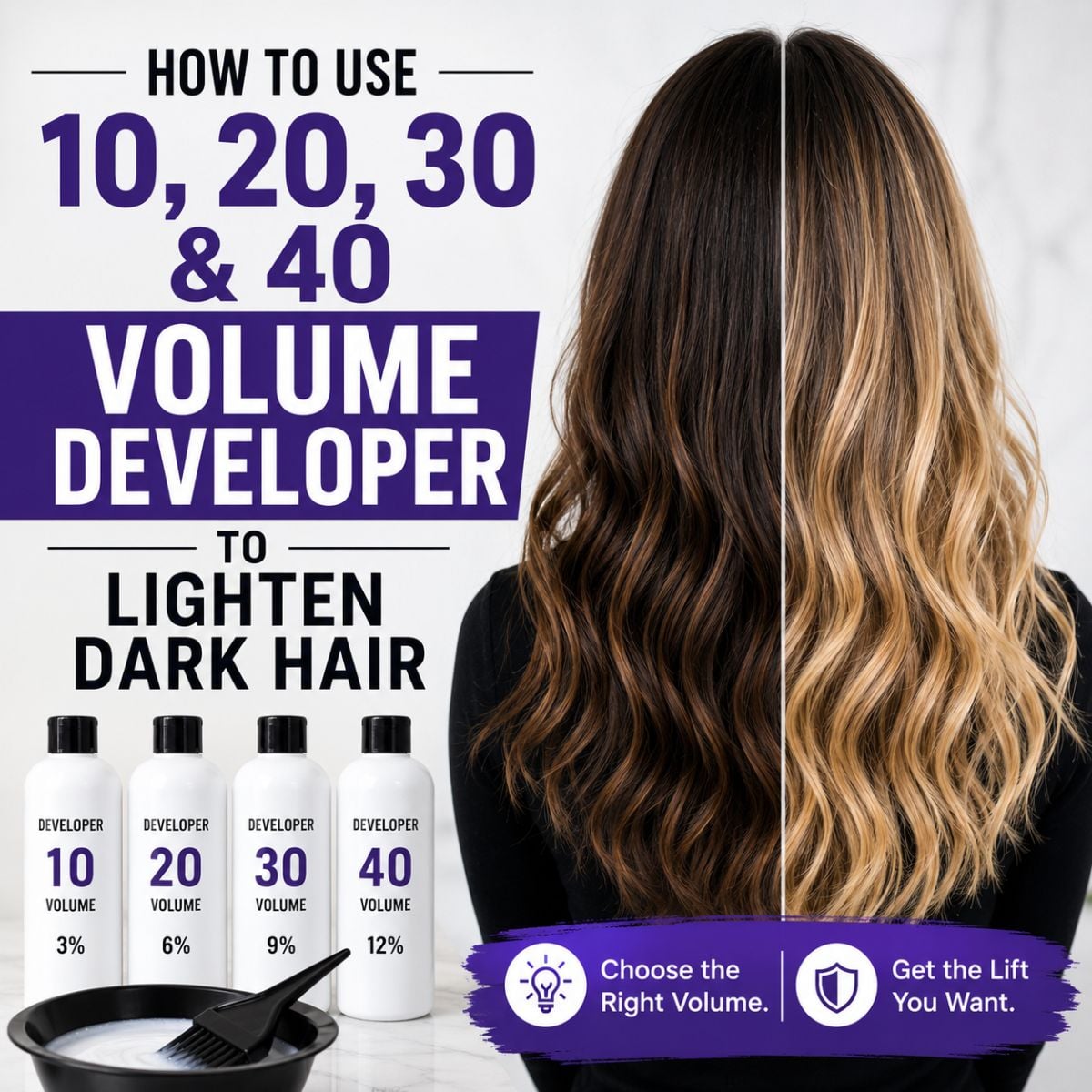


Many people try to go blonde and end up with brassy, patchy hair or the wrong tone. It is more common than you think.
Going blonde is tricky, especially on naturally dark hair. If your blonde dye job went wrong, you can often correct the tone and even out small, uneven spots at home.
- Check safety first: If your scalp burns or swells, rinse thoroughly and seek medical advice.
- Yellow blonde: Use purple shampoo to soften yellow tones.
- Orange or copper: Use blue shampoo to soften orange tones.
- Green tones: Use a clarifying or chelating shampoo first, then a warm, red-toned gloss if needed.
- Uneven spots: Touch up only the missed areas. Do not overlap bleach on hair that has already been lightened.
Emma reaches for the softest version of that warmth: “I love to use a pink or peach toner on clients who come in with green hair from hard water or chlorine. It balances the hair out perfectly without the worry of going red.”
Senior stylist Emma Baxendale sorts blonde disasters into three lanes:
If your hair has turned brassy or has brassy areas, then it is safe to fix this at home with a toning shampoo or a toner, including if you want to ash-out your brunette hair at home.
If your hair is orange or not light enough, a shampoo or toner will not fix this, and it is safest to book a lightening appointment with your stylist. If your hair is breaking or has turned gummy or stretchy, do not use toning products; consult your stylist for the appropriate next steps.
What Could Possibly Go Wrong with Blonde Hair Dye?

Because blonde is a lighter color, you usually need to lighten your hair first. A common mistake is not considering your starting shade. If you apply blonde dye directly to dark hair, it may not lift enough and can look orange or uneven.
Many people need a lightener (bleach) before applying blonde dye. You may need more than one session if you want a very pale blonde, such as platinum. This is one reason people choose a salon for major color changes.
Bleach can lift unevenly when it is not applied consistently. Developer strength matters too. A stronger developer can lift faster, but it can also damage the hair if used incorrectly.
A bad blonde dye job can also happen when the tone is wrong. Warm blondes can look golden. Cool blondes can look beige or ash. If the tone is off, blonde hair can turn orange, brassy, or yellow.
If the dye is not applied evenly, you may get patches that are lighter or darker than others. This is very common at the back of the head.
Some people also notice green tones after going blonde. This can happen when blue pigment is used on yellow hair or when minerals build up on porous hair.
How to Fix a Bad Blonde Hair Dye Job
The right fix depends on what went wrong. Tone problems, such as yellow, orange, or green, require a different plan than an uneven application.
If your hair feels stretchy or gummy, or breaks when wet, pause. That is a sign that your hair is overprocessed. A professional colorist can correct it with less risk.
Do a strand test first. Use a small, hidden section of hair to see the final color and how your hair feels afterward.
Do a patch test to check for a skin allergy if the product directions require it. Hair dye can cause allergic reactions in some people. See the NHS guidance on hair dye reactions and patch testing.
1. Use Color-Correcting Shampoo
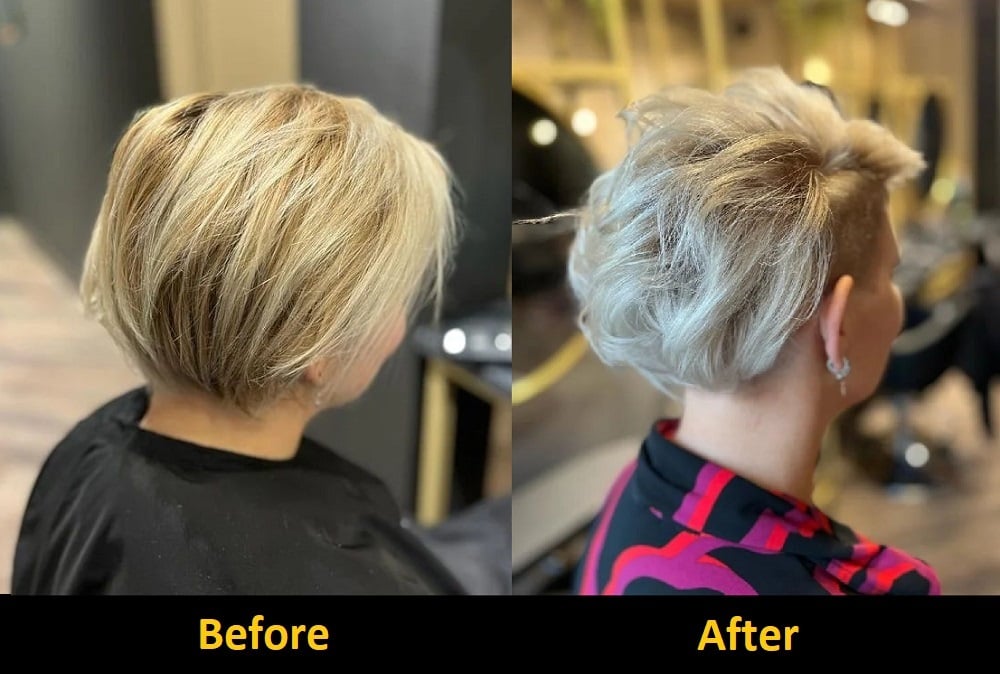
One of the most common blonde problems is brassiness. Your blonde may look too yellow, too bright, or too warm.
A good first step is to use a toning shampoo.
Use purple shampoo to soften yellow tones in blonde hair. Use blue shampoo only if your hair looks orange or copper. This is more common when dark hair is lightened.
Start slowly. Use it once, leave it on for the amount of time stated on the label, and then rinse thoroughly. If your hair feels dry afterward, follow with a rich conditioner.
If you still do not like the tone after a few washes, you may need a different shade of blonde or a toner.
2. Put Another Color on Top
Blonde hair is often easier to adjust because the base is light. In many cases, you can add color without bleaching it again.
It is possible to apply a semi-permanent dye over blonde hair to soften a bad result. Semi-permanent color is usually a gentler option because it mostly adds pigment instead of lifting the hair.
A simple way to choose a shade is to stay close to your current level. Most hair color levels run from 1 (black) to 10 (very light blonde). If your hair looks like a level 8 or 9, do not jump to a very dark shade unless that is your goal.
If your blonde is too warm, look for words like neutral, beige, or ash. If your blonde is too cool or dull, look for gold or honey.
You can also use a toner that mixes with developer, but be careful. This is another chemical step. Use a low-volume developer, often 5- or 10-volume, to reduce damage. Do a strand test first. If you are unsure, a professional gloss is safer.
3. Touch Up Your Dye Job
If you missed a spot, you do not always need to recolor your entire head. A careful touch-up can fix small patches.
Be extremely careful with bleach or high-lift color. Do not overlap bleach on hair that has already been lightened. Overlapping bleach can cause rapid breakage and a “chemical haircut.” Use a precision brush and apply it only to the darker spot.
If you had difficulty applying the color the first time, ask a friend to help with the back of your head. Work in small sections. Saturate the missed area thoroughly, and then rinse and condition your hair.
If the missed spot is dark because it did not lift enough, a salon is often the safest option. A colorist can re-lighten only the darker areas without overlapping the bleach.
4. Fix Green Tones
If your blonde looks green, do not panic. Green usually means that blue pigment grabbed onto yellow hair or minerals built up on porous hair.
Try these steps in order:
Step 1: Wash your hair with a clarifying or chelating shampoo, and then condition it well. This can help remove mineral buildup.
Step 2: If it still looks green, use a warm, red-toned gloss or mask to cancel the green. Do a strand test first so you do not make the color too warm.
Step 3: If the green is strong or your hair feels fragile, see a professional colorist. Green correction is faster and safer in a salon.
If you have tried these steps and your hair still looks off, it may be time to seek professional help. A hair colorist can tell you what went wrong and correct it with less damage.