

Noticing your hair partition getting wider can be alarming, but for many women, it is an early, manageable sign of hair thinning.
If you feel your hair is thinning at the root, this article covers the real causes, the best scalp care habits, and the clever styling tips you need to manage and improve the appearance of your hair part.
Key Highlights
- A widening part can be an early sign of Androgenetic Alopecia or hormonal shifts. While cosmetic fixes help conceal it, we recommend consulting a dermatologist for a diagnosis. (Source: American Academy of Dermatology)
- If hair loss is sudden, patchy, or paired with scalp pain, itching, or scaling, see a clinician soon.
- Topical Minoxidil is an FDA-approved option for pattern hair loss. It usually needs consistent use for several months to see results. (Source: Mayo Clinic)
- If tight hairstyles are causing your hair loss (traction alopecia), the best fix is to stop pulling on your hair as soon as possible. (Source: American Academy of Dermatology)
Is Your Hair Part Widening? Here’s Why
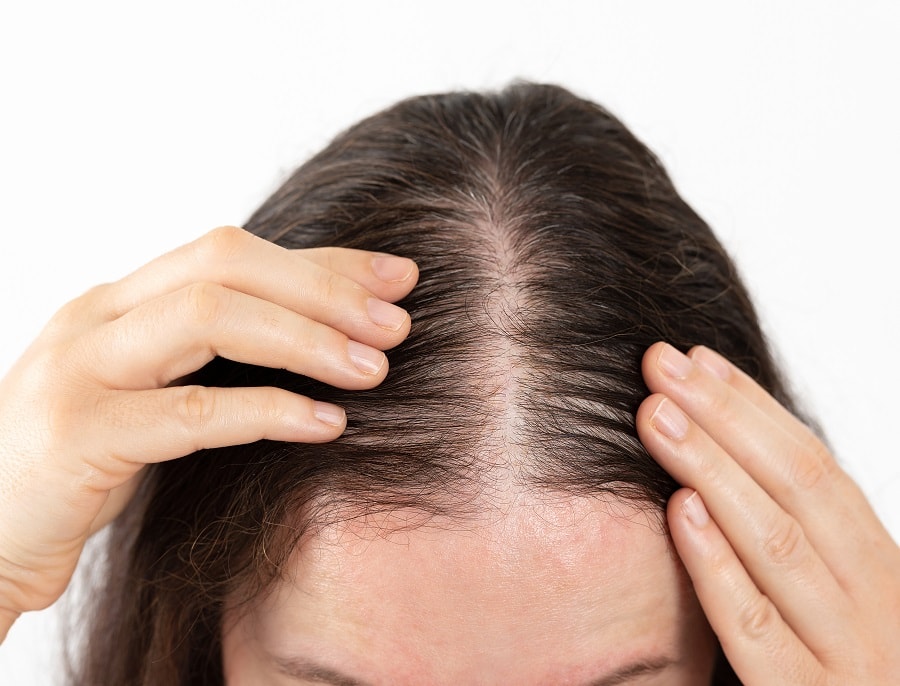
For many women, a widening part is one of the earliest signs of hair thinning. The American Academy of Dermatology notes that female pattern hair loss can begin as a widening part. While men often start losing hair at the hairline or the crown of the head, most women usually begin to see their mid-partition getting wider.
Another possible reason for hair part widening is repeated tension from tight styles around the same part. The weight of your hair can pull down in two opposite directions from that specific parting line. Over time, this may contribute to breakage or traction alopecia along that line, making the gap look wider. The American Academy of Dermatology warns that hairstyles that pull can lead to hair loss.
Still, pattern hair loss and daily tension are not the only reasons this can happen. A widening part can have several causes, including the following. (Source: Mayo Clinic)
- Genetics: If pattern hair loss runs in your family, your hair follicles may slowly shrink over time. This makes them produce finer, weaker hairs, and eventually less hair overall, which can make the part look wider.
- Hormones: Hormonal changes after pregnancy, peri-menopause, or from conditions like PCOS can trigger shedding.
- Stress: Ongoing stress can push more hairs into the shedding phase. This often causes overall thinning, which can make the part stand out more.
- Illness: Some illnesses and infections can affect the hair follicles and lead to hair loss.
- Traction: Tight hairstyles that pull on the hair near the part can put stress on the follicles and make thinning worse over time.
- Damage: Bleach, harsh treatments, and frequent heat styling can weaken the hair and cause breakage close to the root.
- Diet: Extreme dieting or not getting enough key nutrients can leave hair weaker and more prone to shedding.
- Medications: Some prescription medicines can also cause hair loss as a side effect.
Should You Worry If Your Hair Part Is Getting Wider?
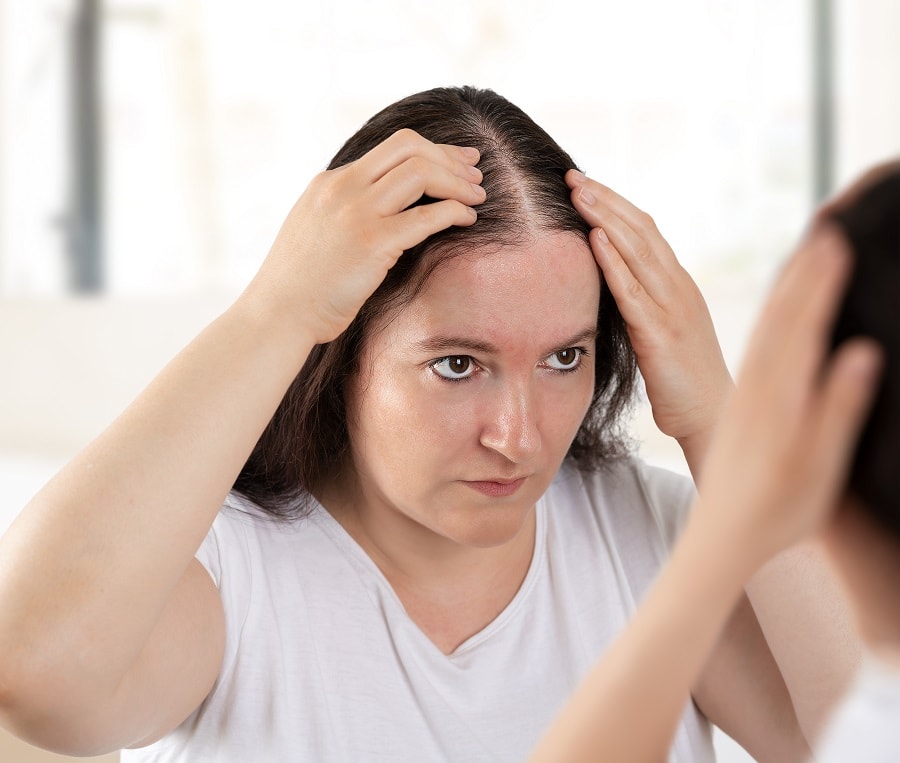
A widening part in your hair can freak you out. But don’t stress too much until you know all the facts. We lose around 50-100 hair strands daily. As we get older, it is normal to notice some widening.
Double board-certified dermatologist Sanober Pezad Doctor, MD, suggests a calmer way to keep an eye on a widening part:

Take a photo of your part from the same angle and under similar lighting every month rather than checking it daily. A gradually widening part over several months, especially if accompanied by increased shedding or overall thinning, warrants a dermatologic evaluation.
I would like to see you soon if the change is rapid, patchy, or associated with scalp itching, burning, pain, redness, or scaling.
Seeing your hair parting getting wider can be normal or alarming, depending on the cause.
Keep an eye out for these signs that it may be more serious:
Warning Signs to Watch
- Can you easily see a lot of scalp through your part? That’s a telltale sign of hair loss that shouldn’t be ignored.
- Be aware of other clues, clumps of hairs falling out when you wash or brush, thinning patches, or a receding hairline. Combining a widening part with symptoms like that is a red flag.
- In some cases, this problem can be slowed, and you might even be able to regrow some hair, depending on the cause. However, if the skin in the widening part looks shiny, smooth, or lacks pore openings, this may be Scarring Alopecia (such as FFA or LPP). See a dermatologist immediately; this type of hair loss can become permanent if not treated early.
- If you notice sudden or patchy hair loss, or you have scalp pain, burning, itching, or sores, see a dermatologist promptly.
Noticing it early gives you a better chance to understand what is going on and take the right steps.
How to Manage Further Thinning and Improve the Appearance of a Widening Hair Part
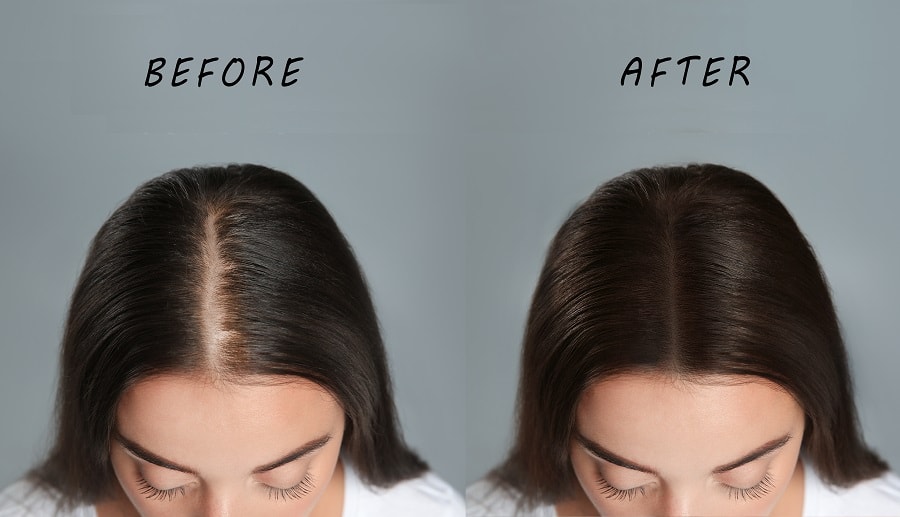
A widening hair part can be a temporary issue or a sign of permanent hair loss. The fix depends entirely on the underlying cause.
Some forms of hair loss need medical treatment. For example, if you are experiencing scarring alopecia, home remedies will not work, and getting treatment is the only way to prevent further loss.
If you notice your parting is becoming more visible, here is how to care for your scalp and help your hair look fuller.
Start with the cause
The first step is seeing a doctor or dermatologist. A widening part can result from many factors, including hormonal changes, nutrient gaps, and different types of hair loss. The American Academy of Dermatology says effective treatment begins with finding the cause. A dermatologist can find the reason and determine the best treatment for you.
Use minoxidil
For pattern hair loss, over-the-counter topical minoxidil is one option some people use, but not every kind of thinning responds to it, and it is best used under the guidance of a dermatologist. That is why getting the right diagnosis first matters.
Side Effect Warning!
Over-the-counter topical liquids or foams (like Rogaine) are the only forms of minoxidil FDA-approved for hair loss, but they can still cause scalp dryness, itching, or irritation.
Check for hidden deficiencies
Hair often reflects what is happening inside the body. Low levels of Vitamin B12, Vitamin D, iron, and zinc can all play a part in shedding. A supplement may help, but only if blood work shows you actually need it. Guessing with over-the-counter vitamins is not the answer here. (Source: International Journal of Trichology)
Treat your scalp gently
A healthy scalp gives your hair its best chance. A gentle scalp massage can help boost circulation and feel lovely at the end of the day. Use your fingertips or a scalp tool with a light touch. But skip massage completely if your scalp feels sore, looks red, is itchy, or has any active irritation. Too much friction on an inflamed scalp can make shedding worse.
If you apply essential oils, always dilute them first in a carrier oil like jojoba or coconut. A safe guide is one to three drops of essential oil per tablespoon of carrier oil. More is not better. A strong mix can irritate the scalp or even cause a chemical burn.
Avoid harsh DIY kitchen ingredients to clean your hair. Baking soda scrubs and lemon juice treatments can throw off the scalp’s natural balance and leave it irritated. If buildup is the problem, use a chelating shampoo once a month, then follow with a pH-balanced conditioner.
The same goes for acidic rinses. If you use one, choose a formula made for the scalp with a pH between 4.5 and 5.5. Apple cider vinegar should be heavily diluted, at least one part vinegar to ten parts water. If it stings, stop. (Sources: International Journal of Trichology, Journal of the American Academy of Dermatology)
Be kinder to your hair every day
Small habits matter more than most people think.
Wash with a mild shampoo and conditioner that keeps the scalp calm and the hair soft. When detangling, use a wide-tooth comb or a flexible detangling brush. Save soft bristle brushes for smoothing dry hair, not for pulling through knots at the root.
Tight styles can also make a widening part look worse over time. Ponytails, slick buns, and anything that pulls too hard can stress the follicles. Loose braids, relaxed styles, and silk or satin scrunchies are a much better choice.
Heavy oils can flatten the hair and make the part look more obvious. Lightweight serums tend to work better when you want softness without losing movement.
Camouflage or style to your advantage
If you have dark hair and a lighter scalp, the contrast can make the part seem more dramatic. Instead of reaching for chemical lighteners, use a camouflaging hair powder or tinted dry shampoo. Gently tap the color onto your scalp with a dense makeup brush for a seamless, thicker look without the damage.
Also, never forget the easiest trick of all: change your hair parting direction or create a zigzag parting. A zigzag line breaks up the straight line of the exposed scalp and instantly makes the hair look thicker at the root. You can also look into specific alopecia hairstyles to creatively hide thinning areas.