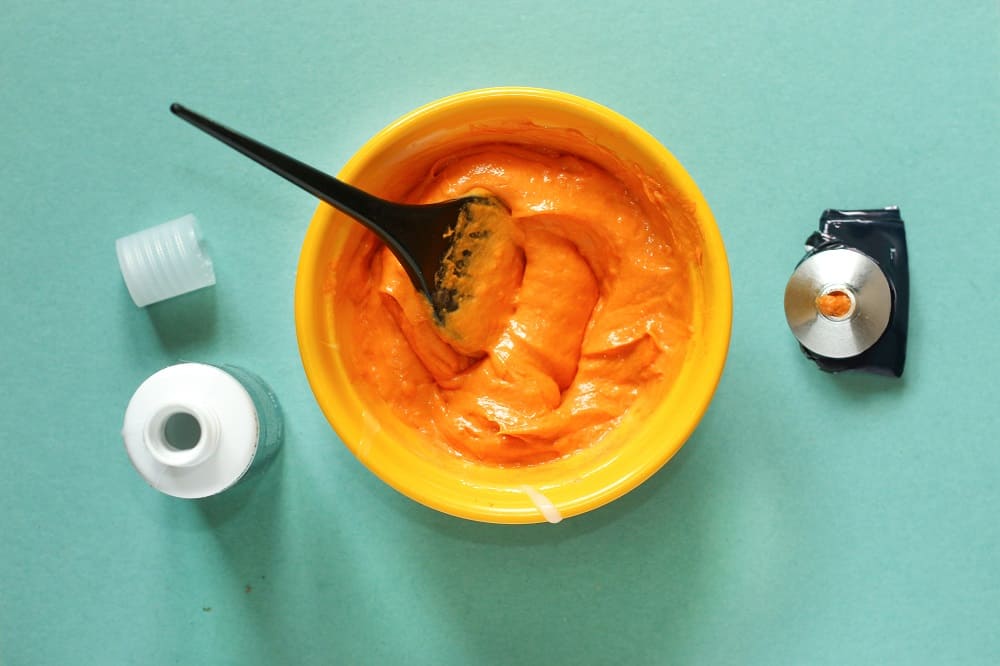


Colorists sometimes dilute hair dye to soften a shade, reduce its intensity, or create a more customized result. But not every type of hair color can be diluted safely. The key rule is simple: semi-permanent direct dyes can usually be diluted, while developer-based dyes should not be thinned with conditioner or water.
This guide explains why, the two dilution methods colorists actually use, and the common tricks that can quietly ruin your results.
The One Rule: Which Kind of Dye Is It?
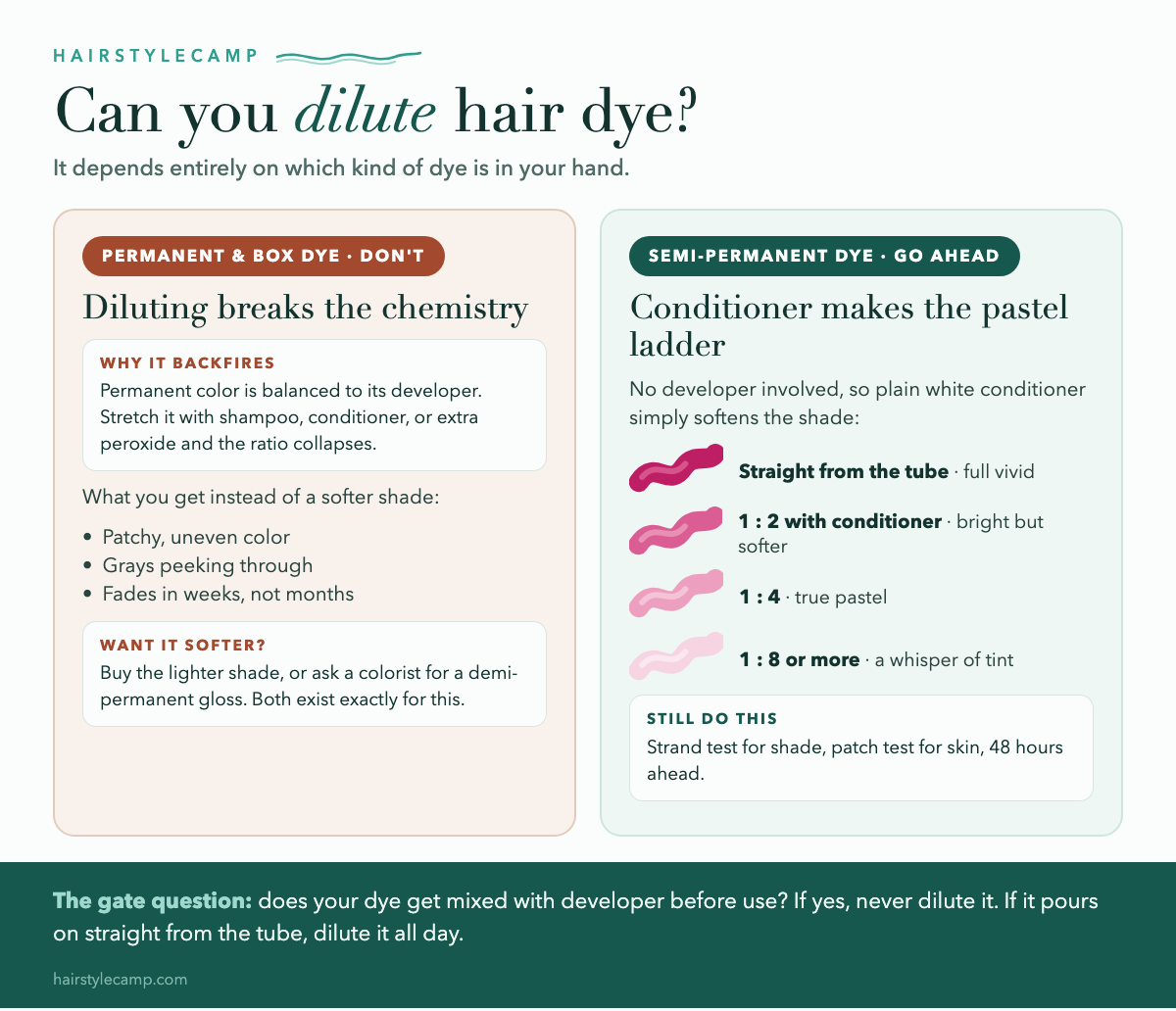
Permanent color and box dye are two-part chemistry. The color is balanced to its developer, and every extra spoon of shampoo, conditioner, or peroxide collapses that ratio. The result is not a softer shade; it is patchy color, grays peeking through, and a dye job that fades in weeks. When a client wants a lighter permanent shade, the colorist reaches for the lighter shade on the chart, or for a demi-permanent gloss.
For a permanent that came out too dark, Emma goes the other way entirely: “Color cannot shift color, so to soften a permanent color I would do a soft bleach cleanse and add a toner afterwards in the desired shade. The cleanse doesn’t even need peroxide when you need it this soft; it can simply be bleach powder, shampoo, and water, which removes just the very top layer, perfect for budging half a shade or so.”
Semi-permanent direct dyes are the opposite. They pour straight from the tube and involve no developer, and mixing them with a plain white conditioner the dye brand allows is how salons make pastel shades.
Why Dilute Hair Dye at All?
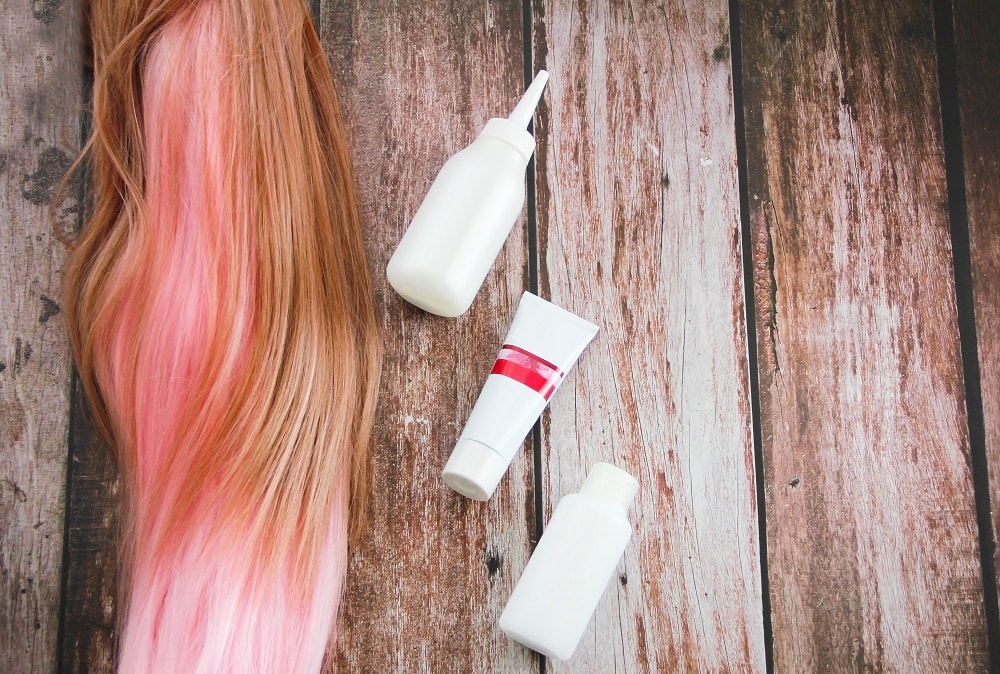
No two clients want the same shade, and the fastest route to a color nobody else wears is a custom mix.
Diluting semi-permanent dye yields the distinct pastels that turn heads. Colorists reach for it because:
- Full-strength dye can be harsher on the hair shaft, which may leave it feeling drier or more damaged.
- A diluted shade doubles as a trial run: if the tone suits the client, it can go deeper next time; if not, it fades without a fight.
- Diluted semi-permanent color fades out gradually over washes, so clients can try shades without a long commitment.
- A conditioner-heavy mix is gentler on the lengths than layering full-strength color again and again, though it is still a dye and still needs the usual care.
- For small tone tweaks, a diluted mix can help alongside using a toner, though a proper toner remains the more precise tool for ashy results.
One honest caveat before the methods: dilution changes the shade, not the health of your hair. A softer mix is kinder to the lengths, but no dye makes hair thicker or healthier.
Is Diluting Hair Dye Safe?
Diluting hair dye is generally gentler on the hair than applying it at full strength, but any permanent or semi-permanent dye still contains active chemicals. It does not remove the need for the usual precautions before any color service.
Andrea Torre, on the HairstyleCamp expert panel and a licensed cosmetologist and colorist for nearly four decades, explains what dilution actually changes:

Diluting semi-permanent color is safe on hair. Knowing the level of deposit you want to achieve is a key factor, and very important to what the end result will look like. The more diluted the formula, the more sheer and transparent the final result; with less dilution, the hair will showcase a deeper and richer result.
Because it is more diluted, this approach is usually gentler on the hair than full-strength dye, though the softer shade also fades out sooner. Results vary by hair type and by the product you use.
How Colorists Dilute Hair Dye
The two real methods below are for semi-permanent direct dyes only, the kind that pours straight from the tube with no developer. The third entry covers a popular trick that is not diluting at all.
Senior stylist Emma Baxendale mixes pastels by eye, not by chart: “To create the ideal pastel shade for my client, I judge by eye when I mix the dye and conditioner in a bowl before applying. If the color is too bright, add more conditioner; to strengthen it, add more color. If I apply it and want more color, I just put a small amount in my hands and blend it through; the conditioner mix already on the hair dilutes it.”
Method 1: Diluting Hair Dye with Shampoo
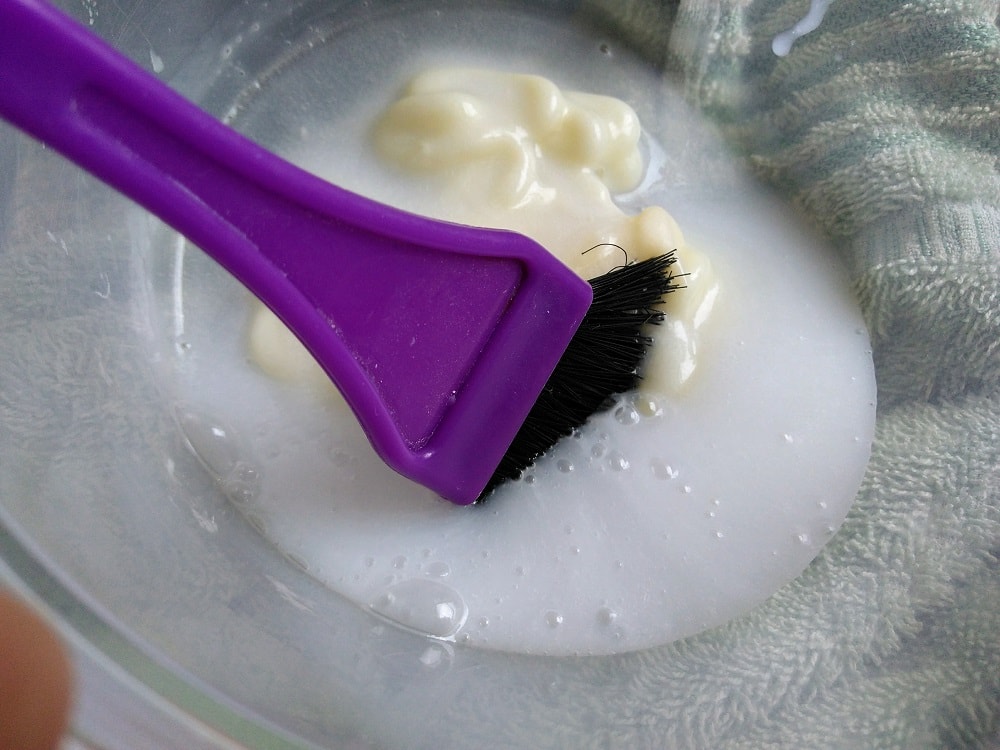
Mixing semi-permanent dye into shampoo stretches one tube of color into a toning wash. Not every shampoo qualifies, though.
Toning shampoo is best. It comes in different semi-permanent colors and is specially made to use on colored hair. Supply stores carry them in a wide range of shades, including purple, blue, red, ash, and golden blonde.
Ready-made toning shampoos are relatively expensive, which is why many colorists mix a house version instead.
The house version takes three things:
- Half a bottle of plain white shampoo
- Half a tube of semi-permanent dye
- A clean, empty bottle
The bottle is filled halfway with white shampoo, the dye goes in, and the mix is shaken until fully even. It goes on like an ordinary shampoo, sits only as long as the dye’s own directions allow for diluted use, and rinses out. If the brand names an approved diluter or ratio, that always wins over a generic recipe. It is not a daily wash; plain white shampoo carries the days in between.
A toning wash is repeated only when the color starts to fade. If hair feels dry afterward, a deep conditioner brings the moisture back.
Method 2: Diluting Hair Dye with Conditioner
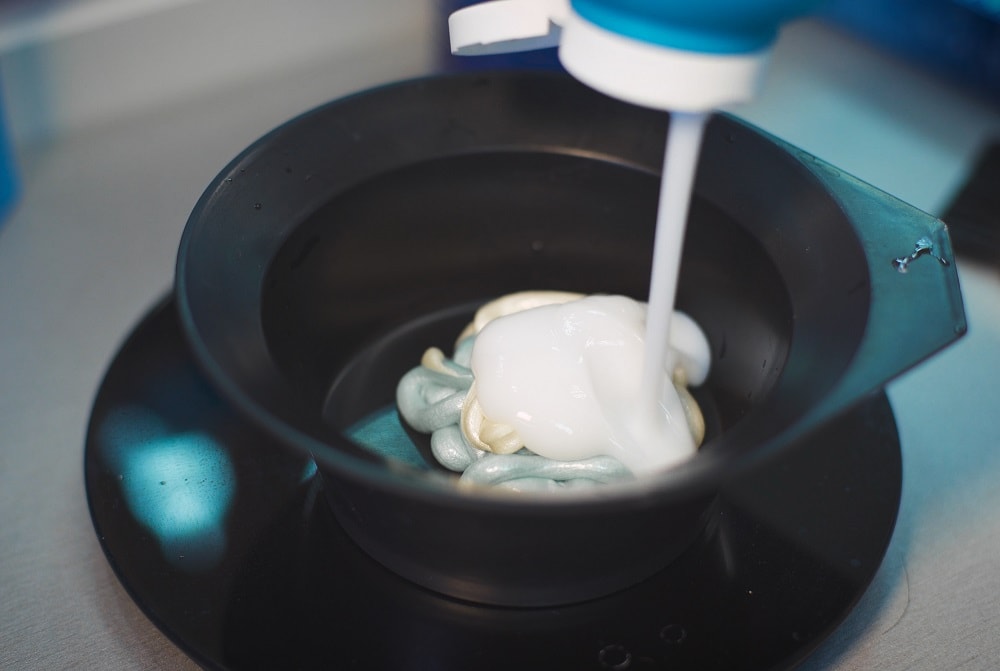
Also known as a color rinse, this is the mix colorists reach for when there is already color on the hair and it has gone dull or ashy.
Unlike a toning shampoo, a color rinse can introduce a new color to the strands. It also restores luster and vibrancy.
The recipe stays small:
- Three tablespoons of standard white conditioner (only a small amount will do)
- Half a tube of hair dye
- A clean, empty container
Conditioner and dye are blended in a plastic container with a soft-bristled brush, painted through the lengths, left on for the time the dye’s own directions give for diluted use, and rinsed out with cold water.
Diluted hair dye with conditioner suits hair that has been through a lot: sun, hard water, harsh shampoos. It is the gentler way to wear color, though it is still a dye, so the usual patch test applies.
The “Peroxide Method” Is Not Diluting (Skip It)
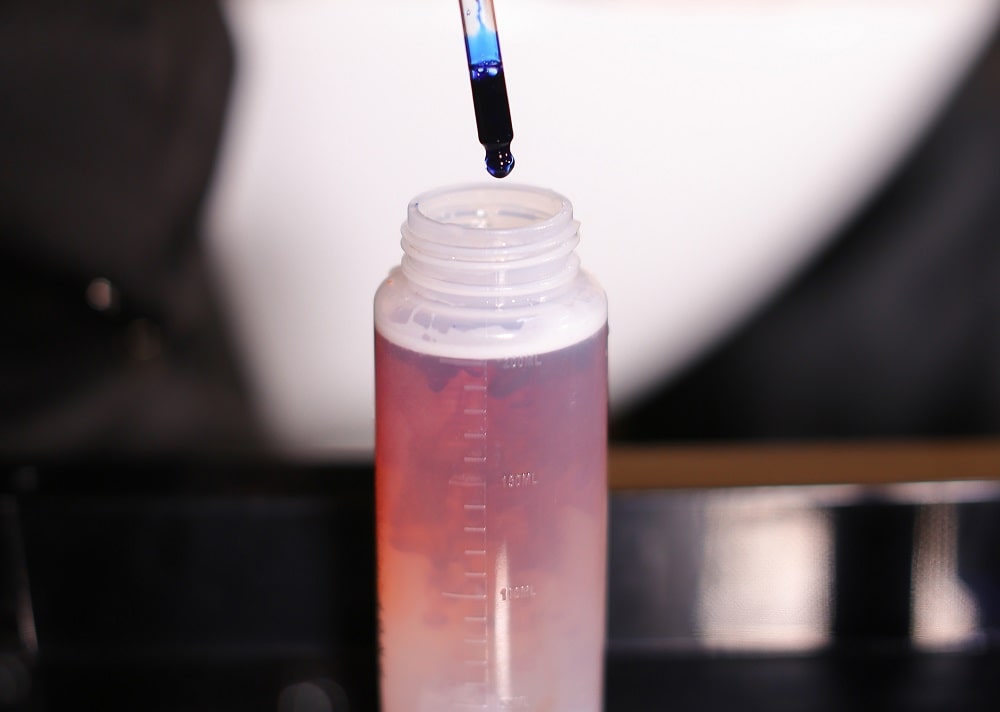
You will see this trick everywhere online: mix one part dye with two parts hydrogen peroxide for a “diluted” permanent result. Chemically, that is not dilution. Peroxide is the developer, and doubling it past the ratio the formula was designed for does not soften the shade; it weakens the color deposit, lifts unevenly, and raises the risk of scalp irritation.
Hydrogen peroxide is the developing agent in most over-the-counter coloring kits, and the kit’s own ratio is the only correct one. If a softer permanent result is the goal, that is a formulation question for a colorist, and the usual answer is a demi-permanent gloss, not extra peroxide in a bowl.
Methods to Avoid When Diluting Hair Dye
Just as telling is what colorists refuse to mix into dye. These solvents fail:
Avoid Diluting Hair Dye with Thermal Oil
Thermal oil is an easy one to rule out: it leaves a greasy film that coats the hair shaft and keeps the dye from penetrating the cortex.
Adding thermal oil to hair that’s already dry risks more breakage because hair oil does not moisturize hair, as water-based hair products do. In a nutshell, diluting hair dye with thermal oil does little to nothing to color the hair.
Too Much or Too Little of an Ingredient
It takes the right product proportions to create the perfect hair coloring solution. The correct measurements to dilute hair dye should be precise to achieve the best results.
With the conditioner method, eyeballing is forgiving: too little dye just means a fainter pastel. With anything involving developer, wrong proportions are how scalps get burned and color turns patchy, which is one more reason that mix belongs to professionals.
Avoid Diluting Hair Dye with Water
Water seems like the obvious diluting agent. Everyone uses water to thin everything, from paint to watercolor. So why not dye?
Wrong, but not for the reason you might think. Dye mixes with water just fine; that is the problem. Water thins the pigment unpredictably, drips everywhere, and leaves streaky results you cannot repeat. Conditioner does the same softening job while keeping the mix thick, even, and controllable.
Tips for Achieving Better Results
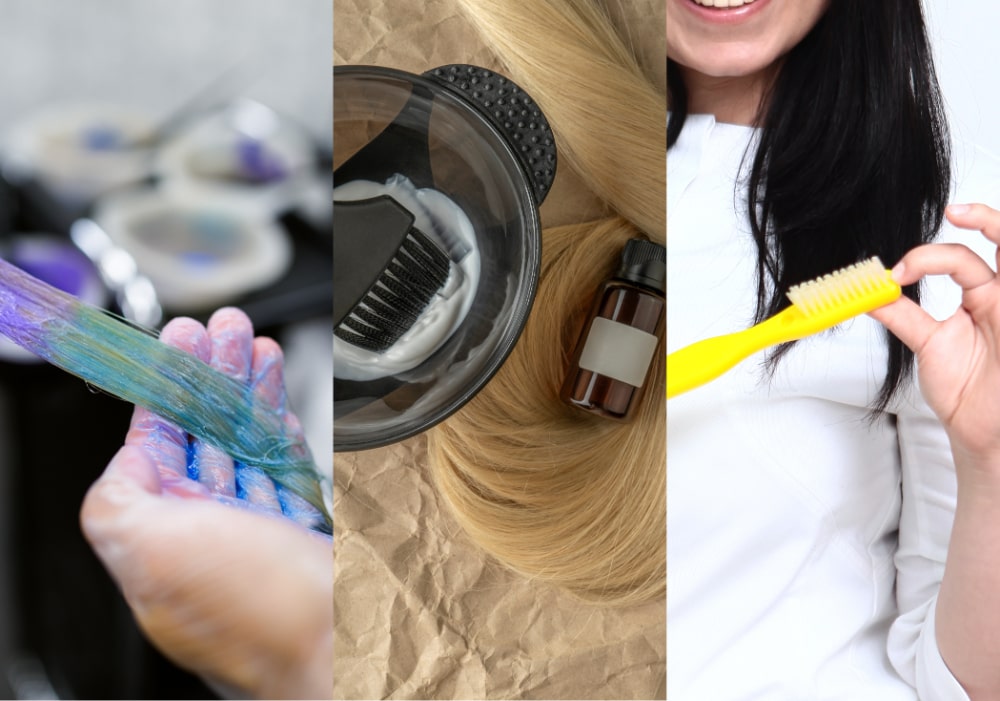
Why do two heads with the same dye and the same base end up with completely different results? The difference usually comes down to habits like these:
Do a Patch Test
Follow the exact dye’s own allergy-test directions, 48 hours before every use. A clear result does not guarantee that a reaction will not occur.
Use a separate hair strand test to preview the color and how your hair responds. Neither test overrides the product’s own restrictions.
If you notice redness or swelling where you applied the test patch, quickly rinse it off and discard the mixture.
Hair Repairing Treatment for Optimum Hair Health
Coloring or bleaching your hair continuously can compromise its health. A standard conditioner is not enough after coloring. Instead, use a repairing hair treatment. Repairing treatment has protective abilities that cushion dyed hair from different side effects.
Using a repairing treatment after washing and dyeing supports the hair you already have. Make it a routine every few weeks and hair feels softer and looks shinier; nothing in a bottle makes it grow longer, though.
Diluting hair dye comes down to the one rule colorists never bend: dilute only a semi-permanent direct dye, only with a mixer its manufacturer allows (plain white conditioner is the classic), and never thin permanent color at all.
From there it is ratios and patience. Pastels are built sheer first and deepened on the next visit, a ladder rather than a leap.