


Powder bleach is the strongest lightener sold for home use, and it behaves very differently in trained hands. In a colorist’s hands it follows a strict sequence; most at-home disasters happen when that sequence gets improvised.
This guide walks through the full process the way a professional runs it, step by step, so you know exactly what is involved and what can go wrong. Just as important, it is honest about which parts are safe to handle yourself and which parts are worth paying for.
Safety Warning
Bleaching hair carries risks of chemical burns and damage.
Before proceeding, you must:
- Do a skin patch test and strand test 48 hours before.
- Follow your product label for the correct mix ratio and timing.
- Do not bleach if your scalp is irritated, cut, or sunburned.
- Do not bleach over relaxed, permed, or henna-treated hair. Chemical service history changes how hair reacts; that call belongs to a professional.
- Use 10 or 20 Volume developer for root touch-up. Never use 30 or 40 Volume on the scalp.
- Apply a barrier cream like Vaseline to your hairline, ears, and neck to help prevent skin burns.
- Work in a well ventilated room and wear glasses. Bleach fumes and dust can irritate your eyes and lungs.
- Do not apply bleach over already lightened hair. For root touch-ups, apply only to new growth. Avoid overlap.
What Bleach Powder Is and How It Works
Bleach powder is a blend of persulfate salts and alkalizers. On its own it does nothing; mixed with developer (a peroxide liquid), it opens the hair cuticle and oxidizes the melanin inside, which is what makes the strand look lighter. Our guide to bleach versus developer breaks down what each part of the mix actually does.
Lightening is gradual. Dark hair does not jump to blonde; it lifts through red, orange, and yellow undertones, which is why freshly bleached hair usually looks brassy before it is toned. The stages of lightening decide how many sessions a shade realistically needs, and stopping mid-stage is where most orange-hair regrets come from.
48 Hours Before: The Two Tests You Can’t Skip
Do These 2 Tests 48 Hours Before
Neither test is bureaucracy; Emma Baxendale has watched them save a head of hair: “A strand test once showed me ‘virgin hair’ bubble and fry because of a shop-bought lighten-in-the-sun spray. The client had told me she had never done anything to her hair. The spray had metallic salts in it, and it caused the bleach to completely melt the strand.
Patch tests are compulsory because clients have sometimes had uncomfortable rashes from one of the brands we use in the salon, and you would not want that happening all over their head.”
|
1. The Patch Test (Check for Allergies) Do the skin-sensitivity test exactly the way your bleach kit’s own instructions describe it, in the spot and for the time the label gives. Do not improvise a test from a general guide; the label’s method is the one matched to that formula. One strength cap applies regardless: never patch test with anything stronger than 10-volume when checking for a reaction. Results If you get redness, itching, swelling, burning, hives, or blisters within 48 hours, do not bleach. If symptoms are severe, get medical help right away. A clear result is not a guarantee that no reaction will ever occur; it only means none showed in this test. |
|
2. The Strand Test (Check Color and Hair Health) Apply the mixture to a small, hidden section of hair, like the layer underneath near your neck. A tidy way to do it: slice out a small hidden section, paint it on a piece of foil, and leave the bleach the full realistic time; if the hair cannot handle the full window on a strand, it cannot handle it on your head. Check it every 10 minutes. Results Rinse the section at the recommended time on the label to see the real shade. Pull the wet strand gently. If it feels gummy, stretches like elastic, or snaps off, do not proceed. Your hair is too fragile to bleach. |
Treat both tests as gatekeepers, not clearances: a failed test rules bleaching out, and even clear results do not override the label’s restrictions or the condition checks above. The strand test also previews the likely final shade. Repeat users are not exempt: sensitivities can develop over time, so both tests happen before every session.
The 8-Step Process, the Way a Colorist Runs It
Here is the full sequence as it happens in a salon, and the reasoning behind each step. Read it before you decide anything; the process is more demanding than the box art suggests.
The classic self-bleaching mistake, according to senior stylist Emma Baxendale, is not the strength of the mix:
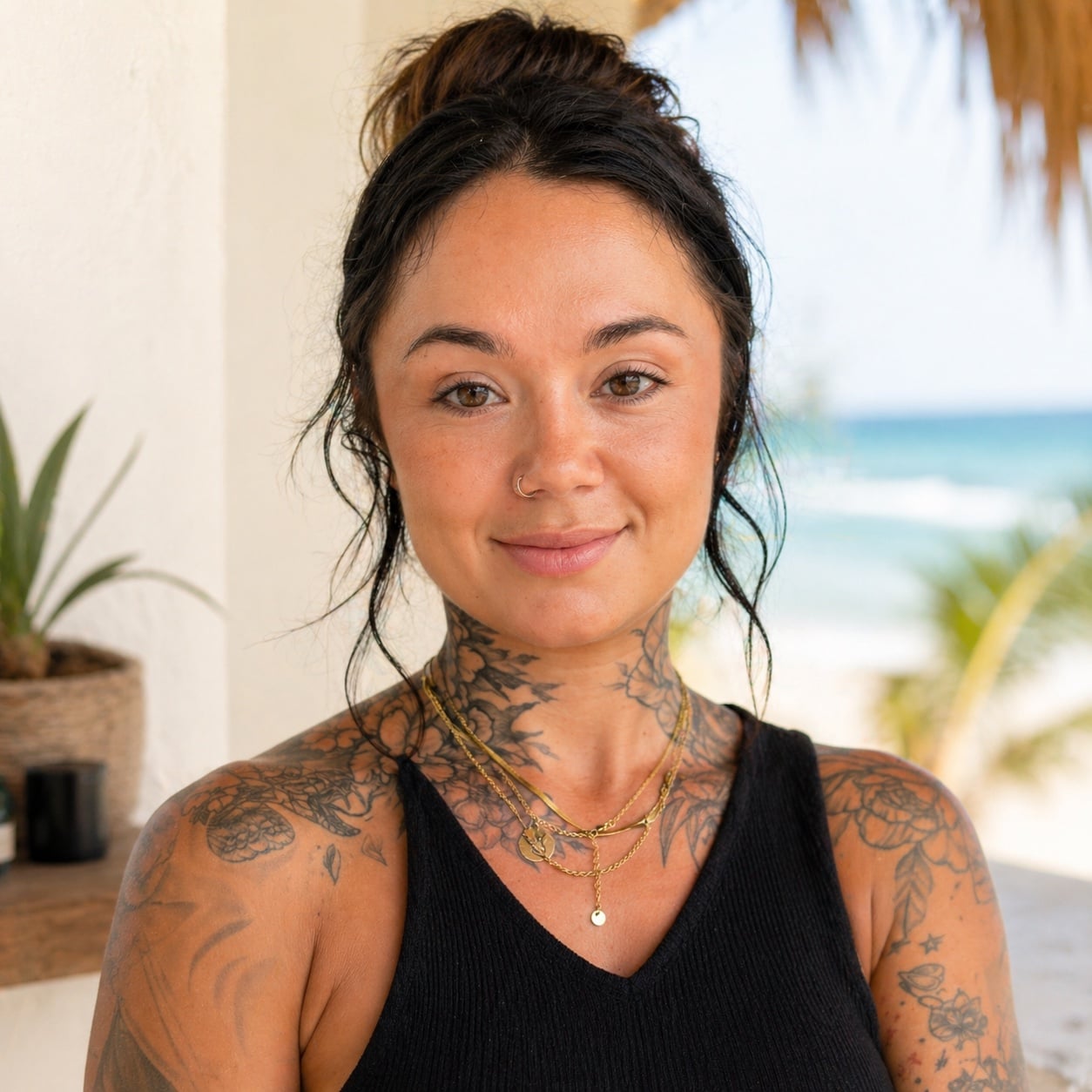
The classic mistake people make when bleaching their own hair is overlapping. Bands of color are created when bleach is just slapped all over the head and processes at different times.
People then try to correct that by bleaching the whole thing all over again, including the already-light pieces. That leads to a lot of breakage, and still more banding where certain areas haven't been dealt with properly.
1. Skin and Scalp Protection
The session starts before any powder comes out. Colorists work over covered surfaces, in gloves, with a barrier cream like Vaseline along the hairline, ears, and neck, because bleach burns skin and ruins fabric.
The hair also goes unwashed for 24 to 48 hours beforehand. The scalp’s natural oil is a protective layer, and stripping it right before a chemical service invites irritation.
2. Sectioning
Clean sectioning is what keeps lightening even. The standard pattern is four quadrants: a part from ear to ear across the crown, then one down the middle from forehead to nape, each section clipped up.
On thick hair, those quadrants get split again. More sections mean thinner slices, better coverage, and no missed patches.
3. Mixing (the Label Wins)
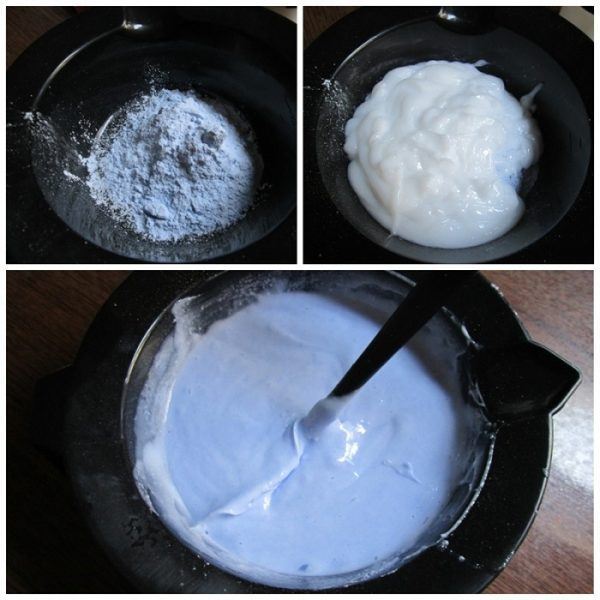
The powder pairs with a developer, and choosing its strength is the judgment call of the whole service. For anything near the scalp, professionals stay at 10 or 20 volume; 30 and 40 volume exist for off-scalp technique work and raise the burn risk sharply. Our developer guide explains what each strength actually does.
Warning
Bleach powder contains persulfate which can irritate your lungs and trigger breathing issues. Pour it slowly to avoid creating a dust cloud and wear a mask until the powder is fully wet.
Mixing happens in a glass, ceramic, or plastic bowl, never metal, which can react with the bleach and heat it up. The classic ratio is 1 part powder to 2 parts developer, but the manufacturer’s label wins every time; some formulas run 1:1 or 1:1.5.
An off-label mixing ratio can change a lightener’s consistency and performance. Follow the exact product’s directions for developer strength, mixing ratio, application, and processing time; do not judge the formula’s strength by how thick or runny it looks.
The mix starts losing strength the moment powder meets developer, so it is mixed right before application and discarded after the session, never saved for later.
4. Application Order: Virgin Hair vs. Regrowth
Virgin hair (never lightened or colored) and regrowth (dark roots on previously bleached lengths) are two different services, and mixing up their rules is the most common at-home mistake.
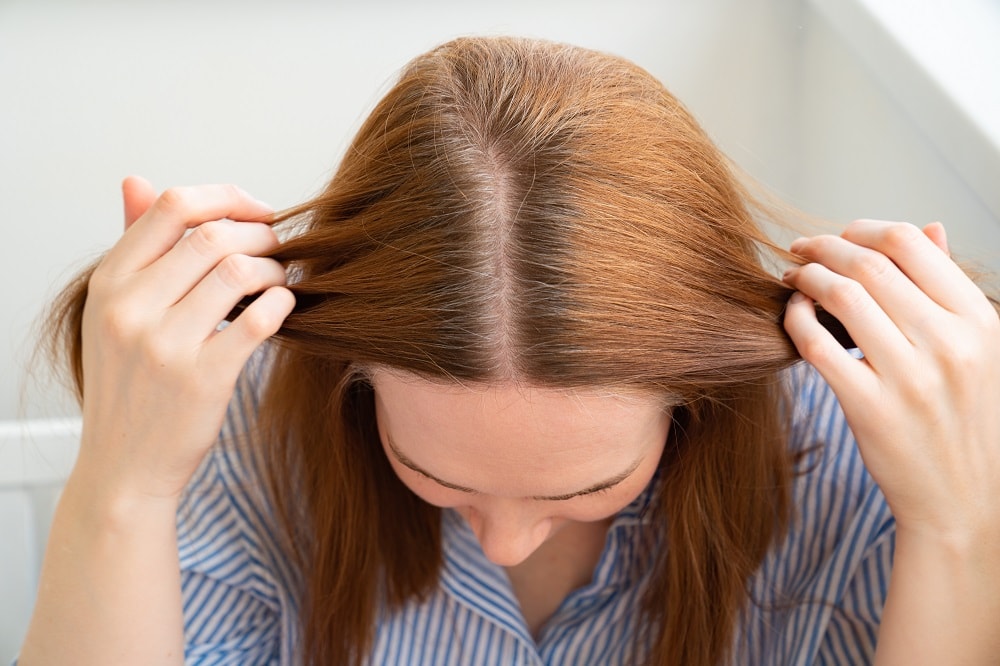
On virgin hair, a colorist starts at the back, where hair is cooler and lifts slower, and applies to mid-lengths and ends first, staying about half an inch off the scalp. Body heat makes roots lift faster; start at the scalp and you get bright roots over darker lengths.
On a pixie-length crop the heat difference barely matters, so application can go all over at once. The work moves quickly, in thin slices, with enough product to fully cover each one.
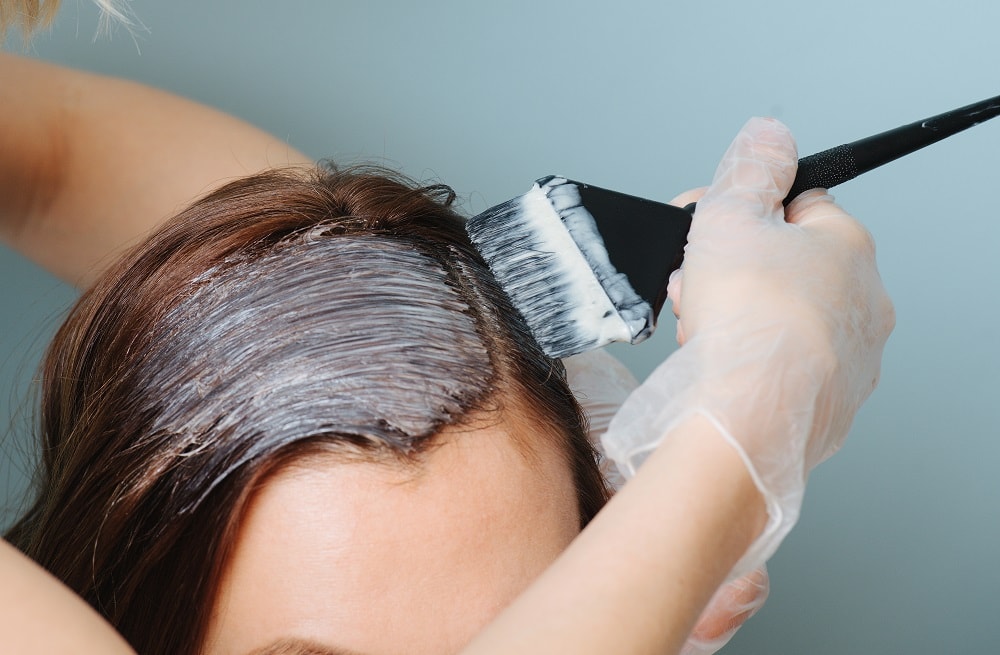
On regrowth, the rule is stricter: product goes on the dark new growth only. Bleach layered over previously lightened hair is what turns strands gummy and snaps them off. Blending the line between old and new is a professional correction technique, not a home move; overlap is the number one cause of breakage.
5. Ventilation and Heat
The room matters: an open window or a fan, because bleach fumes irritate eyes and lungs.
What never happens in scalp work is added heat. Bleach generates its own heat as it processes, and trapping it under foil, a dryer, or a tight cap can push it into burn territory. If a cap is used at all, it is loose and ventilated. The goal is to keep the product from drying out, not to make it hotter.
6. Saturation and Timing
Slices stay thin, and every strand gets coated until it looks glossy, not dusty. Thick sections hide dry spots and turn patchy, and half-dry bleach stops lifting while it keeps stressing the hair. Patchy coverage then tempts a second pass, which is how over-processing happens.
Timing is watched on the hair, not trusted to a clock. The strand gets checked every 10 minutes; most powder bleach is done in 30 to 45 minutes maximum, and the label’s maximum is a hard stop. The first section applied processes longest, which is another reason the work moves fast. Burning or stinging on the scalp means rinse immediately, no exceptions.
7. Rinse and Neutral Wash
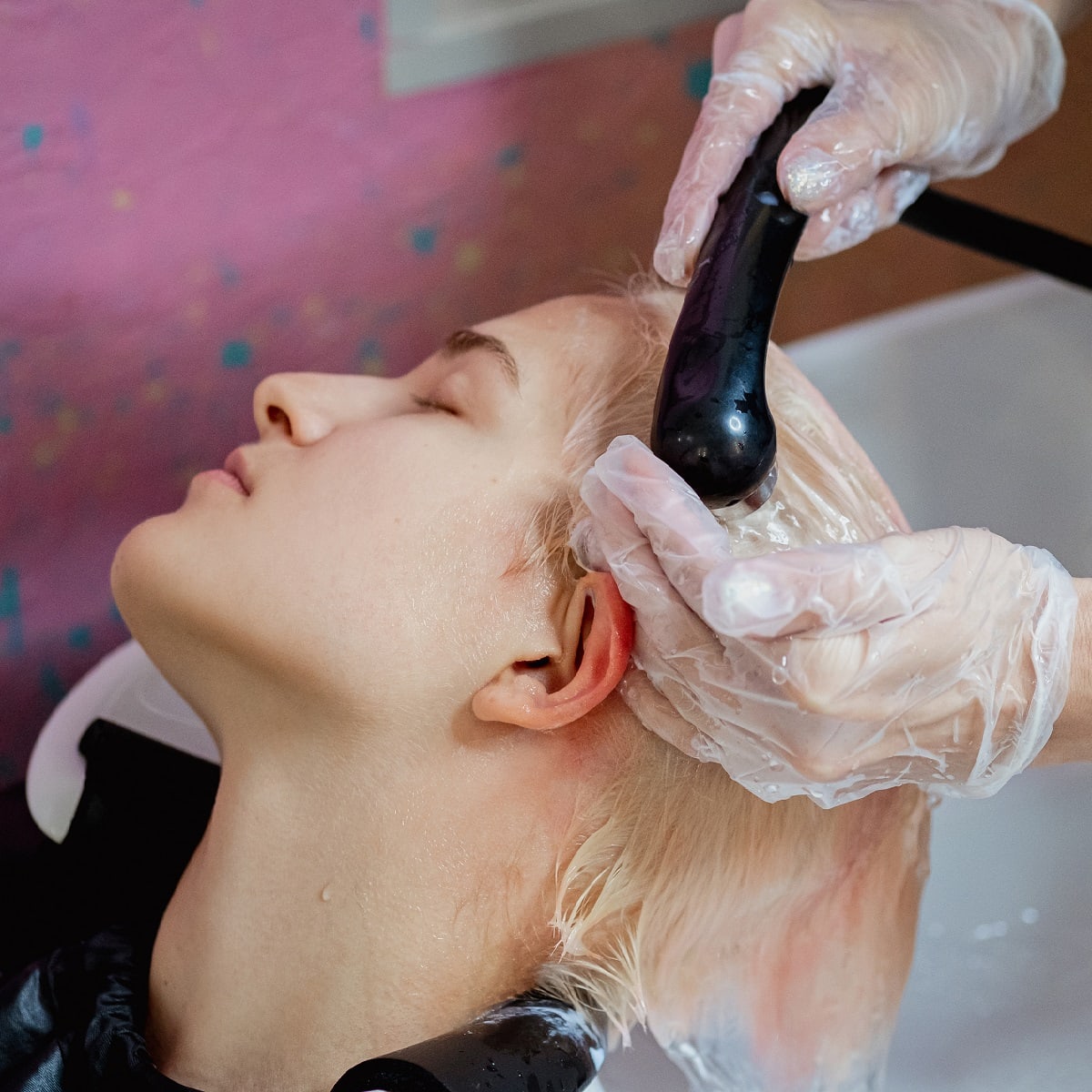
When the target level is reached, the bleach comes out completely: a thorough rinse (here is whether hot or cold water is right for rinsing out bleach), then a gentle shampoo, because leftover residue keeps working on the hair. On porous hair, a rinse-through conditioner before toning can actually even out porosity so the toner takes uniformly; some stylists even tone over a bond treatment. On healthy hair, skip it and tone directly.
8. Toning
Fresh out of bleach, hair is almost never the color anyone wants; toning is what turns brass into the actual shade.
Note: Yellow hair needs a violet or purple toner. Orange hair needs a blue based toner.
An unexpected pink cast calls for a review of previous dyes and the hair’s condition before the colorist chooses a correction.
Toners are typically demi-permanent, mixed with a low-volume developer; colorists commonly stay at 6 volume or less because the scalp is sensitive right after bleaching. The toner goes on the yellowest areas first (often the roots) and gets pulled through the ends only for the last 5 to 10 minutes. If the hair ever feels like it is breaking, it is rinsed immediately and treated with a protein or bond-building product like Olaplex.
What’s Actually Safe to Do at Home
Here is the honest split, the same one a colorist would give you across the chair.
Reasonable at home: a root touch-up on healthy regrowth with a consumer kit at 20 volume or less, a small lift of one or two levels on virgin hair, and everything around the chemistry: the two tests, the prep, the aftercare. If that describes your plan, do both tests, follow the kit label to the letter, and stay on the regrowth.
Salon territory: hair that has been previously colored, relaxed or permed, or dyed black; corrections and blending; lifts of three or more levels; platinum ambitions on a dark base; and fragile, high-porosity, or already-damaged hair. The same goes for hair that resists: if your hair will not lighten with bleach, more product at home is the wrong answer.
One honest cost note: a color correction after a home bleach gone wrong often costs more than the salon lightening you skipped, sometimes several times more, and the hair needs months to recover on top of it.
Doing It at Home Anyway? The Non-Negotiables
If you have weighed all of that and still want to do it yourself, these are the rules a licensed pro would beg you not to bend.
- The kit label is your only protocol. Its ratios, timings, and maximums override anything you read anywhere, including here.
- Both tests, every time. Patch test and strand test, 48 hours ahead, even if you have bleached before.
- 20 volume is the ceiling near your scalp.
- Regrowth only. Never overlap previously lightened hair, and leave blending to a salon.
- Set up before you mix: gloves, barrier cream, ventilation, a timer, and a fast way to rinse.
- Know your stop signals. Burning or stinging means rinse now with cool water. Blistering, swelling, or any trouble breathing means medical care right away.
Aftercare That Keeps Bleached Hair Alive
Bleached hair is porous and delicate, and the first 72 hours decide a lot. Skip heat styling, skip re-washing, and let the cuticle settle.
After that, the routine is moisture plus strength: a salon-quality shampoo and conditioner, a deep conditioner weekly, and protein or bond-building treatments to support the structure. A purple shampoo once or twice a week keeps yellow from creeping back. Our full guide to caring for bleached hair covers the routine week by week.
Bring heat styling back gently, at lower temperatures and always with a heat protectant. And if the first session did not reach your target blonde, wait at least a month before lightening again; back-to-back sessions are how hair snaps off.
If You’re on the Fence: Gentler Routes
Not every lightening goal needs full-strength powder. A bleach bath (bleach diluted with shampoo) lifts about a level with less intensity, which is how pros nudge a color rather than transform it.
If your base is brown, there are colors that work on brown hair without any bleach. A deposit-only salon gloss can change tone or shine without lifting the base. High-lift color is a separate oxidative service whose suitability depends on the exact product and starting hair.
The Powders Colorists Use (and Why They’re Not Beginner Products)
These products are NOT recommended for beginners. If you don’t have experience checking for hair elasticity, we recommend using a standard dust-free drugstore bleach kit (usually labeled “up to 7 levels”) rather than these professional high-lift powders.
For context, these are the powders you will actually see behind salon chairs, the kind used for platinum blonde transformations. They are listed so you know what the professional tools look like, not as beginner shopping advice; the caution above stands.
1. Blond Forte Blond And Protect 1.1 Pound Tub 8+ Level Bleaching Powder
The manufacturer rates this powder for up to eight levels of lift in one session, depending on the starting shade. It is designed to help protect the hair during lightening. Follow the label and do not leave it on past the recommended time.
2. Sparks Professional Color Powder Lightener
Sparks rates this lightener at up to eight shades of lift, depending on hair history. It has a light blue color that may help reduce warm tones during processing. It also uses amino acids to support the hair structure.
3. Schwarzkopf BlondMe Premium Lightener Bleach
Schwarzkopf makes professional-grade powder hair bleach that many stylists trust. BlondMe Premium Lightener can lift several levels, depending on your starting color and hair history. This powder often has a blue or purple tint to help reduce yellow tones while the hair lifts. Follow the label closely, do a strand test first, and avoid pushing the timing.
Bleach Powder FAQ
Can you bleach wet or freshly washed hair?
No. Bleach goes on dry, unwashed hair, ideally 24 to 48 hours after the last wash so the scalp’s natural oils can do their job. Water dilutes the mix and makes the lift weaker and less even.
How soon can you bleach again if it didn’t get light enough?
Wait at least a month, and only proceed if a fresh strand test says the hair can take it. If two careful sessions have not gotten you there, the base you are fighting is a salon job.
How soon can you put color over freshly bleached hair?
Toner goes on the same day; that is part of the process. Permanent color is a different question, and timing depends on how the hair came through the lift. If you are tempted to reach for box dye the very next day, read that first.
True semi-permanent dye adds pigment without developer, but bleached hair still needs a condition check and a strand test before more color.
Does mixed bleach keep for a second use?
No. The mix starts weakening the moment powder meets developer. Mix fresh, use it once, and discard whatever is left.
Do you shampoo before toning?
You shampoo after rinsing out the bleach, then tone, and you skip conditioner until the toner is done. Here is why the shampoo-then-tone order matters.
Powder bleach rewards respect. Learn the process so nothing about it surprises you, own the parts that are genuinely yours (the tests, the prep, the aftercare), and hand the chemistry to someone who does it every day. Your hair will show the difference either way; make sure it shows the good version.

Such a good explanation. Thank you