

Choosing between microlocs and Sisterlocks is a major commitment that changes how you’ll handle your hair for years.
There are several key differences between microlocs and Sisterlocks, including cost, installation time, maintenance, and technique.
This guide will break down the differences between the two methods so you can decide which is best for your hair.
Certified trichologist Celestine Muthoni Gitau judges both systems from the follicle's point of view:

From the follicle’s point of view, both microlocs and sisterlocks, if installed with tension, could lead to traction alopecia. Before committing years to either, make sure your hairstylist understands that neat does not necessarily mean tight. Loose installation and repair will go a long way toward keeping your hairline intact.
What Are Microlocs?
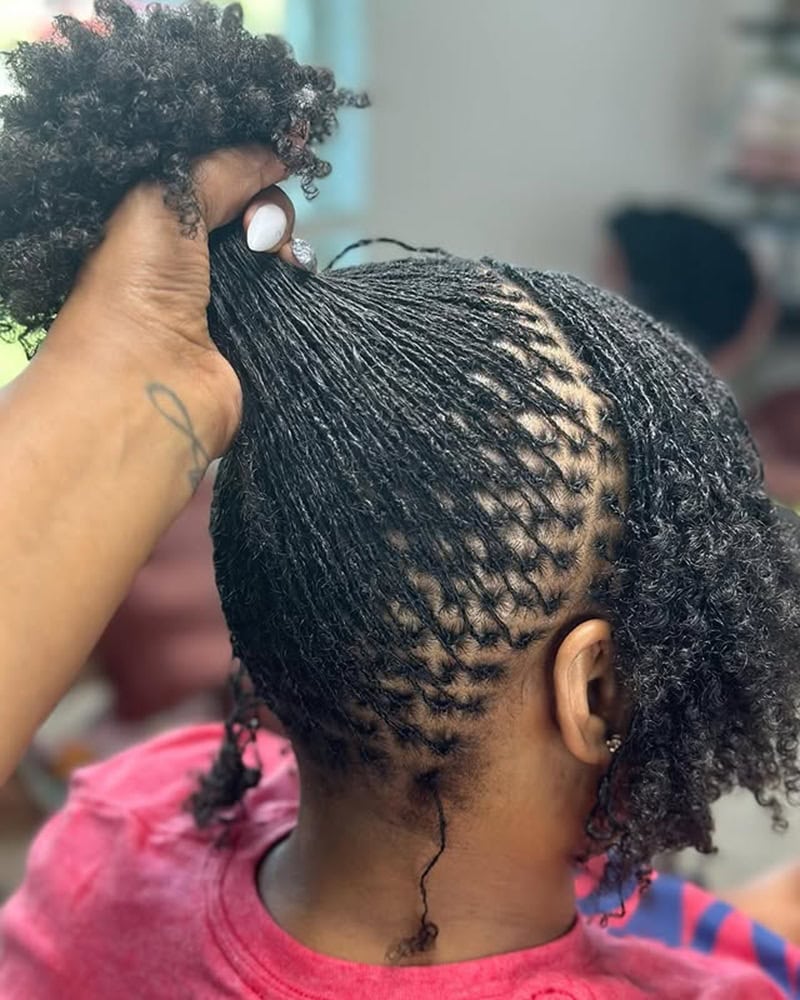
Microlocs are very small locs that are finer than traditional locs. They are typically about 3-10 mm wide, making them similar in width to a narrow ribbon or thick thread.
Microlocs can be started with braids, two-strand twists, coils, or interlocking. Each method can create different results, so consult with a professional before getting started.
Pros and Cons of Microlocs
Although microlocs can be a great way to achieve beautiful locs, there are also drawbacks.
Some pros are the following.
- Installation Methods: Several methods are available for installing microlocs, depending on your preference and hair type, and you can even install them yourself.
- Inexpensive to Maintain: Depending on the installation method, re-tightening microlocs is easy to do at home, but you must use proper technique to avoid excessive tension and prevent traction alopecia.
- Inexpensive to Install: The process does not require a costly, formal brand-certified loctician and is generally faster; microlocs are usually less expensive to install.
However, there are also some cons.
- No Precise Installation Pattern: Microlocs don’t require one strict, proprietary parting pattern like Sisterlocks, meaning the final uniformity can vary depending on who installs them.
- Possible to Make Mistakes: Because no formal training is required to install microlocs, mistakes can cause uneven locs or breakage.
- May Unravel or Clump: Before microlocs have fully locked, they can unravel or clump together, which requires repair to avoid undesired results.
What Are Sisterlocks?
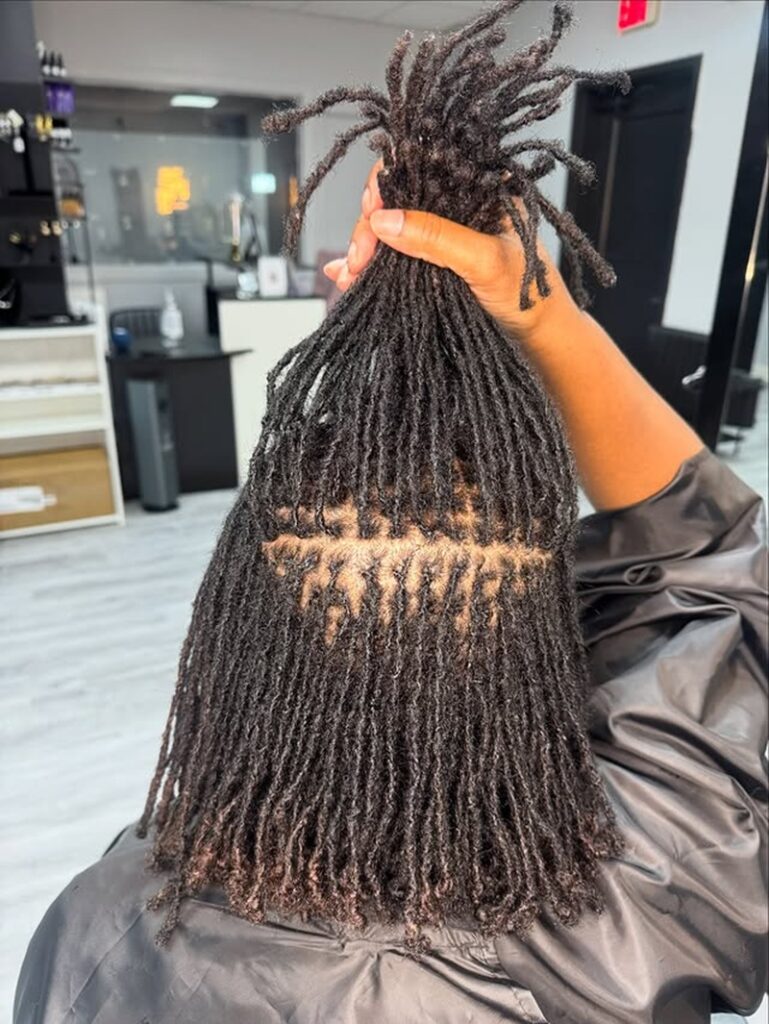
Sisterlocks is a trademarked hair locking system that uses a precise grid pattern to section the hair and create very small, uniform locs.
The system was created by Dr. JoAnne Cornwell in 1993, designed to create small, uniform locs without changing the hair’s natural texture. The hair is divided into tiny sections and installed with a specialized tool using a proprietary method. The result is a series of extremely small, uniform locs.
Pros and Cons of Sisterlocks
Like microlocs, Sisterlocks offer several benefits but also a few drawbacks. Here’s a look at some pros.
- Tight, Uniform Locks. Sisterlocks are tiny, uniform, and less likely to unravel or clump. Retention is typically better with Sisterlocks, as the re-tightening process is more precise.
- Formal Installation Process. Sisterlocks require a specialized tool and training, so the formalized installation process ensures correct installation.
- Style Versatility. Sisterlocks offers more options for wearing your hair and experimenting with different looks, and the precise locking pattern can make your hair appear fuller.
However, there are also some drawbacks.
- High Installation Cost. Sisterlocks can be expensive, and the cost can be higher if your stylist has additional certification, such as being a Sisterlocks Brand Ambassador.
- Long Installation Time. Sisterlocks can take a long time to install, often over multiple days, depending on the length and density of your hair.
- High Maintenance. Sisterlocks require regular maintenance to keep them tidy and prevent buildup, which can be expensive and time-consuming.
What Do Microlocs and Sisterlocks Look Like?
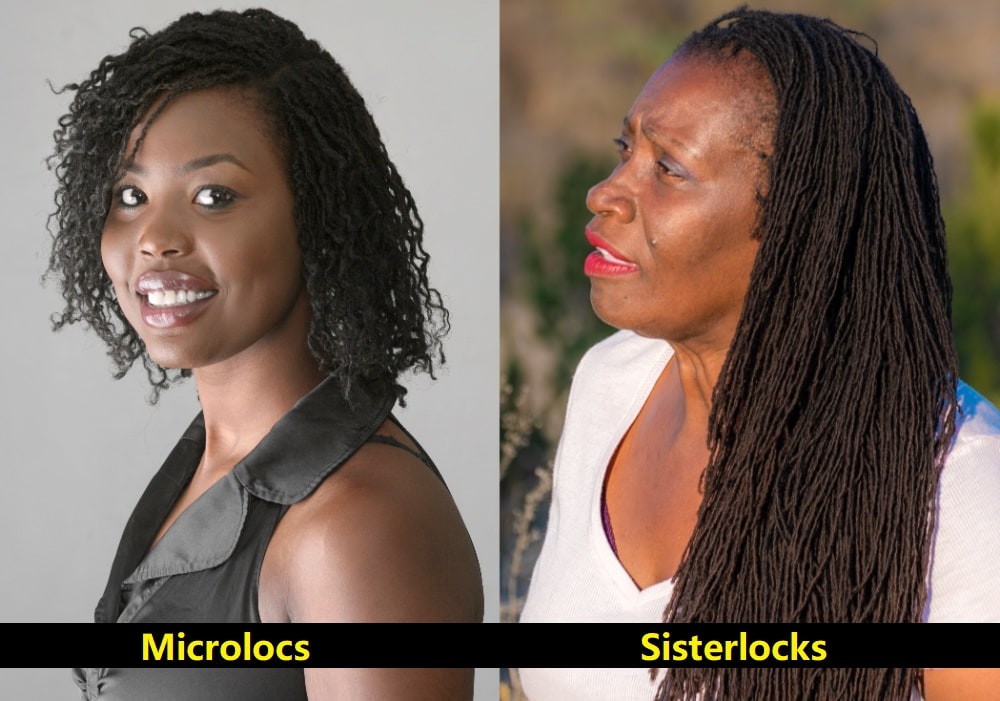
While microlocs and Sisterlocks have a lot in common and often look similar, there are a couple of differences in their appearance.
Sisterlocks have many more locs per square inch than microlocs, giving Sisterlocks a much tighter, denser appearance. Usually, there is a minimum of 400 Sisterlocks, whereas microlocs typically range from 250 to 400+.
Caution: Regardless of whether you choose microlocs or Sisterlocks, the retightening process should never be painful. Consistent, excessive tension on the scalp from any interlocking method can lead to traction alopecia (permanent hair loss).
Both microlocs and Sisterlocks will swell and bud as they mature, but Sisterlocks often result in a highly uniform final size due to the strict parting grid.
Key Differences Between Microlocs and Sisterlocks
Sisterlocks are often compared to microlocs because both styles use small sections of hair and a tool-based method to create neat, defined locs. While they might look similar from a distance, Sisterlocks are generally much denser and more uniform than microlocs.
Microlocs vs. Sisterlocks Quick Overview
| Feature | Microlocs | Sisterlocks™ |
| Cost of Installation | $400 – $1,000+ | $900 – $2,000+ |
| Installation Time | 6 to 20 hours | 15 to 30+ hours (3 to 5 days) |
| Maintenance Schedule | Every 6 to 8 weeks | Strictly every 4 to 6 weeks |
| Maintenance Details | $100 – $300 (Can be done by a loctician or carefully DIYed at home) | $200 – $400+ (Must be done by a certified consultant or via official class) |
One of the biggest differences between microlocs and Sisterlocks is the price. Microlocs installed with interlocking start from $400 to $1,000+, while Sisterlocks usually start at $900 and can go over $2,000+. The final price depends on your hair length, hair density, location, and the loctician’s experience.
Microlocs usually take about 6 to 20 hours, often split across 2 to 4 sessions. Sisterlocks can take much longer; a full installation can take anywhere from 15 to over 30 hours, which is typically spanned across 3 to 5 working days, depending on hair length and density.
Another key difference is the installation process. Microlocs can be started in different ways, including braids, two-strand twists, coils, or interlocking, while Sisterlocks follow a more structured method.
Both methods require re-tightening for maintenance, but microlocs offer more flexibility. Sisterlocks™ require a strict retightening schedule every 4 to 6 weeks to maintain their precise grid, while microlocs generally need retightening every 6 to 8 weeks.
A retightening session for microlocs may cost around $100 to $300 when done by a professional. Some people choose to retighten their microlocs at home, though this usually takes more time and requires learning proper technique to avoid traction alopecia.
Sisterlocks retightening usually costs more ($200 to $400+) and strictly requires a certified professional or completion of the Sisterlocks retightening training to maintain the trademarked grid.
Can You Turn Sisterlocks into Microlocs?
Yes, you can turn Sisterlocks into microlocs, but the process is not reversible.
Once the Sisterlocks are mature, you can convert them into microlocs by combining two locs and interlocking them together at the root.
Final Verdict: Microlocs vs. Sisterlocks, Which One Is Better?
Both styles can look beautiful and last for years, but the best choice depends on what matters most to you.
Important Note: Not all hair types can support micro-sized locs; if you have very fine or low-density hair, consult a professional to ensure your strands are structurally strong enough to prevent future breakage as the locs grow heavier.
Microlocs are the better option if you want a more affordable style with greater flexibility, including the possibility of learning to retighten your own hair at home.
Sisterlocks may be the better choice if you are comfortable investing more time and money for a highly uniform look created and maintained through a certified system.