
Maybe you were on your phone the whole time or half-asleep with a stylist you trusted. When you finally look in the mirror, things are not at all how you expected them to turn out.
How should you handle the stylist who ruined your hair?
Take a deep breath or two. Drink some water first. We’ll discuss how to handle the situation, how to fix your hair when it’s been damaged at a salon, and when to take legal action. You’ll also find at-home fixes for damaged hair.
- If your scalp burns, rinse the product off right away and get medical help. Do not keep adding products.
- Speak up before you leave the chair. Ask for a clear fix plan.
- Take photos in good light. Save receipts and the service details.
- If it feels safe, let the salon correct the result before you book more chemical work elsewhere.
- If there is injury, infection, or major hair loss, document it and get professional advice.
How to React When a Stylist Ruins Your Hair
Here is a step-by-step list of how to handle a stylist who made a mistake:
1. Review the Consultation Process
Reflect on the consultation. Was there a miscommunication about the terminology used? Sometimes, what a client describes as “ashy,” a stylist might interpret as “gray.” Identifying where the communication broke down helps you explain the fix clearly.
You are not a professional, but it is okay to respectfully speak up whenever you think there might be an issue. So, if the result is partially your fault, acknowledging it will help you approach your stylist in a friendly manner so that a resolution can be reached.
2. Have Realistic Expectations

Maybe you asked your hairstylist for a particular color, and they advised you that it might not work with your hair or skin tone. Yet that lemon-colored mane is what you wanted and what you got. Before you blame your stylist, remember that they cannot change your mind.
You’re the client, so your stylist can only respectfully advise you if lemon yellow will not suit you. The same goes for haircuts and highlights.
3. Explain Your Issue Fully and Calmly
Put on the smile you wear for sticky situations and explain, before you leave the chair, exactly what the problem is. Perhaps it is an immediate fix, and the salon will not charge you for it. If you brought in a photo, refer back to it and remind your stylist that this is what you asked for.
Try not to be argumentative. Ask for a solution instead. You might not have all the professional lingo needed, but your stylist will understand. If you’re looking for a polite way to speak up, try complimenting the style first, then make a suggestion on how it can be done better.
Or ask how you can style the cut to make it look closer to the picture you brought in. If your stylist does not understand or becomes needlessly defensive, ask politely if you can speak to a supervisor or manager.
4. Wait if Asked
There are some chemical processes that turn out differently in a few days. You might be asked to wait if a toner is slightly too dark, as it may fade with a few washes.
Waiting works best for toners that are slightly too dark. Semi-permanent color can fade. Permanent oxidative dye does not lighten much with washing. If your hair has been permanently dyed jet black or chemically straightened, waiting will not reverse the process. In these cases, consult a corrective color specialist promptly.
If you think your hair is too straight, overly processed, or damaged, there is usually something your stylist can give you to use at home. See if it works.
5. Allow the Salon to Work on a Fix
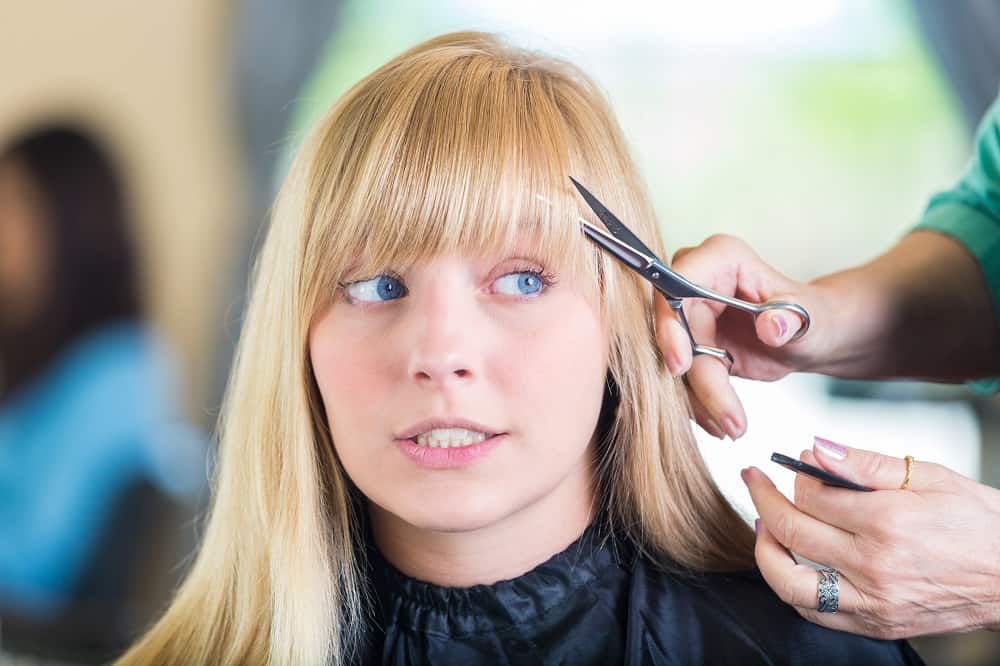
If a manager comes over to reassure you and work with your stylist to get things right, let them talk through the technical details and figure out what should be done. When they are done consulting, ask what their plan is and whether it will take more salon visits to complete.
Also, ask about extra charges. If the style does not reflect the picture you brought in, ask the salon to make it right; many salons will not charge for reasonable adjustments.
6. Be Careful with Refunds
Sure, you can demand a refund of whatever you paid, but it is best to let the salon try to fix the issue first. If you automatically demand a refund without giving the stylist a chance to fix your hair, you probably will not be able to receive services at the same salon again.
You might be offered extra free appointments to fix the problem because the salon has acknowledged its error. Of course, you should receive an apology, too. Allowing the salon to make things right could serve you better down the road when you need another appointment.
7. Go to Another Salon
If you meet with stubbornness from the salon, it might be best to find another hairdresser. You do not want to suffer through a bad attitude when you are the one paying.
And it is your hair we are talking about, anyway. If the salon refuses a fix and insists everything possible has been done, ask respectfully for a refund and go elsewhere.
First Aid: What to Do If Your Scalp Burns After a Salon Visit
If you feel burning during a service, ask the stylist to stop immediately. If bleach, dye, or relaxer is still on your scalp, rinse it out with cool water, and get medical help if the burning, pain, or irritation is serious or does not settle. Do not apply another product to try to neutralize a burn, and if any product reaches your eyes, rinse them with lukewarm water for 15 to 20 minutes and seek urgent care.
What if the Problem Is a Legal One?

There are a few unfortunate scenarios that might require a formal complaint, insurance paperwork, or legal advice:
This section is general information, not legal advice. Laws vary by location. If you believe you were harmed, consider speaking with a local consumer protection office or an attorney.
- Injuries: Allergic reactions can occur if a stylist fails to do a patch test when one is needed. Some chemicals can burn the skin or scalp when left on for too long. Sometimes, eye injuries occur if chemicals get into the eyes.
- Damaged Clothing: If your clothing is expensive and gets ruined by chemicals because of stylist negligence, you may be able to request reimbursement.
- Hair Loss or Damage: If your hair was too damaged before starting a chemical process, your stylist should refuse the service to avoid causing your hair to break off. If your hair is damaged to the point that it feels mushy or starts falling out after an appointment, consult the salon first to see if anything can be done. If not, you may have options, but it is often hard to prove negligence without photos, receipts, and medical documentation.
At-Home Fixes
If your hair has been damaged at the salon but is not coming out by the handful, there are some products that your stylist might suggest to get your hair in better shape:
- Bond builders, like Olaplex or K18: These are not protein treatments. They are designed to repair the disulfide bonds inside the hair shaft that can break during bleaching. Use these to restore structural integrity before you focus on moisture or protein.
- Deep conditioners and repair kits, such as the In Common Crystal Cashmere At-Home Repair Kit, can also help bring your hair back around gradually.
- Protein treatments might also be recommended to help replace the protein lost from excessive straightening and chemical processing. A protein reconstructor mask is a treatment that some salons use. Use protein treatments only if your stylist recommends them, and avoid stacking too many protein products, which can make hair feel stiff and break.
A ruined color or cut feels awful in the moment, but most salon mistakes can be corrected with a calm conversation and a clear fix plan. Give the salon a fair chance to make it right, protect your scalp and skin first, and know when it is time to walk away.