

Gray or white hair can look fresh and polished. But it can also turn yellow over time. This yellow tone can make hair look dull.
This guide explains the most common causes. It also shares safer fixes first. Hydrogen peroxide is included as a last resort. It can be drying and harsh on gray hair.
Key highlights
- Yellowing is often from buildup, smoke, hard water minerals, sun, chlorine, or heat.
- Start with purple shampoo and a clarifying or chelating shampoo.
- Hydrogen peroxide can dry hair and irritate skin. Use only if other options fail.
- Never mix peroxide with baking soda.
- Strand test first. Stop right away if you feel burning or itching.
Critical safety warning
Gray hair is often drier and more porous. Hydrogen peroxide is a chemical oxidant. It can cause dryness, breakage, and skin or eye irritation if misused. Use only volume 10 (3% hydrogen peroxide) Stronger forms can burn skin and damage tissue. Source
Do not use this method if your hair is already dry, damaged, bleached, permed, or recently colored. Never mix peroxide with baking soda. Always do a strand test first.
What Makes Gray Hair Turn Yellow?
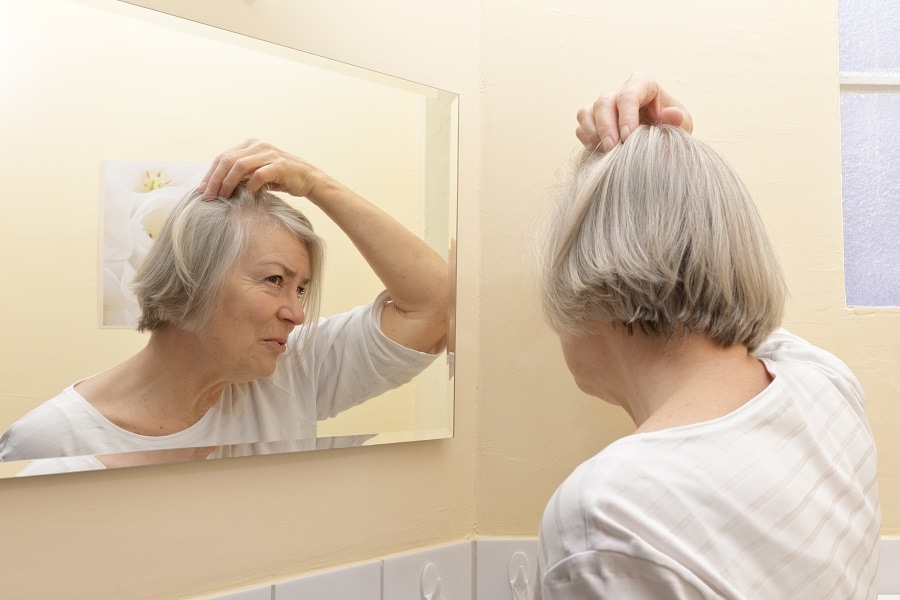
So why does gray or white hair turn yellow? Common causes include:
- Tinted hair products, including some shampoos and conditioners.
- Chlorine and pool chemicals.
- Hard water minerals, which can leave deposits on hair.
- Sun exposure and UV damage.
- Natural scalp oil buildup.
- Smoking and air pollution.
- Heat damage from curling irons, dryers, and straighteners.
One dermatologist quoted by the American Academy of Dermatology puts it simply: “UV damage breaks down the proteins in hair and also changes its color.” Source
The best fix depends on the cause. Try to spot what is most likely in your routine before you treat your hair.
Start With Safer Ways to Remove Yellow Tones
These options are usually safer than peroxide. They also match what most people want: cleaner, brighter gray hair with less damage.
1) Use a purple shampoo
Purple shampoo on gray hair can help cancel yellow tones. Use it once or twice a week and follow with conditioner.
2) Remove buildup and minerals
If your yellowing is from product buildup, use a clarifying shampoo once a week. If you have hard water, try a chelating shampoo. These are made to help lift mineral deposits.
3. Apply a Toner
This is the best way to get rid of yellowish-gray hair. You can use a semi-permanent purple toner (which contains zero peroxide) or a demi-permanent gloss (which uses low-volume developer).
Apply it evenly through damp hair, let it sit for the recommended time, and rinse thoroughly. The sheer wash of cool purple pigment neutralizes stubborn yellowing, leaving your gray hair bright.
My Advice
If yellowing keeps coming back fast, do not keep “stripping” your hair at home. You may be dealing with hard water minerals, heavy product buildup, or heat damage. Using a toner or a chelating shampoo is often the easier fix.
When Hydrogen Peroxide Might Help, And When It Will Not
Hydrogen peroxide may slightly brighten hair when the yellow tone is mild and on the surface.
It usually will not fix yellowing caused by hard water minerals or heat damage. In those cases, focus on chelating shampoos, reducing heat, and protecting hair from sun and chlorine.
Pick the Right Hydrogen Peroxide for Yellowing Gray Hair
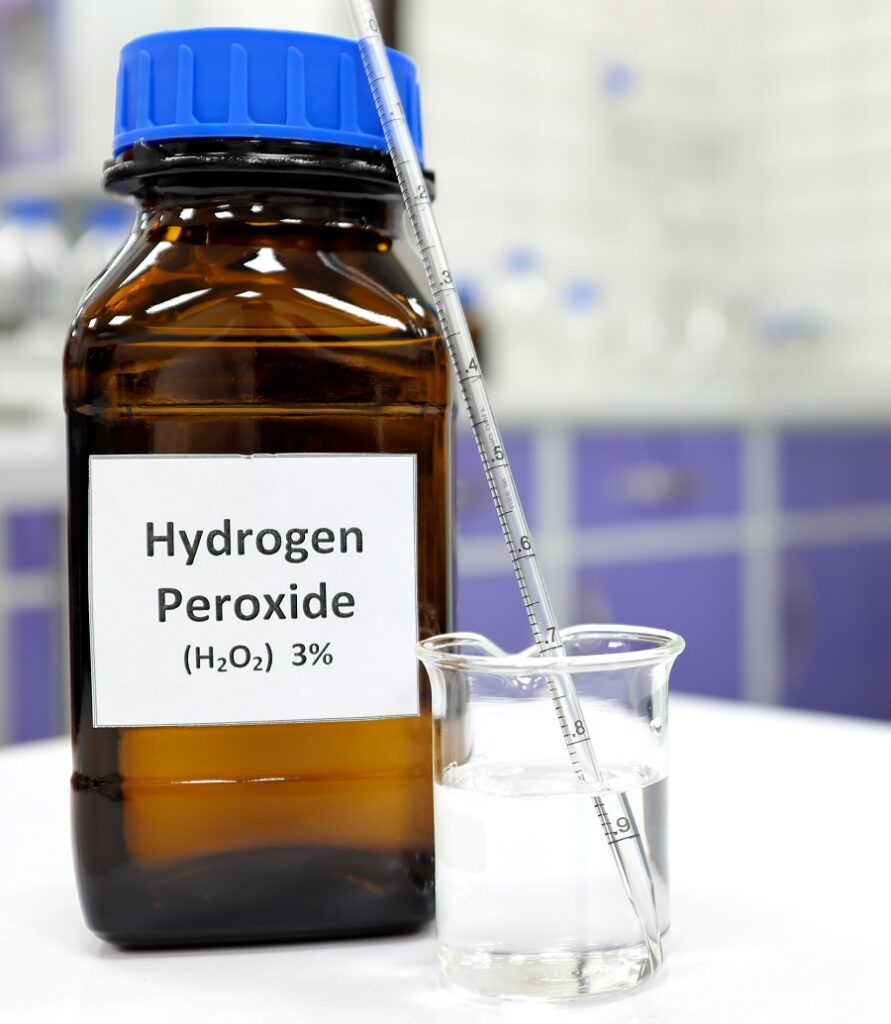
If you try peroxide, use only 3% (also called 10 volume). Do not use higher strengths.
What Does Hydrogen Peroxide Do to Gray Hair?
Hydrogen peroxide is an oxidizer. That means it can change color by breaking down some color molecules.
It can also roughen the hair surface over time. Gray hair is often already dry. So peroxide can leave it more frizzy and more likely to pick up new yellowing later.
How to Get Rid of Yellow in Gray Hair With Peroxide
Only use this method if your hair is in healthy condition. Do a strand test first. If the strand feels rough, dry, or gummy after, do not do your full head. Also, do a simple skin patch test 48 hours before you apply any chemical to your scalp area. This helps reduce the risk of an unexpected reaction. Source
- In a small plastic or ceramic bowl, mix equal parts 3% hydrogen peroxide and white or clear conditioner. You can also use equal parts peroxide and water, then follow with a mask. Never mix peroxide with baking soda.
- Apply to the areas that look most yellow. For many people, that is mid lengths and ends. Try to avoid rubbing it into your scalp.
- Cover with a plastic cap. Set a timer for 10 minutes. Check your hair. Do not leave it on longer than 15 minutes.
- Rinse well with cool to lukewarm water. Shampoo only if you feel residue.
- Use a deep conditioning mask right away. Let hair dry naturally if you can.
If you want to repeat, wait at least 6 to 8 weeks. Do not use this often. If you still see yellow after one careful try, switch to purple shampoo or a chelating shampoo instead.
How Long Does Peroxide Take to Whiten Gray Hair?
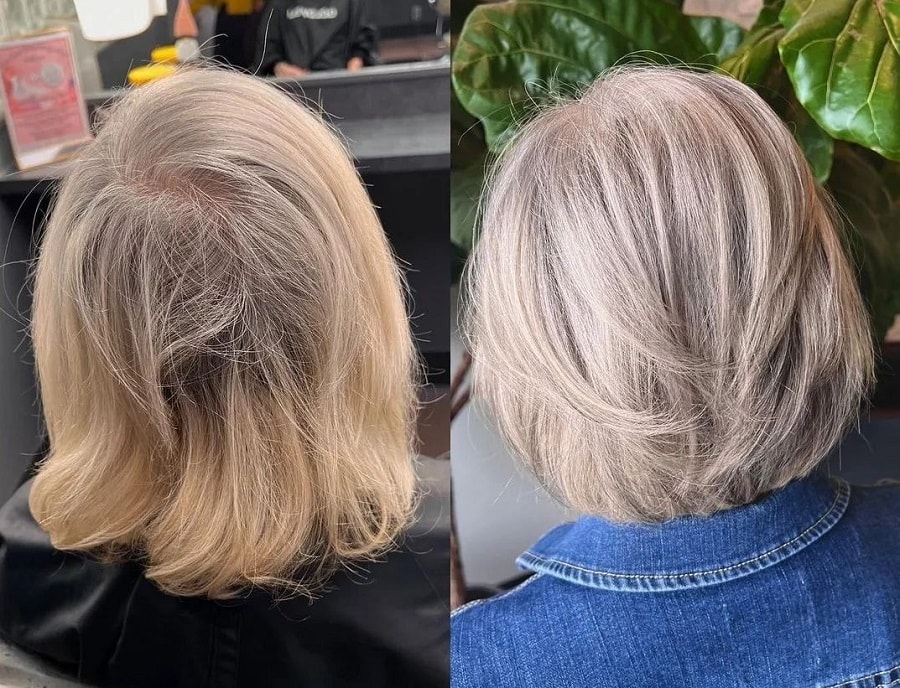
The processing time is usually 10 to 15 minutes. Plan for about 30 to 45 minutes total, including mixing, applying, rinsing, and conditioning.
If your hair is fine, use the shorter end of the range. Fine hair can process fast and can feel dry more quickly.
If your hair is thick, still do not go past 15 minutes. If you need more help after that, use safer options like purple shampoo or chelating shampoo instead of more peroxide.
Wrap Up
Yellow tones in gray hair are common. The safest first steps are purple shampoo, clarifying, and chelating care.
Hydrogen peroxide is a last resort. If you try it, stick to 3%, dilute it, keep the time short, and condition right after. Protect your hair from heat, sun, smoke, and hard water so the yellow does not return.