

If you have colored your hair and you need a toner, you can use a permanent hair color as a toner.
Permanent color can calm brass on bleached hair because it drops pigment fast. But it is not a true toner. Most permanent dyes use ammonia.
Using high-ammonia permanent dye as a toner on bleached hair significantly increases the risk of chemical breakage and dryness.
For a safer result, we highly recommend using a demi-permanent color or an acidic bonding gloss (such as Redken Shades EQ or its generic version, GVP), which is designed to deposit tone without lifting the cuticle. Developer-based color can still dry hair or trigger a reaction, so follow the product’s own directions and allergy test.
If you still choose to use your permanent color as a toner, we’ve got you covered.
Can I Use Permanent Color As A Toner?
Permanent hair color can be used as a toner. But it is not the first choice. Permanent color is stronger than most toners, and the ammonia in permanent dye can damage your bleached hair.
If you still want the permanent-as-toner result, the safest route is to have a colorist do it: adapting a permanent color for deposit-only toning is a formula alteration, and a colorist adjusts it to your hair. If your hair feels very dry or porous, wait at least 1 to 2 weeks before any further color service, and stop and rinse right away if your scalp stings during any color work.
Safety Notes
- If you can, pick a demi-permanent toner instead.
- For toning, use 5-volume developer or 10-volume at max. Skip 20, 30, and 40 volume developers for this job, especially on lightened hair.
- Permanent color can lift natural roots and make them look warmer. Keep the mix off your natural roots. Apply only to the hair that needs toning.
- Do not dilute developer with tap water or additives to change its strength. Use the strength and ratio the product system itself calls for.
- Strand test first. Test a small hidden strand. Check the tone every few minutes. Rinse when it looks right.
Using Permanent Dye As a Toner
Toning is about refining tone. It is not about lifting color. If you use permanent dye for this, choose a gentle, deposit-focused approach.
Pick a shade that only cancels warmth, not one that makes your hair darker.
Violet tones down yellow brass, while blue or blue ash tones down orange brass. If you are worried the result could look too ashy, add a neutral tone to soften it so it does not turn gray or slightly green.
Toning with permanent color is formula work. Colorists who do it adjust the dye, the developer, and the timing to the individual head, and that judgment is the part a written recipe cannot carry.
At home, use a system that is made for the job: a demi-permanent toner or an acidic gloss, mixed with its own developer or activator exactly as its directions say. Do not alter a permanent-color kit with a weaker developer or added shampoo to turn it into a toner; an altered mix is no longer the tested product.
Pro Tip
Use a porosity equalizer before toning to get an even result.
We recommend the following brands:
- Kenra Porosity Equalizer (Accessible option)
- Oligo Porosity Equalizer
- Tressa PEQ (Pro options)
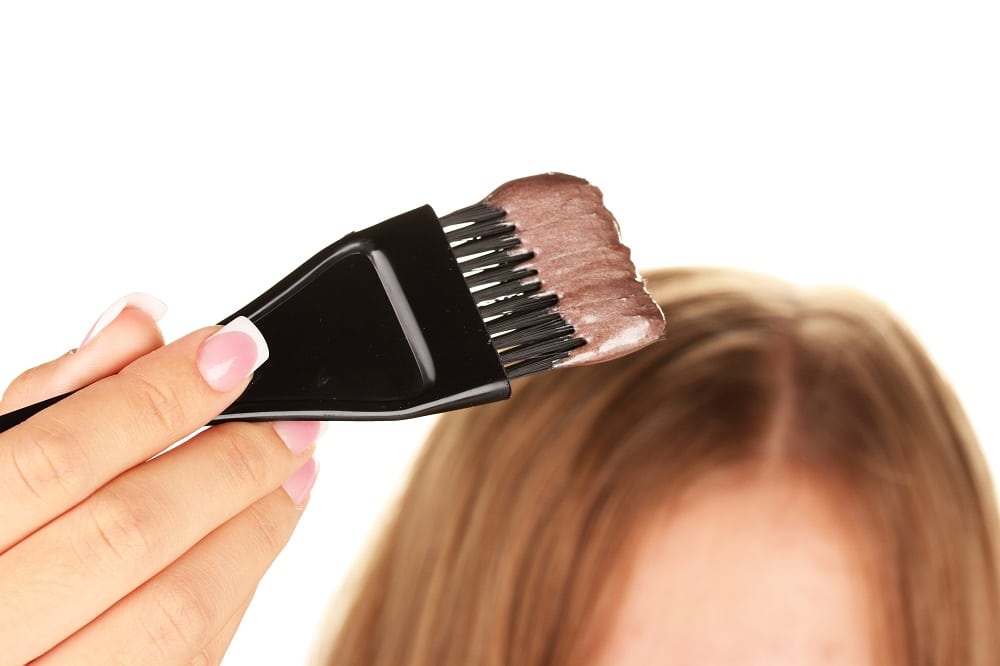
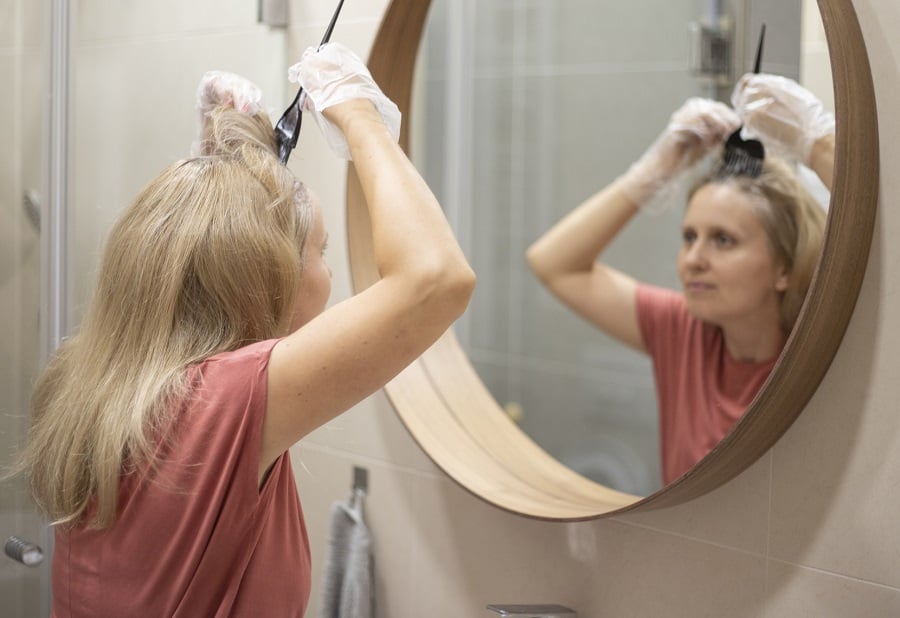
Once your mix is ready, immediately apply the mix to damp hair so it spreads more evenly. Focus only on the brassy part, not the whole head.
Try to keep the mixture off the most fragile ends if they are already cool-toned, because those areas can over-tone and darken quickly. Also, avoid applying it to virgin roots unless you actually want your natural root color to change.
Start checking early and rinse with cool water or lukewarm water as soon as the brass looks neutralized, which is often in just 5 to 10 minutes. Do not leave it on longer, hoping it will get “perfect,” because that is how it turns dull, too dark, or patchy.
Expect hair to feel a bit drier than after a typical toning. Use a rich conditioner or a bond repair treatment to help the hair feel smoother and stronger. Then avoid heat styling for a day or two so the cuticle can calm down and your hair has a chance to recover.
Happy hair days!