

So, you decided that red was going to be your new hair color, but once your hair was dyed, it turned out a little too red! What can you do?
When it comes to fixing a red that is too red, there are a few things we need to do first. First, we need to ascertain what level the red is actually on.
Senior stylist Emma Baxendale sees the same root cause over and over:
Usually, if the hair has turned out too red when dyeing, it is because the hair has lifted too light in the first place, and then not enough base has been added to darken it back down with the red pigment. This causes a much brighter red.
The deeper the level of the hair, the darker and more subtle the shade of red becomes, even if plenty of pigment is added.
Fixing Hair Color That’s Too Red
Hairdressing industry standards mean that all hair colors are measured on a scale of 1 to 10, with 1 being black and 10 being white blonde. Reds are no different. They generally range from a very pastel rose gold at level 10 to black with underlying red at level 1. But to fix the red, we need to work out what shade of red it actually is.
Level 6 Red
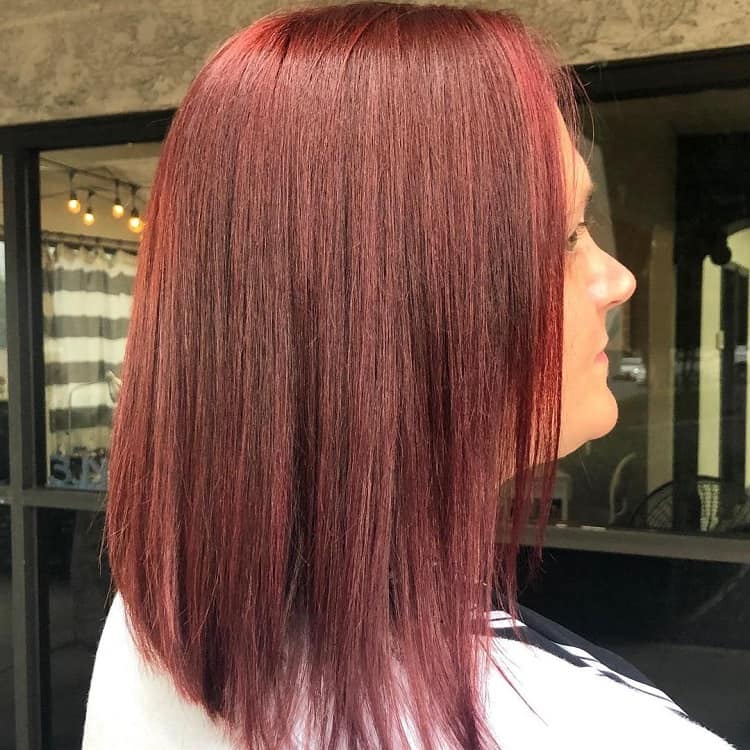
To explain it in simple terms, there are 3 ways to fix your overly red hair. The first, and probably the easiest, is to color over the red with another slightly darker ash or matte brown color to neutralize and eliminate many of the red tones.
A darker shade can hide the red at first, but it is usually a quick fix. After a week or two, the new color can fade. Then, the warm tones show again, and the hair can look clearly red.
Before committing to any of the three, Emma Baxendale tries the cheapest fix: “If the hair has only turned out slightly brighter than expected, a cleansing shampoo for a few days will fix that, as red pigment comes out of the hair quite easily.”
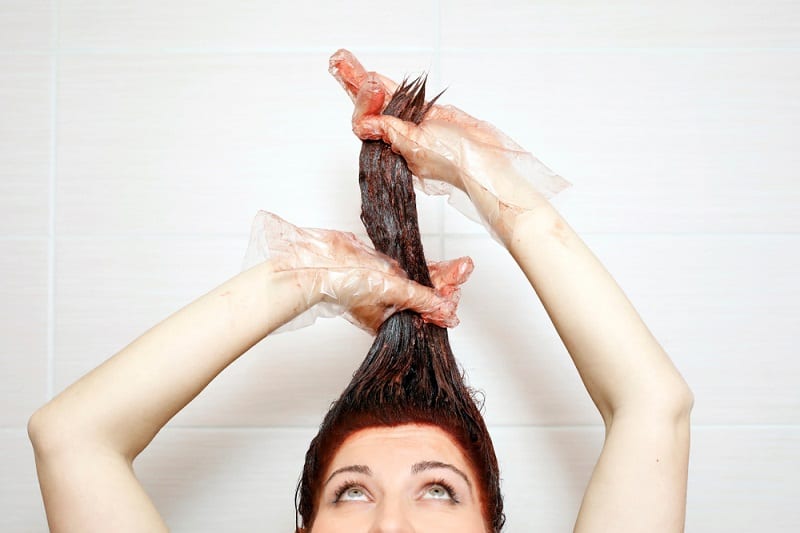
The second choice is to neutralize some of the red tones with green or anti-red tones.
This is where you need to work out what your base color is because, if you decide to tone or neutralize some of the red, the new color will need to be at the same level or darker.
The anti-red or green tones, which are on the opposite side of the color wheel, work best at or below the hair’s current level. One exception worth knowing: if you only want soft neutralization without the hair feeling darker, a toner one level lighter is fine, because it simply carries less pigment than lower levels.
For example, if your hair is a vibrant level 6, you need to use a level 6, 5, or below with either a green color corrector or an anti-red tone to help neutralize the red.
If you are trying to neutralize the rose tones in your very light, level 9 rose-gold hair, you need to use a level 9, 8, or below with a fraction of green or anti-red in it to neutralize the “rose or red tones” in the hair.
If you use a level 8 green or anti-red formula on level 6 hair, it will barely register. Going a level below fully neutralizes unwanted pigment, but expect it to darken the hair a touch as well.
If you are mixing at home and unsure how much neutralizing you need, Emma errs soft on purpose: “There is a fine line between neutralization and creating a murky brown tone, because when tones cancel each other out they create brown. Start with a toner that is a level or two above your starting base; there is not as much ash pigment as there would be on your level, so it creates a softer neutralization.
Leaving some red or warm pigment in the hair creates richness in tone, but canceling out all the warmth creates a muddy, flat look.”
If you have looked at your red and it’s really too red, but you really do not want to go any darker, another option is a gentle bleach bath, also called a soap cap.
A bleach bath contains lightener, so its formulation and application must follow the exact product’s directions and a suitable hair assessment. Do not use an equal-parts shampoo, developer and bleach recipe as a universal formula. For previously colored, lightened or relaxed hair, have a licensed colorist assess the service.
⚠️ Safety Warning: Never apply a bleach bath directly to the scalp. Keep the mixture at least half an inch away from the root area to prevent contact dermatitis or chemical burns. Do not attempt this process if your hair is already brittle, highly porous, or previously chemically relaxed, as it will cause irreversible structural breakage. Always perform a strand test first.
Keep in mind that a bleach bath is only a transitional step. It will effectively strip the red, but it will leave behind a raw, brassy orange or yellow-orange canvas. You must follow up by applying a demi-permanent color or toner to neutralize those warm underlying pigments and achieve your final desired shade.
Level 5 Red
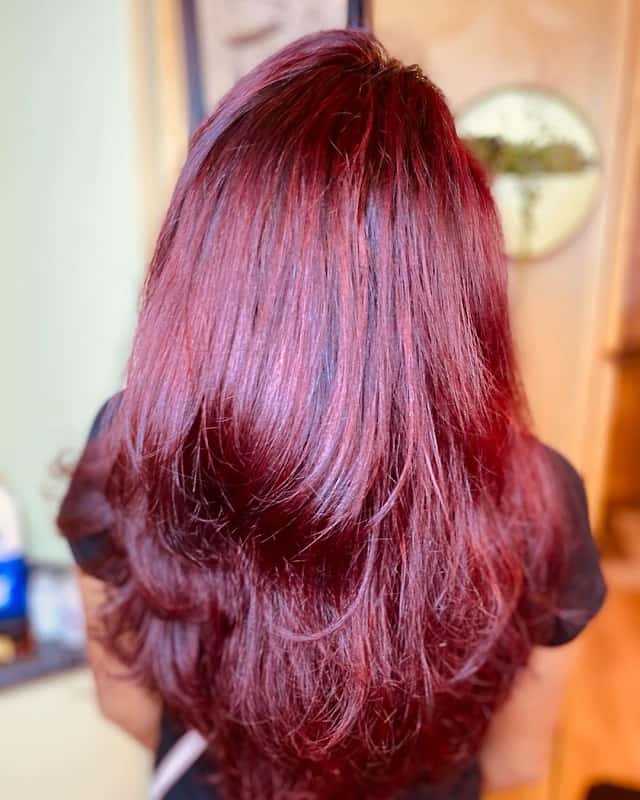
You then have the opportunity to apply a new color at the desired level, taking into account the underlying reflect and pigment that will come back through the red.
The other option is to add some anti-red or green to the new color mix to balance out the red overload in the new color.
Pro tip: Whenever you have to perform a ‘color correction‘ like any of these options, first, it takes a couple of days to ‘settle in,’ and second, it usually takes 2–3 coloring sessions after a color correction for the color to be perfect again!
Third and most importantly, if you have used box colors to try to achieve your perfect color, I apologize in advance, but your color will rarely be the desired outcome.
Box colors use a one-size-fits-all formula, so the same ammonia and peroxide levels are applied to everyone’s hair. A custom salon formula can be adjusted to your hair, which may make it gentler on the mid-lengths and ends.
Developer strength must follow the exact color system’s directions for the hair being treated. 20-volume peroxide or 6% is one developer strength, rather than a universal gray-coverage rule. Previously colored lengths also need a product-specific assessment; 1.5% is not invariably the correct formula.
When the correct salon color is used, it can leave the hair healthy and shiny. Well-hydrated hair, due to the silk proteins and nutrients in the semi-permanent colors, also feels like it has substance and helps prevent breakage, allowing you to retain your length!
So, now that we have the red we love, it’s super important to be kind to your tresses. This means using a salon-quality shampoo, conditioner, and mask once a week. It also means protecting your gorgeous locks from the sun and chlorine if you are a swimmer!
Red dye molecules are larger than most other dye molecules. Because of this, they do not sink deep into the hair cortex. They stay closer to the cuticle surface. That is why red can fade quickly, especially if the cuticle stays open. Common causes include too little conditioning, dry hair, and frequent heat styling. Now you have the ultimate red—GO AND ROCK IT!