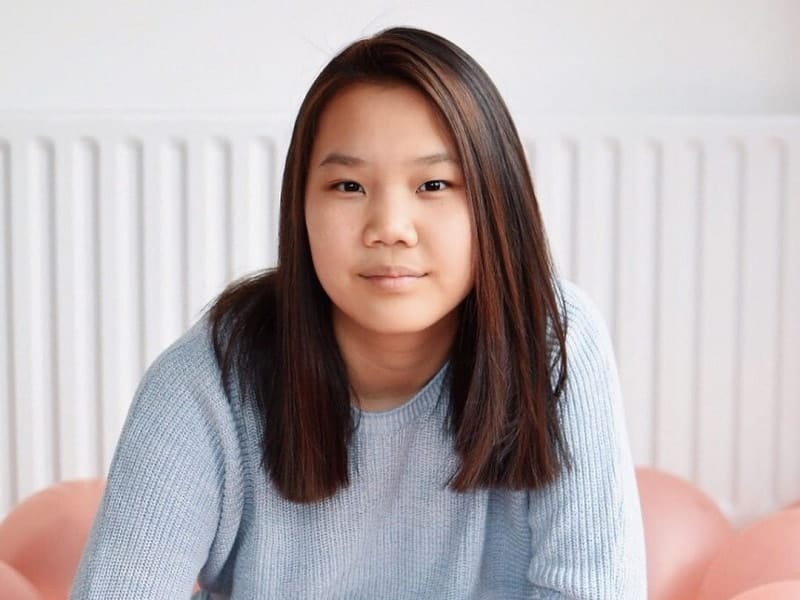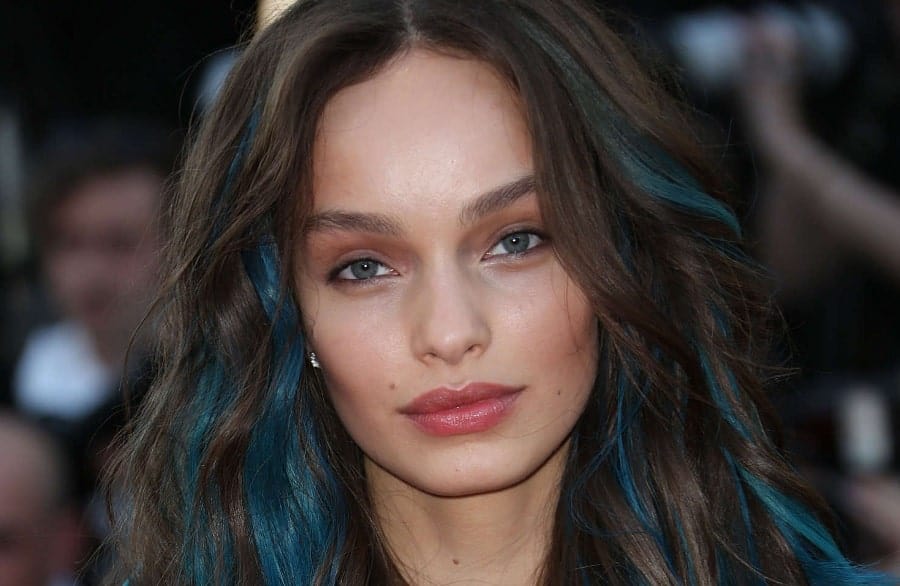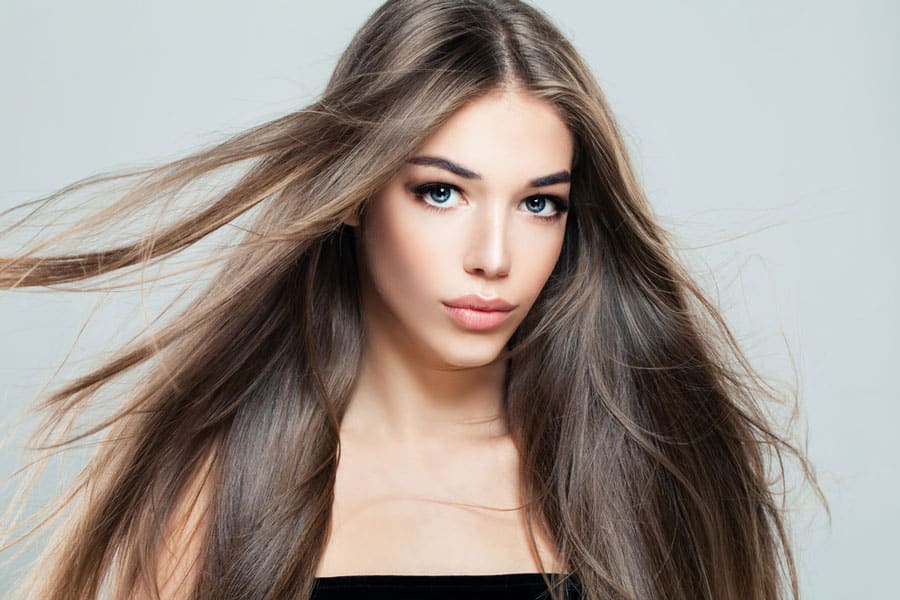


Ash-brown hair has a cool finish, but getting there depends on your starting shade and color history. A salon colorist assesses that starting point before choosing how to neutralize unwanted warmth.
Take a reference photo to your consultation and explain which red or copper tones you want to reduce. The comparison below shows how different warm and cool brown can look.

Both colors are beautiful, but if you were expecting a cool, ashy brown like the picture on the left, it’s disappointing to look in the mirror and see the color pictured on the right.
This guide explains how professionals tone brown hair to ash, from consultation and formula selection to application and aftercare. It will help you understand the service and discuss realistic results with your colorist.
Why Does My Hair Always Turn Red/Copper?
Achieving an ashy brown color means working with the warmth already in the hair. A colorist checks the current depth, exposed undertones, previous dye, and condition before deciding whether toning alone can achieve the goal.
Maintaining an ash-brown color is even more difficult because, as your color fades, warmer tones may become visible again. Your stylist can plan refresh appointments around the formula and your haircare routine.
How Salon Professionals Tone Brown Hair to Ash
A salon appointment starts with a consultation and an assessment of your hair. The stages below explain the decisions your colorist makes; the exact products and timing depend on your hair and the manufacturer’s instructions.
Checks Before the Service
- Tell the colorist about previous dyes, bleach, relaxers, and any past skin reactions.
- The salon should follow the product’s allergy-alert test instructions before use. A strand test checks the color result and hair response; it is a separate check.
- The stylist uses gloves, protects the skin and eyes, and avoids applying color to a broken or irritated scalp.
- Tell the stylist immediately if you feel burning or irritation so the product can be rinsed out. Trouble breathing or facial swelling needs urgent medical help.
Clinical patch testing investigates contact allergy; see the British Association of Dermatologists’ guidance on patch testing. It is different from the dye manufacturer’s pre-use allergy-alert test.
Choose the Formula for Your Starting Color

Your colorist may choose a demi-permanent ash hair color to adjust warmth without aiming for a major change in depth. They select the product line and shade after assessing your hair, rather than choosing a formula from a box number alone.
Redken Shades EQ is one example of a professional demi-permanent gloss. The colorist chooses whether that system or another formula suits your hair and the result you want.
Product Choice Belongs to the Colorist
The chosen color system determines which activator or processing solution is used. The stylist follows that system’s directions rather than substituting a generic developer or a consumer product.
The stylist identifies your current color level and checks whether the desired ash brown is at the same depth, darker, or lighter. Existing artificial color, uneven porosity, and previously lightened sections can affect the plan.
The formula is matched to the warmth that needs correcting. Shade letters and pigment bases vary between brands, so the professional uses that product line’s chart and a strand test rather than assuming that every shade labeled “ash” behaves the same way.
Light or Porous Sections Need Special Care
Too much corrective pigment can create an unwanted cast; the hair may turn green. A colorist checks the underlying shade and porosity and tests the formula before deciding how to treat those sections.
Prepare the Hair for the Chosen Toner
The colorist follows the chosen toner’s preparation instructions, including whether to cleanse first and apply to dry or damp hair. Porous or damaged areas may need a different approach from the roots.
Apply and Monitor the Toner

The application process depends on the type of toner the stylist selects. Product-specific developer, mixing, hair preparation, and processing directions take priority over a general recipe.
Cream Toner:
- Choose the activator: The colorist uses the activator specified for that exact cream toner. A 10-volume developer is appropriate only when the selected color system calls for it; developer strength is not interchangeable between products.
- Ratio: The stylist measures the exact ratio stated by the manufacturer, using the matching color and activator system.
- Apply: The stylist sections the hair and follows the product’s dry- or damp-hair directions, adapting application to the condition and color of each area.
- Process: The stylist times and monitors the service according to the product’s directions, without adding extra time to chase a different shade.
The stylist rinses, shampoos, and conditions as the product directs, then checks the result. Ask when to shampoo next and which products suit your new color; there is no single schedule for every toner.
Liquid Toner:
Do not assume that every liquid toner is applied to damp hair. Redken’s current Shades EQ instructions specify dry hair, and the stylist follows those directions for that product.
Shades EQ: Follow the Manufacturer’s System
Redken’s current directions specify equal parts Shades EQ and its dedicated Processing Solution or Gloss-to-Gel solution, applied to dry hair and processed for 20 minutes. These details describe that professional product, not a universal toner formula.
The colorist applies the mixed gloss systematically, ensuring suitable coverage while accounting for porous ends and differences between sections. They monitor the result within the product’s stated processing limits.
After processing, the stylist removes the product as directed, conditions the hair, and assesses the finished shade. Any further correction is planned around the hair’s condition.
Senior stylist Emma Baxendale explains why a lighter target needs professional color correction: “If the client is wanting a lighter ash color, then a salon appointment is needed, because a higher peroxide will be used to lift the hair, which is best used in the hands of a professional. This will expose more warmth in the hair as it lifts, so a salon professional has the knowledge to know what tone to use at this stage to create the desired ash color.”
How to Maintain Salon-Toned Ash Brown Hair

Your home routine supports the salon result. Ask your colorist how often to use any color-depositing product and when to return for a gloss refresh.
Maintenance Between Appointments
- Use the shampoo and conditioner your colorist recommends for your hair and color service.
- If the stylist recommends a blue or purple shampoo, follow the label and their advice on frequency. The pigment must suit the warmth you are trying to reduce.
- Be gentle with chemically treated hair and avoid repeated high heat. Return to the salon if the tone becomes uneven or you want a lighter result.