
For your next haircut, do you want a ‘high and tight‘ hairstyle or would you prefer a ‘crew cut‘? It is better to understand the terms before you head to the barbershop so that you will know what you are talking about when you get there. Our guide will help you to understand the differences between a Crew Cut and a High and Tight hairstyle for men.
Difference Between High & Tight Vs Crew Cut
So how will you be able to differentiate between these two very similar, but not the same haircuts? Below are the 6 distinctive points between high and tight vs crew cuts so that you can identify them instantly.
High & Tight vs Crew Cut at a Glance
| High & Tight | Crew Cut | |
| Sides | Very short or shaved to the skin, set high on the head | Tapered and blended, never bare |
| Contrast | Bold, often a hard, disconnected line | Soft and graduated |
| Top | Short, sometimes left a little longer to style | Graduated, longer toward the front |
| Best for | A sharp, low-fuss, military-style look | A cleaner, more versatile everyday cut |
| Upkeep | About every 1–2 weeks | About every 3–4 weeks |
#1: Length
High and Tight
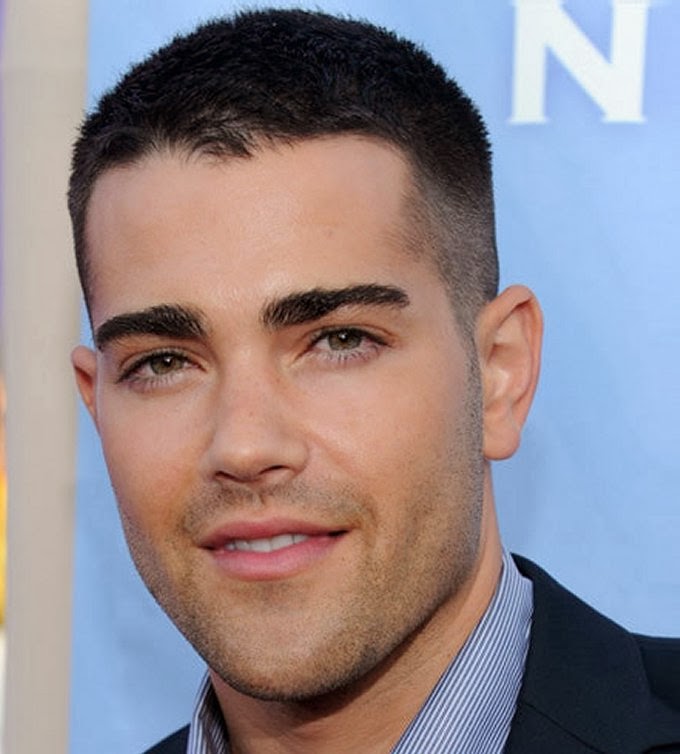
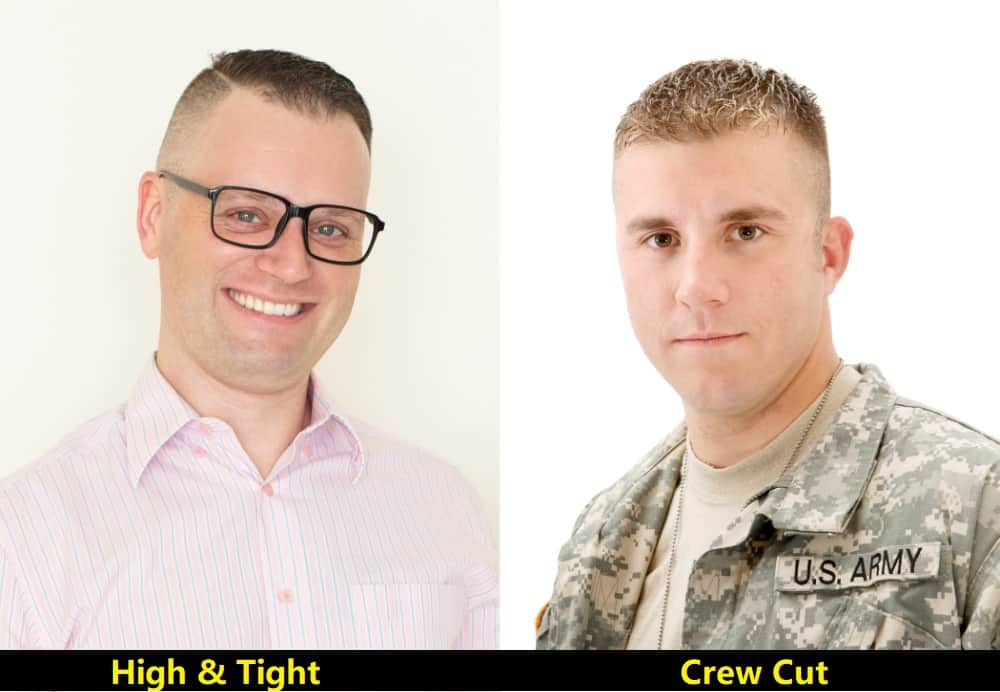
A high and tight style is one that has been clipped short all of the way around the back and the sides of the head. However, the hair on the top of the head is normally left longer. The hair on top is often only a little longer than the sides, though some versions leave noticeably more length up top to style.
Crew Cut

With a Crew Cut hairstyle, the length of the hair is tapered at the sides and the back of the head. The hair on the top of the head is neatly clipped or trimmed so that the hair at the front is slightly longer than the hair which is closest to the crown.
#2: Origin
High and Tight

The High and Tight cut is a classic style which has been used by the US military for a long time. This look was chosen by the military to help to ensure that all men looked the same and felt part of a unit. Short style like this helps men to keep cool when they are in hot environments and prevents the hairstyle from becoming a distraction when they are in dangerous combat scenarios.
Crew Cut

Crew cut hairstyles for men are different from High and Tight hairstyles in their origin. Unlike the High and Tight, the Crew Cut actually originated with 19th-century university rowing crews, who adopted the style to keep hair out of their eyes while racing. Because of its practical, low-maintenance nature, it was later adopted by the military during World War II.
#3: Face Shape
Both haircuts suit a range of face shapes.
High and Tight Cut
A high and tight beautifully complements thinner, angular, or square faces by highlighting sharp jawlines, while the volume on top can also help balance a wider forehead.
Those with round faces actually benefit from the high and tight style, as the closely shaved sides remove bulk and the height on top visually elongates the face.
Crew Cut
The crew cut suits similar face shapes to the high and tight cut. Because a crew cut leaves the hair slightly longer at the front hairline, it can actually be a great option for wider foreheads, as the front fringe can be textured or pushed forward to soften the hairline.
#4: Fade
One of the biggest differences between the high and tight and crew cuts is the fade.
High and Tight Cut
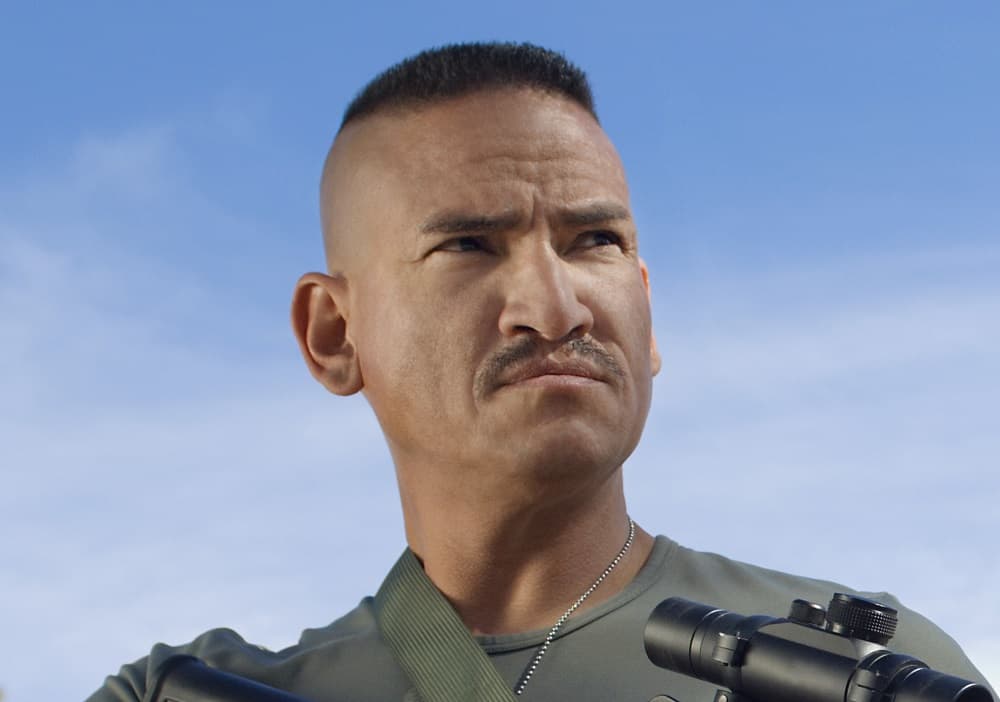
The high and tight is defined by very short sides placed high on the head, usually taken down to the skin for a bold contrast with the top. Some versions are blended as a high fade; classic versions keep a sharper, more disconnected line rather than a smooth gradient.
Crew Cut

Crew cuts generally utilize a slight fade or tapering that blends smoothly into the top. Unlike the high and tight, which relies on stark contrast and a disconnected top, the crew cut is all about a seamless, graduated transition.
#5: Variations
High and Tight Cuts
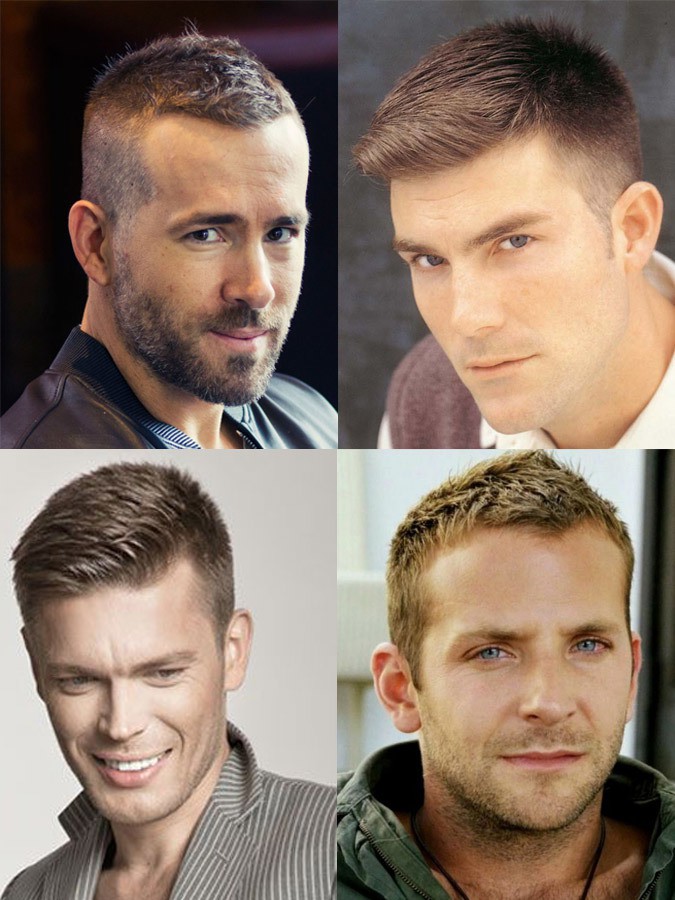
The major variations that can be seen with High and Tight cuts are the variations in the thickness of the long hair on top of the head. Some men with high and tight haircuts will leave the hair on top slightly longer so it can be styled up or pushed forward to create a textured look.
Crew Cuts

You will sometimes hear crew cuts described in regional terms (loosely, a shorter and more uniform top versus a more heavily graduated one), but that is a casual generalization rather than a strict rule. Most crew cuts are tapered in certain sections. In some variations of the style, the hair is left much longer at the front so that it can be pulled up into a peak or rolled over to create a quiff. Shorter Crew Cuts may be referred to as Buzz Cuts.
#6: Maintenance
These two hair cuts are on the shorter side, but require different levels of maintenance.
High and Tight Cut
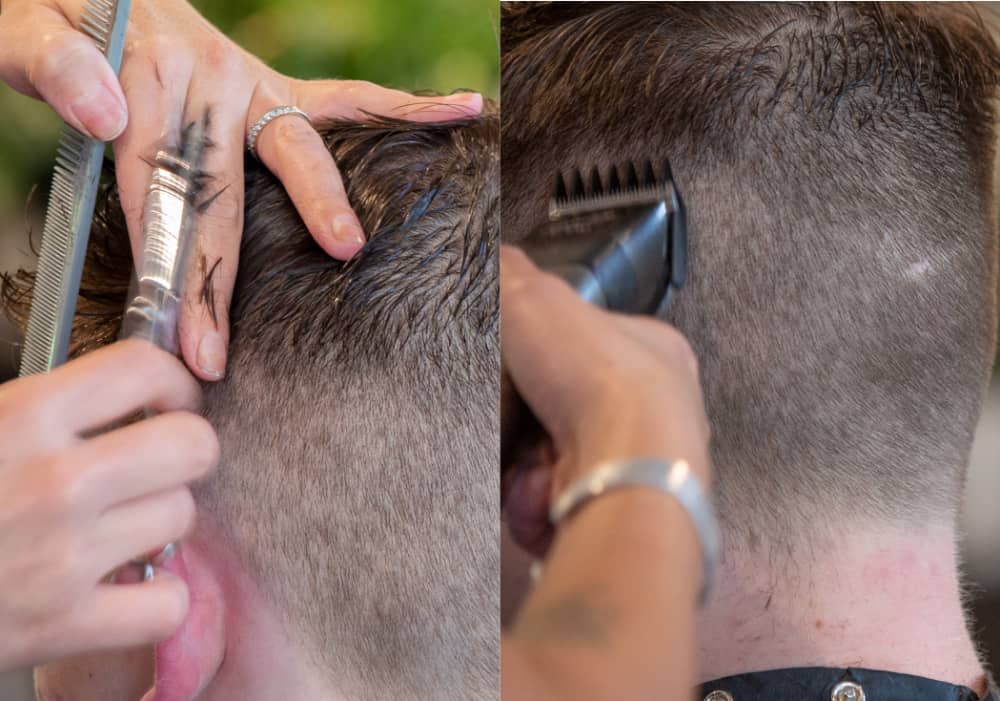
High and tight cuts are more difficult to maintain because of the sharp contrast. Because the sides are shaved down to the skin, even a small amount of growth disrupts the tight fade, requiring frequent barber visits.
Additionally, because this cut takes the sides right down to the skin, it pays to sit in a chair with spotless tools. A sharp barber sanitizes their clippers and blades between clients, which helps keep freshly exposed skin smooth and clear. A splash of aftershave balm or a light moisturizer at home keeps the skin looking clean and fresh as it grows back.
Crew Cut
Crew cuts are easier to maintain than high and tight cuts because once the hair grows out, you have more time in between haircuts where you can manipulate the style.
As a rough guide, a high and tight needs a touch-up about every 1 to 2 weeks to keep the skin-tight sides sharp, while a crew cut holds its shape longer and can usually go around 3 to 4 weeks between visits.
Whichever way you lean, both are sharp, practical cuts. Go for the high and tight if you want maximum contrast and don’t mind frequent touch-ups, or pick the crew cut for a softer look with more time between barber visits.