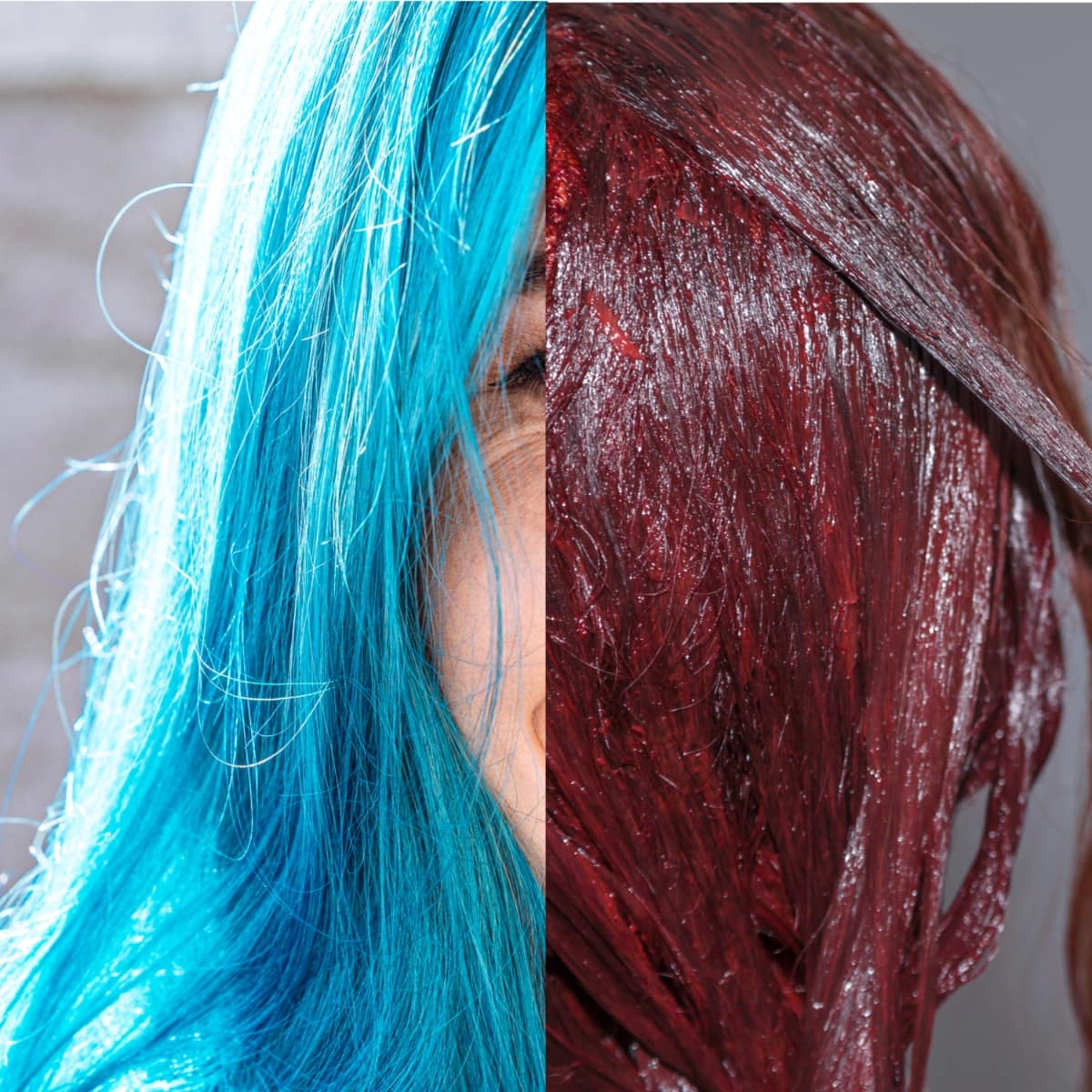


You’ve had blue hair for a while, and it was nice while it lasted, but you’re looking for a change. Is it okay to use purple hair color over blue hair? Will it turn blue hair purple?
Can You Dye Purple Over Blue Hair?
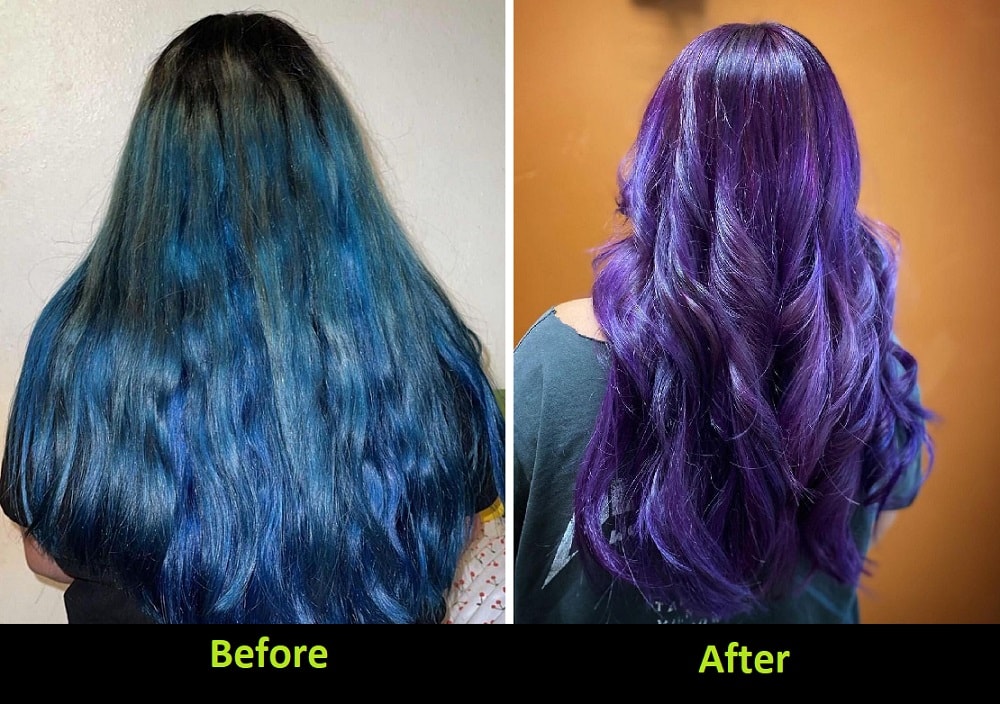
Yes. You can dye purple over blue hair. The result depends on how light your blue is and what shade of purple you use.
- Light, faded blue: Purple looks brighter and closer to a true purple.
- Bright blue: Purple turns into a blue-violet or indigo shade.
- Dark blue: Purple looks deeper and may remain mostly blue.
- Greenish-blue hair: Purple can turn muddy unless you fade the blue first.
If your hair is very dark blue or greenish-blue, you may need to fade the blue first to achieve an even purple. Purple dye can cover blue, but it cannot “lift” color that is already in the hair.
Even though purple is one of the easiest shades to apply over blue, a few details can change the outcome.
Safety Notes
- Do not use blonde dye to remove blue. Color does not lift color.
- If you use bleach, do a strand test first. Stop if your hair feels stretchy or gummy.
- Wear gloves. Protect your skin and clothes. Work in a well-ventilated area.
- If you have reacted to hair dye before, do not use another dye until you have obtained medical advice about which ingredients to avoid. If you are unsure, see a professional.
If you have just dyed your hair, the blue may be too strong, which can make the purple look patchy.
Things to Consider Before Dyeing Purple Over Blue Hair
Here are a few things to consider before dyeing purple over blue hair.
Fading
If your hair is freshly dyed blue, wait before dyeing it again. Too many chemical processes in a short time can weaken your hair, and bleach and developer pose the greatest risks. The gentle exception: many direct dyes need no developer at all, going on like a conditioning treatment, so applying one of those purples over blue is a low-stress route at home if you follow the product’s own directions and warnings.
Fresh, heavily saturated blue can also overpower the new pigment, making the purple look uneven. Fading the blue first usually produces a smoother result.
The Shade of Blue You Have
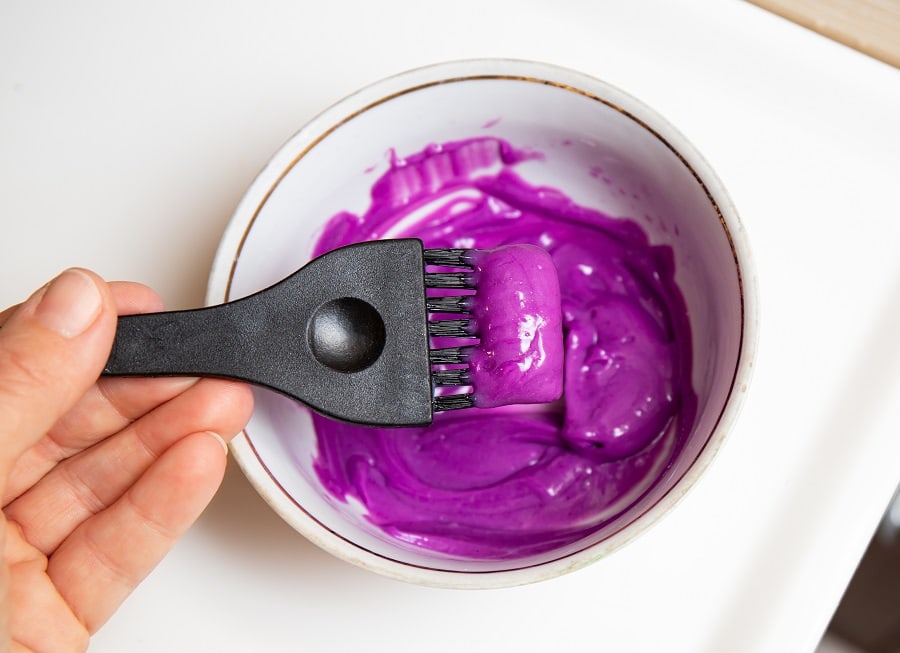
If your blue has green undertones or has faded to green, be careful with red-based purple. Red and green can cancel each other out, but they can also look dull together. On greenish-blue hair, a red-based purple may turn muddy or brownish.
For greenish-blue hair, a deep blue-based purple or indigo often provides the best coverage. If you want a brighter purple, neutralize the green first, and then apply your purple dye.
The Shade of Purple You Want
If you want a vivid, true purple, you need a cleaner base. That usually means a lighter blue with less green.
If you want a purple-blue look, you can apply a neutral purple over medium blue hair and retain some of the blue undertone.
Other Options for Blue Hair
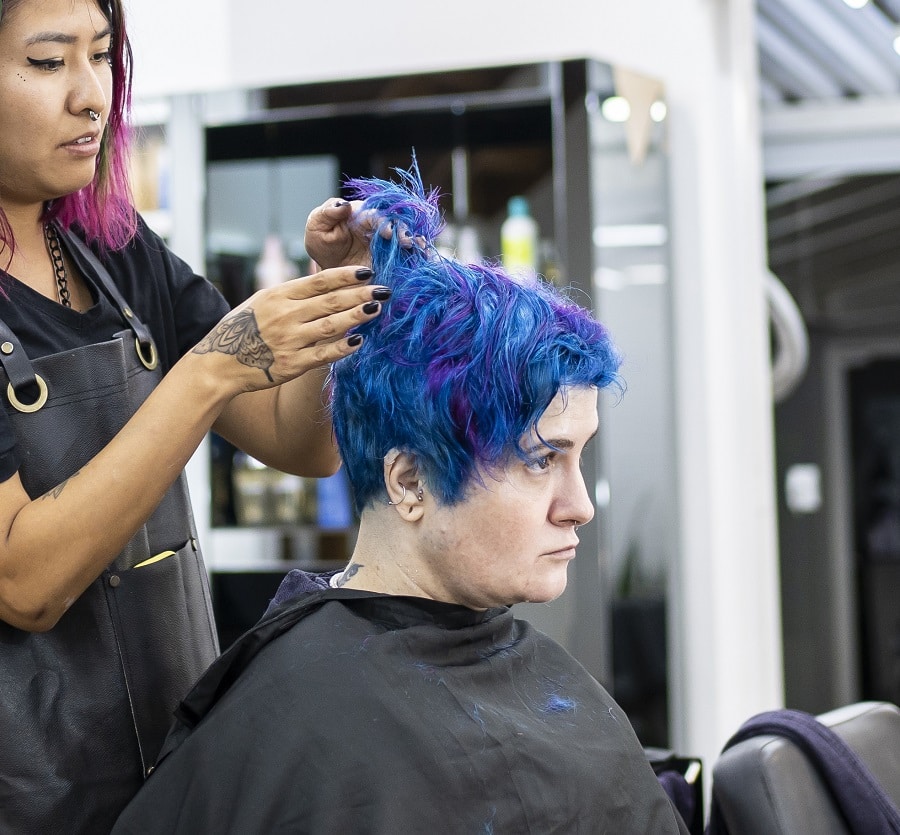
Purple is a strong choice for blue hair, but it is not the only option. Here are some other ways to handle blue hair first.
How to Fade Blue Hair Safely
Blue and teal shades can be stubborn. Most “color removers” sold at drugstores are made for permanent dye. They often do little to fashion colors that sit on top of the hair.
Use one of these options instead, starting with the gentlest method.
Method 1: Clarifying shampoo and warm water
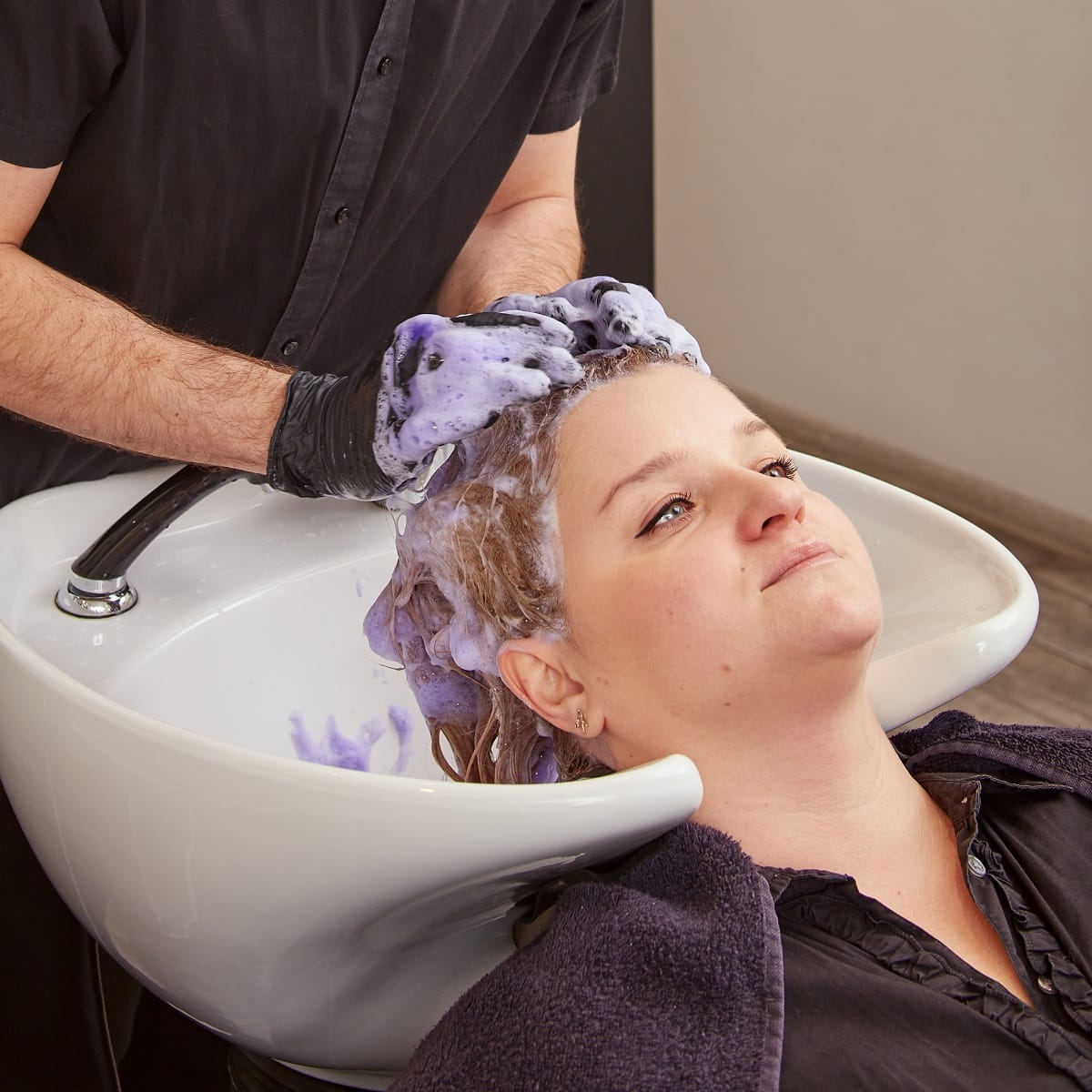
Wash your hair with a clarifying shampoo and warm water. Let the lather sit for a few minutes, and then rinse. Repeat this process over several washes. It is slow, but it is the least damaging method.
Method 2: Bleach bath (soap cap) for stubborn color
This method is stronger and can damage fragile hair.
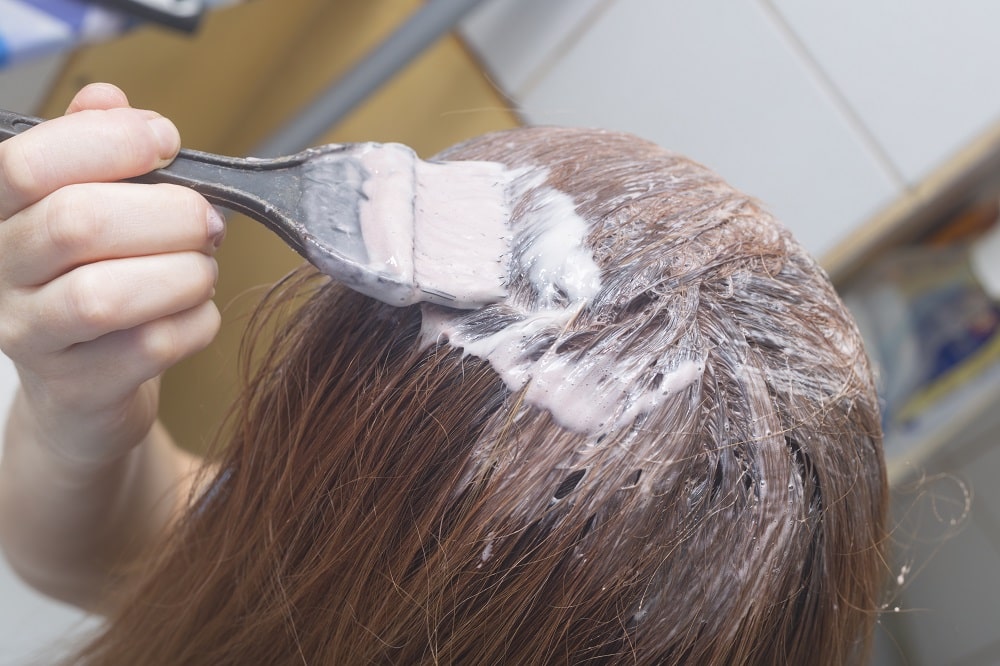
A bleach bath combines bleach powder, developer, and shampoo, so it is gentler than straight bleach but still lifts color. Because the correct ratio and lowest safe developer strength depend on your hair, it is best to have a licensed stylist mix and apply it rather than guessing at home.
Apply it to damp hair and watch it closely. Check every few minutes and rinse as soon as the blue lifts. Follow with a deep conditioning treatment.
Emma Baxendale, the senior stylist at The White Room in Guernsey who reviewed this article, reaches for that soap cap with two caveats: “Sometimes a couple of these sessions are required to remove enough for the desired purple tone to be applied. It can be very drying and potentially damaging if the condition is already compromised, which may mean just consistently using cleansing shampoos and hydrating treatments until it has faded enough.”
Method 3: Direct dye remover
Look for a remover made for semi-permanent fashion colors. Follow the brand’s directions exactly. This can be a good option when the blue will not budge. Our stylist’s pick for this job is the Malibu CPR treatment.
Let Blue Hair Fade Naturally to Pastel Green
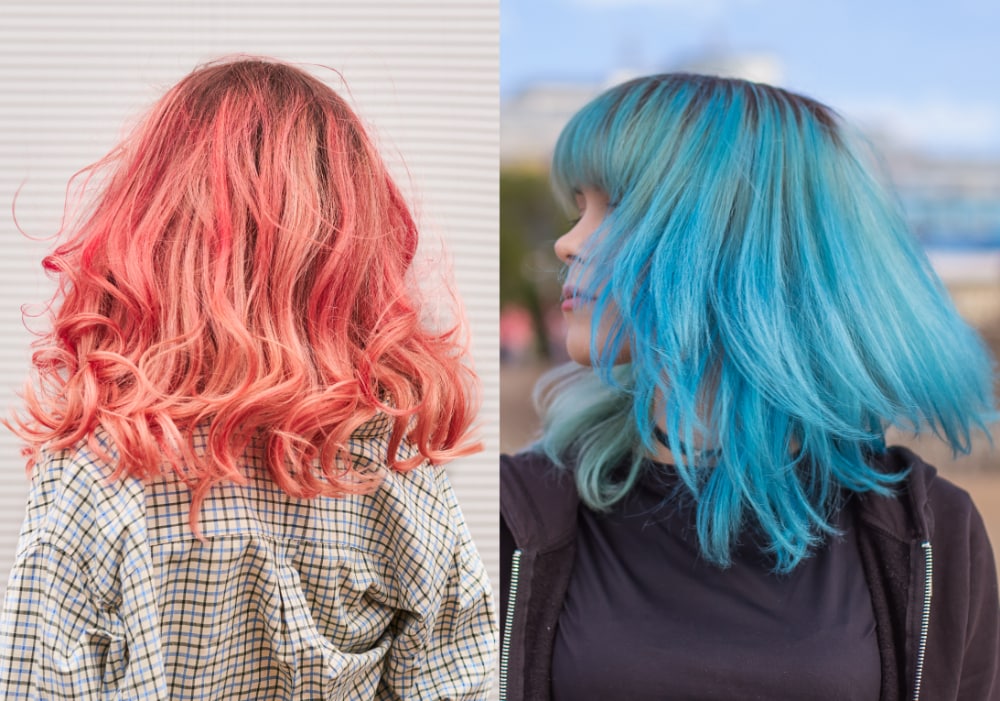
Many blue dyes fade toward green or aqua. That is normal.
If you like that look, you can refresh it with green or aquamarine dye. It is an easy way to keep your color fresh without making a complete change.
Most of the time, dyeing purple over blue hair is fairly straightforward.
For the best result, let your blue fade first. This lowers the risk of damage and helps you achieve a cleaner purple.