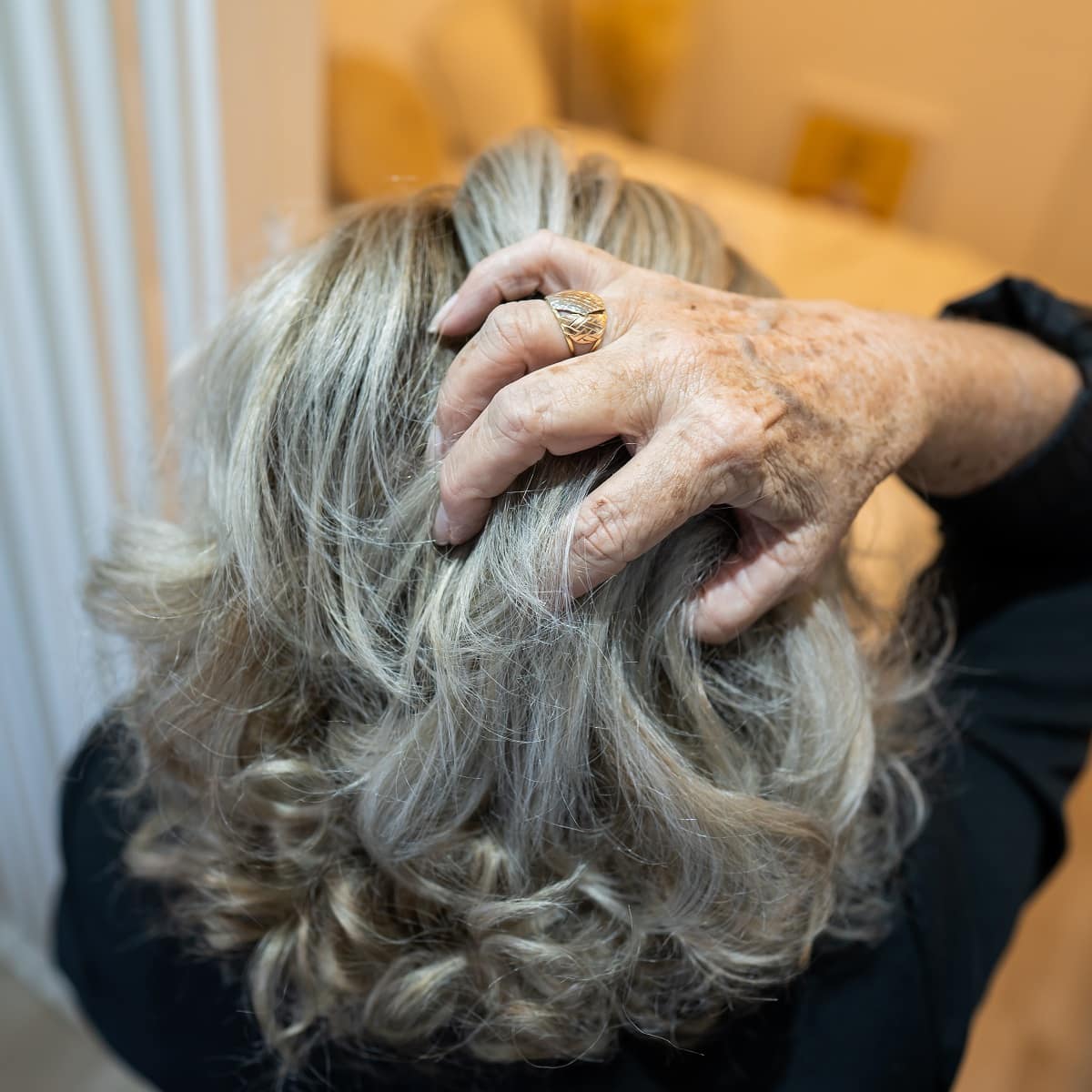

Gray hair does not have to mean old, dull, or dry hair. Some people start seeing grays in their twenties, while others may not have a silver strand until later in life.
However, regardless of age, one of the biggest gray hair mistakes you can make is to scale down your hair care routine.
Going gray will indeed affect your hair maintenance habits, but it won’t eliminate the need for them completely. A proper hair care regimen is necessary for healthy gray hair.
So let’s go through some of the most common gray hair mistakes so you can do your best to avoid them. We’ll also give you several tips to better prepare for gray hair and how to look your best with your new shade of hair!
Gray Hair Mistakes and How To Fix Them
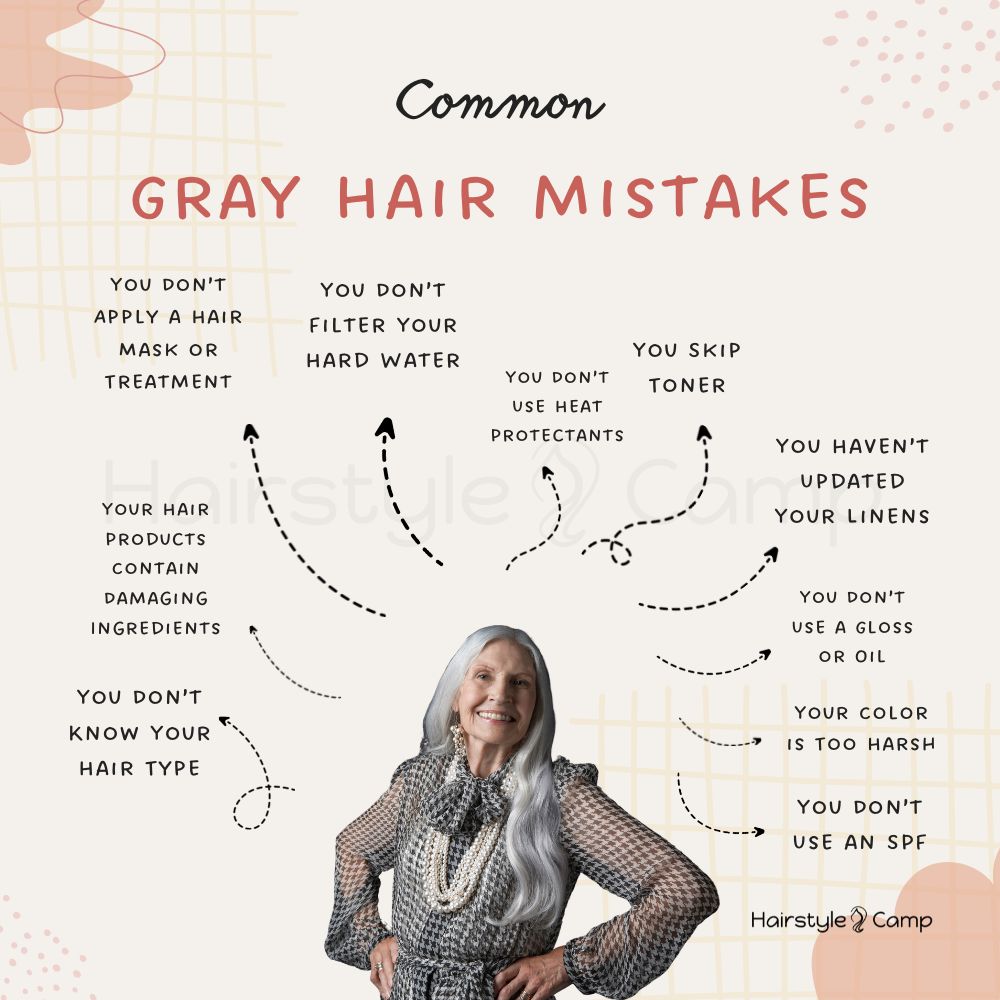
When most people begin to go gray, they do everything they can to stop it or cover it up. But some of these actions can lead to significant mistakes. And remember, gray hair is beautiful!
Let’s explore the 11 most common gray hair mistakes and how to fix them.
1. You Don’t Know Your Hair Type

Like all other hair colors, gray hair varies depending on your hair type. Coarse, coiled strands will face more issues like frizz and dullness, while thinning gray hair that lies flat may lead to a limp and drab appearance. You should know your type to avoid the mistake of using the wrong products on your gray hair.
The key to figuring out what works for your gray hair is to consider the results you want. If you had problems with dryness and unmanageable hair before you went gray, chances are you’ll have the same issues in the future.
Invest in high-quality products with hydrating ingredients to smooth your hair and define curls.
2. Your Hair Products Contain Damaging Ingredients
Some hair products like hairsprays and mousses contain drying, short-chain alcohols (like ethanol or SD alcohol), which you should avoid if you have gray hair. This type of alcohol dries out your hair, which is something that people with gray hair don’t need any help with.
You can apply fatty alcohols like cetyl or stearyl alcohol, which are highly moisturizing. Other ingredients to avoid include sulfates, another type of additive commonly found in shampoos and body washes.
While you may not be able to avoid every drying ingredient, there are a few more to keep an eye on, such as:
- Silicones: seal the hair and eventually create buildup.
- Mineral oil: does not provide adequate hydration to the hair or scalp and may weigh gray hair down.
There are several options available without the above ingredients; just look at the label before purchasing a new hair product.
3. You Don’t Filter Your Hard Water

Water can either be soft or hard. Soft water contains fewer minerals than hard water. Hard water has high magnesium and calcium levels that deposit buildup on your hair strands.
Mineral buildup leads to dull, dry hair, which is not ideal for any hair color, particularly gray hair. Hard water can also turn your hair brassy and yellow.
Thankfully, there are solutions available. You can purchase a showerhead with a built-in filter that reduces hard water minerals and leaves your hair soft.
4. You Skip Toner
If you have (or had) blonde hair, chances are you’ve heard of toner. Toner helps remove unwanted brass and yellow tones from light, silver, or gray strands.
Not using toner is another often disregarded gray hair mistake. You can tone your hair with shampoos and conditioners, but you can also have it done at the salon. Most toners are purple or indigo.
Some toning products are made for gray or silver hair and have ingredients like oils and vitamins to keep hair healthy and brass-free. You should use a toning shampoo or conditioner once or twice a week, but do not use them daily, as they can dry out your hair significantly.
5. You Haven’t Updated Your Linens

It may sound high maintenance, but if you want to maintain your gray tresses, cotton towels don’t cut it. Use a microfiber towel as an alternative because the fabric is gentle and not as abrasive as cotton. Cotton towels may soak up more water, but they’re too rough for potentially brittle gray hair.
Another aspect you may not think of as damaging to your hair is your pillowcase. If you notice your gray hair becoming dry and unmanageable, you may want to switch to a satin pillowcase. The slick material keeps hair smooth and shiny, and you may even be able to cut down on your product arsenal!
6. You Don’t Use an SPF
You probably know that you need SPF on your face every day, but you may not realize your hair needs protection from the sun, too. UV rays damage your scalp and hair follicles just like your skin.
Too much sun exposure on your hair can also fade your color (even gray hair) and lead to overly dry, frizzy strands. Try finding a hair SPF product, which may be a spray or cream you put on after styling. Avoid spraying body or face sunscreens directly onto your hair, as they can make your hair oily and weigh it down.
7. You Don’t Use Heat Protectants
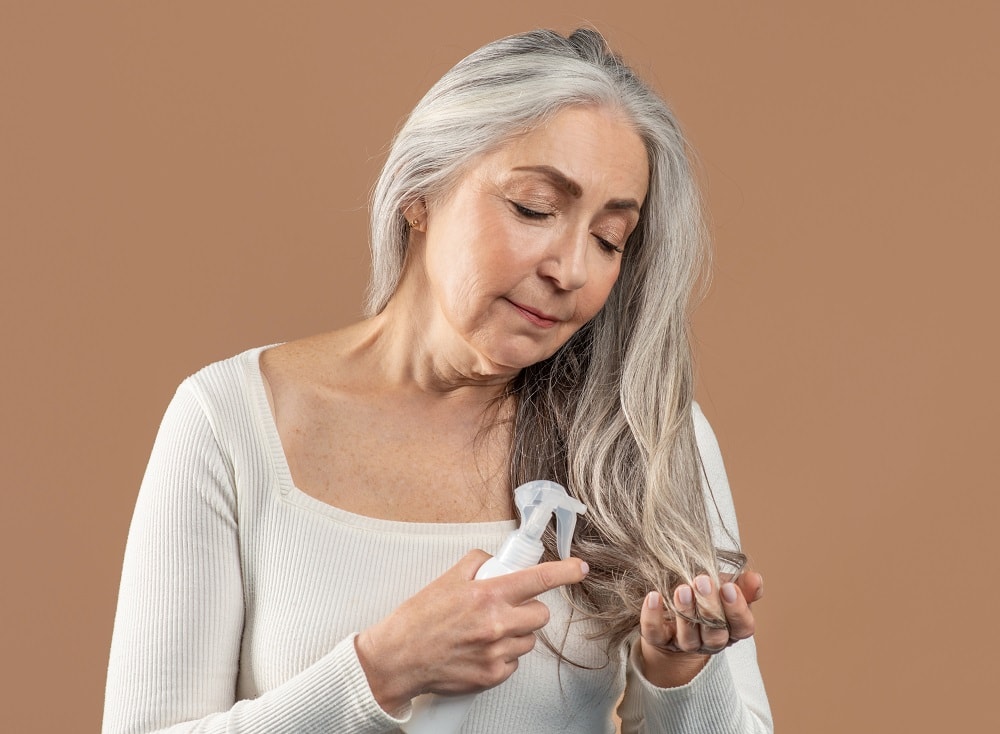
We all love blowouts and hair styling tools, but heat damages your hair, and that doesn’t change when you go gray! Since the aging scalp produces fewer natural oils, and the hair itself has less melanin, it becomes much more susceptible to breakage and heat damage.
Before you turn on your flat iron or hair dryer, apply a heat protectant. These products help protect your hair by coating the hair shaft.
8. You Don’t Use a Gloss or Oil
Clear styling glosses or oils are essential for hydrating gray hair. Avoid colorful formulas because they may stain your strands or contain drying dyes. Apply the oils or hair glosses to the ends and middle of your hair, gently combing it through after styling.
Hair glosses help gray hair stay shiny, silky, and manageable and reduce the need to shampoo and condition your hair daily.
9. Your Color is Too Harsh
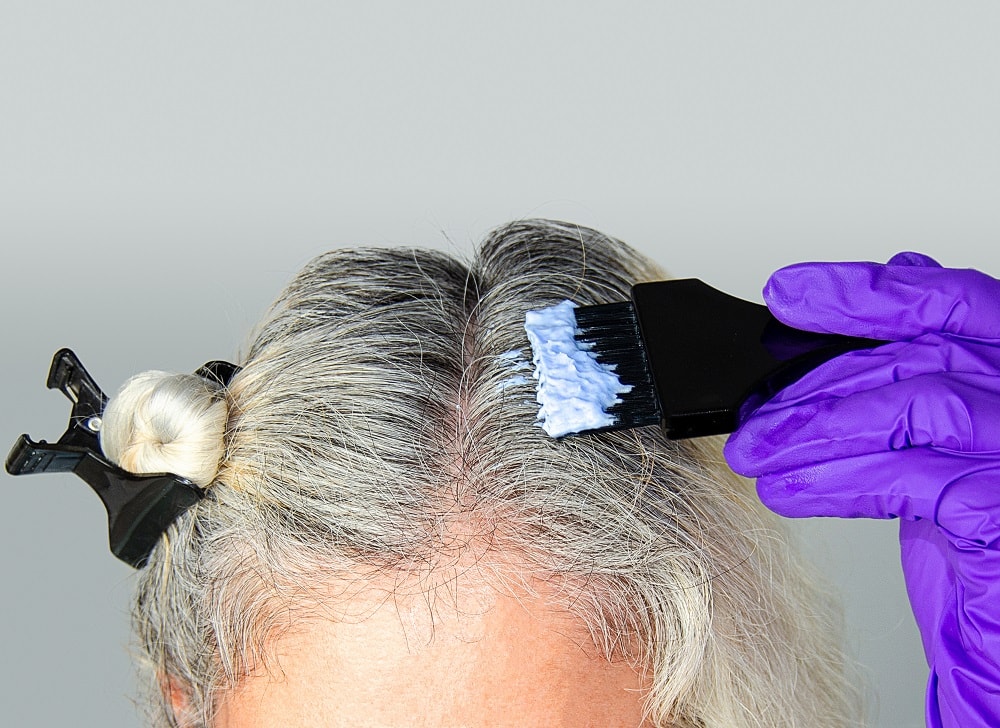
The first instinct you may have when you see gray hair is to cover it up, but before you reach for the dye and make another gray hair mistake, consider embracing your gray hair and blending it into your natural or dyed color. Your stylist can use highlights or balayage to frame your face and brighten your overall look.
Coloring your entire head the same shade can create a harsh, noticeable grow-out line at the roots as your new gray hair comes in. Opting for dimensional color, like highlights or lowlights, provides a softer blend that hides the root demarcation line much better.
10. You Don’t Apply a Hair Mask or Treatment
A weekly mask or treatment can work wonders for dry, frizzy gray hair. Find a treatment with a glossy finish or soothing ingredients to smooth your strands and pamper them. You can also find a treatment with purple or blue hues to tone your hair while hydrating it.
Gray hair requires more care than younger hair or hair that has not been chemically treated. Taking the time to apply a mask in the shower or overnight helps keep your gray shades bright and brass-free.
11. Your Haircut is Too Angular

As mentioned earlier, gray hair tends to be drier and more fragile than other hair colors.
A simple aspect that you may overlook when going gray is your haircut. Angular, blunt bobs can go very wrong because aging hair often changes in texture, becoming coarser and more wiry. This change in texture often results in frizz and a triangle-like shape.
Instead of severe or sharp cuts, try a soft, gentle look with layered ends. Layers help with frizz and frame your face.
Tips To Wear Gray Hair Without Looking Old
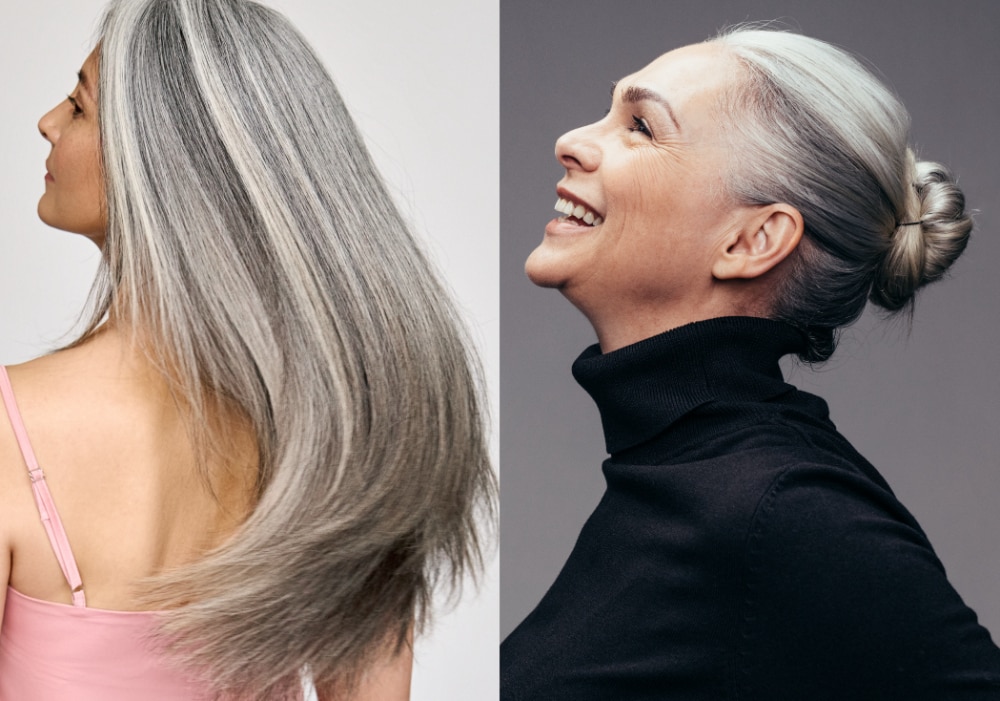
Are you ready to embrace your gray hair naturally without looking old? Here are some tips to add youthfulness to your look:
- Add layers that give your hair volume and movement.
- Seal moisture into your hair with oils.
- Protect your hair from heat.
- Use clarifying shampoo.
- Braid your hair or wear it in an updo.
- Wear accessories in your hair.
Gray hair is beautiful, especially when you take proper care of it and show it off. Additions like oils, protectants, and trying updos are excellent for showing your gray hair to the world.
So, now you have some steps you can take to look your best when the inevitable transition occurs. And when these gray hair mistakes pop up, you’ll know exactly how to deal with them!