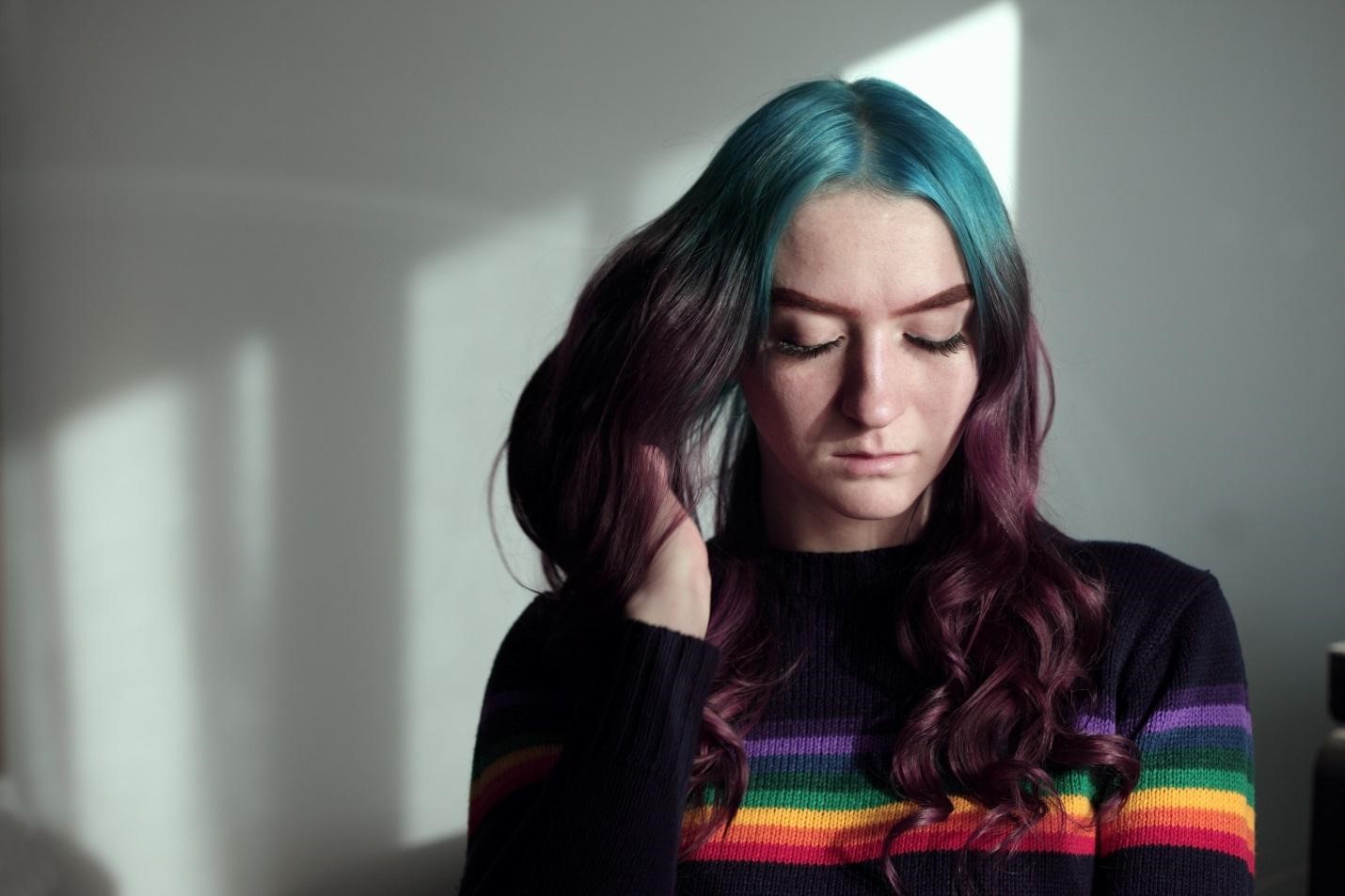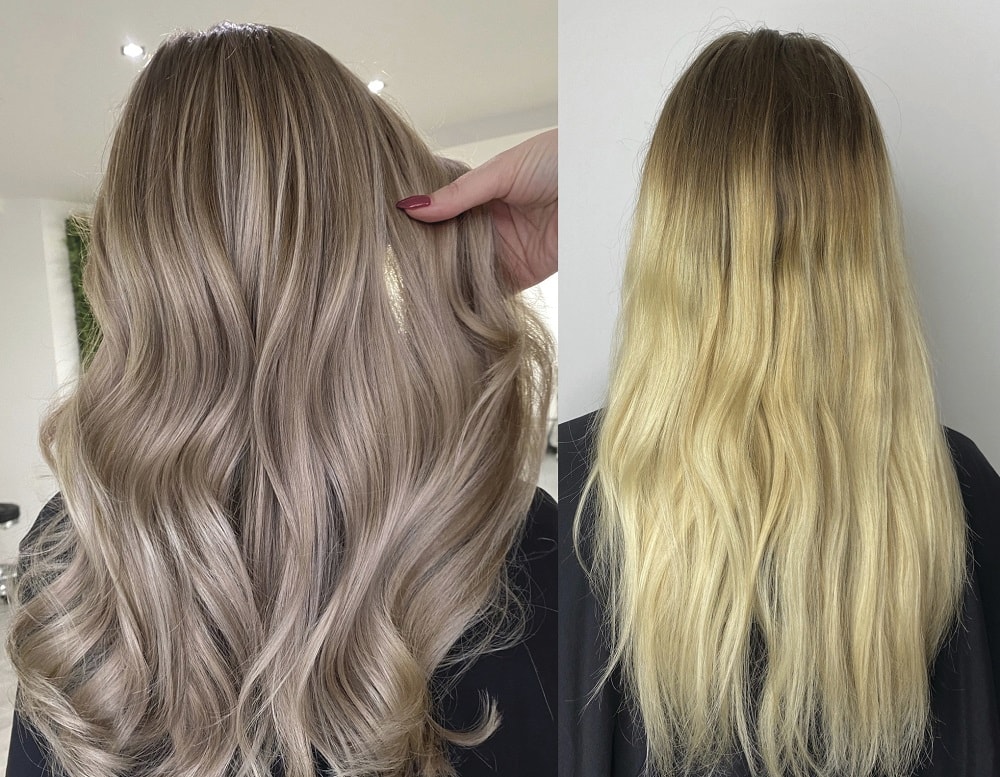

Blue hair was fun. Now you want it gone. Blue dye can cling, so removal takes a plan.
If your first try left you with dull blue or patchy fade, you are not alone. The goal is a cleaner base, with as little damage as possible.
How to Get Rid of Blue Hair Dye
Some dyes lift fast. Blue often does not. Blue is a color that can hold on, especially when the pigment is deep and dark.
Start with the least harsh option on the list, like a clarifying wash, and treat bleach as the last step. Move up in strength only if you need to.
1. Bleach Out
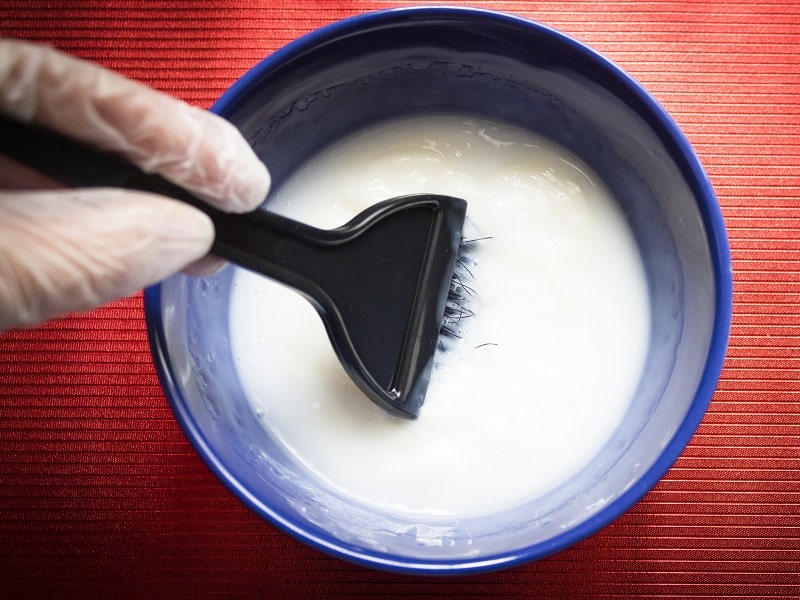
Bleach should not be used as a stand-alone bleach out.
A soap cap or bleach cleanse still uses lightener and requires a suitable hair assessment and the exact product’s directions. Do not use a universal equal-parts shampoo, bleach and developer recipe, a generic processing time or a heat-trapping cap instruction. Have a colorist select the product and application for the color being removed.
Shampoo and condition as usual.
A professional stylist can check your hair first and choose the right strength and timing.
Do not color again for 36 to 48 hours, depending on the condition after the soap cap, to let the cuticle close and relax.
This is one to book with a colorist rather than run at home. Read the notes below before you start any removal method.
Advice and safety notes
- Do a strand test. Blue can flip to green or hang on as a stain when you bleach.
- Wear gloves, use a timer, and ventilate the room. Follow the label every time.
- Patch test before dyes and removers. The FDA explains how to do it and when to skip a product if you react. FDA
- After harsh washes, reset moisture. Use a deep conditioner. Lower pH products are linked with less friction and less cuticle stress. NIH
2. Take Your Time with Clarifying Shampoo
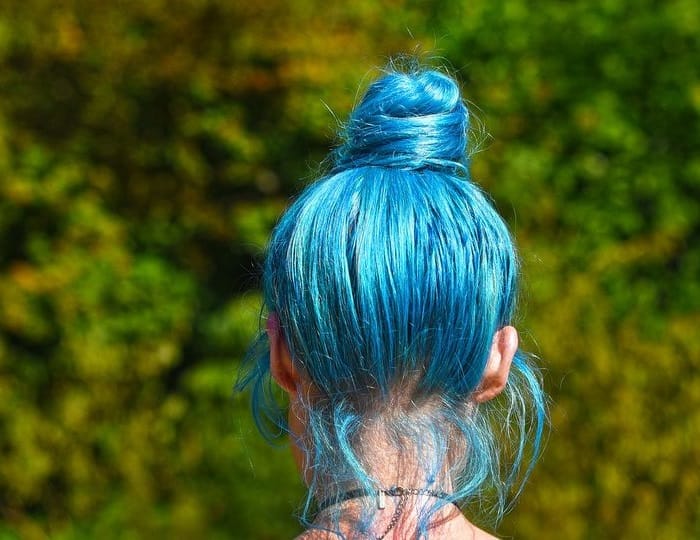
If speed is not a concern, using a clarifying shampoo is an effective method. Clarifying shampoo is designed to remove residue and product buildup. It cleans deeper than a basic shampoo, so it can help fade blue over time.
It tends to work best with semi-permanent dye. Expect several washes. Lather well, let it sit for a few minutes, then rinse and condition.
3. Color Removers
These come in two categories, color strippers and color reducers. Color reducers are often the gentler choice, but both are chemical processes, so do a patch test and a strand test first and follow the label.
Read the label before you buy. Some removers are made for oxidative, permanent dyes, and may not work well on direct, semi-permanent blues. Always follow the manufacturer’s instructions.
4. Dandruff Shampoo Can Do More than One Job
It may come as a surprise, but dandruff shampoo can help fade blue hair color. Like clarifying shampoo, dandruff shampoo is denser and offers a deeper clean than a basic shampoo.
This is not a fast method. It can take several washes to lift the tint until it is hard to see. If you do not need a quick fix, it can work well. Dandruff shampoo can irritate a scalp that is sensitive to begin with, so stop if yours stings.
5. Neutralize the Color
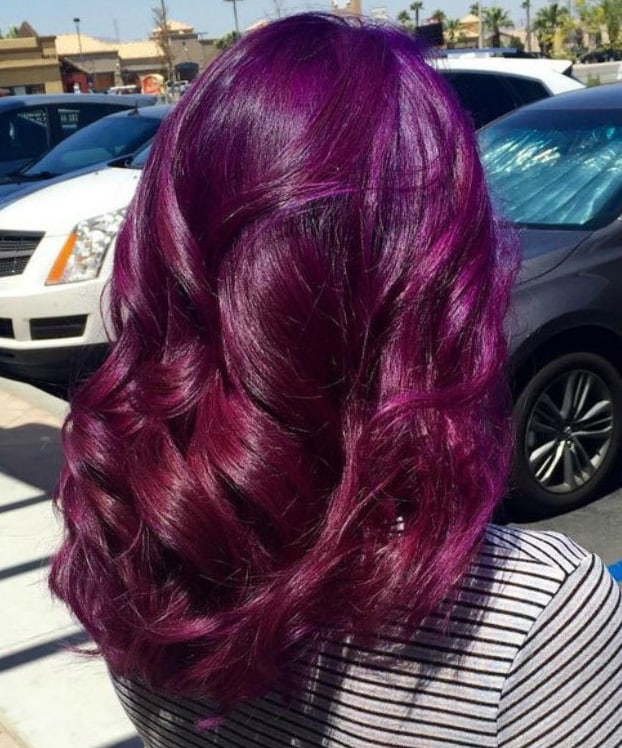
If your main goal is to hide the blue fast, neutralizing can be easier than removing. This method changes what you see, even if some pigment is still in the hair.
Colors on the opposite side of the color wheel can mute blue. Warm tones like copper, golden brown, or soft orange can shift the look toward a more natural shade. Test first, and choose a tone that makes sense for your base color.