

A Brazilian Blowout is a professional hair-smoothing treatment. Many people use the name for any keratin smoothing service. But it is also a specific brand name, with its own formula and system.
A Dominican blowout is temporary heat styling, whereas a Brazilian Blowout is a chemical smoothing service.
The main difference is that a Brazilian blowout is rinsed out in the salon, so you can wash or style your hair immediately. Traditional keratin treatments often need about 24-72 hours before washing.
This treatment offers less frizz, more shine, and significantly easier styling. It is a semi-permanent solution that lasts about 12 weeks and can reach up to 16 weeks with good care.
Warning: formaldehyde gas risk
Products used for a Brazilian blowout may release formaldehyde gas. Formaldehyde Free labels can be misleading when a product contains methylene glycol, as it releases formaldehyde when heated. Formaldehyde exposure can irritate the eyes, nose, throat, and lungs in some people. Source: OSHA
Pregnancy note: If you are pregnant, avoid services that may release formaldehyde gas.
What to Expect During the Service?
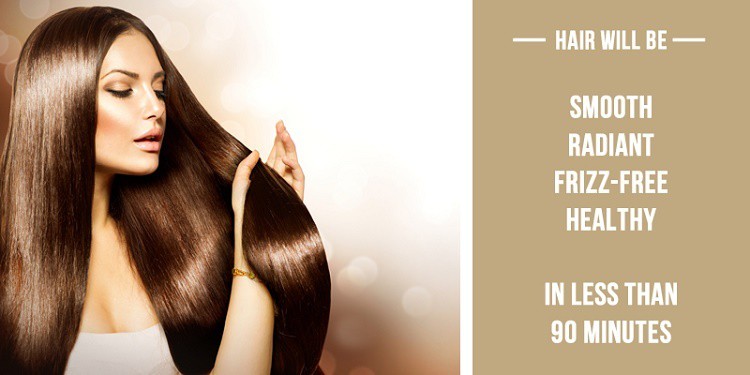
In a Brazilian blowout treatment, the stylist applies the smoothing solution, then uses heat to seal it. The goal is a smoother surface and less frizz.
Below is a simple five-step overview of how most salons do it.
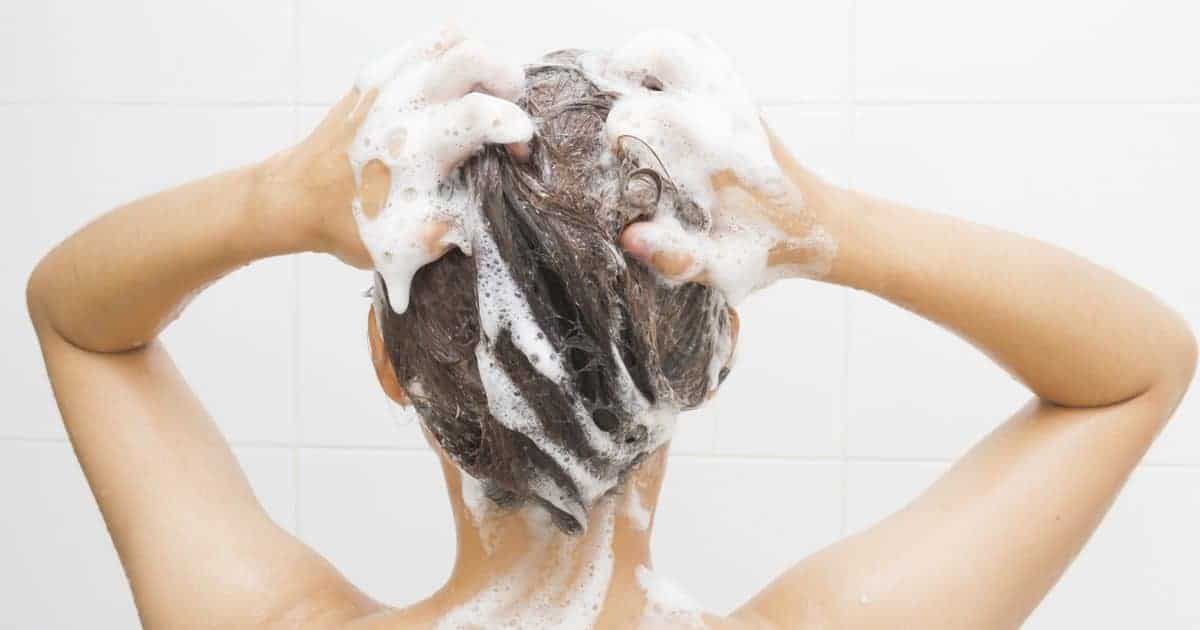
- The hair is washed with clarifying shampoo to remove buildup. Then the solution is applied in small sections to damp hair.
- The hair is blow-dried.
- The hair is flat-ironed in small sections to seal the product.
- The solution is rinsed out of the hair (this step can vary by brand and salon).
- Hair is styled to your preference. Some stylists do a final pass for a straighter finish. If you want to keep waves, you may skip extra flat ironing and style the natural pattern.
In the US, the price is often around $150 to $400+, depending on your hair length, thickness, and the salon. The Brazilian Blowout is usually a top choice for celebrities and people with frizzy hair.
How does the solution work?
The solution is sealed with heat. This can leave a thin, smooth layer on the hair, so the cuticle lies flatter. Hair can look shinier because it reflects light better.
Results often last about 10 to 12 weeks. Gentle shampoo and less heat styling can help it last longer.
Before and After Results
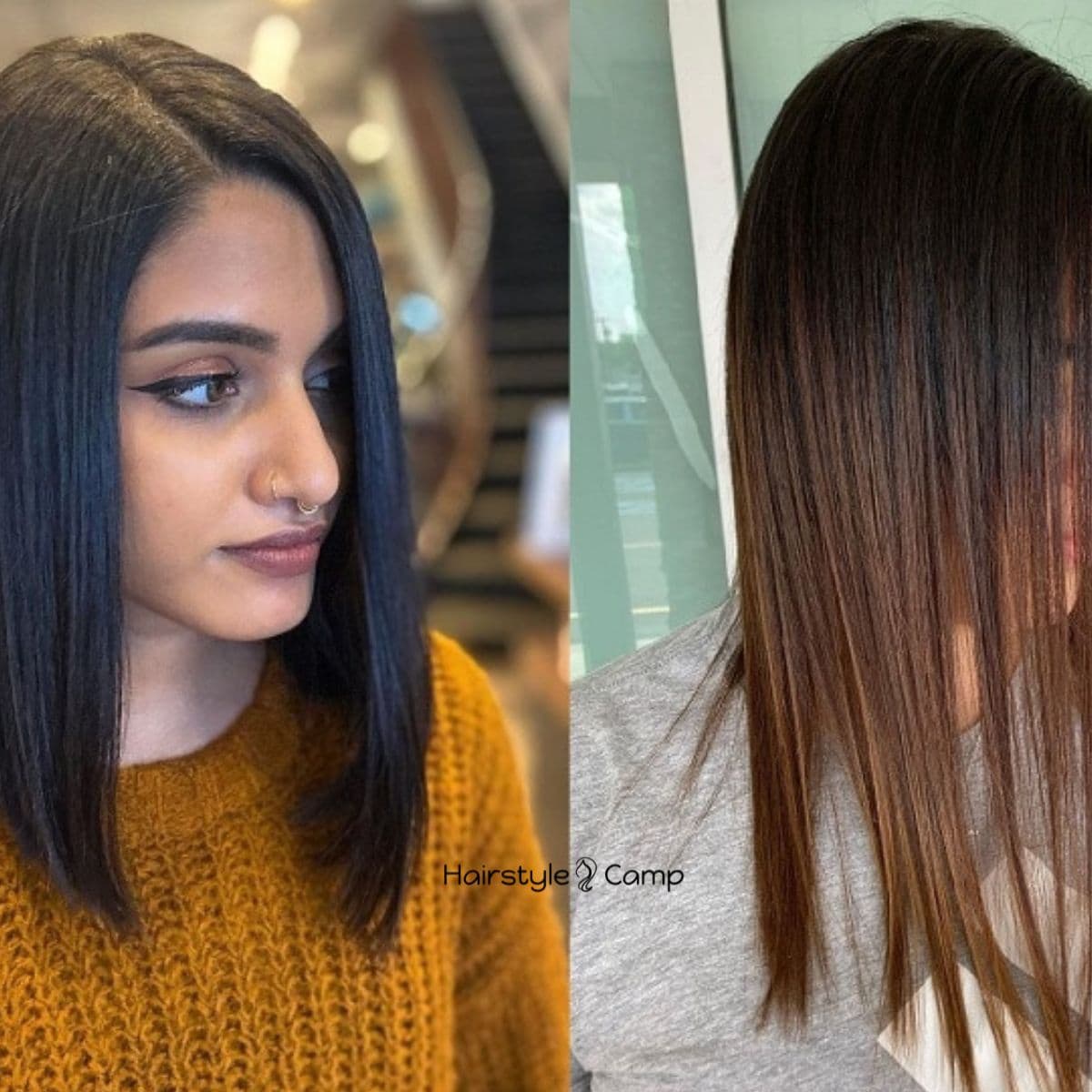
Here are a few before-and-after photos. Frizzy hair can look smoother and shinier after the service.
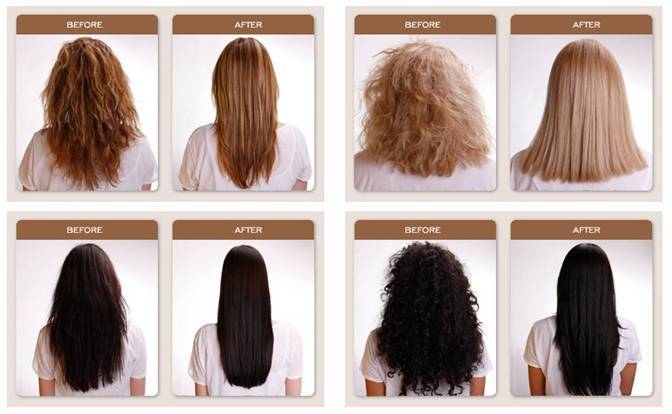
Like any chemical and heat service, there are tradeoffs. Here is a clear look at the pros and cons.
Pros
- Less frizz and easier styling for a few months
- Often done in about 90 minutes
- Not permanent, it fades over time
- You can usually wash and style the same day
- You can choose your finish, from smoother waves to straighter hair
Risks and Side Effects
It can be a good fit for some people. But do not ignore the safety side.
- Cost can add up, especially if you buy aftercare products
- High heat and repeated passes can lead to dryness and breakage, especially on fine or already damaged hair.
- Some hair-smoothing products can release formaldehyde gas when heated. Formaldehyde exposure causes short-term irritation and other reactions.
My advice
- Ask what product will be used. Ask to see the ingredient list and the Safety Data Sheet before you start.
- Choose a well ventilated salon. Ventilation lowers the chance of breathing in formaldehyde gas. FDA
- If your hair is fine, ask for the lowest effective heat and fewer passes. Heat styling can damage hair and cause breakage.
- Do not stack services. Avoid rebonding or relaxers on hair that recently had a Brazilian blowout treatment. Mixing strong chemical services can cause severe breakage.
Aftercare and Maintenance Tips
In many salons, you can wash your hair after the service when you need to. To help results last, avoid harsh clarifying shampoos. Choose a gentle sulfate-free shampoo.
You can usually wear any hairstyle after a Brazilian blowout treatment. A weekly conditioning mask can help with softness. If you use heat tools at home, keep the heat as low as you can.
Does the service cause hair loss?
It can lead to breakage that looks like hair loss, especially if your hair is already fragile or if very high heat is used. The American Academy of Dermatology notes that styling habits, including heat, can damage hair and even make it fall out.
If the product releases formaldehyde, some people can also get scalp or skin irritation. The FDA lists possible reactions such as eye irritation, cough, wheezing, nausea, and skin rash, and advises people who are sensitive to formaldehyde not to use these products.
Is it safe for thin or fine hair?
Proceed with caution. Fine hair is often more vulnerable to heat damage and breakage. Heat styling can damage hair and make it more likely to break.
If you still want the service, ask your stylist to use the lowest effective heat and fewer passes. Many stylists use lower temperatures for fine hair, often around 380°F to 400°F, instead of 450°F.
This treatment can also reduce volume because it smooths the cuticle and relaxes the pattern.
What is the difference between a Brazilian Blowout and Japanese straightening?
They work in very different ways.
Japanese straightening (also called thermal reconditioning) is a permanent straightening service. It uses a reducing chemical step to break bonds inside the hair, then a neutralizer step to set the new shape.
A Brazilian Blowout is a smoothing service. It mainly helps with frizz and manageability and it fades over time. Some smoothing products can release formaldehyde gas during heat processing.
Relaxer vs smoothing treatment
A relaxer is a chemical straightener. It changes the hair structure by breaking bonds so the hair can set straighter. A smoothing treatment is usually less permanent and focuses on frizz control and shine.
Rebonding vs smoothing treatment
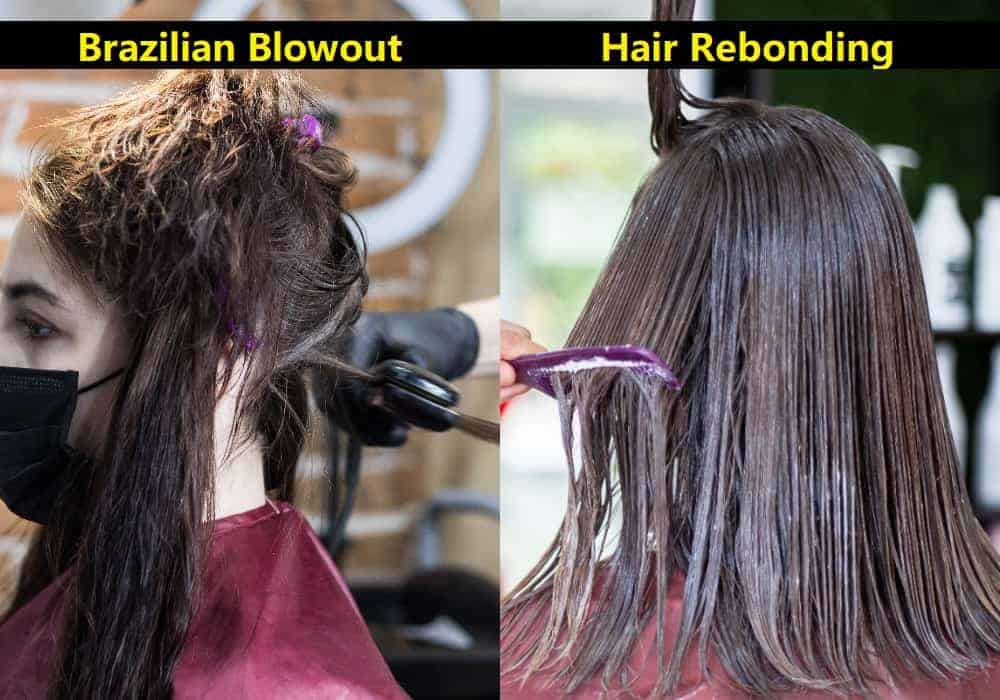
Rebonding is not a type of Brazilian Blowout. It is a permanent straightening process that breaks bonds inside the hair and then sets the hair straight with a neutralizer. Brazilian Blowout focuses on frizz control and manageability.
Here is a general outline of how rebonding is often done. Exact steps vary by salon.
- The hair is washed and sectioned.
- A straightening solution is applied to break bonds inside the hair. The hair is then rinsed.
- The hair is blow-dried and flat-ironed to shape it straight.
- A neutralizing solution is applied to set the new shape. Then the hair is rinsed and styled.
Rebonding permanently changes the hair’s internal bonds and sets it straight with a neutralizer, while Brazilian Blowout focuses on frizz control and manageability.