

The terms “wavy” and “curly” hair are often used interchangeably. While there are similarities between the two, there are distinct differences in their shape, hair type, and even their haircare requirements.
So, where exactly is the line between a wave and a curl, and how should you adjust your routine to care for each hair type?
Certified trichologist Celestine Muthoni Gitau draws the line between a wave and a curl:

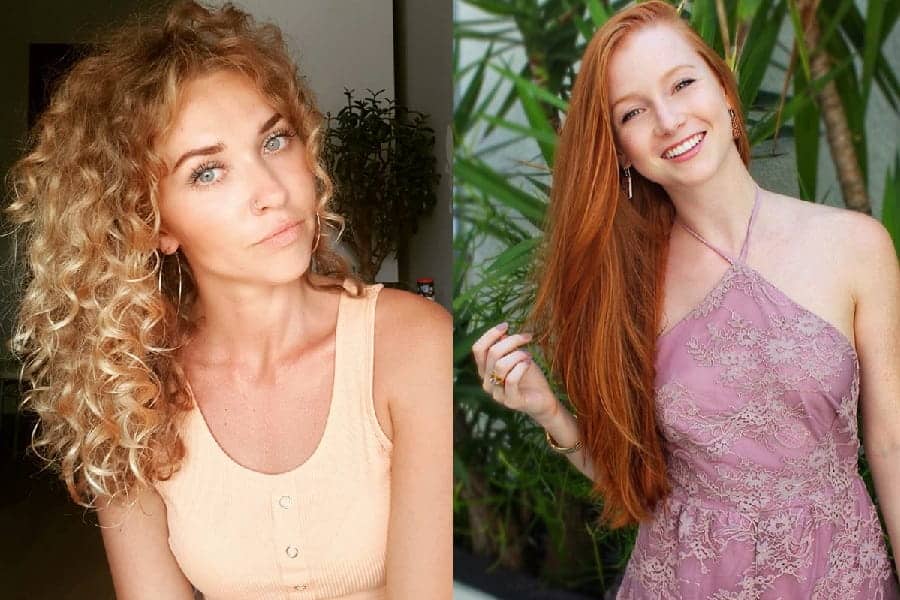
Wavy hair tends to have looser curls while curly hair has tighter curls. Most people may have both at once. This could be as a result of genetics or areas of the scalp that have gone through structural changes from hair handling and routine.
Wavy Hair Vs. Curly Hair
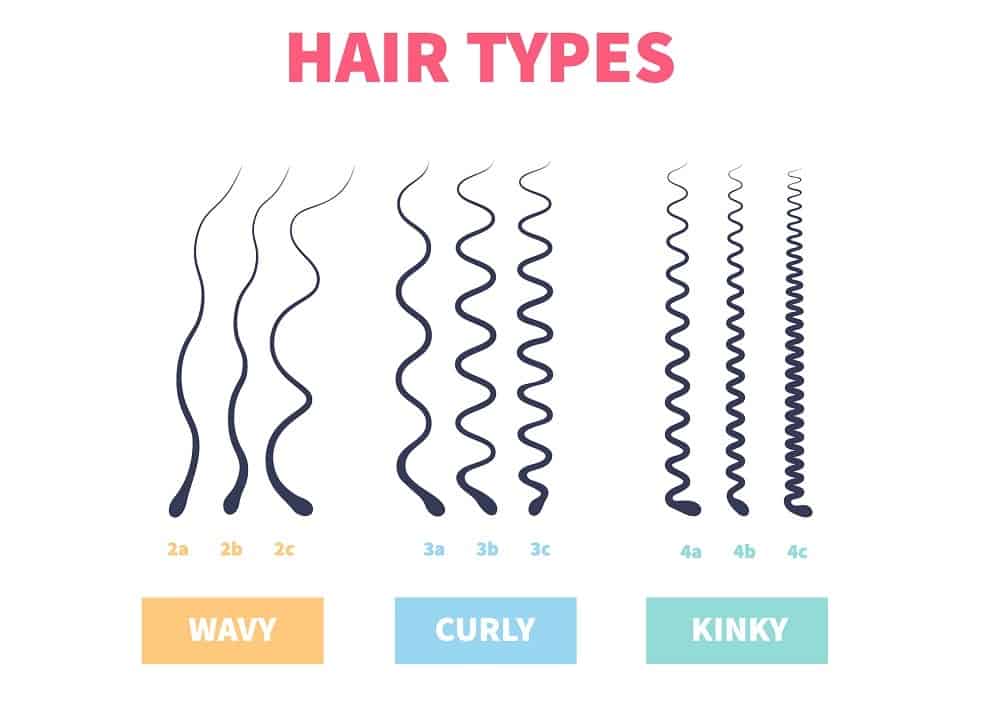
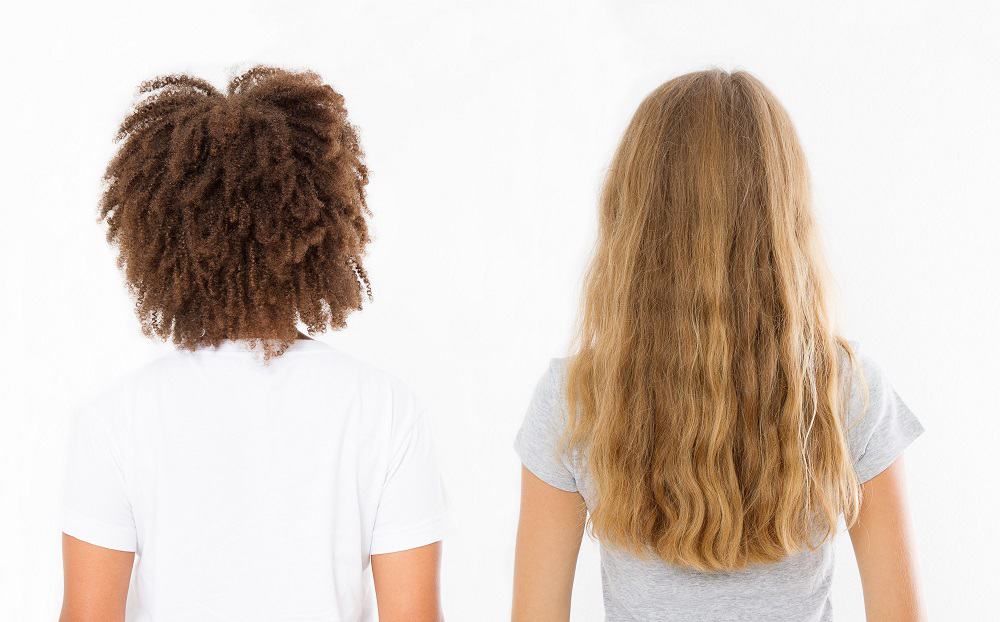
Curly hair has a complete 360-degree spiral making a complete circle. On the other hand, wavy hair has more of an S shape, which goes from side to side. You can have tighter waves that create loose curls, but they will not complete a circle at the same height.
These are the visual differences between curly and wavy hair. However, there is more to investigate since there are many traits that get confused in the discussion.
Nonetheless, the rule of thumb will come back to whether or not the curl pattern does a full spin or only goes from side to side to determine whether the hair is curly or wavy.
Although many people use the terms interchangeably, wavy hair sits at the loosest end of the curly hair spectrum.
Furthermore, there are three main categories in the curly hair spectrum: wavy, kinky, and curly. Curly hair is often assumed to be coarse, but curl pattern and strand thickness are separate things. What’s more, it gets regarded as thick, and even though that can be true, curly hair can be fine as well.
Types
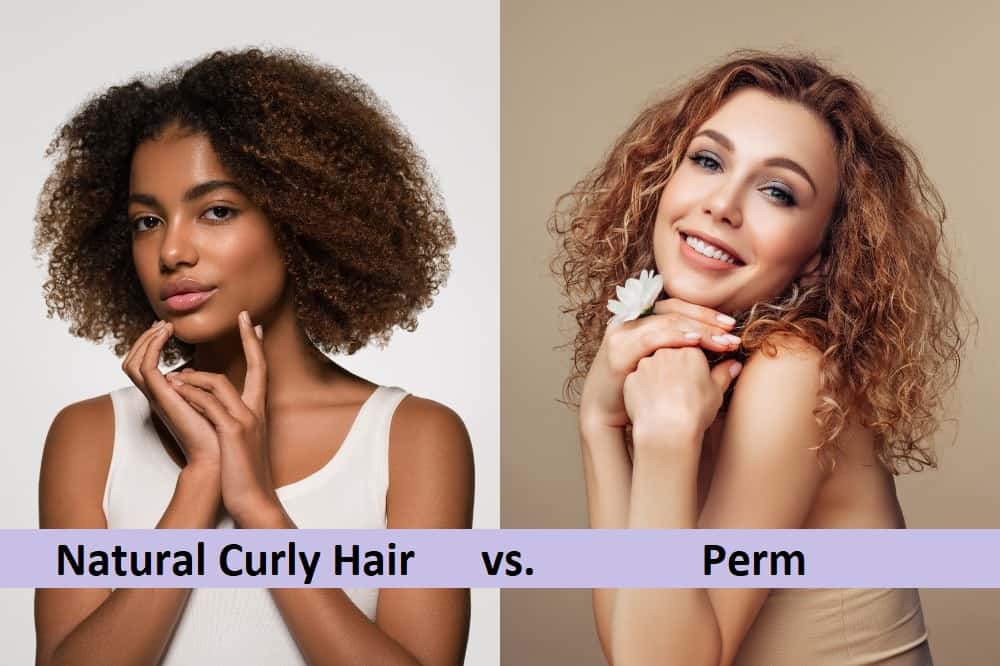
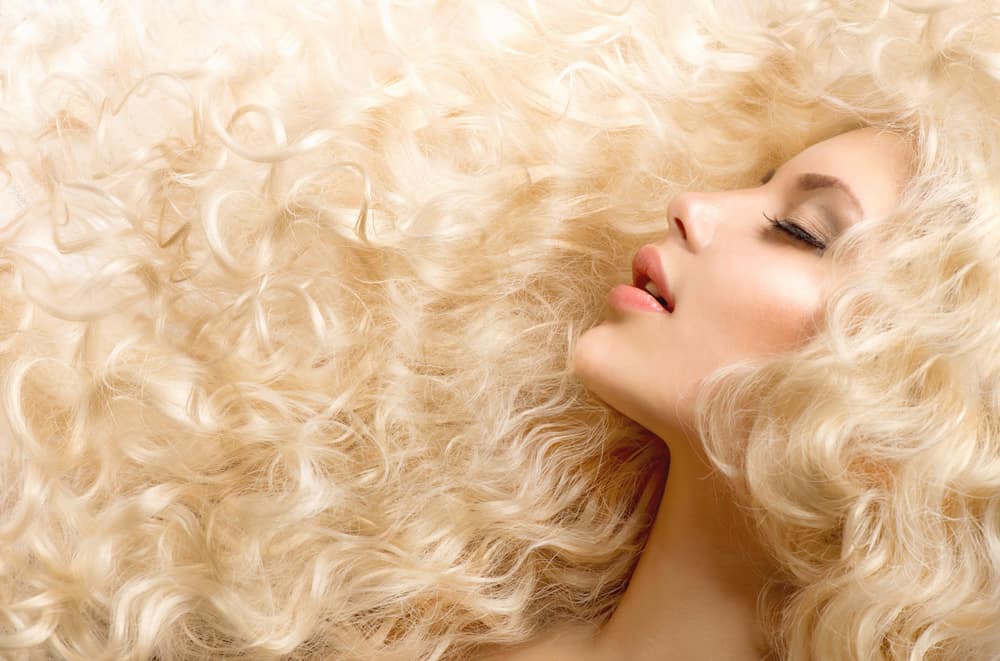
Curly hair will take on the shape of a corkscrew or a ringlet.
Wavy hair can appear to be ringlets, but ultimately they will settle into an “S” shape instead of tight curls. Wavy hair can also take on a zig-zag pattern.
Identification
Focus and Blur/Shutterstock.com
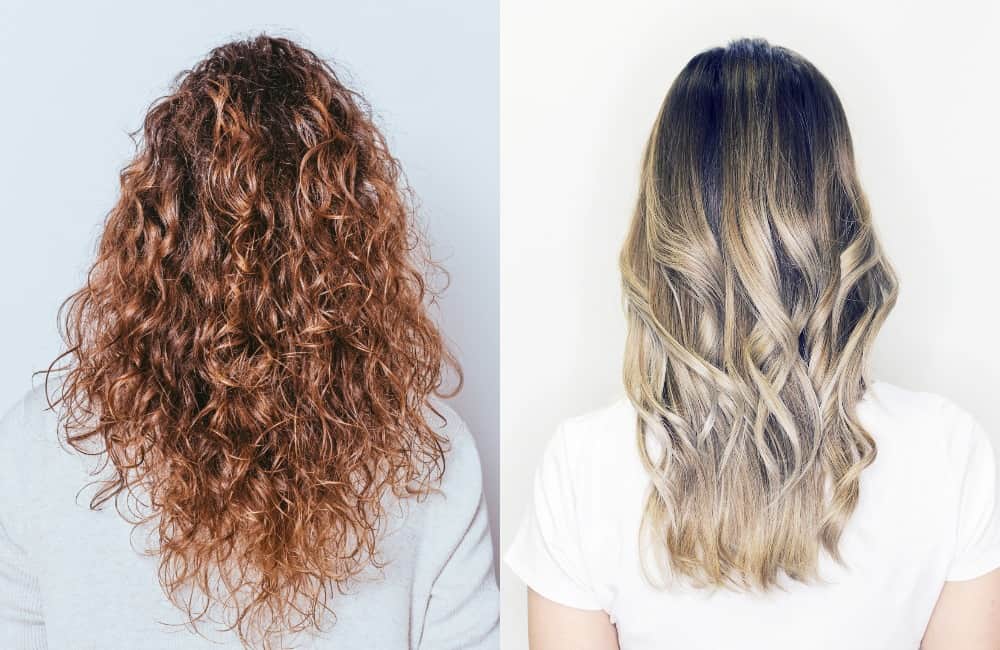
Curly hair is thick in appearance. Moreover, curls will typically begin at the scalp and hold this shape all the way down to the tips. Curls also have a range of thickness that people can fall into.
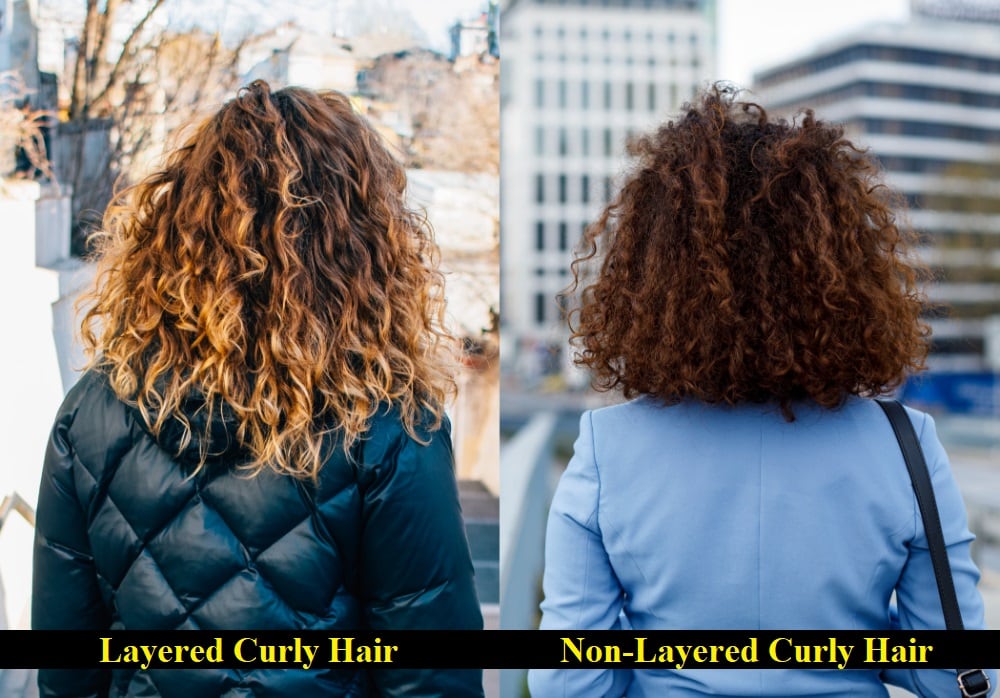
On the flip side, wavy hair is usually wavy near the bottom and flat as you get closer to the scalp. Kinky curls are smaller in width and yet are the densest as it pertains to thickness. Kinky curls maintain their pattern from scalp to ends; however, layering requires specialized techniques, such as dry cutting, to account for significant shrinkage.
Care
If you have waves or curls, you should use a curly hair diffuser when you blow-dry your hair. A diffuser is a hairdryer attachment that diffuses the air.
Thanks to this, curls are not transformed to frizz or blown straight when they are dried. If you wish to keep your curls tight, having your hair dryer set on low heat and airflow is best. Gently cup sections of hair into the diffuser bowl and hold it still to dry, minimizing touching to prevent frizz.
If you wish to give your waves and curls body after drying your hair, you can add pomade or mousse to them. Type 4 coily or kinky hair is naturally prone to dryness, requiring specialized moisturizing creams and gentle cleansers to maintain hydration and definition.
Precautions for Those with Curls
You should never brush or comb your curls when they are dry. If you were to do this, your curls will become frizzy or come undone. If you need to freshen your curls up, dampening the flatter sections with water and gently scrunching in a little mousse can help reactivate the pattern.
For on-the-go maintenance, you can lightly mist your hair until it is damp and use your fingers to twist your curls into ringlets.
What is the Curly Girl Method?
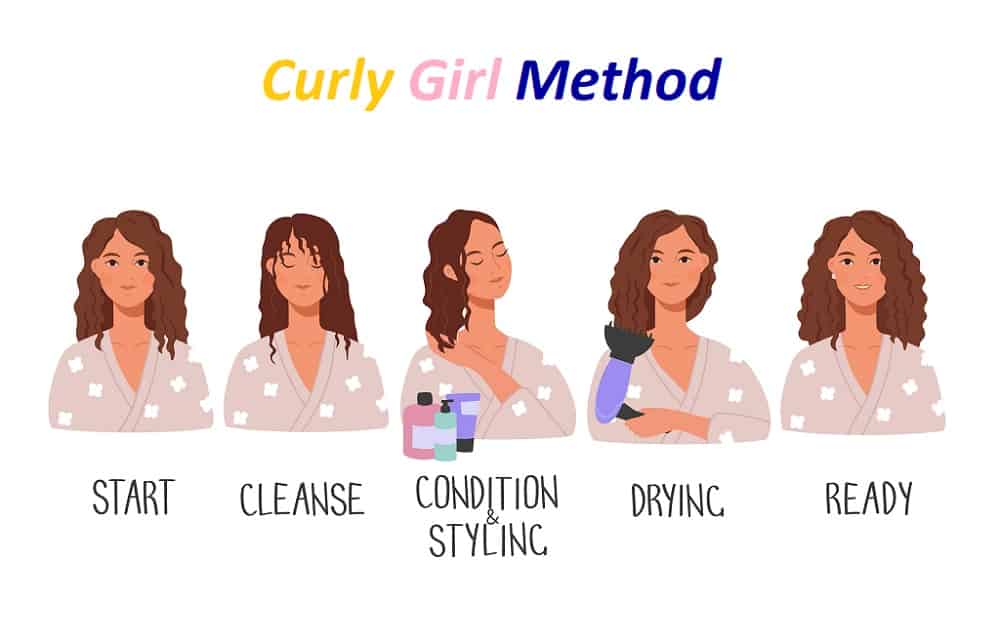
Lorraine Massey is the founder of the Curly Girl Method, a regimen that popularized practices long utilized by the Black natural hair community for curly hair care. This works on not only curls but waves and coils as well. One important stipulation for this method is that your hair should be natural, as in not chemically relaxed. This hair care regimen encourages co-washing, meaning you use a cleansing conditioner to gently wash the hair.
However, occasional use of a sulfate-free clarifying shampoo is still recommended to maintain a healthy scalp and prevent buildup.
Is Wavy Hair The Same As Curly Hair?
While some people do consider wavy hair to be a type of curly hair, these two textures are not exactly the same. You’ll often notice that wavy hair has a looser texture; this is in comparison to even the loosest curl patterns. There are a few obvious differences that both parties acknowledge.
Aside from that, both textures share many similarities as well, especially concerning how their hair behaves with certain styles and products.
Main Differences in Managing Wavy and Curly Hair
- Wavy hair may need to get clarified (washed with a deep-cleansing shampoo to remove product buildup) more often than curly hair.
- Wavy hair usually has a lower porosity (meaning the hair cuticle is tightly bound and can resist absorbing moisture and products).
- Wavy hair seemingly gets weighed down easier.
- The wave pattern usually starts toward the jaw or bottom of the hair, and the hair at the scalp is a little more flattened. Curly hair typically starts at the scalp.
- Wavy hair seems to lose its definition easier.
- Wavy hair doesn’t seem to get dry as easily as curly hair does.
- Wavy hair doesn’t seem to respond as well to specific techniques like wash n go styling, finger coils, or the use of a Denman brush, which aims to clump curls together for a more defined look.
- Wavy hair doesn’t seem to require deep conditioning as often as curly hair due to the moisture retention being more difficult with curly hair.
- Wavy hair tends to need to use extra hold products to maintain definition.
Of course, these characterizations aren’t set in stone. These are just the experiences shared by many people who have both hair types. Each person’s hair type is different and may not correspond to the generalizations above.
Can Wavy Hair Start Becoming Curly?
Someone with wavy hair may notice a change in texture over time due to hormones or age, but chemical damage typically loosens or destroys the wave pattern rather than creating tighter curls. Learn the process of making your curly hair wavy.
Celestine again, on how much a pattern can really change:
Hair texture is not fixed for life. Wavy or curly pattern may change over the years from our lifestyle choices, hormonal changes as well as age. With that being said, hair pattern may also change from how we handle the hair. Habits such as use of heat, chemicals and styling methods may cause structural changes on the hair shaft.
Does Wavy Hair Pattern Start At The Ears?
Some stylists’ rule for determining if the hair is wavy or curly is where the pattern starts. Many think that the wavy pattern starts around the ears and moves downward, while curly hair develops right from the root.
However, these rules can get confusing when you see someone with wavy hair straight from the root and a curly-haired person with curls starting near the bottom.
There’s no one way of haircare to subscribe to because you can’t just fit everything neatly into a box when it comes to hair. Everyone is different and has different experiences, and that’s one of the beautiful things about hair!
You kind of get to just figure it out as you go, see what your hair responds to, and do your best to take care of your precious locks, whether they’re wavy or curly.