

You’ve dyed your hair blue and you loved it. Now you want to change it to red. The question is, can you put red hair dye over blue hair and turn it red?
Quick Answer
You can apply red dye over blue hair, but it will not turn your hair red. Instead, it will create a dark purple or burgundy shade. To achieve a true, bright red, you must first remove the blue pigment entirely. A professional stylist is highly recommended for this correction, because blue dye is difficult to lift without damaging the hair.
Here is exactly how the results can vary:
- If your hair is still blue: Red dye will mix with the blue and usually turn purple, often a deep violet.
- If your blue has faded to teal or green: Red sits opposite green on the color wheel, so it can cancel the green. The result often turns dull and muddy, like brown or gray, not a clean purple.
Below, we explain what happens when you put red dye over blue hair. We will also explain how to achieve purple or true red from blue hair.
What Happens When You Put Red Hair Dye Over Blue Hair?
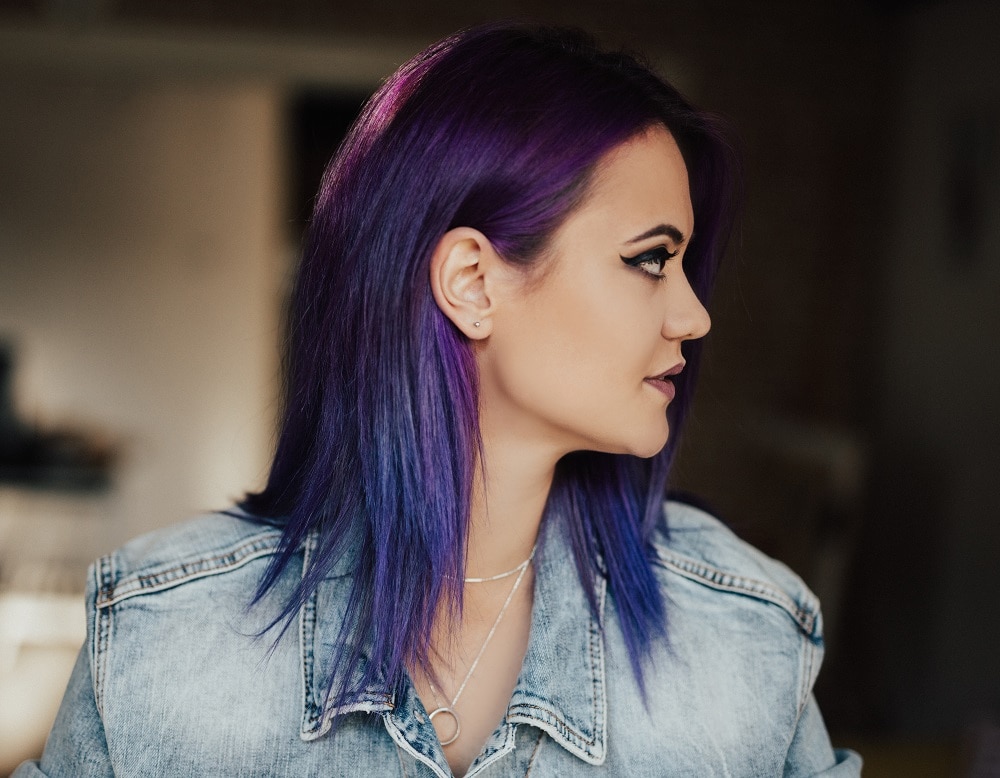
Color theory says red plus blue makes purple. Hair color is not that simple. Hair dye is see-through.
You are laying red over a blue base. Also blue hair fades into teal or green. Once you see green, the color theory changes. That creates three likely outcomes when you put red dye on blue hair.
1. It will look darker
You are adding pigment, not taking it out. So the result will be darker than your starting blue. Over dark navy blue you will not get bright purple. You will get deep violet. It may look almost black purple.
2. It can turn muddy
If your blue hair has faded to a light mint or teal, adding red will turn it brown, not purple. You must use a pink/magenta dye first to bridge the color gap.
3. It will fade unevenly
Blue dye molecules are highly prone to staining the hair cuticle and are difficult to remove, whereas red dye molecules are larger and tend to wash out (fade) much faster.
After 4 to 6 washes, the purple can slide back toward blue gray. It may look like a soft, blurred violet as the red washes out and the blue stays.
How to Turn Your Blue Hair Purple with Red Hair Dye

Step #0: Check your blue in daylight
If your hair is true blue, red dye can turn it purple. If your hair reads teal or green, do not skip this. Red may go muddy. Many people get a better purple result by using a hot pink or magenta direct dye first, then adjusting from there.
Step #1: Choose the dye
For an at home mix, use a direct dye (semi permanent) such as oVertone or Arctic Fox. Deeper red can make a deeper purple. Brighter red can make a brighter purple. If your hair is teal, consider hot pink instead of red.
Step #2: Patch test, then strand test
Do a skin patch test first. The FDA explains the basic approach and why you should do it each time you color.
Now do a strand test on a hidden piece of hair. Apply dye, wait the full time, then rinse. Dry it completely. Check it in natural daylight. Ask one question: Did it turn purple, or did it turn muddy? Never skip this step.
Step #3: Prep your hair and skin
Start with dry hair. Wear gloves. Use an old towel. Apply a thin layer of petroleum jelly around your hairline to help prevent staining.
Work in a well-ventilated room and keep the dye out of your eyes. If your scalp burns or stings while the color processes, rinse right away, and stop and get medical advice if you notice swelling or a rash.
Step #4: Apply the dye
Section hair into four parts. Apply dye evenly, section by section. Use your fingers to fully saturate the hair so every bit of blue hair is covered.
Step #5: Cover and process
Cover with a shower cap. Follow the brand timing. Many direct dyes sit for about 20 to 30 minutes.
Step #6: Rinse out
Rinse until the water runs mostly clear. Use cool or lukewarm water to help slow fading. Finish with a color-safe conditioner.
Step #7: Dry and assess
Blow-dry or air dry. Your former blue hair should now read purple if your starting shade was right. If it looks muddy, do not keep layering dye. Pause and reassess.
What Should I Do if I Still Want Red Hair While My Hair Is Blue?
If you want true red, the safe path is to remove blue pigment first. Do not assume you can “just bleach it out.” Blue direct dyes can stain the hair and may not lift cleanly. A pro colorist is your best bet for a blue-to-red correction.
Here is the order that usually works best:
- Fade it first: Time, clarifying shampoo, and frequent rinsing can help remove surface pigment.
- Use a direct dye remover: These are made for semi-permanent pigments. One example is Malibu C DDL (often sold for professional use).
- Then decide if lightening is needed: Once the blue is mostly gone, a stylist can judge hair strength and choose the gentlest next step.
Why this matters: Red dye needs a clean base. If blue or green is still sitting in the hair, red can look dull, brown, or uneven. A stylist may also “fill” the hair with warm tones first so red looks rich and lasts longer.
Before you book, let your blue fade as much as possible. Bring photos of the red you want. Expect more than one session if your blue is strong.
What to Expect in the Salon?

In a salon, a blue to red change is treated like a color correction. That means careful steps. Not one fast bleach job.
- Your stylist will consult with you. You will pick the red shade. They may do a strand test to see how your blue behaves.
- Many stylists start with a direct dye remover to break down the blue pigment before any lightening.
- If your hair needs it, they may do gentle lightening after the remover. This is to clean up leftover staining, not to “blast out” blue.
- Your hair may look warm or uneven mid process. That is normal. This is the in between stage.
- Your stylist may add a warm “filler” tone first, then apply the final red. This helps red look rich and last longer.
- They will rinse, treat, then style. You will leave with a care plan to slow fading.
Pro Tip: Red fades fast. Use cool water. Wash less often. Use heat protection when you style.