There are countless different ways to style your hair naturally or with braids. But if you’re looking for something easier to get and look gorgeous, you should go for twist hairstyles.
They’re broadly classified into two main types: flat twists and two-strand twists. Although the basic technique of wrapping two chunks of hair around one another remains the same, the former ones lie flat against the head like cornrows while the latter consists of smaller sections.
If you want to understand the differences between these two types of twist hairstyles before deciding on your next twisted hairstyle, read this article to the end.
Flat Twists and Two Strand Twists: Overview
As we have already mentioned, twists can be made with braids or natural hair. Take a look at this comparison table between flat twists and two-strand twists before you read about them in detail.
| Criteria | Flat Twists | Two Strand Twists |
|---|---|---|
| Time and Effort | Takes 30 mins to 1 hour | Takes 1-2 hours |
| Technique | Parting hair into cornrowed portions and twisting to the scalp | Twisting one hair section against another |
| Durability | Lasts 1-6 weeks | Lasts 2-6 weeks |
| Product Usage | Both styles require a good moisturizing cream or mousse to reduce frizz, though flat twists often require a stronger gel or edge control to keep the base neat and secure. | Both styles require a good moisturizing cream or mousse to reduce frizz; two-strand twists may need less gel at the base. |
| Final Look | Lies flat against the head like cornrows | Individual free-hanging twists |
| Styling Options | More options; can’t adjust the hairstyle once finished without redoing the whole style | Various hairstyles like bun or ponytail; slightly fewer options than Flat Twists |
| Tangling Rate | Can sometimes lead to product buildup at the roots | Can tangle if the loose ends shrink and interlock |
| Tension Level | More tension as they’re twisted in long rows | Slightly less tension |
| Cost | $50 to $150 based on hair characteristics and stylist/salon factors | $70 to $260 based on hair characteristics and stylist/salon factors |
| Pros | Works with relaxed/natural hair, many styling options, affordable | Retains more hair length, prevents breakage, protects from knots/damage, low maintenance |
| Cons | Causes more tangles than Two Strand Twists | Higher tension than Flat Twists |
| Author’s Preference | Provides more styling options but applies slightly more tension | Lasts longer and results in a lower tangling rate |
| Overall User Preference | Preferred for variety in styling options | Preferred for longevity, reduced tangling, and slightly less tension |
This table has given you a basic idea about the differences between flat twists and two-strand styles but to understand and decide your hairstyle you should also know the characteristics and pros and cons of these styles.
Flat Twists

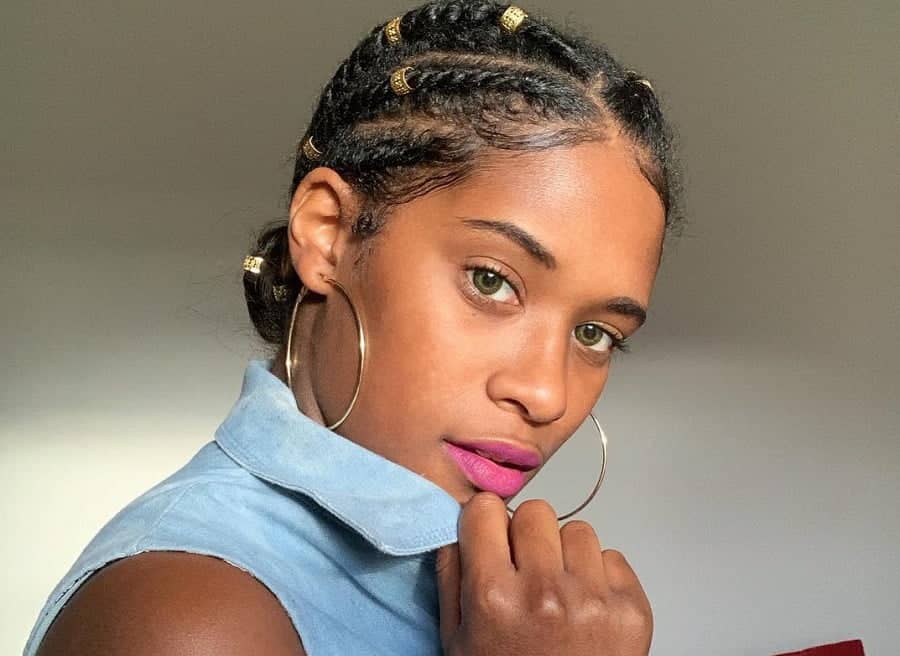
Flat twists are a protective hairstyle known for minimizing hair manipulation. This hairstyle involves parting your hair into cornrowed portions and twisting it to the scalp. Then, you can separate them out to your desired style.
It starts with two intertwined hair strands on top of each other, forming a rope-like pattern. The great thing is that you can flat-twist just your natural hair or add braiding hair for extensions.
Pros and Cons
- Works well with both relaxed and natural hair textures
- Offers many styling options
- Highly affordable
- Less hair damage
- Pros of Flat Twists
Two Strand Twist

The two-strand twist is one of the most popular hairstyles for natural hair. It involves twisting a hair section against another equal one to create small twists.
By repeating the same thing all over the head surface, you end up with a few twists that form the overall iconic hairstyle. This hairstyle is widely used with afro-textured hair. The two-strand twists hairstyle is also easy to create, and you can maintain it effortlessly.
Pros and Cons
- Helps in retaining more hair length
- Can prevent hair breakage in the long run
- Protects hair from knots and damage
- Requires minimal maintenance
- Can sometimes unravel easily
- Applies slightly less tension to the hair than flat twists
Flat Twists Vs. Two Strand Twists: Choose the Right One
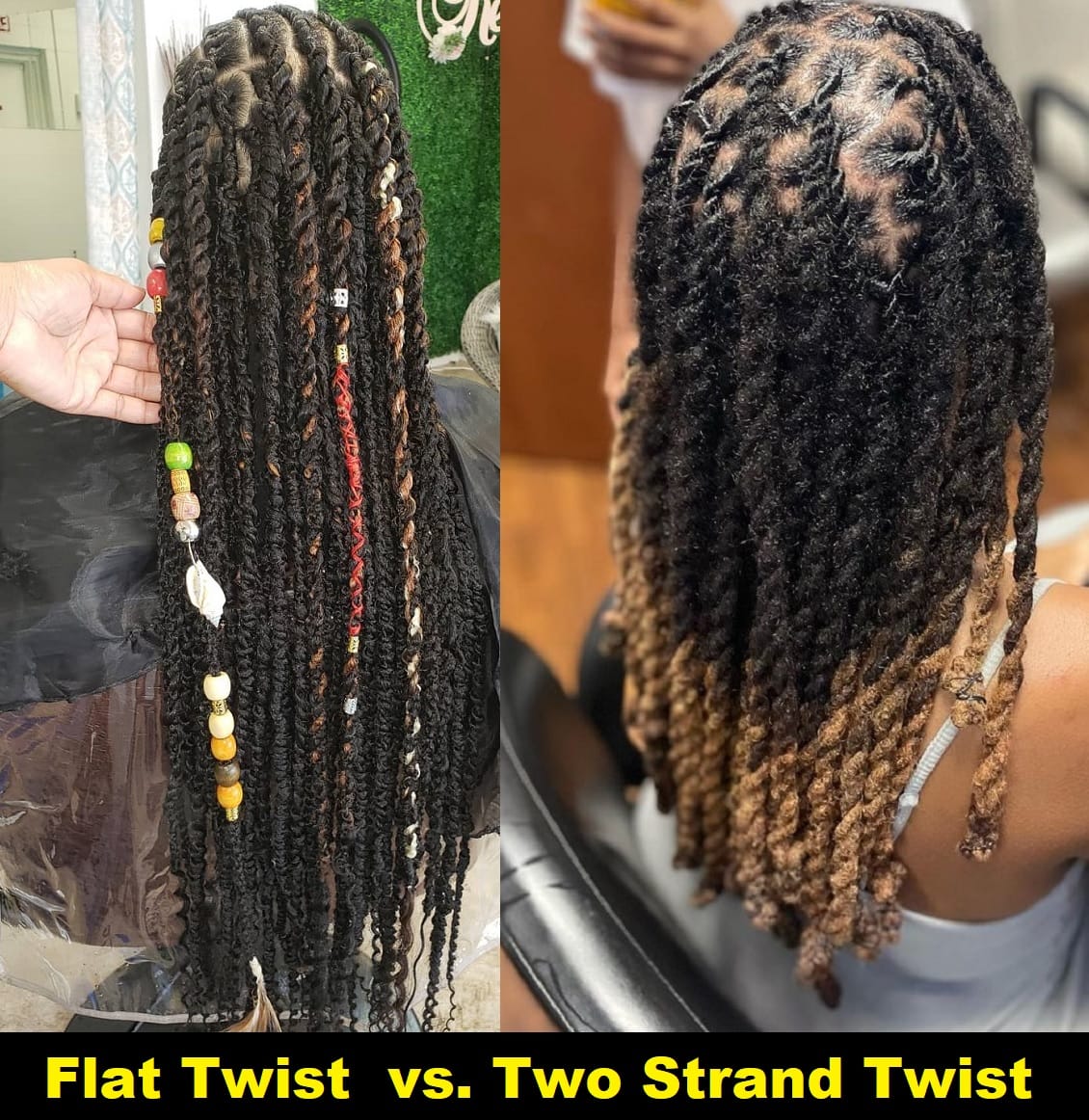
To gain a deeper understanding of the differences between the two hairstyles, here’s a detailed comparison between the two:
Styling Options
Flat twists and two-strand twists allow you to create multiple beautiful hair artworks. Nonetheless, one of the two provides more styling options.
Two-strand twists allow you to create various hairstyles. Still, the options when using two-strand twists are slightly fewer than those when using flat twists.
You can get a simple twisted ponytail style with your natural flat twists and also a gorgeous bun or updo with flat-twist braid extensions.
Winner: Flat Twist
Flat twists provide you with more styling options. You can achieve simple styles like Afro-men twists, kinky twists, and buns.
Tangling Rate
Like other protective hairstyles, flat twists and two-strand twists tend to develop tangles in your hair when you leave them for a long time. Still, each one of the two styles has a different tangling rate.
Flat twists can sometimes lead to product buildup at the roots, while two-strand twists can tangle if the loose ends shrink and interlock.
Another reason why flat twists may have a higher tangling rate is because they are typically done in long rows. This can make it more difficult to detangle the hair when it is time to remove the twists.
Two-strand twists, on the other hand, are created as individual, free-hanging twists sectioned in squares, triangles, or freestyle parts across the head. This can make it easier to detangle the hair when it is time to remove the twists.
Winner: Two-Strand Twists
Two-strand twist’s tangling rate is lower than that of flat twists.
Tension Level
All protective hairstyles are known for applying little tension to the hair. However, the level of stress can differ from one hairstyle to another.
Flat twists apply more tension to the hair than two-strand twists. This is because flat twists are twisted tightly against the scalp, while two-strand twists are twisted around each other more loosely. Flat twists are also typically done in long rows, which can further increase the tension on the hair.
Two-strand twists are sectioned individually, which distributes tension evenly across the head rather than pulling continuously along a single track.
Winner: Two-Strand Twist
Although both hairstyles can apply little stress to your hair, flat twists can result in a slightly higher tension level.
So, if you are concerned about tension on your hair, it is best to choose two-strand twists over flat twists. You can reduce tension by ensuring your parts are clean, uniform, and the hair is not pulled too firmly at the root during installation.
Longevity
Luckily, flat twists and two-strand twists last longer than most other hairstyles. This is highly likely if you apply them to natural hair. Nonetheless, which of the two lasts longer?
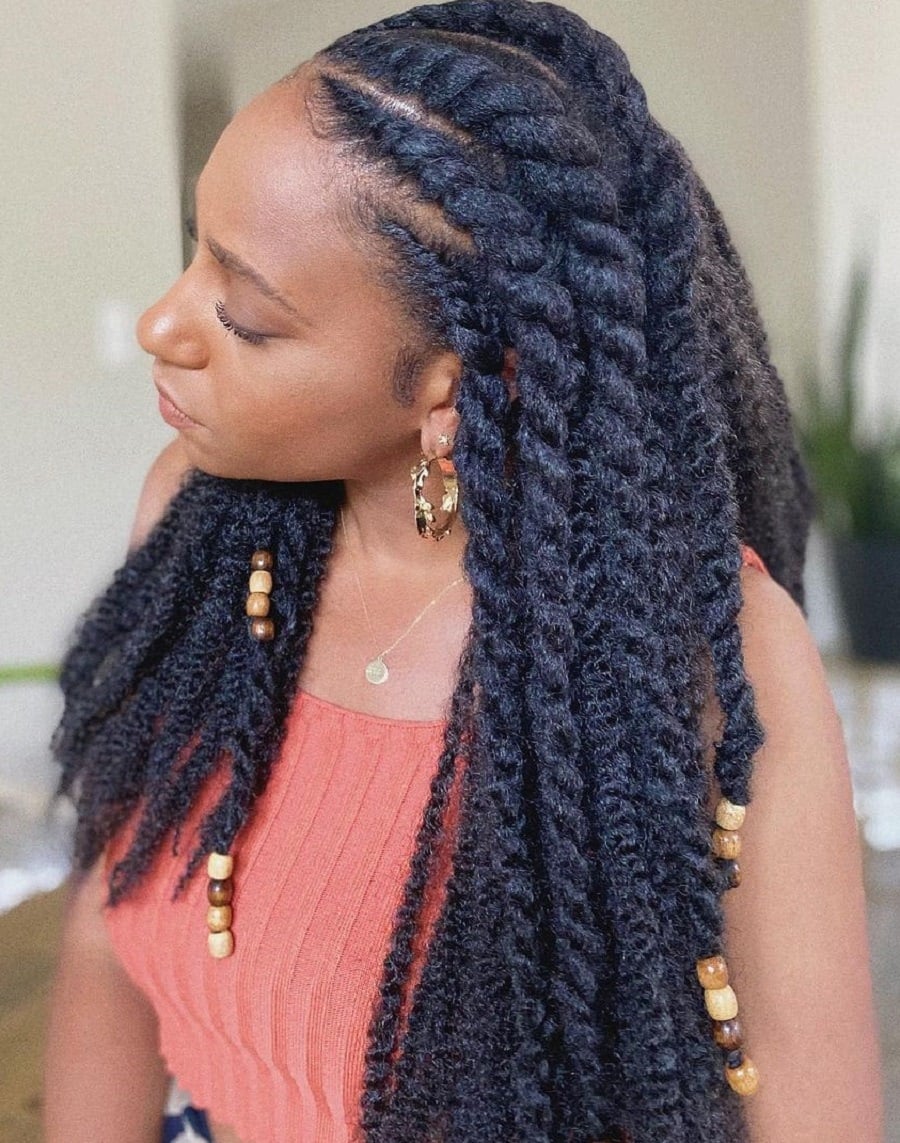
Flat twists can last from one up to six weeks. The exact duration depends on the care you provide for your hair, the hair texture, and your overall lifestyle.
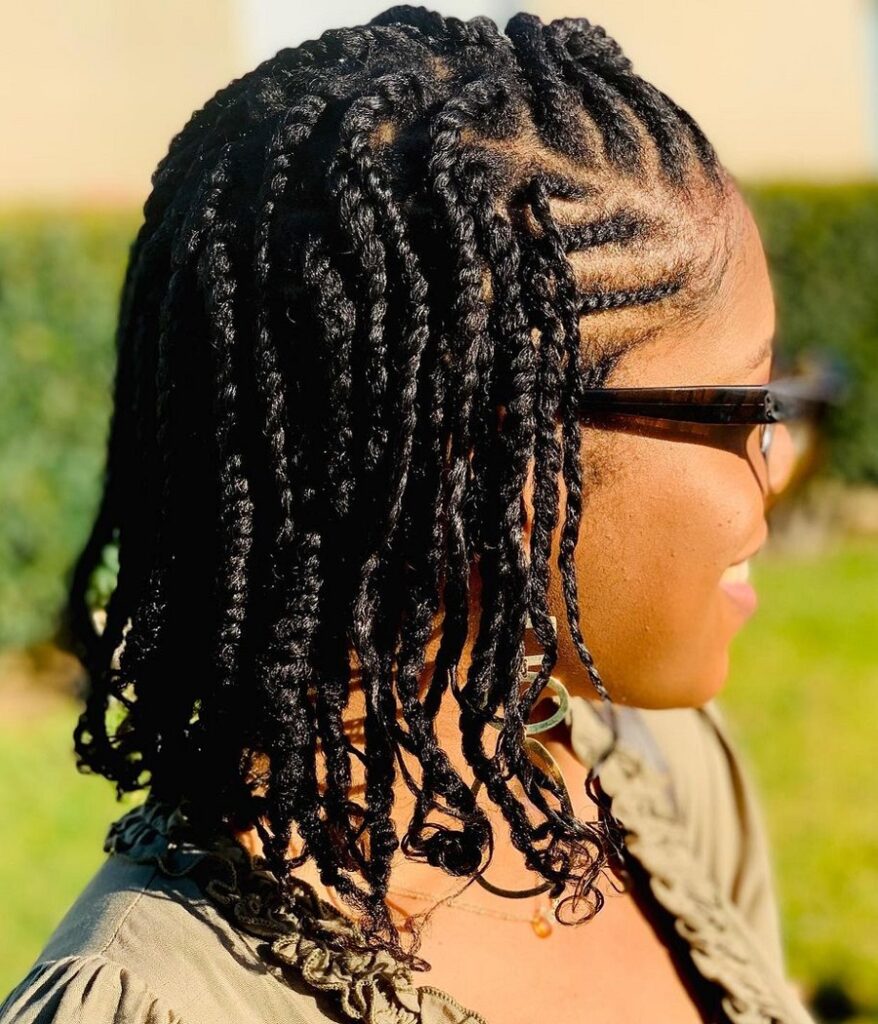
Two-strand twists have a higher minimum longevity duration than flat twists. They can last from two to six weeks, based on individual factors.
Winner: Two-Strand Twists
Both hairstyles can last up to six weeks. However, the minimum longevity duration of two-strand twists is two weeks, while flat twists last for a minimum period of only one week.
Cost
The price of flat-twists or two-strand twists varies based on hair length and thickness, stylist experience, and salon location.
For flat twists, costs range from $50 to $150. Longer, thicker hair costs more due to the time taken.
The cost of two-strand twists ranges from $70 to $250. Experienced stylists often charge less due to their efficiency, and urban salons typically charge more than rural ones.
Winner: Flat Twists
Although both hairstyles are affordable, flat twists are more cost effective than two-strand twists.